Medicaid

Work Requirements

Challenges with Implementing Work Requirements

Many states are anticipating a variety of implementation challenges, including the need for complex system changes, a compressed implementation timeline, and limited staff capacity.

What is the Medicaid Hardship Exception?

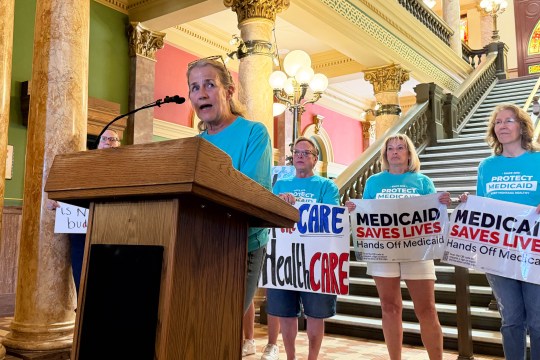
The number of Medicaid expansion enrollees who ultimately qualify for the high unemployment hardship exception will depend on how the exception is implemented and how unemployment rates changes.

Tracking Implementation of the 2025 Reconciliation Law: Medicaid Work Requirements

KFF’s interactive tracks key data and policies that will affect how states implement Medicaid work requirements, which are required under the 2025 budget reconciliation law starting in January 2027. The tracker includes state-level data on Medicaid enrollment and renewal outcomes as well as current state enrollment and renewal policies.

Medicaid Budget Survey

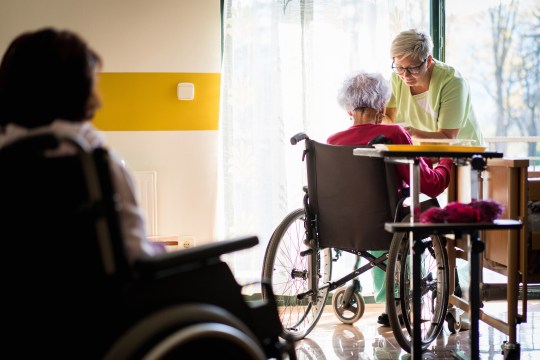
Medicaid Home Care

Using data from the 23rd KFF survey of officials administering Medicaid home care programs, this issue brief describes the mechanisms states are currently using to limit Medicaid spending on home care and their plans for adopting new mechanisms in state fiscal year (FY) 2026.

A Look at Waiting Lists for Medicaid Home- and Community-Based Services from 2016 to 2025

This data note provides new information about waiting lists in Medicaid home care before many of the provisions in the 2025 reconciliation law go into effect. The data come from KFF’s 23rd survey on Medicaid home care programs in all 50 states and DC.

KFF regularly surveys states about their Medicaid home- and community-based services (HCBS) programs and their eligibility policies for people who are eligible for Medicaid on the basis of having a disability or being 65 and older.

states-are-most-likely-to-offer-home-care-to-eligible-people-with-intellectual-developmental-disabilities_FI_v2_7f7f71.png

This issue brief provides an overview of what Medicaid home care (also known as “home- and community-based services” or HCBS) is, who is covered, and what services were available in 2024.

Eligibility and coverage
  • Eligibility, Enrollment, and Renewal Policies

    KFF's survey findings capture state actions that seek to improve the accuracy and efficiency of Medicaid and CHIP enrollment and renewal processes, as of January 2025.
  • Seniors and People with Disabilities

    More than 1 in 3 people with disabilities (15 million) have Medicaid (35%). In comparison, only 19% of people without disabilities have Medicaid.
  • Children with Special Needs

    Amid debates about proposed cuts to federal Medicaid spending, this brief analyzes key characteristics of children with special health care needs and explores how Medicaid provides them with coverage.
  • People With Intellectual and Developmental Disabilities

    Among the estimated 8 million people with intellectual and developmental disabilities (I/DD), over three million have Medicaid coverage.
  • Adults with Chronic Conditions

    Among working age adults enrolled in Medicaid, approximately three quarters have one or more chronic conditions, and nearly one-third have three or more.

The Essentials
  • 5 Facts: Immigrants and Medicaid

    This brief provides five key facts on Medicaid and immigrants as context for understanding the potential impacts of policy changes under the Trump administration.
  • 5 Facts: Medicaid and Hospitals

    This brief explains the role of Medicaid for hospitals, including how much spending on hospital care comes from Medicaid, the share of births covered by the program, and how Medicaid expansion has impacted hospital finances.
  • Medicaid Financing: The Basics

    Medicaid is a major source of financing for states to provide health coverage and long-term services and supports for low-income residents. This brief examines key questions about Medicaid financing and how it works.
  • 5 Facts: Medicaid’s Share of National Health Spending

    This brief explores how Medicaid spending contributes to national health spending and how different service areas contribute to Medicaid costs.
  • 5 Facts: Medicaid and Nursing Facilities

    The substantial Medicaid savings in the reconciliation bill could have major implications for nearly 15,000 federally certified nursing facilities and the 1.2 million people living in them.

Subscribe to KFF Emails

Choose which emails are best for you.
Sign up here

Filter

1,921 - 1,930 of 2,672 Results

  • Poor People Have the Same Needs as Others

    From Drew Altman

    Drew Altman, President and CEO of the Foundation, was asked to contribute to the New York Times' Room for Debate discussion on More Medicaid, More Health? In his piece, Dr. Altman concludes "Insurance -- public or private -- provides financial protection and access to medical care which low-income people need just as everybody else does. But it cannot by itself change behavior, alleviate poverty, or guarantee that the medical system is doing all it can to improve health."

  • Medicaid Financial Eligibility: Primary Pathways for the Elderly and People with Disabilities

    Issue Brief

    This issue brief details the various eligibility pathways by which individuals with disabilities and the elderly can qualify for Medicaid coverage. The program, which serves as a safety net for many of the nation’s poorest and sickest individuals, provides health coverage to nearly 60 million Americans, including 8.5 million with disabilities and 8.

  • Visualizing Health Policy: The Role of Medicaid and Medicare in Women’s Health Care

    Other

    This month’s Visualizing Health Policy infographic provides information about the role of Medicaid and Medicare in women’s health care: the proportion of US women who are covered by Medicaid and Medicare; how women comprise the majority of those covered by the Medicaid and Medicare programs and the majority of those receiving long-term services and supports (such as home health care); how women on Medicaid are poorer and sicker than women with private coverage; how Medicaid is a primary payer for women’s reproductive health services; and how women on Medicare spend more than their male counterparts on medical care and also have higher rates of health problems and social challenges.

  • Quality of Care in Community Health Centers and Factors Associated with Performance

    Issue Brief

    This study examines quality among health centers relative to Medicaid managed care organizations (MCOs). Chronic care quality among health centers is high; gaps in women’s preventive care are a concern. Lower-performing health centers have very high uninsured and homeless rates. The expansion of Medicaid and private insurance under the ACA may foster gains in health center quality performance.

  • State Medicaid Coverage of Perinatal Services: Summary of State Survey Findings

    Report

    The report examines state Medicaid program policies regarding coverage of pregnancy-related services. It details state-level Medicaid eligibility and enrollment policies for pregnant women, as well as scope of coverage for prenatal and screening services, delivery and post-partum care, educational classes and support services.

  • California’s Health Care Environment and Health Reform Efforts: June 2013 Update

    Issue Brief

    This brief provides and update of the health care and health policy environment in California, discussing the budgetary environment, implementation of the state's "Bridge to Reform" Medicaid waiver, and efforts to prepare for coverage expansions and new coverage options in 2014 under the Affordable Care Act.

  • The Cost of Not Expanding Medicaid

    Report

    As states wrap up legislative sessions and make decisions about whether to implement the Medicaid expansion included in the Affordable Care Act (ACA), this new analysis highlights the implications of these decisions for coverage, state budgets and providers. The decisions by as many as 27 states not to adopt the Medicaid expansion will leave a many more uninsured; these states would also forgo billions in federal funds.