Medicaid

new and noteworthy

An Early Look at States’ Differing Approaches to Implementing Medicaid Work Requirements Amid Cost and Time Constraints and Uncertainty

A new KFF survey of state Medicaid officials and focus groups in eight states captures the different choices states are making about how to implement Medicaid work requirements, with seven states planning for a more restrictive approach to verifying work or exemption status or to implement work requirements early. These implementation plans are taking shape as states encounter time, cost, and other constraints as well as uncertainty about how to define and verify certain exemptions due to delayed federal guidance.

Medicaid Watch

Featuring policy research, polling and news about how Medicaid is changing, and the impact of those changes due to the tax and spending cuts law

Medicaid Work Requirements

Tracking Medicaid Work Requirements: Data and Policies

To implement Medicaid work requirements, states will need to make important policy and operational decisions, implement needed system upgrades or changes, develop new outreach and education strategies, and hire and train staff, all within a relatively short timeframe. The information tracked here can serve as a resource to understand Medicaid work requirements and state options, gauge readiness, and track implementation of the requirements.

understanding medicaid

Medicaid Financing

Medicaid represents $1 out of every $5 spent on health care in the U.S. and is the major source of financing for states to provide health coverage and long-term care. This brief examines key questions about Medicaid financing and how it works.

Medicaid and Provider Taxes

All states except Alaska cover some state Medicaid costs with taxes on health care providers. This brief uses data from KFF’s 2024-2025 survey of Medicaid directors to describe current practices and the federal rules governing them.

5 Facts: Medicaid and Hospitals

Absorbing reductions in Medicaid spending could be challenging for hospitals, particularly for those that are financially vulnerable. This brief provides data on the reach of Medicaid across hospitals, patients, and charity care.

Medicaid Home Care in 2025

This issue brief provides an overview of what Medicaid home care (also known as “home- and community-based services”) is, who is covered, and what services were available in 2025.

5 Facts: Medicaid Program Integrity

This brief explains what is known about improper payments and fraud and abuse in Medicaid and describes ongoing state and federal actions to address program integrity.

2025 Medicaid Home Care survey

Payment Rates Ahead of 2025 Reconciliation Law

This issue brief describes Medicaid payment rates for home care and other workforce supports that are in place in 2025, before the majority of the 2025 reconciliation law provisions start taking effect.

Home Care Support for Family Caregivers in 2025
number of responding states, including DC, that allow payments for family caregivers by type of home care program and type of caregiver.

This issue brief describes the availability of self-directed services and supports for family caregivers in Medicaid home care in 2025, before most provisions in the reconciliation law take effect.

States’ Management of Home Care Spending

This issue brief describes the mechanisms states are currently using to limit Medicaid spending on home care and their plans for adopting new mechanisms in state fiscal year (FY) 2026.

Waiting Lists for Medicaid Home Care, 2016 to 2025
A Look at Waiting Lists for Medicaid Home- and Community-Based Services from 2016 to 2025

This data note provides new information about waiting lists in Medicaid home care before many of the provisions in the 2025 reconciliation law go into effect.

Eligibility and coverage
  • Eligibility, Enrollment, and Renewal Policies

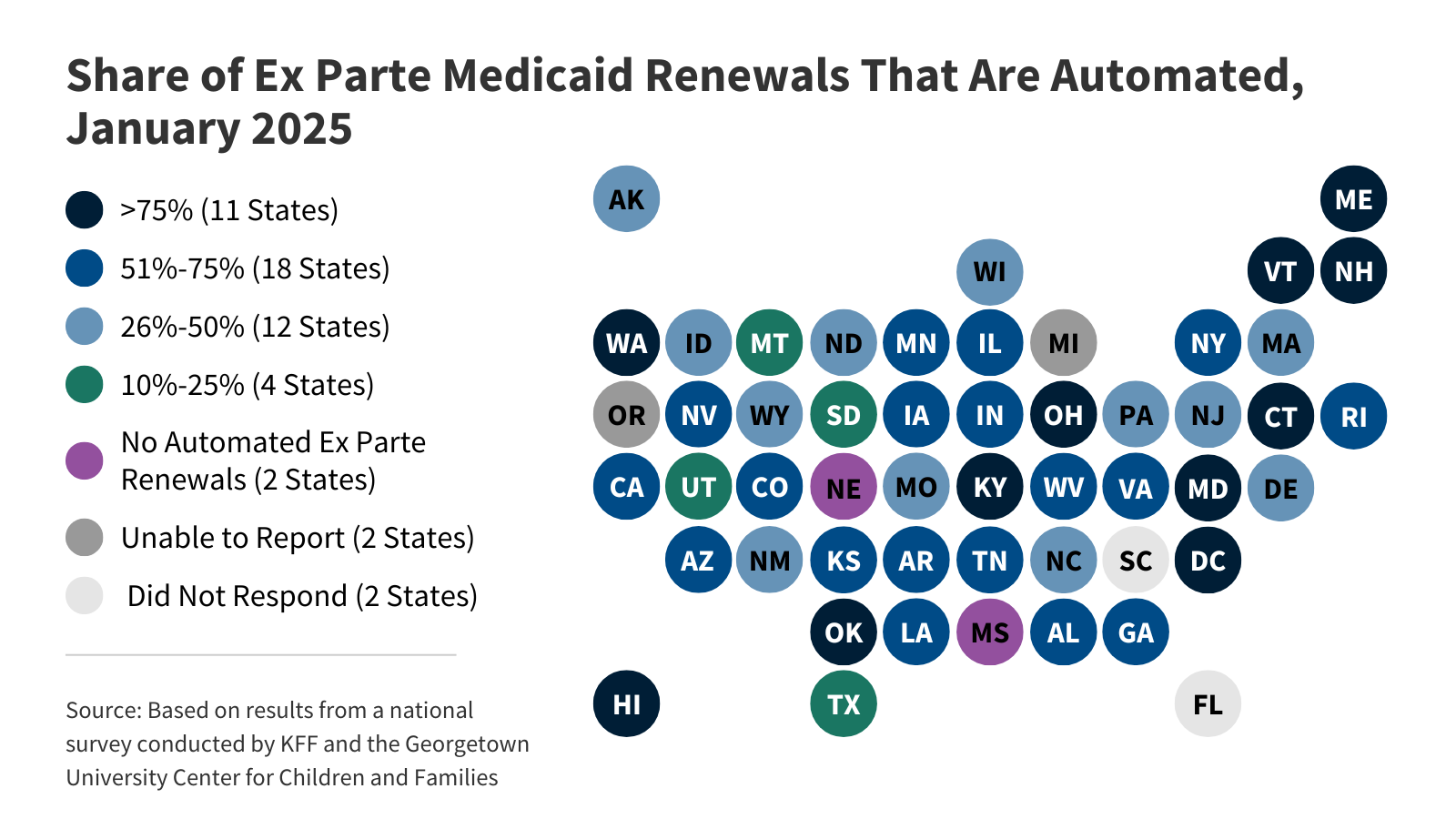
    KFF's survey findings capture state actions that seek to improve the accuracy and efficiency of Medicaid and CHIP enrollment and renewal processes, as of January 2025.
  • Seniors and People with Disabilities

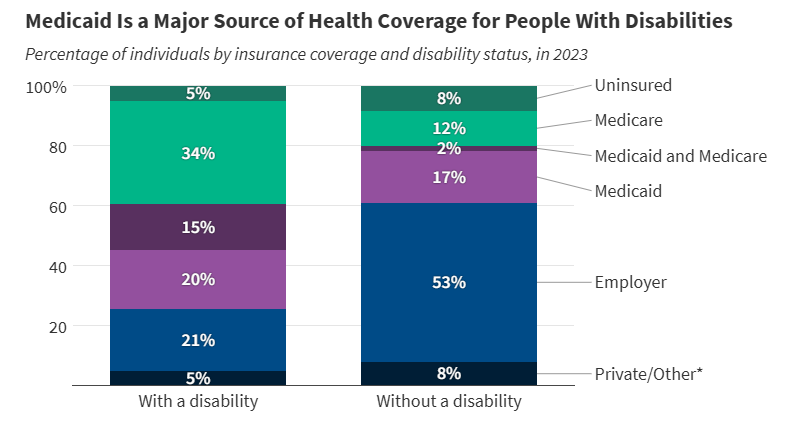
    More than 1 in 3 people with disabilities (15 million) have Medicaid (35%). In comparison, only 19% of people without disabilities have Medicaid.
  • Children with Special Needs

    Amid debates about proposed cuts to federal Medicaid spending, this brief analyzes key characteristics of children with special health care needs and explores how Medicaid provides them with coverage.
  • People With Intellectual and Developmental Disabilities

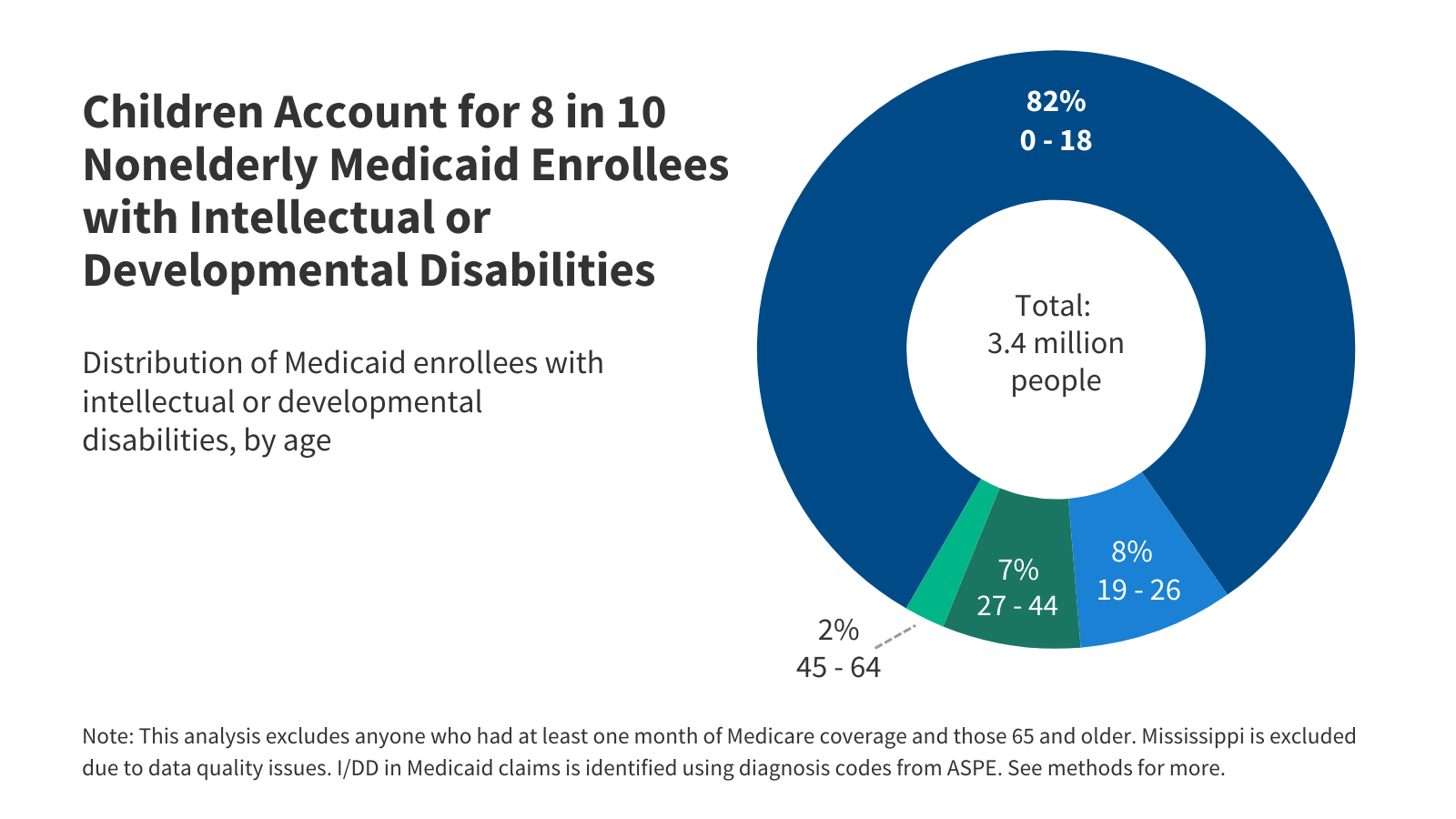
    Among the estimated 8 million people with intellectual and developmental disabilities (I/DD), over three million have Medicaid coverage.
  • Adults with Chronic Conditions

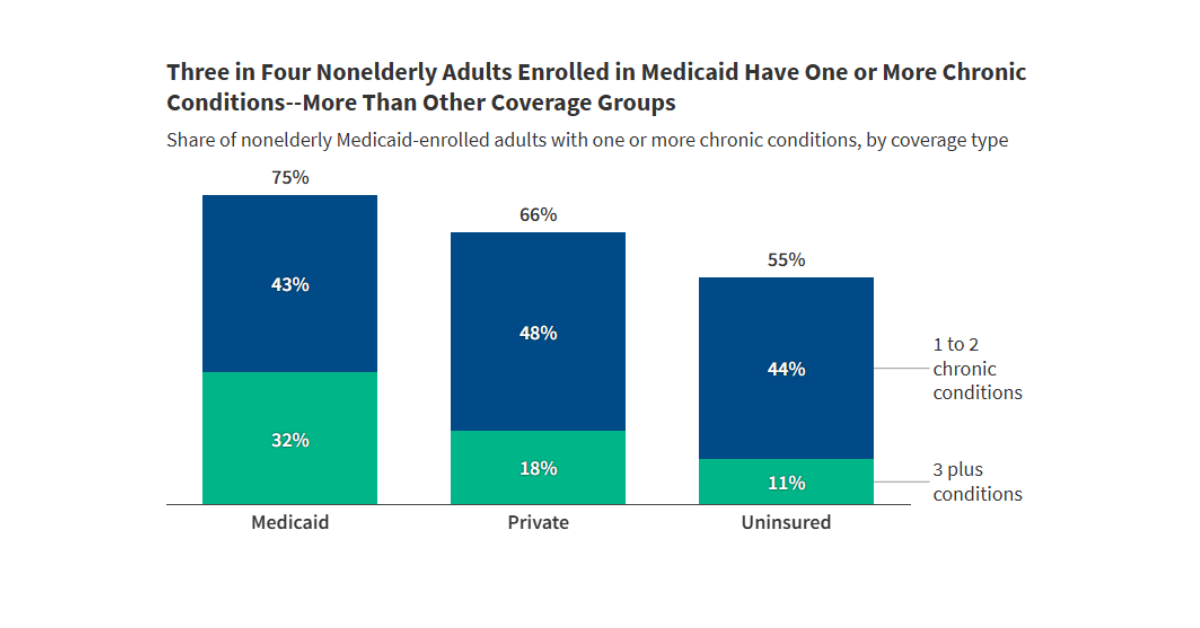
    Among working age adults enrolled in Medicaid, approximately three quarters have one or more chronic conditions, and nearly one-third have three or more.

Subscribe to KFF Emails

Choose which emails are best for you.
Sign up here

Filter

1,801 - 1,810 of 2,693 Results

  • Determining Income for Adults Applying for Medicaid and Exchange Coverage Subsidies: How Income Measured With a Prior Tax Return Compares to Current Income at Enrollment

    Issue Brief

    A major goal of the Patient Protection and Affordable Care Act (ACA) is to significantly expand coverage and reduce the number of uninsured. Beginning in 2014, the ACA will establish a new continuum of coverage that will provide assistance to individuals with incomes up to 400% of poverty through a broad expansion in Medicaid and by making premium tax credits available to eligible individuals to purchase coverage through new Health Insurance Exchanges. The law standardizes…

  • The Budget: What Would You Cut?

    Perspective

    As President Obama and Congress begin to hash out the 2012 budget, it is a good time to revisit results from our January 2011 survey showing that in spite of the fact that most Americans report being very concerned about the budget deficit, there is little public support for major reductions across a number of program areas. Majorities said they would not support any reductions in Social Security (64 percent), public education (63 percent), or…

  • Pop Quiz: Assessing Americans’ Familiarity with the Health Care Law

    Perspective

    Based on the December Kaiser Health Tracking Poll, the latest KFF data note explores Americans’ awareness of what the Affordable Care Act (ACA) will do. As the 112th Congress prepared to take office and the discussion of repeal was on the rise, we 'quizzed' Americans on whether they thought a series of ten provisions were included in the new law, ranging from five items that are part of the law (i.e., Medicaid expansion, changes in…

  • Medicaid Spending Growth and the Great Recession, 2007-2009

    Fact Sheet

    This fact sheet examines how the recent recession drove up Medicaid enrollment as millions of Americans lost jobs and income, and how that increase in enrollment has been the primary cause of the increase in overall Medicaid spending. Fact Sheet (.pdf)

  • Medicaid Spending Growth over the Last Decade and the Great Recession, 2000-2009

    Report

    This report examines Medicaid spending growth nationally during the last decade, with a focus on growth during the recession of 2007 to 2009. The recession-driven enrollment growth in recent years drove program spending to increase faster than national health spending overall, but on a per enrollee basis the growth in Medicaid spending has remained lower than the rise in private insurance premiums and overall national health expenditures. The recession-driven increase in Medicaid enrollment has been…

  • State Budgets Under Federal Health Reform: The Extent and Causes of Variations in Estimated Impacts

    Issue Brief

    This analysis examines the potential costs and savings that the health reform law may generate for state budgets, a topic of great interest at a time when states continue to struggle with tight budgets in the wake of the recession. The analysis seeks to explain why recent state estimates of the likely impact of health reform on their budgets vary widely, and discusses the major expected sources of costs and savings as the new law…

  • Resources Examine Recession-Driven Record Medicaid Enrollment and Assess Medicaid Spending Growth

    Fact Sheet

    Three papers from the Foundation's Commission on Medicaid and the Uninsured examine Medicaid enrollment and spending during the recent recession. The analyses show Medicaid enrollment rose above 50 million people nationally for the first time in 2010, reflecting the program’s counter-cyclical role of helping people who become uninsured when the economy falters, with many turning to Medicaid after losing jobs and employer-based health insurance. Without access to Medicaid coverage, millions more people who suffered economic…

  • Money Follows the Person: A 2010 Snapshot

    Issue Brief

    Enacted into law in 2006 as part of the Deficit Reduction Act (DRA), the Money Follows the Person demonstration provides states with enhanced federal matching funds for twelve months for each Medicaid beneficiary transitioned from an institutional setting to a community-based setting. In July 2010, the Kaiser Commission on Medicaid and the Uninsured (KCMU) surveyed states about the current status of their MFP program including trends in enrollment, services and per capita spending.

  • A Challenge for States: Assuring Timely Access to Optimal Long-Term Services and Supports in the Community

    Issue Brief

    The Medicaid program is a major payer for long-term services and supports (LTSS) in the United States, accounting for 40 percent of total spending for long-term services and supports. The federal government has played an active role in sponsoring initiatives to promote a shift to community-based care; and evidence from several states suggests that providing care in the community can be less expensive than providing institutional care. The Affordable Care Act (ACA) provides incentives for…

  • Money Follows the Person Transitions Individuals from Nursing Homes to the Community

    Issue Brief

    This brief presents short profiles of four Ohio residents who have benefited from the state's Money Follows the Person demonstration program, known as HOME Choice. It was released along with several other resources on Medicaid long-term services and supports at a Feb. 7, 2011 briefing at the Foundation's Washington, D.C., offices. Profiles (.pdf)