Medicaid

new and noteworthy

An Early Look at States’ Differing Approaches to Implementing Medicaid Work Requirements Amid Cost and Time Constraints and Uncertainty

A new KFF survey of state Medicaid officials and focus groups in eight states captures the different choices states are making about how to implement Medicaid work requirements, with seven states planning for a more restrictive approach to verifying work or exemption status or to implement work requirements early. These implementation plans are taking shape as states encounter time, cost, and other constraints as well as uncertainty about how to define and verify certain exemptions due to delayed federal guidance.

Medicaid Watch

Featuring policy research, polling and news about how Medicaid is changing, and the impact of those changes due to the tax and spending cuts law

Medicaid Work Requirements

Tracking Medicaid Work Requirements: Data and Policies

To implement Medicaid work requirements, states will need to make important policy and operational decisions, implement needed system upgrades or changes, develop new outreach and education strategies, and hire and train staff, all within a relatively short timeframe. The information tracked here can serve as a resource to understand Medicaid work requirements and state options, gauge readiness, and track implementation of the requirements.

understanding medicaid

Medicaid Financing

Medicaid represents $1 out of every $5 spent on health care in the U.S. and is the major source of financing for states to provide health coverage and long-term care. This brief examines key questions about Medicaid financing and how it works.

Medicaid and Provider Taxes

All states except Alaska cover some state Medicaid costs with taxes on health care providers. This brief uses data from KFF’s 2024-2025 survey of Medicaid directors to describe current practices and the federal rules governing them.

5 Facts: Medicaid and Hospitals

Absorbing reductions in Medicaid spending could be challenging for hospitals, particularly for those that are financially vulnerable. This brief provides data on the reach of Medicaid across hospitals, patients, and charity care.

Medicaid Home Care in 2025

This issue brief provides an overview of what Medicaid home care (also known as “home- and community-based services”) is, who is covered, and what services were available in 2025.

5 Facts: Medicaid Program Integrity

This brief explains what is known about improper payments and fraud and abuse in Medicaid and describes ongoing state and federal actions to address program integrity.

2025 Medicaid Home Care survey

Payment Rates Ahead of 2025 Reconciliation Law

This issue brief describes Medicaid payment rates for home care and other workforce supports that are in place in 2025, before the majority of the 2025 reconciliation law provisions start taking effect.

Home Care Support for Family Caregivers in 2025
number of responding states, including DC, that allow payments for family caregivers by type of home care program and type of caregiver.

This issue brief describes the availability of self-directed services and supports for family caregivers in Medicaid home care in 2025, before most provisions in the reconciliation law take effect.

States’ Management of Home Care Spending

This issue brief describes the mechanisms states are currently using to limit Medicaid spending on home care and their plans for adopting new mechanisms in state fiscal year (FY) 2026.

Waiting Lists for Medicaid Home Care, 2016 to 2025
A Look at Waiting Lists for Medicaid Home- and Community-Based Services from 2016 to 2025

This data note provides new information about waiting lists in Medicaid home care before many of the provisions in the 2025 reconciliation law go into effect.

Eligibility and coverage
  • Eligibility, Enrollment, and Renewal Policies

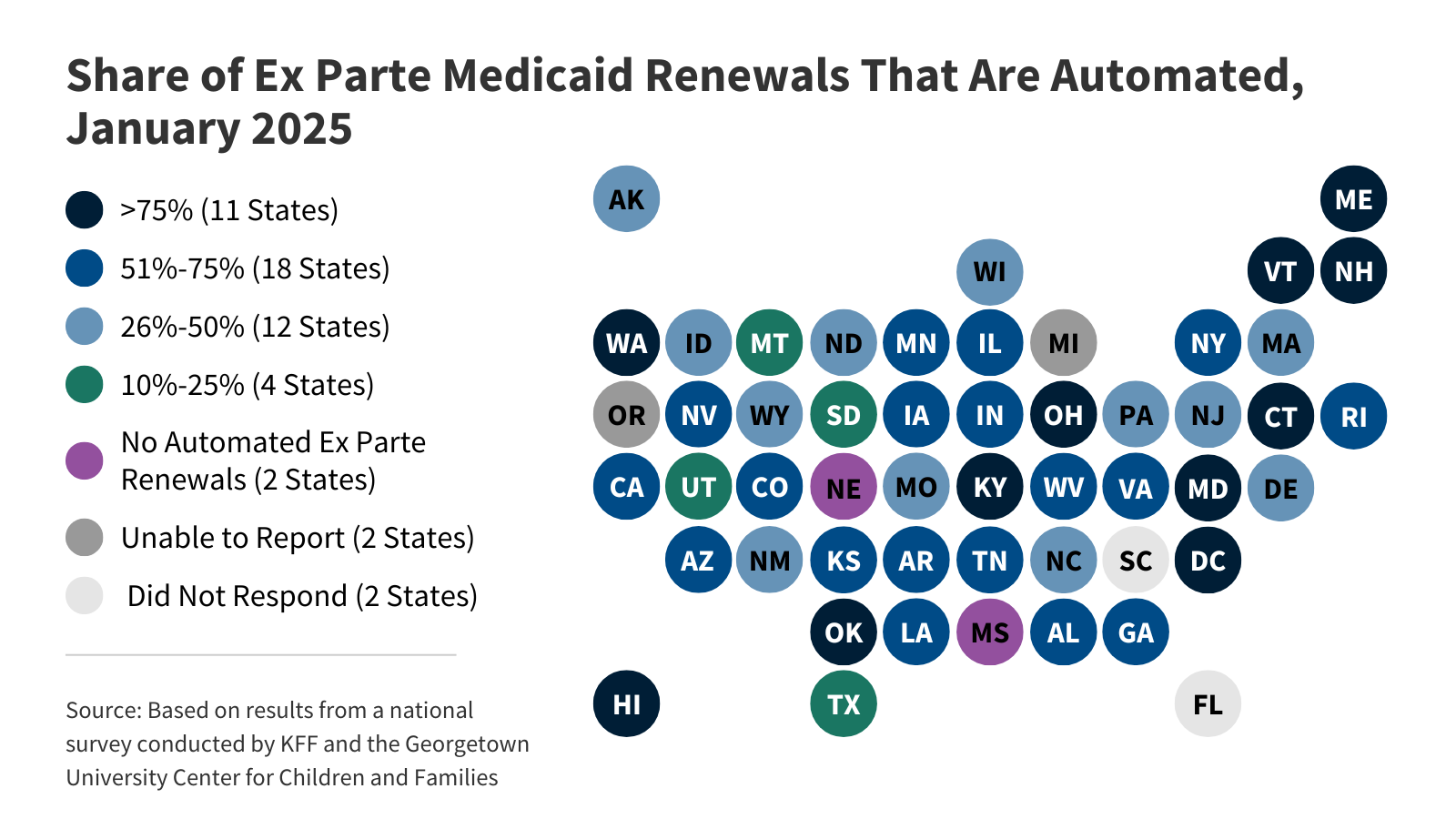
    KFF's survey findings capture state actions that seek to improve the accuracy and efficiency of Medicaid and CHIP enrollment and renewal processes, as of January 2025.
  • Seniors and People with Disabilities

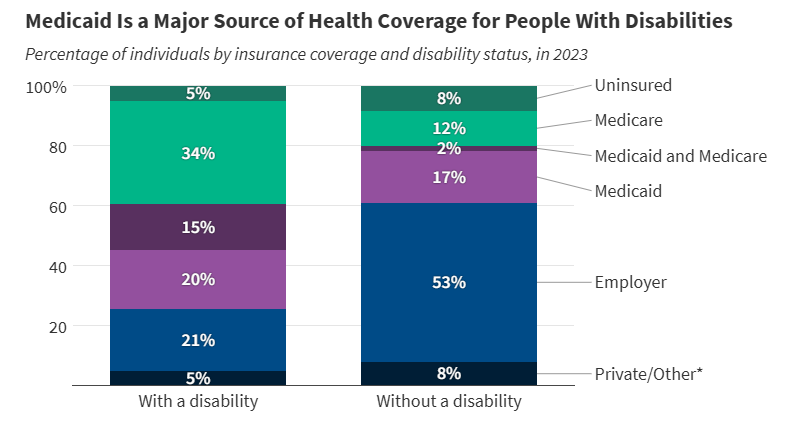
    More than 1 in 3 people with disabilities (15 million) have Medicaid (35%). In comparison, only 19% of people without disabilities have Medicaid.
  • Children with Special Needs

    Amid debates about proposed cuts to federal Medicaid spending, this brief analyzes key characteristics of children with special health care needs and explores how Medicaid provides them with coverage.
  • People With Intellectual and Developmental Disabilities

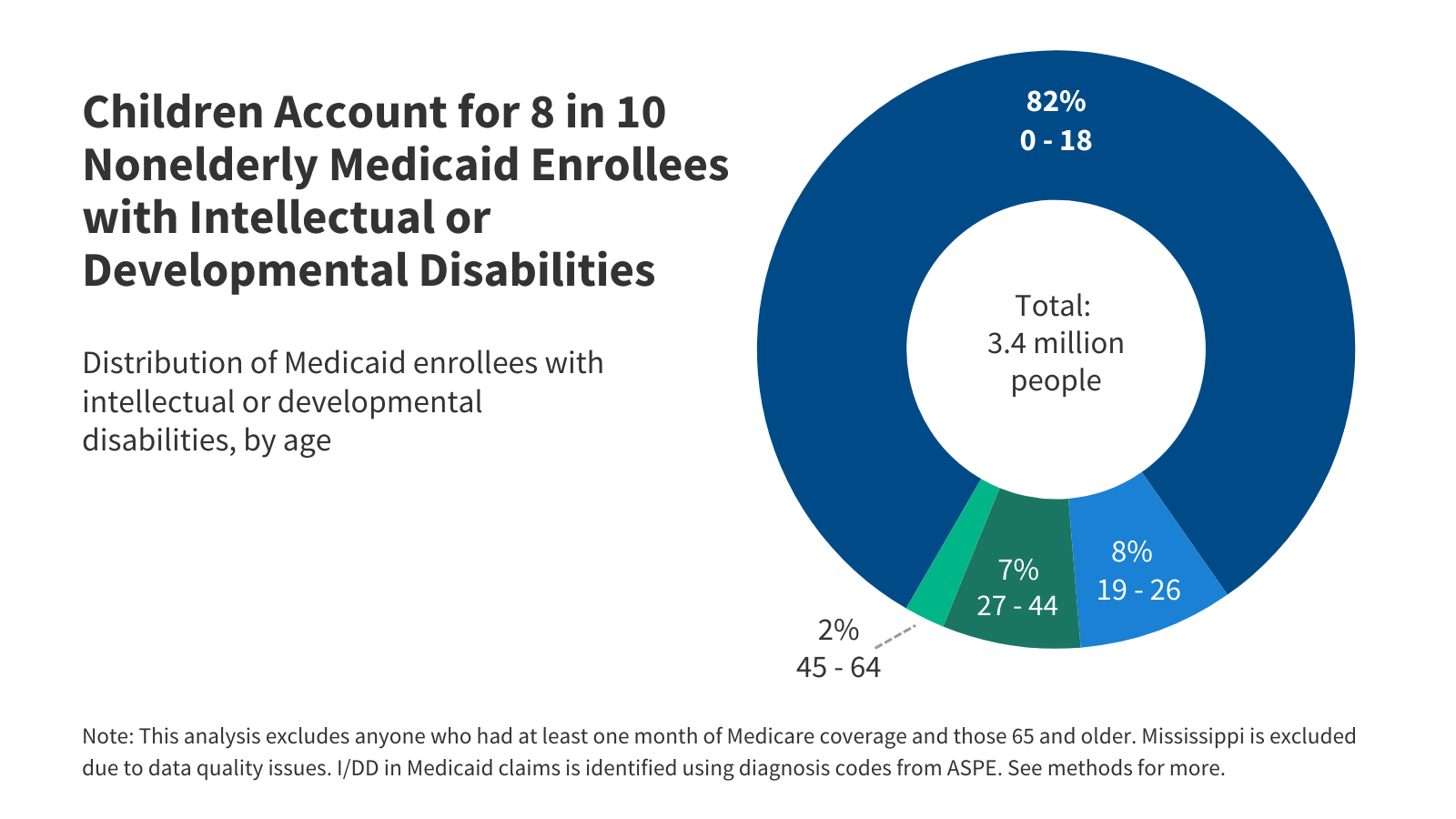
    Among the estimated 8 million people with intellectual and developmental disabilities (I/DD), over three million have Medicaid coverage.
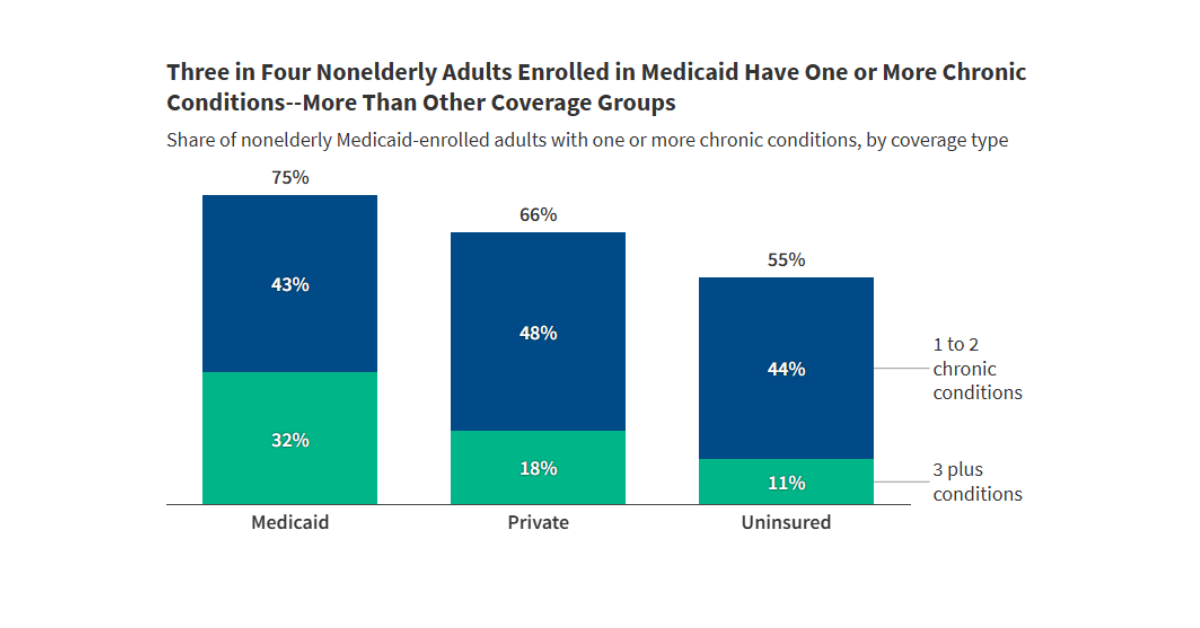
  • Adults with Chronic Conditions

    Among working age adults enrolled in Medicaid, approximately three quarters have one or more chronic conditions, and nearly one-third have three or more.

Subscribe to KFF Emails

Choose which emails are best for you.
Sign up here

Filter

1,771 - 1,780 of 2,693 Results

  • Pulling It Together: Medicare, Medicaid, and The Multiplier Effect

    Perspective

    We are witnessing a battle in Washington right now about the future of health care’s two big public programs, Medicare and Medicaid. It’s a budget battle, it’s an ideological battle, it’s a partisan political battle, and while it might not always be obvious following the debate, it’s a high stakes battle for people. In 2011, over a hundred million low-income, disabled, and elderly beneficiaries will be served by the two programs. Many of the proposals…

  • A Primer on Dually Eligible Beneficiaries

    Event Date:
    Event

    The nine million dually eligible beneficiaries are generally poorer and sicker than other Medicare beneficiaries, tend to use more health care services, and thus account for a disproportionate share of Medicare and Medicaid spending. Because they often have complex medical and long-term care needs, and must navigate both Medicaid and Medicare benefits and financing, they present a special challenge for those seeking a more efficient and coordinated care delivery system. The panel will address such…

  • Health Coverage for the Unemployed

    Issue Brief

    This policy brief outlines the challenges facing the unemployed as they seek to remain insured after losing jobs and employer-sponsored health coverage. In May 2011, 13.9 million people in the U.S. were unemployed. Of these, 6.2 million had been unemployed for six months or more and faced limited options to remain insured. The brief examines potential sources of insurance, including through a spouse's plan, COBRA, the non-group insurance market and public programs. It also discusses…

  • Online Applications For Medicaid And/Or CHIP: An Overview of Current Capabilities And Opportunities For Improvement

    Issue Brief

    This analysis provides an overview of online applications for Medicaid and/or CHIP and examines the extent to which they incorporate features that streamline and simplify the enrollment process for individuals. Thirty-two states currently offer an online application for one or both of these programs that is accessible by the public and can be electronically submitted, although they vary in their features. A key component of the Patient Protection and Affordable Care Act is the creation…

  • Enhanced Medicaid Match Rates Expire in June 2011

    Fact Sheet

    This fact sheet discusses the role played by the enhanced federal Medicaid matching funds available to states through the American Recovery and Reinvestment Act of 2009 (ARRA), and the implications for state Medicaid programs as that extra assistance expires June 30, 2011. States used the ARRA enhanced Medicaid funding to address Medicaid funding shortfalls during the economic downturn, and to mitigate program cuts and address budget shortfalls. As national unemployment has increased in recent years…

  • Ensuring Access to Care in Medicaid Under Health Reform

    Issue Brief

    This paper examines the key issues raised in a December 2010 roundtable discussion of federal and state officials and experts convened by the Kaiser Commission on Medicaid and the Uninsured to examine important issues related to ensuring access to care in Medicaid under the Patient Protection and Affordable Care Act (ACA). The ACA expands Medicaid to reach millions of low-income uninsured Americans and, recognizing current serious access problems system-wide, takes significant steps to build capacity…

  • Affordable Care Act Provisions Relating to the Care of Dually Eligible Medicare and Medicaid Beneficiaries

    Issue Brief

    This issue brief identifies the major provisions in the Patient Protection and Affordable Care Act (ACA) that are designed to improve care and streamline service delivery for dual eligibles, the millions of low-income seniors and younger persons with disabilities who are enrolled in both the Medicaid and Medicare programs. Dual eligibles are among the sickest and poorest individuals covered by either the Medicaid or Medicare programs; they comprise only 15 percent of total Medicaid enrollment…

  • Medicaid’s Role for Dual Eligibles

    Issue Brief

    These short profiles illustrate the help that Medicaid provides to four individuals who qualify for both Medicaid and Medicare. They include a 66-year-old former nurse who suffers from a multitude of health problems; an 86-year-old stroke survivor and nursing home resident; a 64-year-old man with disabilities who lives independently; and a 42-year-old woman with numerous chronic conditions, including diabetes, a thyroid condition, effects of a stroke, and depression. There are 9 million "dual eligibles" --…

  • Most Americans Oppose Converting Medicaid to a Block Grant in Order to Reduce the Federal Deficit

    News Release

    New Poll Finds Support For Medicaid May Be Linked to Broad Ties To The Program, With Half of Americans Reporting A Personal Connection 1 in 5 Adults Has Received Medicaid Benefits Over Time, And For Most, Experiences Were Positive, Although One Third Of Them Report Having Had Problems Finding A Doctor MENLO PARK, Calif. -- Most Americans oppose the idea of converting Medicaid to block grant financing to reduce the federal deficit, and more than…

  • May Kaiser Health Tracking Poll: Views of Health Reform Law Remain Unchanged

    Perspective

    This month’s Kaiser Health Tracking Poll reveals little change in public opinion about the health reform law. Americans remain divided overall, with 42 percent having a favorable opinion of the law and 44 percent viewing it unfavorably. Three in ten continue to want to see the law expanded, while roughly one in five want it either kept as is (21%), repealed and replaced with a GOP alternative (19%), or repealed outright (19%). Americans continue to…