Medicaid

new and noteworthy

Medicaid: What to Watch in 2026

Medicaid: What to Watch in 2026

In this brief, KFF explores how state fiscal pressures are likely to converge with the implementation of the 2025 reconciliation law to affect Medicaid coverage, financing, and access to care over the next year, especially leading up to the midterm elections.

Medicaid Watch

Featuring policy research, polling and news about how Medicaid is changing, and the impact of those changes due to the tax and spending cuts law

Medicaid and work

Tracking Medicaid Work Requirements:
Data and Policies

To implement Medicaid work requirements, states will need to make important policy and operational decisions, implement needed system upgrades or changes, develop new outreach and education strategies, and hire and train staff, all within a relatively short timeframe. The information tracked here can serve as a resource to understand Medicaid work requirements and state options, gauge readiness, and track implementation of the requirements.

understanding medicaid

5 Facts: Provider Taxes

All states except Alaska cover some state Medicaid costs with taxes on health care providers. This brief uses data from KFF’s 2024-2025 survey of Medicaid directors to describe current practices and the federal rules governing them.

5 Facts: Medicaid and Hospitals

Absorbing reductions in Medicaid spending could be challenging for hospitals, particularly for those that are financially vulnerable. This brief provides data on the reach of Medicaid across hospitals, patients, and charity care.

5 Facts: Medicaid and Immigrants

Confusion persists about immigrants’ eligibility for federal programs. This brief helps readers understand how current Medicaid policy affects immigrants as well as the potential impacts of policy changes under the Trump administration.

5 Facts: Medicaid and Rural Areas

Approximately 66 million people live in rural areas – about 20% of the U.S. population. Nearly 1 in 4 of them have Medicaid, a higher share than in urban areas (24% vs 21%).

5 Facts: Nursing Facilities

The substantial Medicaid savings in the reconciliation bill that has been passed by the House could have major implications for nearly 15,000 federally certified nursing facilities and the 1.2 million people living in them.

2025 Medicaid Home Care survey

Payment Rates Ahead of 2025 Reconciliation Law

This issue brief describes Medicaid payment rates for home care and other workforce supports that are in place in 2025, before the majority of the 2025 reconciliation law provisions start taking effect.

Home Care Support for Family Caregivers in 2025
number of responding states, including DC, that allow payments for family caregivers by type of home care program and type of caregiver.

This issue brief describes the availability of self-directed services and supports for family caregivers in Medicaid home care in 2025, before most provisions in the reconciliation law take effect.

States’ Management of Home Care Spending

This issue brief describes the mechanisms states are currently using to limit Medicaid spending on home care and their plans for adopting new mechanisms in state fiscal year (FY) 2026.

Waiting Lists for Medicaid Home Care, 2016 to 2025
A Look at Waiting Lists for Medicaid Home- and Community-Based Services from 2016 to 2025

This data note provides new information about waiting lists in Medicaid home care before many of the provisions in the 2025 reconciliation law go into effect.

Eligibility and coverage
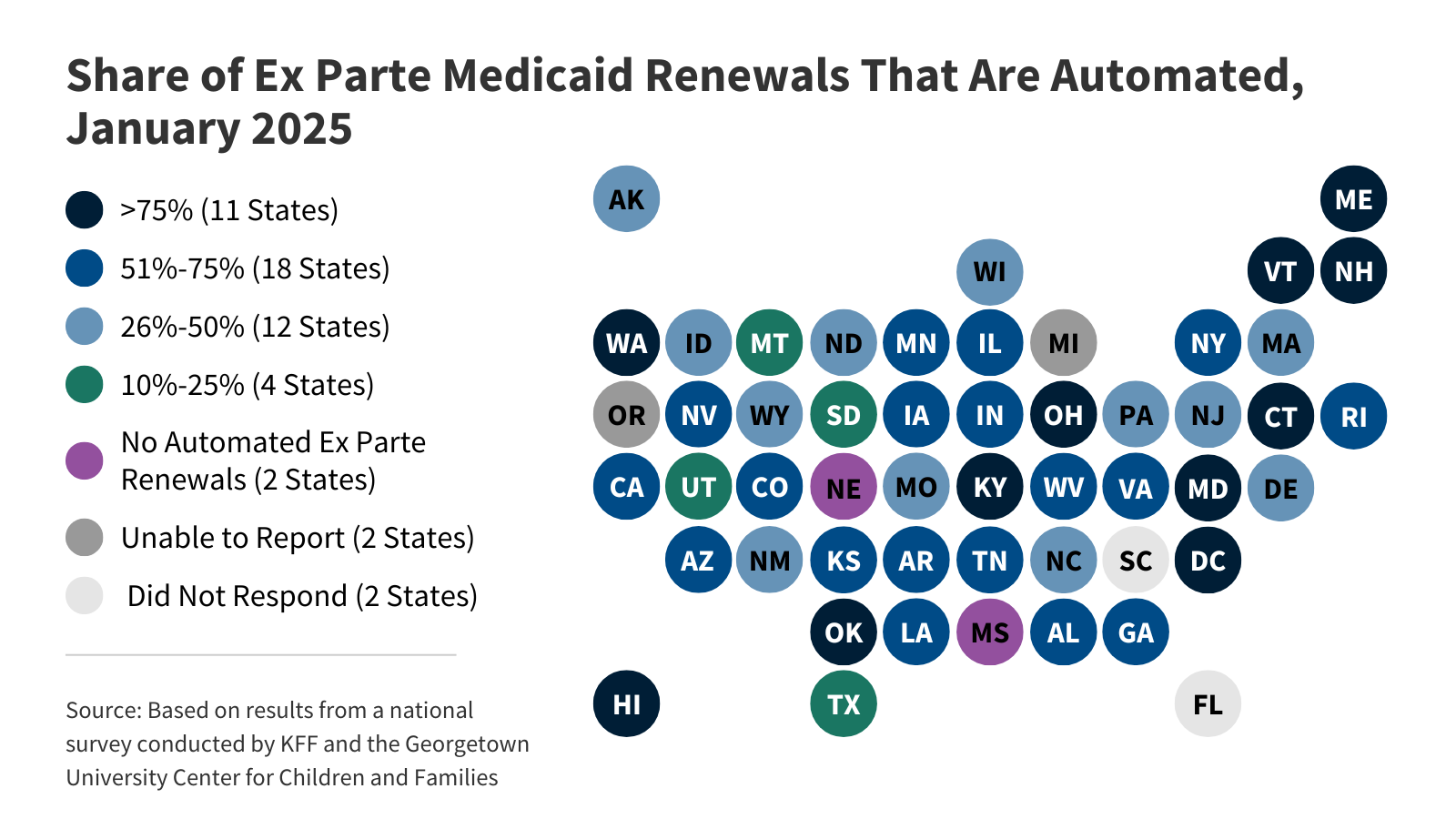
  • Eligibility, Enrollment, and Renewal Policies

    KFF's survey findings capture state actions that seek to improve the accuracy and efficiency of Medicaid and CHIP enrollment and renewal processes, as of January 2025.
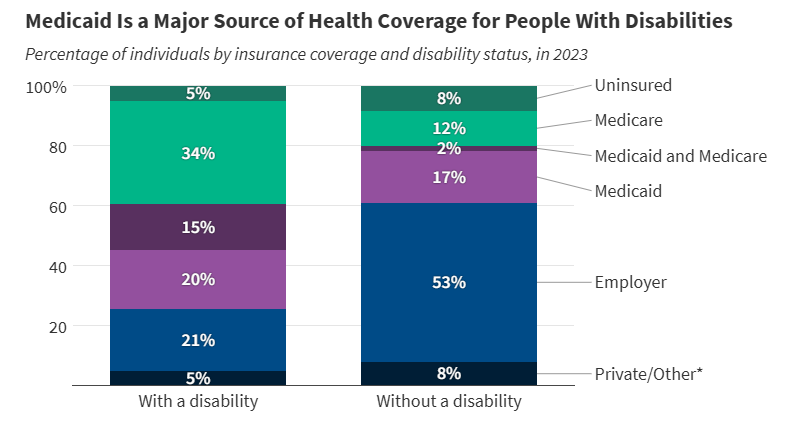
  • Seniors and People with Disabilities

    More than 1 in 3 people with disabilities (15 million) have Medicaid (35%). In comparison, only 19% of people without disabilities have Medicaid.
  • Children with Special Needs

    Amid debates about proposed cuts to federal Medicaid spending, this brief analyzes key characteristics of children with special health care needs and explores how Medicaid provides them with coverage.
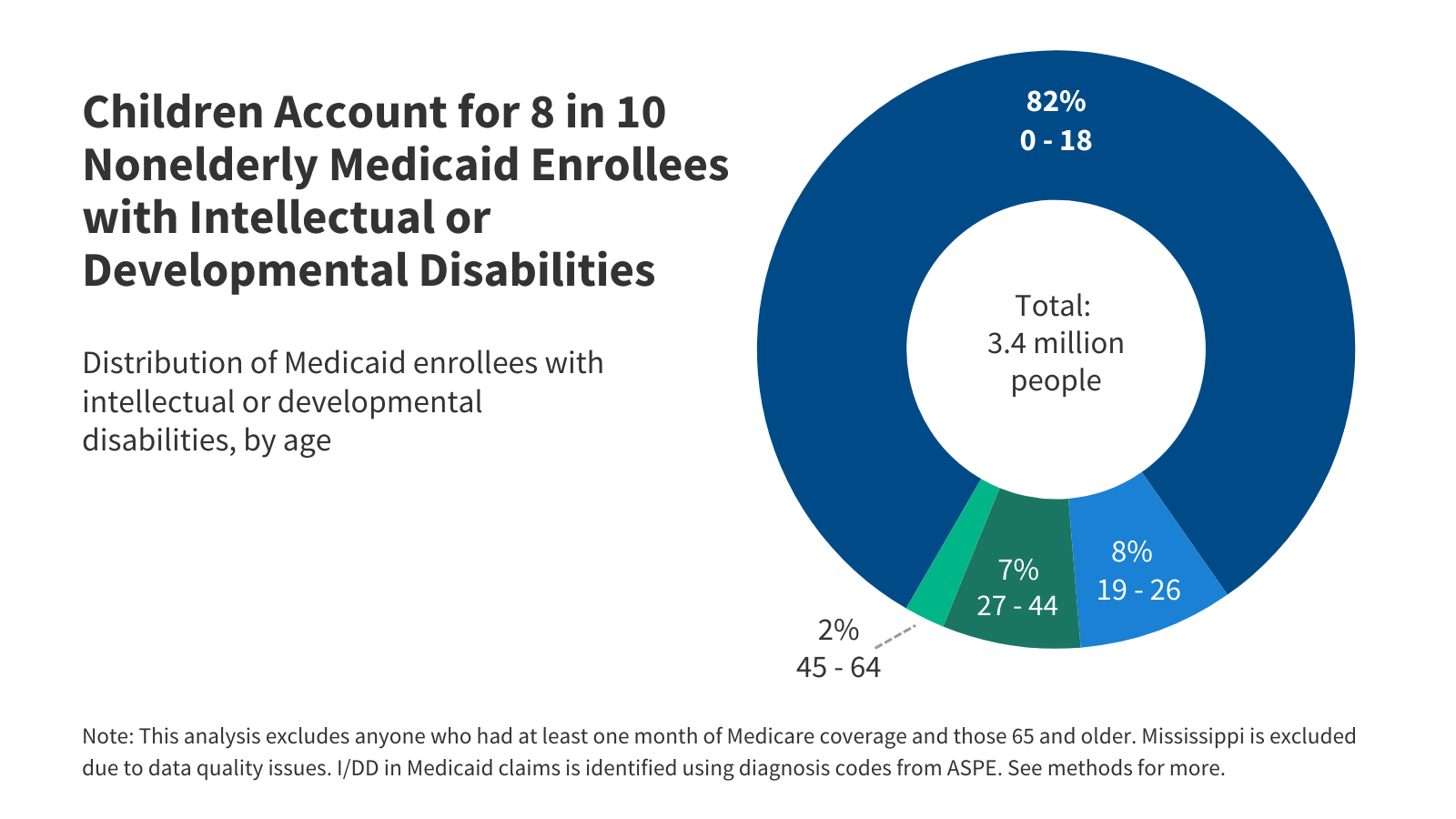
  • People With Intellectual and Developmental Disabilities

    Among the estimated 8 million people with intellectual and developmental disabilities (I/DD), over three million have Medicaid coverage.
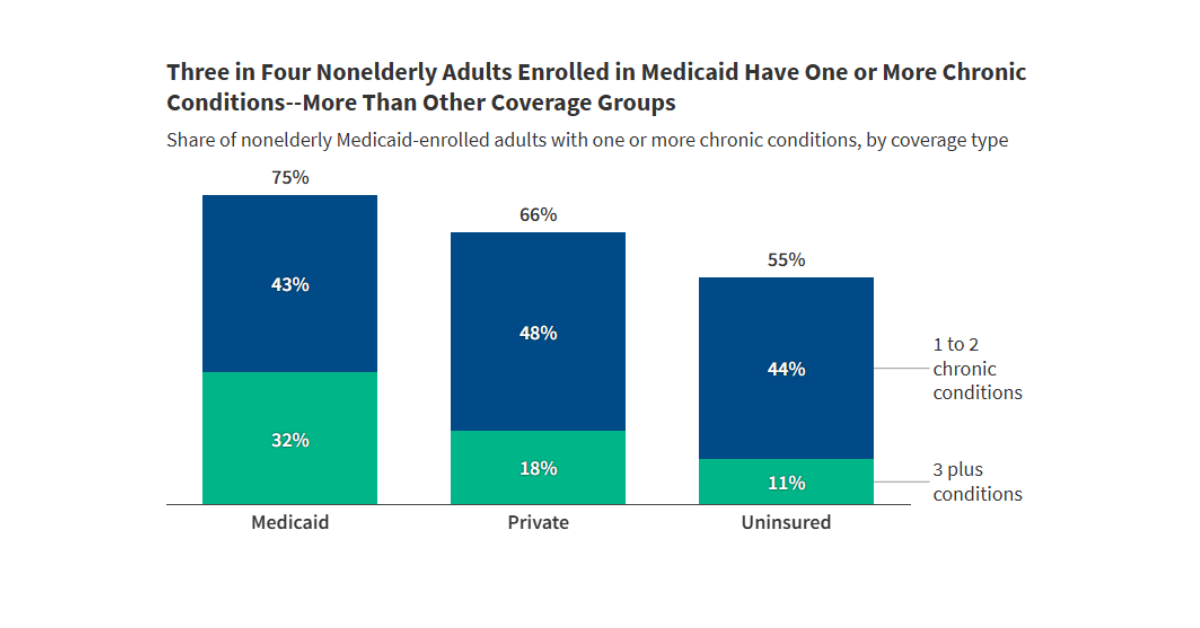
  • Adults with Chronic Conditions

    Among working age adults enrolled in Medicaid, approximately three quarters have one or more chronic conditions, and nearly one-third have three or more.

Subscribe to KFF Emails

Choose which emails are best for you.
Sign up here
Filter

151 - 160 of 2,685 Results

  • The Biggest Rollback in Federal Support for Health Coverage Ever

    Quick Take

    Republicans are not talking about repealing and replacing the ACA anymore, and the budget reconciliation bill doesn't do that, at least not directly. However, the bill would restrict health insurance for many people who have been helped by the ACA, and it would be the biggest rollback in federal support for health coverage ever.

  • KFF Health Tracking Poll: The Public’s Views of Funding Reductions to Medicaid

    Feature

    As Congress works to pass the "One Big Beautiful Bill Act," which includes significant changes to Medicaid and the ACA, the latest KFF Health Tracking Poll examines the views of groups that could be most directly impacted by the impending legislation. The poll finds most of the public is worried about the consequences of federal funding reductions to Medicaid, including rural residents, those with lower incomes, and across partisans.

  • Make American Health Care Affordable Again

    Perspective

    In this JAMA Health Forum column, Larry Levitt highlights how the Make America Healthy Again agenda aimed at chronic disease does little to address the affordability of health care and that efforts to lower federal spending on health care may worsen the problem, raising out-of-pocket costs for many people with Medicaid and Affordable Care Act…

  • Allocating CBO’s Estimates of Federal Medicaid Spending Reductions and Enrollment Loss Across the States: House Reconciliation Bill

    Issue Brief

    The Congressional Budget Office’s (CBO) latest estimate shows that the One Big Beautiful Bill would reduce federal Medicaid spending by $793 and that the Medicaid provisions would increase the number of uninsured people by 7.8 million. Previous CBO estimates show that 10.3 million fewer people would be enrolled in Medicaid in 2034. Building on prior KFF analysis, this analysis allocates these estimated federal spending reductions and enrollment losses across the states.

  • Understanding the Intersection of Medicaid and Work: An Update

    Issue Brief

    Amid renewed interest in Medicaid work requirements as part of a broader legislative package designed to significantly reduce federal Medicaid spending, KFF has updated its analysis of the work status and demographic characteristics of Medicaid enrollees with the latest data.

    Data show that, in 2023, 92% of Medicaid adults were either working full or part-time (64%), or were not working due to barriers to work such as caregiving responsibilities, illness or disability, or school attendance -- reasons that counted as qualifying exemptions from the work requirements under previous policies.

  • 5 Key Facts About Medicaid and Pregnancy

    Issue Brief

    This brief examines Medicaid’s pregnancy and postpartum coverage and its support for strengthening and improving maternal health outcomes.

  • 5 Key Facts About Nursing Facilities and Medicaid

    Issue Brief

    The substantial Medicaid savings in the reconciliation bill that has been passed by the House could have major implications for nearly 15,000 federally certified nursing facilities and the 1.2 million people living in them. Nursing facilities provide medical and personal care services for older adults and people with disabilities, and Medicaid covered 44% of long-term institutional care costs in 2023.

  • Utilization of Health Care Services by Medicaid Expansion Status

    Issue Brief

    Some critics of Medicaid expansion have argued that expansion diverts resources away from other groups of Medicaid enrollees, including people with disabilities and children, and that expansion enrollees are “able-bodied” implying they have minimal health care needs. However, data show that expansion states spend more per enrollee overall and on each eligibility group than non-expansion states and that nearly half of expansion enrollees have a chronic condition. This data note analyzes 2021 Medicaid claims data to compare utilization of health care services among Medicaid expansion enrollees with other Medicaid enrollees in expansion states and to compare utilization of health care services among adult Medicaid enrollees living in expansion and non-expansion states.