Medicaid

new and noteworthy

Medicaid: What to Watch in 2026

Medicaid: What to Watch in 2026

In this brief, KFF explores how state fiscal pressures are likely to converge with the implementation of the 2025 reconciliation law to affect Medicaid coverage, financing, and access to care over the next year, especially leading up to the midterm elections.

Medicaid Watch

Featuring policy research, polling and news about how Medicaid is changing, and the impact of those changes due to the tax and spending cuts law

Medicaid and work

Tracking Medicaid Work Requirements:
Data and Policies

To implement Medicaid work requirements, states will need to make important policy and operational decisions, implement needed system upgrades or changes, develop new outreach and education strategies, and hire and train staff, all within a relatively short timeframe. The information tracked here can serve as a resource to understand Medicaid work requirements and state options, gauge readiness, and track implementation of the requirements.

understanding medicaid

5 Facts: Provider Taxes

All states except Alaska cover some state Medicaid costs with taxes on health care providers. This brief uses data from KFF’s 2024-2025 survey of Medicaid directors to describe current practices and the federal rules governing them.

5 Facts: Medicaid and Hospitals

Absorbing reductions in Medicaid spending could be challenging for hospitals, particularly for those that are financially vulnerable. This brief provides data on the reach of Medicaid across hospitals, patients, and charity care.

5 Facts: Medicaid and Immigrants

Confusion persists about immigrants’ eligibility for federal programs. This brief helps readers understand how current Medicaid policy affects immigrants as well as the potential impacts of policy changes under the Trump administration.

5 Facts: Medicaid and Rural Areas

Approximately 66 million people live in rural areas – about 20% of the U.S. population. Nearly 1 in 4 of them have Medicaid, a higher share than in urban areas (24% vs 21%).

5 Facts: Nursing Facilities

The substantial Medicaid savings in the reconciliation bill that has been passed by the House could have major implications for nearly 15,000 federally certified nursing facilities and the 1.2 million people living in them.

2025 Medicaid Home Care survey

Payment Rates Ahead of 2025 Reconciliation Law

This issue brief describes Medicaid payment rates for home care and other workforce supports that are in place in 2025, before the majority of the 2025 reconciliation law provisions start taking effect.

Home Care Support for Family Caregivers in 2025
number of responding states, including DC, that allow payments for family caregivers by type of home care program and type of caregiver.

This issue brief describes the availability of self-directed services and supports for family caregivers in Medicaid home care in 2025, before most provisions in the reconciliation law take effect.

States’ Management of Home Care Spending

This issue brief describes the mechanisms states are currently using to limit Medicaid spending on home care and their plans for adopting new mechanisms in state fiscal year (FY) 2026.

Waiting Lists for Medicaid Home Care, 2016 to 2025
A Look at Waiting Lists for Medicaid Home- and Community-Based Services from 2016 to 2025

This data note provides new information about waiting lists in Medicaid home care before many of the provisions in the 2025 reconciliation law go into effect.

Eligibility and coverage
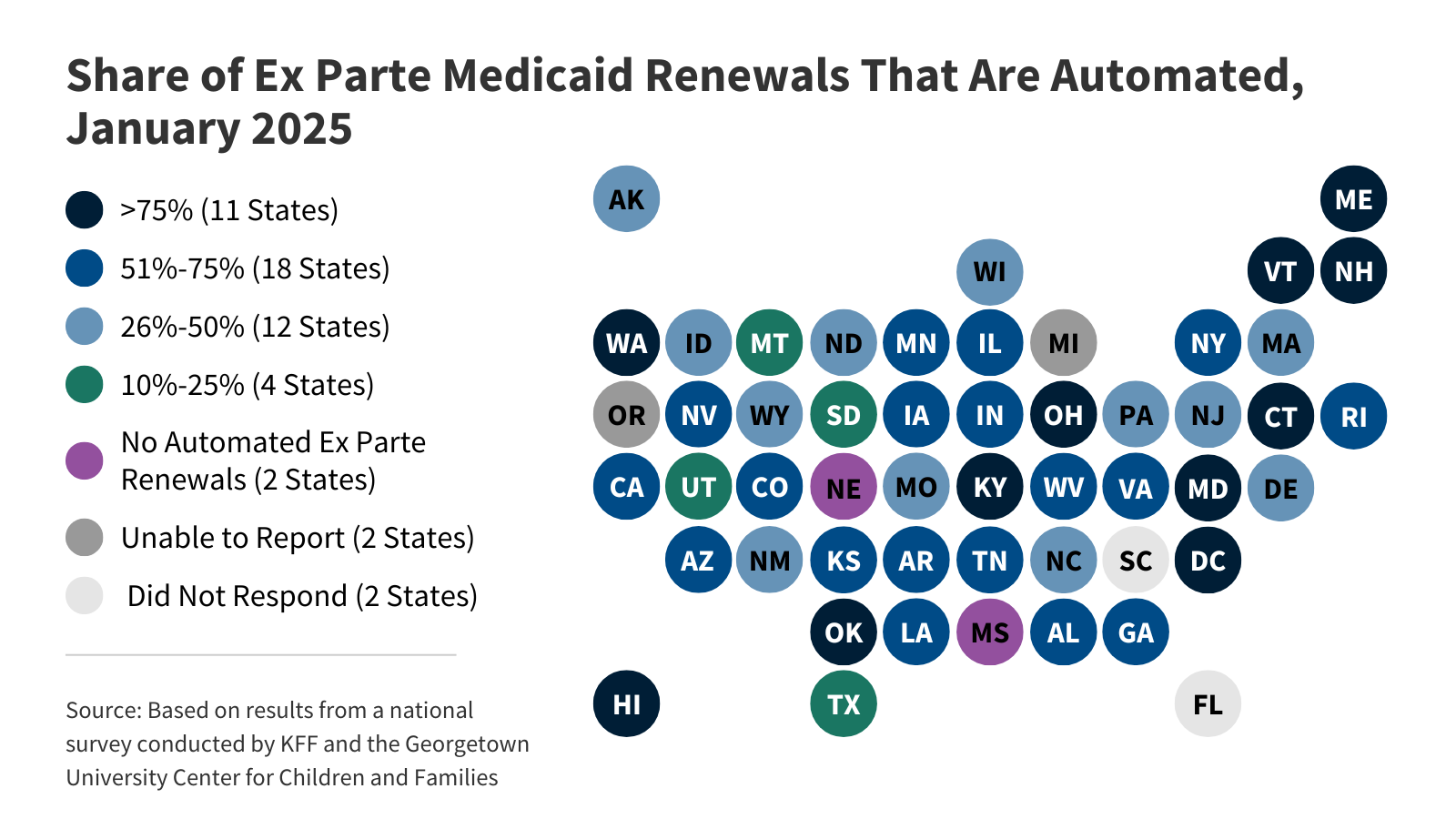
  • Eligibility, Enrollment, and Renewal Policies

    KFF's survey findings capture state actions that seek to improve the accuracy and efficiency of Medicaid and CHIP enrollment and renewal processes, as of January 2025.
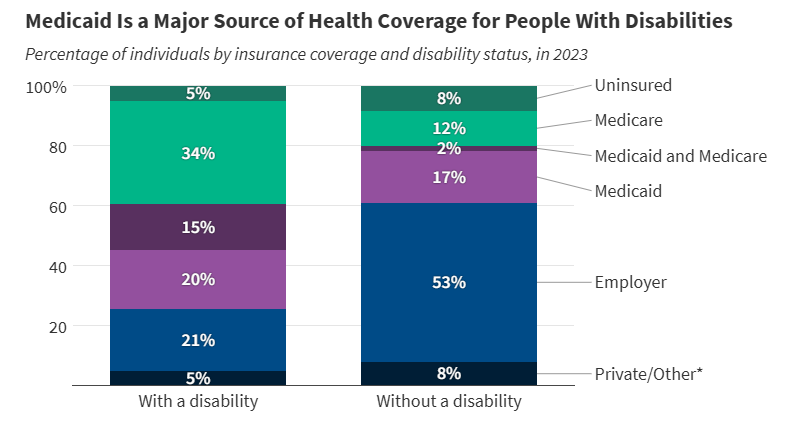
  • Seniors and People with Disabilities

    More than 1 in 3 people with disabilities (15 million) have Medicaid (35%). In comparison, only 19% of people without disabilities have Medicaid.
  • Children with Special Needs

    Amid debates about proposed cuts to federal Medicaid spending, this brief analyzes key characteristics of children with special health care needs and explores how Medicaid provides them with coverage.
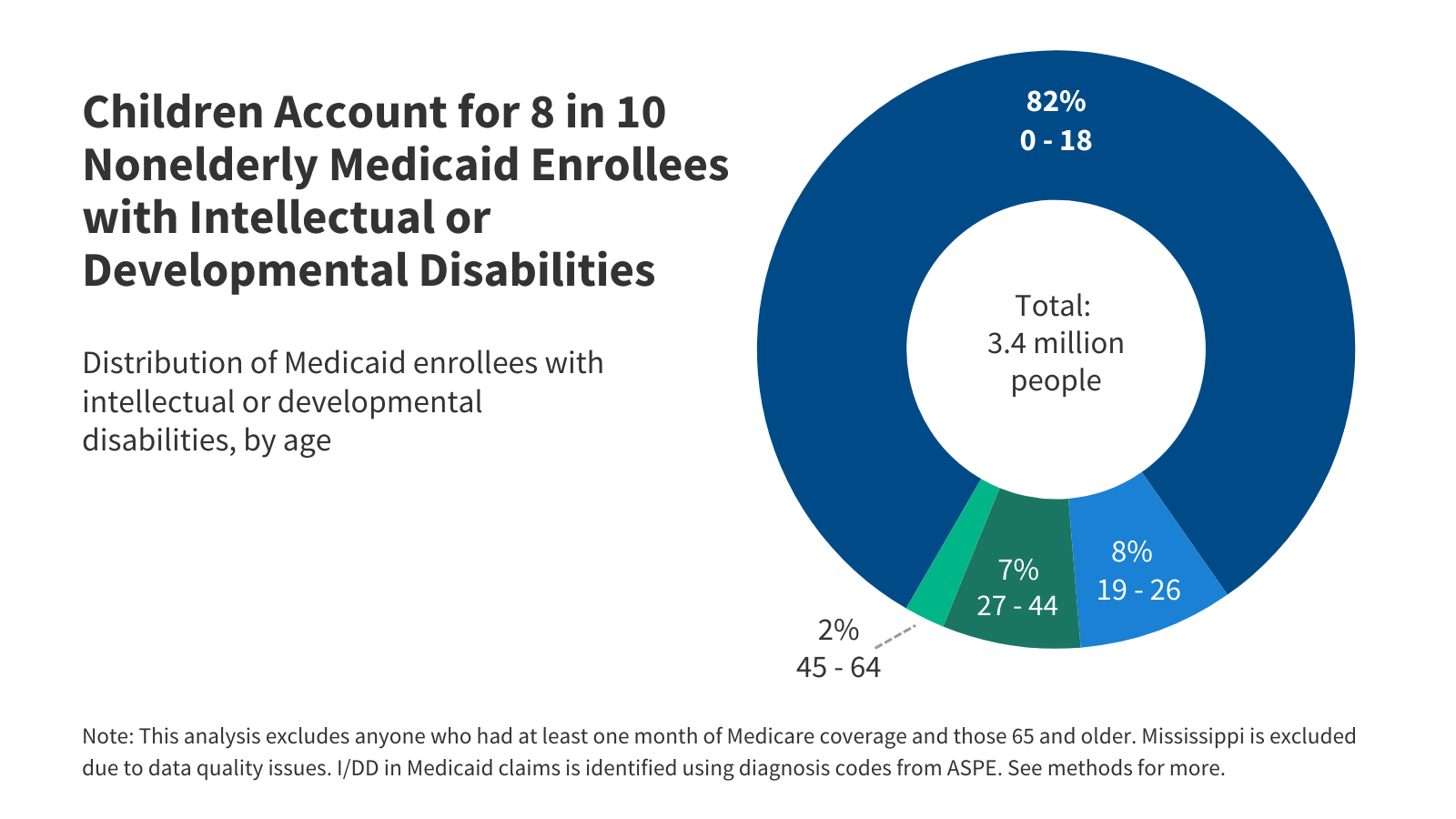
  • People With Intellectual and Developmental Disabilities

    Among the estimated 8 million people with intellectual and developmental disabilities (I/DD), over three million have Medicaid coverage.
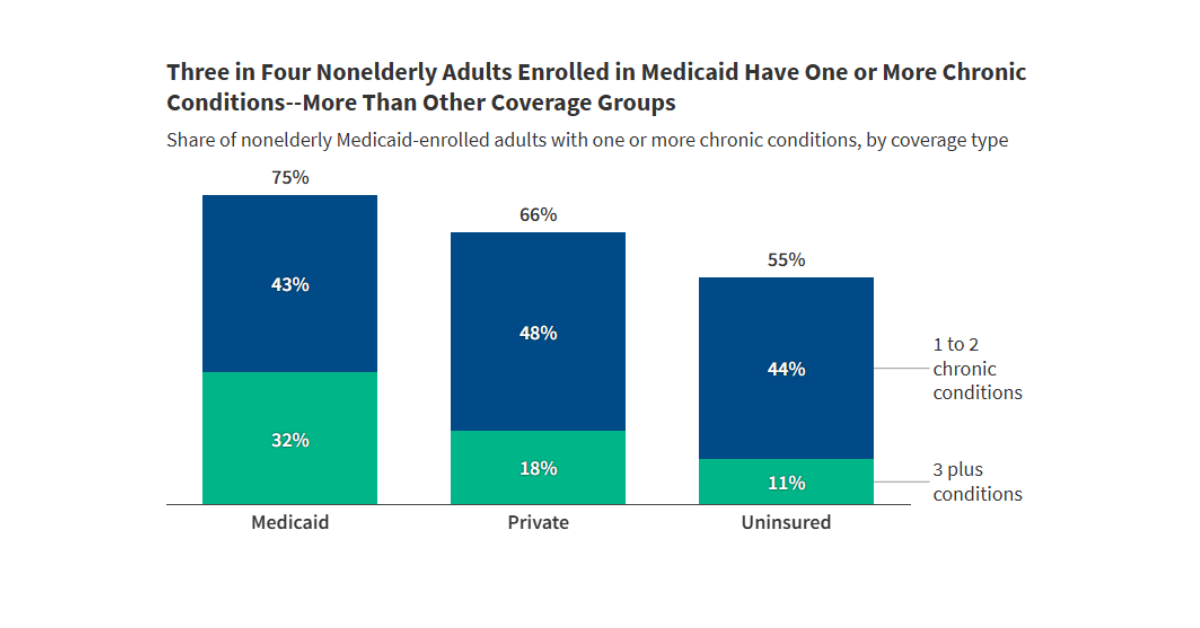
  • Adults with Chronic Conditions

    Among working age adults enrolled in Medicaid, approximately three quarters have one or more chronic conditions, and nearly one-third have three or more.

Subscribe to KFF Emails

Choose which emails are best for you.
Sign up here
Filter

141 - 150 of 2,685 Results

  • 5 Key Facts About Medicaid Coverage for People Ages 50 and Older

    Issue Brief

    On May 22, the House passed a budget reconciliation bill that includes significant changes to the Medicaid program. The Congressional Budget Office (CBO) estimated that the bill would reduce federal Medicaid spending by $793 billion and reduce the number of people covered by Medicaid in 2034 by 10.3 million. Many of the reductions in coverage will be among the 22 million Medicaid enrollees ages 50 and older.

  • Medicaid Changes in House and Senate Reconciliation Bills Would Increase Costs for 1.3 Million Low-Income Medicare Beneficiaries

    Issue Brief

    On May 22, the House passed a reconciliation bill, the One Big Beautiful Bill Act, which would partially pay to extend expiring tax cuts by cutting Medicaid. The Congressional Budget Office (CBO) estimates that the bill would reduce federal Medicaid spending by $793 billion over ten years and 10.3 million fewer people would be enrolled in Medicaid in 2034, including 1.3 million people with Medicare, otherwise known as “dual-eligible individuals”.

  • KFF Health Tracking Poll: Views of the One Big Beautiful Bill

    Feature

    This poll finds two-thirds of the public view the "One Big Beautiful Bill" legislation unfavorably, and its favorability erodes further when people hear about its potential health impacts. As Congress debates changes to Medicaid and the ACA as part of the bill, each program's popularity is at a record high.

  • Poll: Public Views “Big Beautiful Bill” Unfavorably by Nearly a 2-1 Margin; Democrats, Independents and Non-MAGA Republicans Oppose It, While MAGA Supporters Favor It

    News Release

    Medicaid Work Requirements Are Generally Popular, But Arguments Can Shift Views Nearly two-thirds (64%) of the public holds unfavorable views of the “One Big Beautiful Bill” passed last month by the House, nearly twice the share who view the bill favorably (35%), a new KFF Health Tracking Poll finds.

  • 7 Charts About Public Opinion on Medicaid

    Feature

    This data note provides an overview of recent KFF polling on the public’s views of and connections to Medicaid, the federal-state government health insurance for certain low-income adults and children and long-term care program for adults 65 and older and younger adults with disabilities.

  • What are the Implications of the 2025 Budget Reconciliation Bill for Hospitals?

    Issue Brief

    On May 22, 2025, the U.S. House of Representatives passed a budget reconciliation bill that includes significant reductions in federal Medicaid spending to help offset the cost of tax cuts, along with changes to the Affordable Care Act (ACA), immigration reforms and other provisions. This issue brief discusses the potential implications of the bill for hospitals and explains how some hospitals (such as rural hospitals as well as urban hospitals that serve a large share of Medicaid patients) may be less well positioned than others (such as hospitals that serve a large share of commercial patients) to absorb revenue losses given their current financial status.