Medicaid

Work Requirements

Challenges with Implementing Work Requirements

Many states are anticipating a variety of implementation challenges, including the need for complex system changes, a compressed implementation timeline, and limited staff capacity.

What is the Medicaid Hardship Exception?

The number of Medicaid expansion enrollees who ultimately qualify for the high unemployment hardship exception will depend on how the exception is implemented and how unemployment rates changes.

Tracking Implementation of the 2025 Reconciliation Law: Medicaid Work Requirements

KFF’s interactive tracks key data and policies that will affect how states implement Medicaid work requirements, which are required under the 2025 budget reconciliation law starting in January 2027. The tracker includes state-level data on Medicaid enrollment and renewal outcomes as well as current state enrollment and renewal policies.

Medicaid Budget Survey

Medicaid Home Care

Using data from the 23rd KFF survey of officials administering Medicaid home care programs, this issue brief describes the mechanisms states are currently using to limit Medicaid spending on home care and their plans for adopting new mechanisms in state fiscal year (FY) 2026.

A Look at Waiting Lists for Medicaid Home- and Community-Based Services from 2016 to 2025

This data note provides new information about waiting lists in Medicaid home care before many of the provisions in the 2025 reconciliation law go into effect. The data come from KFF’s 23rd survey on Medicaid home care programs in all 50 states and DC.

KFF regularly surveys states about their Medicaid home- and community-based services (HCBS) programs and their eligibility policies for people who are eligible for Medicaid on the basis of having a disability or being 65 and older.

states-are-most-likely-to-offer-home-care-to-eligible-people-with-intellectual-developmental-disabilities_FI_v2_7f7f71.png

This issue brief provides an overview of what Medicaid home care (also known as “home- and community-based services” or HCBS) is, who is covered, and what services were available in 2024.

Eligibility and coverage
  • Eligibility, Enrollment, and Renewal Policies

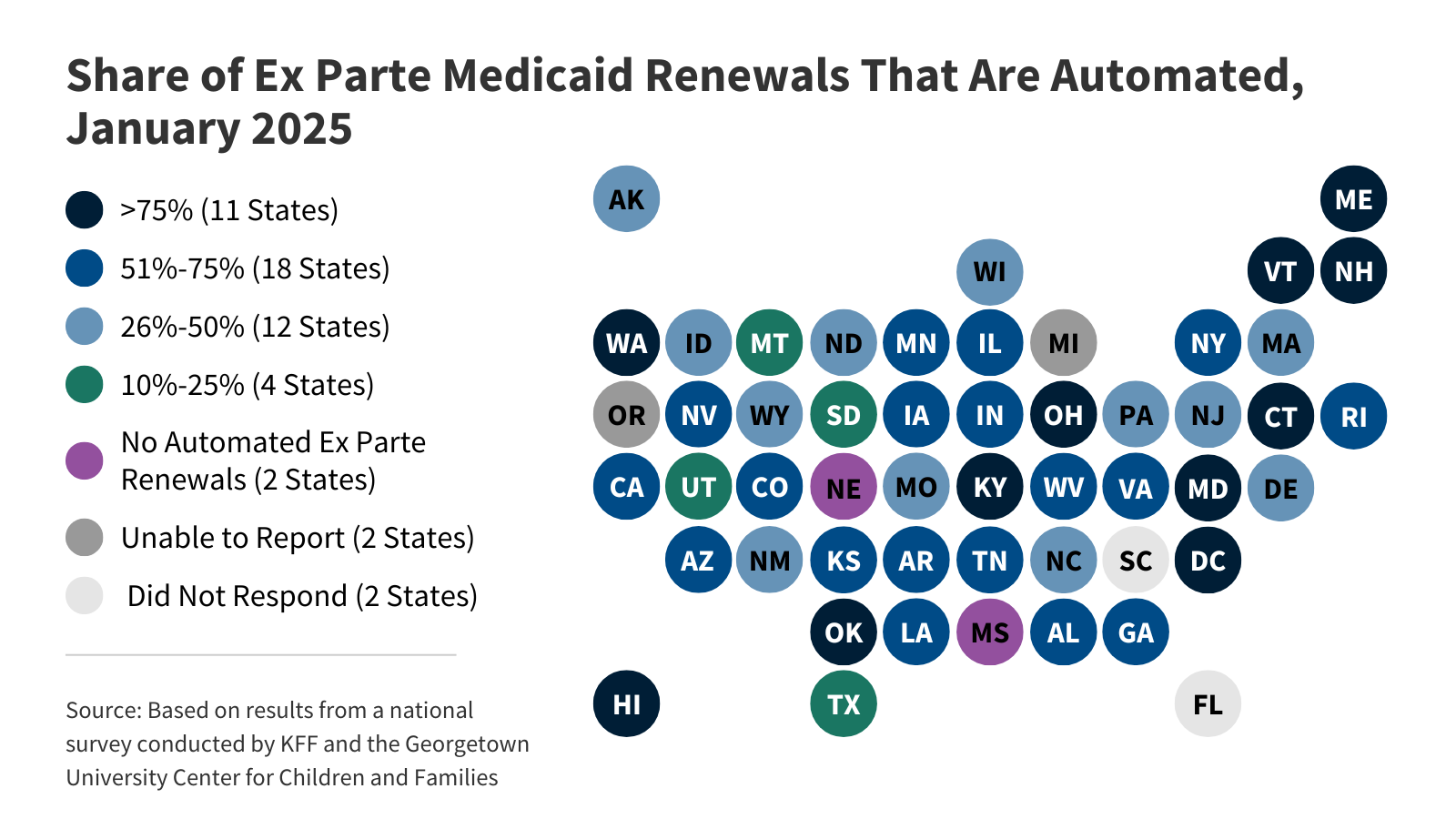
    KFF's survey findings capture state actions that seek to improve the accuracy and efficiency of Medicaid and CHIP enrollment and renewal processes, as of January 2025.
  • Seniors and People with Disabilities

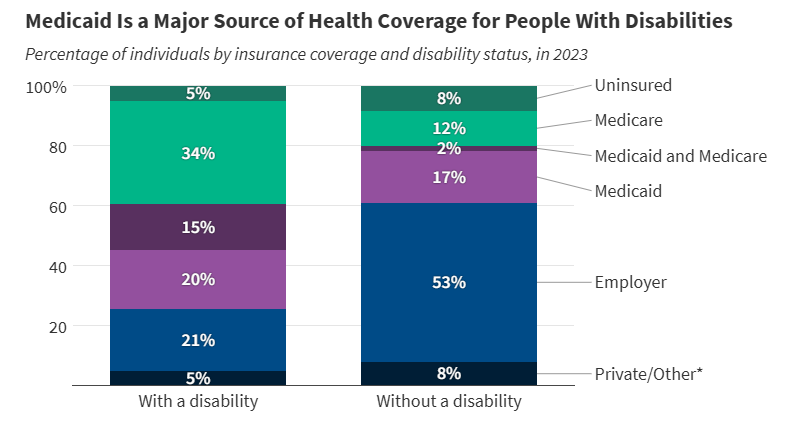
    More than 1 in 3 people with disabilities (15 million) have Medicaid (35%). In comparison, only 19% of people without disabilities have Medicaid.
  • Children with Special Needs

    Amid debates about proposed cuts to federal Medicaid spending, this brief analyzes key characteristics of children with special health care needs and explores how Medicaid provides them with coverage.
  • People With Intellectual and Developmental Disabilities

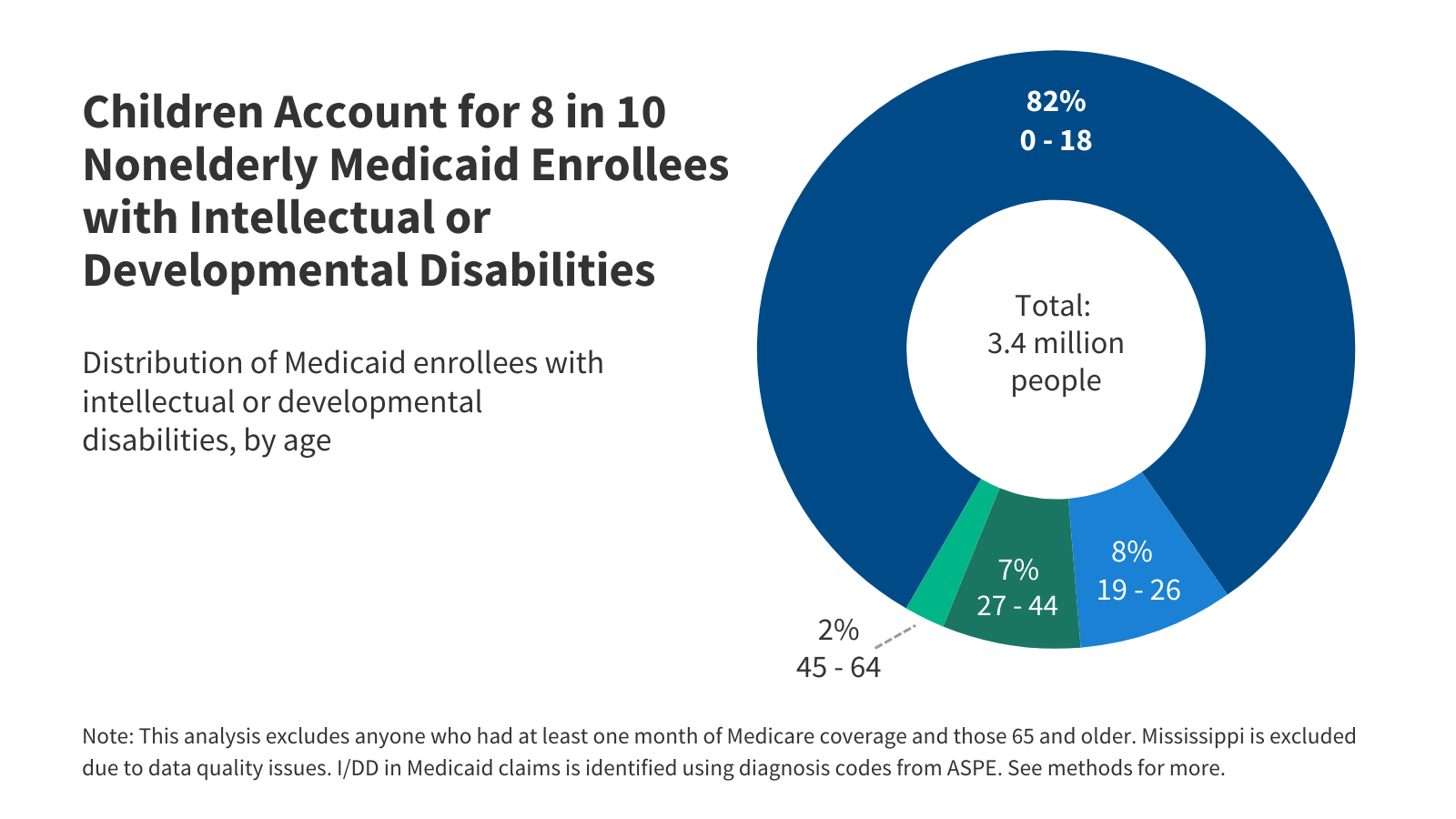
    Among the estimated 8 million people with intellectual and developmental disabilities (I/DD), over three million have Medicaid coverage.
  • Adults with Chronic Conditions

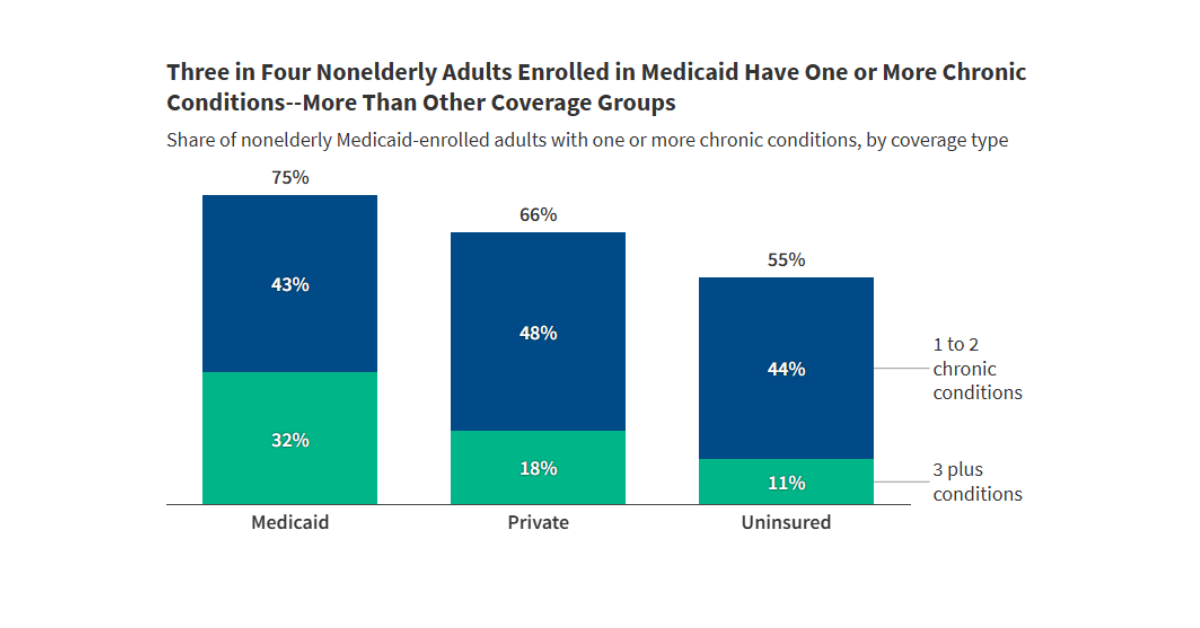
    Among working age adults enrolled in Medicaid, approximately three quarters have one or more chronic conditions, and nearly one-third have three or more.

The Essentials
  • 5 Facts: Immigrants and Medicaid

    This brief provides five key facts on Medicaid and immigrants as context for understanding the potential impacts of policy changes under the Trump administration.
  • 5 Facts: Medicaid and Hospitals

    This brief explains the role of Medicaid for hospitals, including how much spending on hospital care comes from Medicaid, the share of births covered by the program, and how Medicaid expansion has impacted hospital finances.
  • Medicaid Financing: The Basics

    Medicaid is a major source of financing for states to provide health coverage and long-term services and supports for low-income residents. This brief examines key questions about Medicaid financing and how it works.
  • 5 Facts: Medicaid’s Share of National Health Spending

    This brief explores how Medicaid spending contributes to national health spending and how different service areas contribute to Medicaid costs.
  • 5 Facts: Medicaid and Nursing Facilities

    The substantial Medicaid savings in the reconciliation bill could have major implications for nearly 15,000 federally certified nursing facilities and the 1.2 million people living in them.

Subscribe to KFF Emails

Choose which emails are best for you.
Sign up here

Filter

2,251 - 2,260 of 2,671 Results

  • Medicaid and Family Planning: Background and Implications of the ACA

    Issue Brief

    This brief reviews the role of Medicaid in financing and enabling access to family planning services for low-income women; discusses how states have expanded access to these services with Medicaid; and highlights future programmatic challenges in the context of the health care delivery and coverage reforms resulting from the Affordable Care Act (ACA).

  • Medicare and Medicaid at 50

    Video

    With Medicare and Medicaid turning 50 this year, this updated video provides a brief history of both programs, including: an examination of the health care, social and political landscape that gave rise to them, the significant ways each program has evolved over five decades, and the important roles they play in the U.S. health care system. The video includes archival footage, as well as commentary and perspective from policymakers, government officials and experts.

  • Key Themes From Delivery System Reform Incentive Payment (DSRIP) Waivers in 4 States

    Issue Brief

    Building on an earlier brief that provided an overview of the components of DSRIP waivers, this analysis relied upon interviews with stakeholders to identify emerging trends and themes from DSRIP waivers in four states – California, Massachusetts, New York and Texas. It highlights that DSRIP waivers are spurring major change in relationships among providers; allowing providers to launch new initiatives aimed at improving care and reducing costs; and fostering a stronger focus on the social service needs of Medicaid beneficiaries. At the same time, the rapid pace of implementation is straining the ability of stakeholders to keep pace, including consumer advocates who are hard-pressed to track and respond to the DSRIP-driven changes that are fundamentally re-shaping the way that care is delivered to Medicaid beneficiaries.

  • Kaiser–Commonwealth Fund Survey: Most Primary Care Providers Report Seeing More Medicaid or Newly Insured Patients Since January 2014, But Little Change in Ability to Provide Quality Care

    News Release

    As with the Public, Physicians' Views on Affordable Care Act Split Along Party Lines The first in a series of reports on a comprehensive new survey finds most primary care doctors, nurse practitioners, and physician assistants report an increase in Medicaid or newly insured patients since the Affordable Care Act's (ACA) major coverage provisions took…

  • Health Insurance Explained: The YouToons Have it Covered

    Video

    In this five-minute animated video, the YouToons help consumers understand their health insurance through fun, easy-to-understand explanations and scenarios. This cartoon serves as a tutorial for consumers and organizations. The YouToons previously appeared in the 2010 animated movie, "Health Reform Hits Main Street" and the 2013, "The YouToons Get Ready for Obamacare: Health Insurance Changes Coming Your Way Under the Affordable Care Act."

  • State Variations in the Role of the Reproductive Health Safety Net for Contraceptive Care Among Medicaid Enrollees

    Issue Brief

    This KFF analysis uses 2023 T-MSIS Research Identifiable Files to look at where reproductive-age female Medicaid enrollees received their last contraceptive visit by state. Overall, more than four in 10 (43%) female Medicaid enrollees received their last contraceptive visit of 2023 at a safety net provider, which includes Planned Parenthood clinics, community health centers, state and local health departments, and Indian health services, but there is wide variation by state.