Health Information and Trust

The monitor

KFF Poll Finds That Most Adults Lack Confidence in Key Health Agencies to Act Independently — The Monitor

KFF’s latest Health Tracking Poll finds that confidence in the independence of key government health agencies overseeing food and drug safety and public health is low among the public and across partisans. Most of the public also share a distrust of agriculture, food, and pharmaceutical companies to act in the public’s best interest, compared with doctors and health care providers who are much more trusted among the public.

Polling

Dashboard: Polling on Health Information and Trust

Drawing on KFF’s poll findings, this interactive dashboard tracks the public’s trusted sources for health information, attitudes toward vaccines, and use of news, social media, and AI for health-related information.

Subscribe to KFF Emails

Choose which emails are best for you.
Sign up here

Filter

71 - 80 of 133 Results

  • Race Is a Social Category, Not a Biological One

    Quick Insights

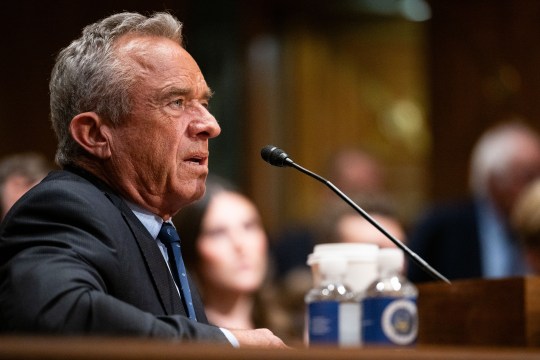
    Sen. Angela Alsobrooks questioned [Kennedy] about earlier statements he has made suggesting that Black people should not adhere to the same vaccine schedule as White people because “their immune system is better than ours.” … Race is a poor proxy for genetic ancestry and large genetic studies have demonstrated more variation within defined racial groups (intra-racially) than there are between different racial groups (inter-racially).

  • Skepticism About Vaccines and Response to Bird Flu — The Monitor

    Feature

    This volume shares findings from the latest KFF Tracking Poll on Health Information and Trust, along with updates from Robert Kennedy Jr’s senate hearings. It also examines distrust in public health messaging about bird flu, motivations for sharing information online, and how fraudulent research can sometimes inform AI chatbot models.

  • KFF Tracking Poll on Health Information and Trust: January 2025

    Feature

    As Senate hearings begin for President Trump’s health nominees, including Robert F. Kennedy Jr., the latest KFF Tracking Poll on Health Information and Trust shows a decline in public trust for government health agencies like the CDC, FDA, and local public health officials. The poll reveals growing skepticism about vaccines and school vaccine requirements, especially among Republicans and parents, while misinformation about vaccine safety persists. Despite low concern about the H5N1 bird flu, the U.S.…

  • Poll: Trust in Public Health Agencies and Vaccines Falls Amid Republican Skepticism

    News Release

    As President Trump begins his second term, the public’s trust in health information from key health agencies has fallen over the past 18 months, continuing a decline that began during the COVID-19 pandemic, finds the new KFF Tracking Poll on Health Information and Trust.  Just over half (53%) of the public now says they trust the Food and Drug Administration (FDA) to make the right recommendations on health issues at least “a fair amount,” down…

  • A Few Thoughts After Twenty-Five Years Half In and Half Out of Journalism

    From Drew Altman

    In his latest column, KFF’s President and CEO Drew Altman dissects a few key challenges facing journalism, observed over decades overseeing KFF’s health journalism and media programs, including launching KFF Health News as its Founding Publisher in 2009.  He discusses the need for more coverage of state health policy decisions, how news can play a role in countering and not spreading misinformation, and the pros and cons of journalism awards, among others.

  • Myths About Raw Milk and Vaccines — The Monitor

    Feature

    This volume explores narratives linking vaccines to autism and misleading claims about the benefits of raw milk. It examines how trust and perceived expertise influence misinformation and AI's role in spreading false mental health information.

  • The Public’s Views on Vaccines, Mandates and More

    Quick Insights

    Fewer than a quarter of voters want to decrease government involvement in ensuring childhood vaccinations, suggesting the public may not be eager for disruption in this area.