Health Costs

The MIDTERMS

Democrats Hold a Nearly 2-to-1 Advantage Over Republicans on Handling the Cost of Health Care

Poll: Cost of Health Care and Gas Top Voters’ Midterm Concerns; Democrats Hold Significant Advantage on Health Care Costs and Cost of Living 

With the 2026 midterms about a month away, health care costs remain tied with gas as voters’ top midterm concerns and the Democrats hold a clear edge over the Republicans Party on who voters trust to handle many top electoral issues, including the cost of health care and the cost of living. Two-thirds of U.S. adults now favor Medicare-for-all, a new high in KFF Polling, but support shifts when competing claims from critics and proponents are heard.


New and noteworthy

Health System Tracker

Is This A Healthcare Economy?

Health care employment has grown faster than other sectors of the economy, with jobs in physician offices, hospitals, outpatient care centers, home health, and other settings increasing over the past year even as the rest of the job market plateaued. 

U.S. Health Spending Is Expected to Reach $9 Trillion by 2034

How Much is Health Spending Expected to Grow?

This chart collection explores how much health spending is expected to grow in the coming years, with a look at growth in prescription drug spending, out-of-pocket spending, and related trends.

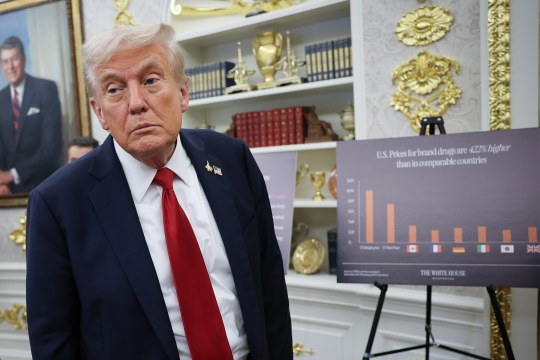
How TrumpRx Brand-Name Drug Prices Compare

TrumpRx prices for brand-name drugs are about as likely to be higher as lower compared to average prices in other wealthy countries, according to an analysis that compares 32 brand-name drugs.

Stay informed.

Stay informed.

Filter

641-650 of 1,626 results

  • Impact of Direct-to-Consumer Advertising on Prescription Drug Spending

    Report

    A new study by researchers at Harvard University and the Massachusetts Institute of Technology looks at the effect of direct-to-consumer (DTC) advertising on spending for prescription drugs. The study found that, on average, a 10% increase in DTC advertising of drugs within a therapeutic drug class resulted in a 1% increase in sales of the drugs in that class.

  • Distribution of National Health Expenditures, by Type of Service (in Billions), 2012 and 2023

    Feature

    Distribution of National Health Expenditures, by Type of Service (in Billions), 2012 and 2023-HEALTHCOSTS Download Source Kaiser Family Foundation calculations using NHE data from Centers for Medicare and Medicaid Services, Office of the Actuary, National Health Statistics Group, at http://www.cms.hhs.gov/NationalHealthExpendData/ (For 2012 data, see Historical; National Health Expenditures by type of service and source of funds, CY 1960-2012; file nhe2012.zip. For 2023 data, see Projected; NHE Historical and projections, 1965-2023, file nhe65-23.zip).

  • Visualizing Health Policy: Recent Trends in Employer-Sponsored Insurance

    Other Post

    This Visualizing Health Policy infographic takes a look at recent trends in employer-sponsored insurance, including average premium increases for workers with family coverage, the average yearly cost of premiums for single and family coverage and how those costs have increased in the past decade, along with the prevalence of health promotion programs (such as wellness programs) offered by large firms. It also looks at differences in premium and worker contributions at firms with many lower-wage…

  • New Evidence Health Spending Is Growing Faster Again

    From Drew Altman

    In this column for The Wall Street Journal’s Think Tank, Drew Altman discusses new Census Department survey data showing higher health spending growth over the last four economic quarters, and raises the question: is the health spending slowdown over?

  • Poll Finds Nearly Three Quarters of Americans Say Prescription Drug Costs Are Unreasonable, and Most Blame Drug Makers Rather Than Insurers for the Problem

    News Release

    If Supreme Court's King v. Burwell Decision Restricts Insurance Subsidies to Certain States, Most Say Congress Should Act to Ensure Residents of All States are Eligible, and a Majority in Potentially Affected States say Their State Should Act Public's Views on Affordable Care Act Are Divided and Unchanged: 42% Unfavorable and 39% Favorable Nearly three quarters (73%) of the public view prescription drug costs as unreasonable, and far more blame pharmaceutical companies more than insurers…

  • The Burden of Medical Debt: Results from the Kaiser Family Foundation/New York Times Medical Bills Survey

    Report

    To date, there has been little research providing a quantitative look at the causes of medical bill problems and the impacts they have on people’s families, their finances, and their access to health care. To fill this gap, the Kaiser Family Foundation and The New York Times conducted an in-depth survey with 1,204 adults ages 18-64 who report that they or someone in their household had problems paying or an inability to pay medical bills…

  • Patient Cost-Sharing in Marketplace Plans, 2016

    Issue Brief

    This brief and accompanying slides examine cost sharing - deductibles, copayments and coinsurance - in 2016 insurance plans sold on the Affordable Care Act's (ACA) federally-facilitated marketplaces. The analysis looks at out-of-pocket limits, as well as cost sharing for hospital stays, physician visits, emergency room visits, and prescription drugs, for plans across the metal levels (platinum, gold, silver and bronze).

  • Potential Savings from Actively Shopping for Marketplace Coverage in 2016

    Issue Brief

    This analysis looks at how the premiums for the lowest-cost silver plans in Affordable Care Act (ACA) Marketplaces changed between 2015 and 2016. The analysis examines premiums of the 2015 lowest-cost silver plans (in states that used Healthcare.gov in both 2015 and 2016) for a single 40 year-old adult to see how much these premiums increase in 2016 and whether enrollees could obtain lower premiums by switching plans.

  • In 73 Percent of Counties, Healthcare.Gov Enrollees Could Lower Their Silver Plan Premiums by Comparison Shopping

    News Release

    A new analysis from the Kaiser Family Foundation finds that in 73 percent of counties served by Healthcare.gov, people enrolled in the lowest-cost silver plan this year could save money on premiums by switching to a different silver plan in 2016. In these counties, the silver plan with the lowest premiums in 2015 is no longer the lowest-cost plan in 2016, according to the analysis. If they stay in their current plan, Healthcare.gov enrollees who…