Health Costs

The MIDTERMS

Democrats Hold a Nearly 2-to-1 Advantage Over Republicans on Handling the Cost of Health Care

Poll: Cost of Health Care and Gas Top Voters’ Midterm Concerns; Democrats Hold Significant Advantage on Health Care Costs and Cost of Living 

With the 2026 midterms about a month away, health care costs remain tied with gas as voters’ top midterm concerns and the Democrats hold a clear edge over the Republicans Party on who voters trust to handle many top electoral issues, including the cost of health care and the cost of living. Two-thirds of U.S. adults now favor Medicare-for-all, a new high in KFF Polling, but support shifts when competing claims from critics and proponents are heard.

New and noteworthy

Health System Tracker

Is This A Healthcare Economy?

Health care employment has grown faster than other sectors of the economy, with jobs in physician offices, hospitals, outpatient care centers, home health, and other settings increasing over the past year even as the rest of the job market plateaued. 

U.S. Health Spending Is Expected to Reach $9 Trillion by 2034

How Much is Health Spending Expected to Grow?

This chart collection explores how much health spending is expected to grow in the coming years, with a look at growth in prescription drug spending, out-of-pocket spending, and related trends.

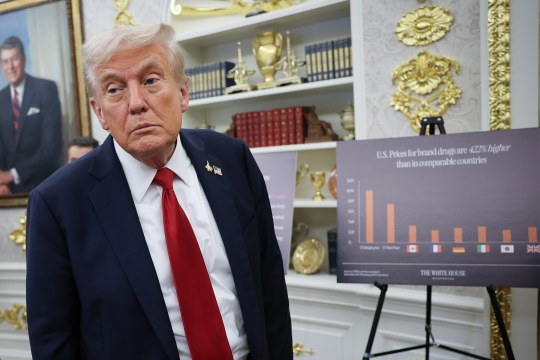
How TrumpRx Brand-Name Drug Prices Compare

TrumpRx prices for brand-name drugs are about as likely to be higher as lower compared to average prices in other wealthy countries, according to an analysis that compares 32 brand-name drugs.

Stay informed.

Stay informed.

Filter

301-310 of 1,627 results

  • Section 5: Market Shares of Health Plans

    Report

    The distribution of enrollment among types of health plans has remained fairly constant over the past several years. The majority of covered workers are enrolled in PPO plans (55%), followed by HMO plans (25%) (Exhibit 5.1). Although annual changes in plan enrollment have been moderate, enrollment in PPO plans has grown by nine percentage points since 2001. More than half of covered workers (55%) are enrolled in PPO plans, an increase from 46% in 2001…

  • Snapshots: Compensation for Workers with and without Access to Health Benefits at Work

    Other Post

    A newer version of this Snapshot is available here. Compensation for Workers with and without Access to Health Benefits at Work  October 2008 This paper compares the payroll and benefit compensation of workers that had access to employer-sponsored health benefits at work to that of workers who did not have an insurance offer.  By analyzing compensation differences within occupations and establishment sizes for those with and without access to health benefits, we provide new information…

  • Changes in Health Insurance Coverage, 2007-2008: Early Impact of the Recession

    Issue Brief

    This issue brief examines trends in health insurance coverage from 2007 to 2008, a period marked by the start of a deep recession. It finds that the share of the nonelderly population covered by employer-provided insurance declined, the share covered by public programs increased and the number of uninsured people continued to rise. Notably, the economic downturn affected health insurance coverage differently for adults compared to children. The increase of 1.5 million in the number…

  • KFF Health Tracking Poll – April 2019: Surprise Medical Bills and Public’s View of the Supreme Court and Continuing Protections for People With Pre-Existing Conditions

    Feature

    The April 2019 KFF Health Tracking Poll examines the public’s position on the future of ACA and its protections for people with pre-existing medical conditions, in light of the ongoing legal battle which may end up in the Supreme Court. With lawmakers proposing legislation to address surprise medical bills, this month’s survey also measures the public’s support for federal government action to protect patients from having to pay the cost incurred from an inadvertent out-of-network…

  • 5 Key Facts About Medicaid Coverage for People with Medicare

    Issue Brief

    The recently passed House budget resolution targets cuts to Medicaid of up to $880 billion or more over a decade to help pay for tax cuts. Major cuts to Medicaid may impact coverage for the almost 1 in 5 Medicare beneficiaries (12.2 million) who are also enrolled in Medicaid.

  • Individual Market Insurers Requesting Largest Premium Increases in More Than 5 Years

    Issue Brief

    This analysis of preliminary rate filings submitted by 105 ACA Marketplace insurers in 19 states and DC shows that ACA Marketplace insurers are requesting a median premium increase of 15% for 2026, which would represent the largest hike in premiums since 2018, the last time policy uncertainty contributed to sharp premium growth. The scheduled expiration of enhanced tax credits and impact of tariffs on some drugs, medical equipment, and supplies are among the factors pushing…

  • Illustrating the Potential Impacts of Adverse Selection on Health Insurance Costs in Consumer Choice Models

    Other Post

    Health Care Spending in the United States and OECD Countries  Health spending is rising faster than incomes in most developed countries, which raises questions about how these countries will pay for future health care needs.  The issue may be particularly acute in the United States, which not only spends much more per capita on health care than any other country, but which also has had one of the fastest growth rates in health spending among…