Affordable Care Act

The ACA Marketplace

2025 KFF Marketplace Enrollees Survey

In 2025, about one in three ACA enrollees said they would be “very likely” to look for a lower-premium Marketplace plan If their premium payments doubled.

Cost Concerns and Coverage Changes: A Follow-Up Survey of ACA Marketplace Enrollees

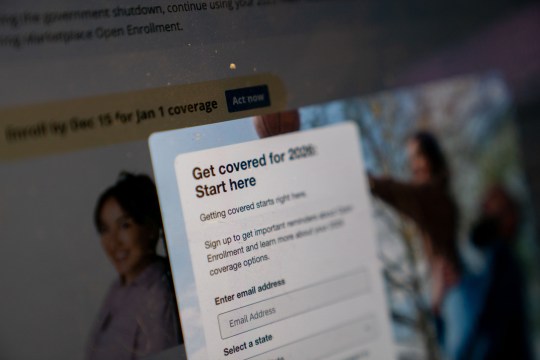
Following the expiration of the enhanced premium tax credits for people with Affordable Care Act (ACA) Marketplace plans, a new KFF follow-up survey of the same Marketplace enrollees KFF surveyed in 2025 finds half (51%) of returning enrollees say their health care costs are “a lot higher” this year compared to last year, including four in 10 who specifically say their premiums are “a lot higher.”

Timely insights and analysis from KFF staff

Latest News

No Posts to Show

Subscribe to KFF Emails

Choose which emails are best for you.
Sign up here

Filter

501 - 510 of 2,770 Results

  • Side-by-Side Comparison of Major Health Care Reform Proposals

    Issue Brief

    On March 23, 2010, President Obama signed into law the Patient Protection and Affordable Care Act, and a week later, signed into law the Health Care and Education Reconciliation Act of 2010, which made some changes to the comprehensive health reform law. Summary of Final Health Care Reform Law (.pdf) Download a printable comparison of the new health reform law (the Patient Protection and Affordable Care Act), the House-passed Health Care and Education Reconciliation Act…

  • Visualizing Health Policy: Health Care in the 2012 Election

    Other Post

    The October 2012 Visualizing Health Policy infographic provides a snapshot of how health care–related issues are shaping the 2012 presidential election, including the percentage of Democrats, Republicans, and independents who named health care or the economy as the issue that is most important in determining their vote for President; which health care issues are considered most important by Americans; how health care has compared with the economy and other issues as the most important issue…

  • An Overview of State Approaches to Adopting the Medicaid Expansion

    Issue Brief

    State approaches to adopting the Affordable Care Act’s Medicaid expansion have varied greatly by state based on state law, the political context, or other factors. While it does not cover how every state has enacted the Medicaid expansion, this issue brief highlights some of the different approaches states have taken to adopt the Medicaid expansion. Each state’s circumstances are unique, and the actions taken by one state may not apply to another state’s circumstances.

  • Medicare Advantage Hospital Networks: How Much Do They Vary?

    Report

    This report takes an in-depth look at Medicare Advantage plans’ hospital networks. The analysis draws upon data from 409 Medicare Advantage plans serving beneficiaries in 20 diverse counties that together accounted for about one in seven (14%) Medicare Advantage enrollees nationwide in 2015. The report examines the size and composition of plans’ hospital networks, the variation across counties, the inclusion of Academic Medical Centers and NCI-Designated Cancer Centers, and the relationship between network size and…

  • The Affordable Care Act Doesn’t Rank Highly As an Issue for Voters in the Presidential Primaries

    News Release

    Despite Anecdotal Reports about Narrow Networks, 87% of Working-Age Adults with Insurance Are Satisfied With Their Plan's Choice of Doctors; 12% Say They Had to Change Doctors in Past Year As the ACA's Open Enrollment Nears End, Most of Those Who Remain Uninsured Are Disengaged While this month Congress passed and President Obama vetoed legislation to repeal the Affordable Care Act, voters nationally aren't focused on the law in this year's presidential election, the latest…

  • How Has the Pandemic Affected Health Coverage in the U.S.?

    Policy Watch

    Findings from administrative data suggest that the decline in enrollment among employer-sponsored insurance was far less than overall declines in employment as of September, and that many who did lose their job-based coverage likely found a safety net in coverage through Medicaid or the ACA marketplaces.

  • Chronic Disease and Co-Morbidity Among Dual Eligibles: Implications for Patterns of Medicaid and Medicare Service Use and Spending

    Report

    The health reform law contains provisions that aim to improve the delivery and coordination of services for persons enrolled in both Medicaid and Medicare, known as the dual eligibles. This population includes individuals with some of the most severely disabling chronic conditions. While the higher costs associated with services to dual eligibles is well-known, information on how spending is distributed across these programs is less understood. This study uses linked Medicare and Medicaid data to…

  • 2008 Update on Consumers’ Views of Patient Safety and Quality Information

    Poll Finding

    2008 Update on Consumers' Views of Patient Safety and Quality Information An updated examination of consumers' views on health care quality information reveals major challenges remain in providing the public with comparative quality information and encouraging its use. The 2008 Update on Consumers' Views of Patient Safety and Quality Information finds that three in 10 (30%) Americans say they have seen health care quality comparisons of health insurance plans, hospitals, or doctors in the past…

  • Health Reform Roundtables: Charting A Course Forward

    Report

    Health Reform Roundtables: Charting A Course Forward is a series of discussions among federal officials, state officials and outside experts that provides an opportunity to share insights and explore key issues related to implementing a significant expansion of the Medicaid program as part of the new health reform law that will require most U.S. citizens and legal residents to obtain health coverage. States will be largely responsible for implementing the Medicaid expansion, which will provide…