Affordable Care Act

Enhanced Premium tax credits

2025 KFF Marketplace Enrollees Survey

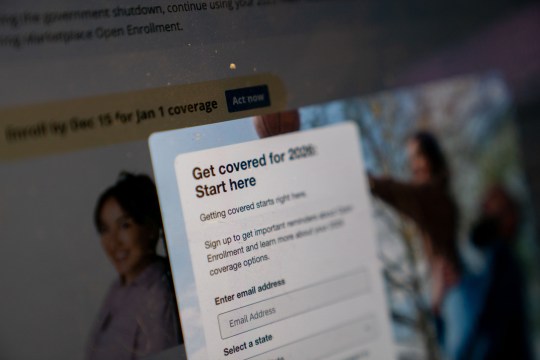
If their premium payments double, about one in three ACA enrollees say they would be “very likely” to look for a lower-premium Marketplace plan.

Timely insights and analysis from KFF staff

Subscribe to KFF Emails

Choose which emails are best for you.
Sign up here

Filter

371 - 380 of 2,759 Results

  • Puerto Rico: Fast Facts

    Fact Sheet

    Puerto Rico: Fast Facts provides a quick snapshot of the island's demographic, health, and economic characteristics. It also provides some information on federal Medicaid rules, infrastructure, and fiscal challenges ahead.

  • KFF Election Tracking Poll: Health Care in the 2018 Midterms

    Feature

    In an expansive look at the 2018 midterm elections, this month's KFF Health Tracking Poll includes an in-depth examination of the role health care may be playing in midterm elections nationally, as well as in Florida and Nevada, two bellwether states in which candidates from both parties are talking about health care issues. Health care remains a top priority for Democrats and independents, but ranks lower for Republicans, behind immigration and the economy and jobs. However, when it comes to specific health care issues, lowering health care costs and maintaining protections for pre-existing conditions have bipartisan support. In addition to exploring the role of health care issues in the election, the KFF Health Tracking Poll also finds large shares of voters say candidate characteristics, President Trump, and party control over Congress will be major factors in their voting decisions.

  • The Affordable Care Act’s Enduring Resilience

    Perspective

    In this article in the Journal of Health Politics, Policy and Law, Larry Levitt examines the Affordable Care Act 10 years after it's enactment. The article notes that the law has taken numerous blows, yet due to its policy design and the political forces it has unleashed, the law has shown remarkable resilience.

  • Kaiser Health Tracking Poll: March 2016

    Feature

    The March Kaiser Health Tracking Poll finds that health care is one of many issues that will be important to voters in the Presidential election, trailing concerns about the economy and jobs but leading concerns about immigration. Health care ranks higher for Democratic voters than for Republican and independent voters and is a higher priority for women than for men. Health care costs remain on the forefront of the minds of both the uninsured and voters, with nearly half of uninsured Americans saying that cost is the main reason they haven’t gotten health insurance and voters mentioning cost when asked what specifically about health care will affect their presidential vote. In light of the two women’s health cases before the Supreme Court, this month’s survey examines how the public, and women specifically, feel about the state of women’s reproductive health policy. About one-third of Americans say ‘there is a wide-scale effort to limit women’s reproductive health choices and services, such as abortion, family planning, and contraception’ and a majority of Democratic voters name Hillary Clinton as the candidate for president they trust to represent their view of women’s reproductive health choices and services, while Republican voters don’t coalesce around any one candidate.

  • Health and Health Coverage in the South: A Data Update

    Issue Brief

    This brief provides key data on the South and the current status of health and health coverage in the South to provide greater insight into the health needs in the region and the potential coverage gains that may be achieved through the ACA. It includes data on the uninsured, Medicaid expansion and eligibility for coverage.

  • The Impact of the Coverage Gap for Adults in States not Expanding Medicaid by Race and Ethnicity

    Issue Brief

    The Affordable Care Act (ACA) expansion of Medicaid to adults with incomes at or below 138% of the federal poverty level (FPL) effectively became a state option following the Supreme Court decision, creating a “coverage gap” for many poor uninsured adults in states that do not expand Medicaid. This brief examines the coverage gap by race and ethnicity.