Affordable Care Act

The ACA Marketplace

2025 KFF Marketplace Enrollees Survey

In 2025, about one in three ACA enrollees said they would be “very likely” to look for a lower-premium Marketplace plan If their premium payments doubled.

Cost Concerns and Coverage Changes: A Follow-Up Survey of ACA Marketplace Enrollees

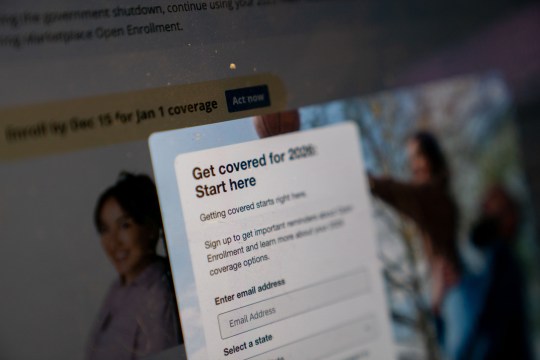
Following the expiration of the enhanced premium tax credits for people with Affordable Care Act (ACA) Marketplace plans, a new KFF follow-up survey of the same Marketplace enrollees KFF surveyed in 2025 finds half (51%) of returning enrollees say their health care costs are “a lot higher” this year compared to last year, including four in 10 who specifically say their premiums are “a lot higher.”

Timely insights and analysis from KFF staff

Latest News

No Posts to Show

Subscribe to KFF Emails

Choose which emails are best for you.
Sign up here

Filter

341 - 350 of 2,769 Results

  • Survey Brief: Economic Problems Facing Families

    Poll Finding

    This poll finds that health care costs rank among Americans’ top personal economic problems, and their struggles to deal with those costs have affected both their financial well-being and their family’s health care. Conducted by the Foundation’s public opinion researchers, the poll probes into the economic concerns facing Americans and the ways they have dealt with the cost of health care. The poll was designed and analyzed by public opinion researchers at the Kaiser Family…

  • Governors’ Budgets for FY 2013 — What is Proposed for Medicaid?

    Issue Brief

    This report provides Medicaid highlights from governors' proposed state budgets for FY 2013, which starts July 1, 2012 for most states. While some states are beginning to see signs of economic recovery, many remain cautiously optimistic as they continue to experience the recession's lingering effects. State revenues have not rebounded to pre-recession levels, unemployment rates are still high, and some states continue to face budget shortfalls. There continues to be high demand for Medicaid and…

  • Kaiser Health Tracking Poll — January 2012

    Feature

    As the Supreme Court prepares to hear legal challenges to the health reform law in March, most Americans expect the Justices to base their ruling on their own ideological views rather than their interpretation of the law, according to the January Health Tracking Poll. Other key findings include: The public doubts the Supreme Court renders judgments based solely on the law. Three-quarters (75%) say they think that, in general, Justices let their own ideological views…

  • Kaiser Health Tracking Poll — November 2011

    Feature

    The November Health Tracking Poll takes a closer look at public opinion and knowledge about specific provisions of the Patient Protection and Affordable Care Act (ACA). Findings include: After taking a negative turn in October, the public's overall views on the ACA returned to a more mixed status this month. Still, Americans remain somewhat more likely to have an unfavorable view of the law (44%) than a favorable one (37%). The survey also finds that…

  • Kaiser Health Tracking Poll — June 2010

    Feature

    The start of summer finds Americans remain divided on the health reform law, but favorable views of the new law increased seven percentage points over the past month to 48 percent, compared to 41 percent who have “generally unfavorable” views and 10 percent who have yet to make up their minds. With four months remaining until the midterm congressional elections, an early look suggests that the contests could be impacted by a number of different…

  • Medicaid Long-Term Services and Supports: Key Changes in the Health Reform Law

    Issue Brief

    This issue brief examines new opportunities under the health reform law for states to balance their Medicaid long-term care delivery systems by expanding access to Medicaid home and community-based services (HCBS) programs. The brief outlines key provisions of the new law that expand HCBS benefit options, broaden financial and functional eligibility criteria, and provide additional financial incentives for states to further shift their Medicaid long-term services budgets to non-institutional settings. Issue Brief (.pdf)

  • Pulling It Together: Predicting the Future

    Perspective

    A fair amount of attention was given recently to projections made by the Chief Actuary of the Centers for Medicare and Medicaid Services (CMS) about the new health reform law, and how they compare to previous estimates by the Congressional Budget Office (CBO). No doubt the various projections will be grist for claims made in the upcoming political season, so it is important to be clear about the differences between the two estimates and to…

  • The Community Living Assistance Services and Supports (CLASS) Act

    Issue Brief

    This issue brief provides a brief overview of the Community Living Assistance Services and Supports (CLASS) Act, including a discussion of how the program would be financed and whom it is intended to reach. The paper was released as part of a Kaiser briefing about the act, a component of two leading health reform bills that would establish a national voluntary insurance program to allow for voluntary pre-financing of long-term care through payroll deductions and…

  • Key Findings: Kaiser Health Tracking Poll — September 2009

    Poll Finding

    This document contains the key findings from the September Health Tracking Poll. The survey was designed and analyzed by public opinion researchers at the Kaiser Family Foundation and was conducted September 11 through September 18, 2009, among a nationally representative random sample of 1,203 adults ages 18 and older. Telephone interviews conducted by landline (801) and cell phone (402, including 147 who had no landline telephone) were carried out in English and Spanish. The margin…

  • Kaiser Health Tracking Poll — September 2009

    Feature

    The September Kaiser Health Tracking Poll finds that public support for health reform ended its summer slide, reversed course and moved modestly upwards in September. The survey also finds initial majority support for taxing expensive health plans and imposing fees on insurers to pay for reform. Fifty-seven percent of Americans now believe that tackling health care reform is more important than ever—up from 53 percent in August. The proportion of Americans who think their families…