Racial Equity and Health Policy

Survey of Immigrants

KFF-New York Times Survey: Immigrants Report Rising Fear, Negative Economic and Health Impacts, and Changing Political Views During the First Year of President Trump’s Second Term

The 2025 Survey of Immigrants, a partnership between KFF and The New York Times, takes an in-depth look at the experiences of immigrants during the first year of President Trump’s second term, including their worries related to increased immigration enforcement, their health and economic wellbeing, and the political views and preferences of immigrant voters. The survey paints a portrait of families under strain — where fear of detention and economic instability are negatively impacting immigrants’ health and reshaping immigrant families’ daily lives and views of U.S. political parties.

Read the News Release | Explore The New York Times’ Reporting
the Essentials
  • Disparities in Health and Health Care: 5 Key Questions and Answers

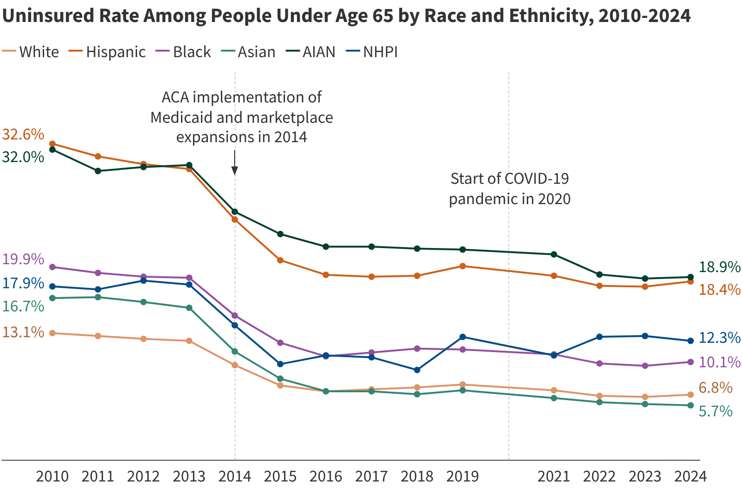
    This brief provides an introduction to what health and health care disparities are, why it is important to address them, what the status of disparities is today, recent federal actions to address disparities, and key issues related to addressing disparities in the future.
  • Timeline: How History Has Shaped Racial and Ethnic Health Disparities

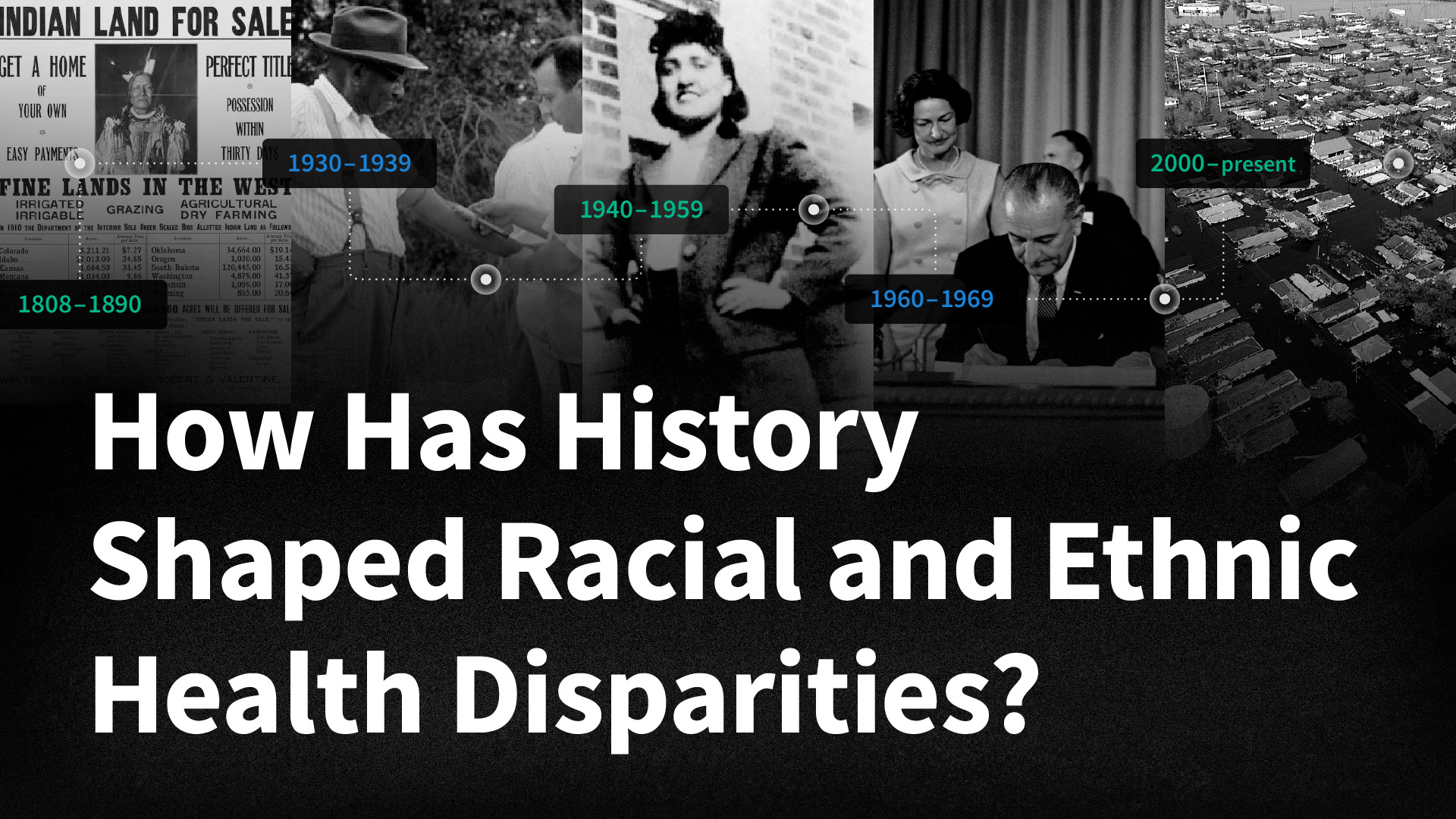
    This timeline offers a historical view of significant U.S. federal policies and events spanning the early 1800s to today that have influenced present-day health disparities.
  • Health Policy 101: Chapter on Race, Inequality and Health

    Addressing persistent racial and ethnic disparities in health and health care is important for improving the nation’s health and economic prosperity. KFF explains such disparities and the factors that drive them, examines the actions to address them, and outlines future considerations.
  • Key Data on Health and Health Care by Race and Ethnicity

    Racial and ethnic disparities in health and health care remain a persistent challenge in the United States. An updated KFF resource examines how people of color fare compared to White people across 64 measures of health, health care, and social determinants of health.

Subscribe to KFF Emails

Choose which emails are best for you.
Sign up here

Filter

41 - 50 of 601 Results

  • Misinformation About Immigrants in the 2024 Presidential Election

    Poll Finding

    With the 2024 election season underway, a large majority of the public reports hearing false claims about immigrants from candidates or elected officials, and many immigrants say Donald Trump's rhetoric in particular is negatively affecting how they are treated. This poll finding also gauges understanding about U.S. immigrants' eligibility for government benefits programs.

  • Loneliness and Social Support Networks: Findings from the KFF Survey of Racism, Discrimination and Health 

    Poll Finding

    The issues of loneliness and social isolation gained attention during the COVID-19 pandemic, and continue to be associated with poor mental and physical health conditions. One in six (15%) adults report feeling always or often lonely in the past year, with the highest shares among young adults ages 18-29. There is a strong relationship between feelings of loneliness, local support networks, and physical and mental health and well-being, but Black, Hispanic, and Asian adults are…

  • Who is at Risk Amid the H5N1 Influenza Outbreak? Characteristics and Health Coverage of Animal Production Workers

    Issue Brief

    This analysis uses data on “animal production workers” from the 2022 American Community Survey to examine characteristics of workers who may be at risk for exposure to H5N1 avian influenza, which has been found in dairy cattle herds in nine U.S. states as of May 14, 2024. The analysis compares characteristics of these workers to all U.S. workers, to all workers in the H5N1-affected states, and draws out some implications. Among the findings are that…

  • More States Are Providing Fully State-Funded Health Coverage to Some Individuals Regardless of Immigration Status

    News Release

    More states are providing fully state-funded health coverage to some individuals regardless of immigration status.  An updated KFF analysis shows that as of March 2024, 12 states and Washington D.C. provide fully state-funded coverage for income-eligible children regardless of immigration status. These states include California, Connecticut, Illinois, Maine, Massachusetts, New Jersey, New York, Oregon, Rhode Island, Utah, Vermont, and Washington.Six states -- California, Colorado, Illinois, New York, Oregon, and Washington, plus D.C. -- have also…

  • Year in Review: 10 Health Policy Issues for 2023

    Fact Sheet

    This fact sheet offers a look back at 10 issues that KFF tracked closely during 2023 in its polling, policy analysis and journalism, including summaries of major findings and news stories.

  • How History Has Shaped Racial and Ethnic Health Disparities: A Timeline of Policies and Events

    Feature

    This timeline offers a historical view of significant U.S. federal policies and events spanning the early 1800s to today that have influenced present-day health disparities. It covers policies that directly impacted health coverage and access to care, relevant events in medicine, social and economic policies and developments that influence health, and efforts to tackle inequalities.

  • 5 Key Facts About Immigrants and Medicaid

    Issue Brief

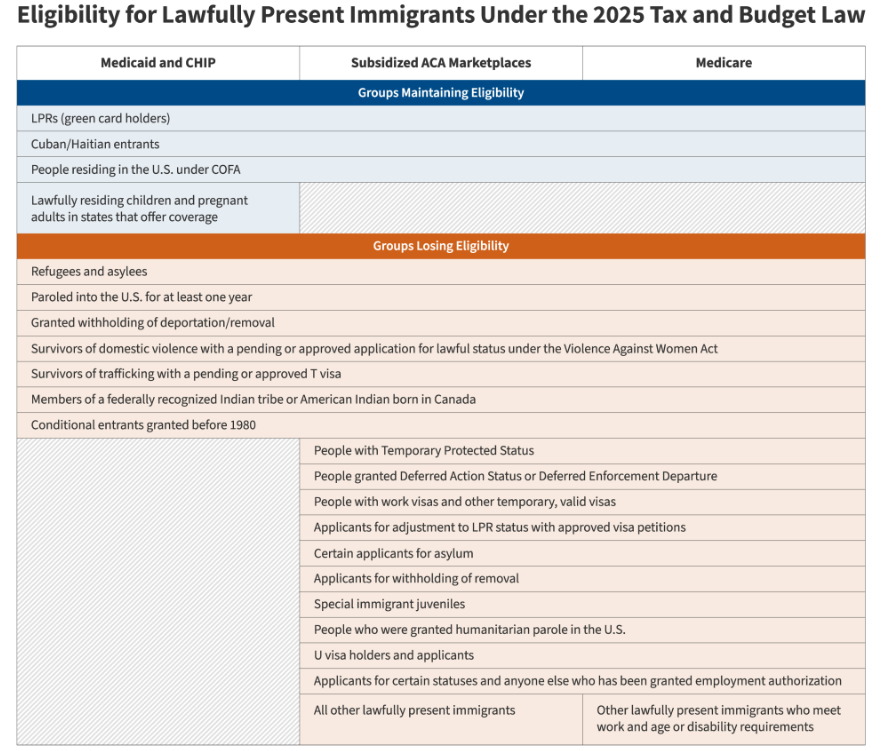
    This brief provides five key facts on Medicaid and immigrants as context for understanding the potential impacts of policy changes under the Trump administration.

  • Children of Immigrants: Key Facts on Health Coverage and Care

    Issue Brief

    This brief provides key data on socioeconomic characteristics and health coverage among children of immigrants based on KFF analysis of the American Community Survey data. It also examines potential implications of policies and actions that may be implemented by the incoming Trump administration.