
New Public Charge Policies Will Likely Lead to Decreased Enrollment in Medicaid and CHIP
On July 20, 2026, the Department of Homeland Security finalized new public charge regulations, which the federal government uses to decide whether many groups of immigrants can adjust to lawful permanent resident status (i.e., receive a green card). Under the new rule, immigration officers will have broad discretion to determine whether someone is likely to become a public charge and can consider use of previously excluded programs, including Medicaid and the Children’s Health Insurance Program (CHIP), as well as potentially a much broader array assistance programs, and family members’ use of programs. The new rule will likely lead many people in immigrant families, including citizen children in these families, to disenroll from or forgo health coverage and other types of assistance even if they are eligible and not subject to public charge determinations due to “chilling effects” of fear and confusion.
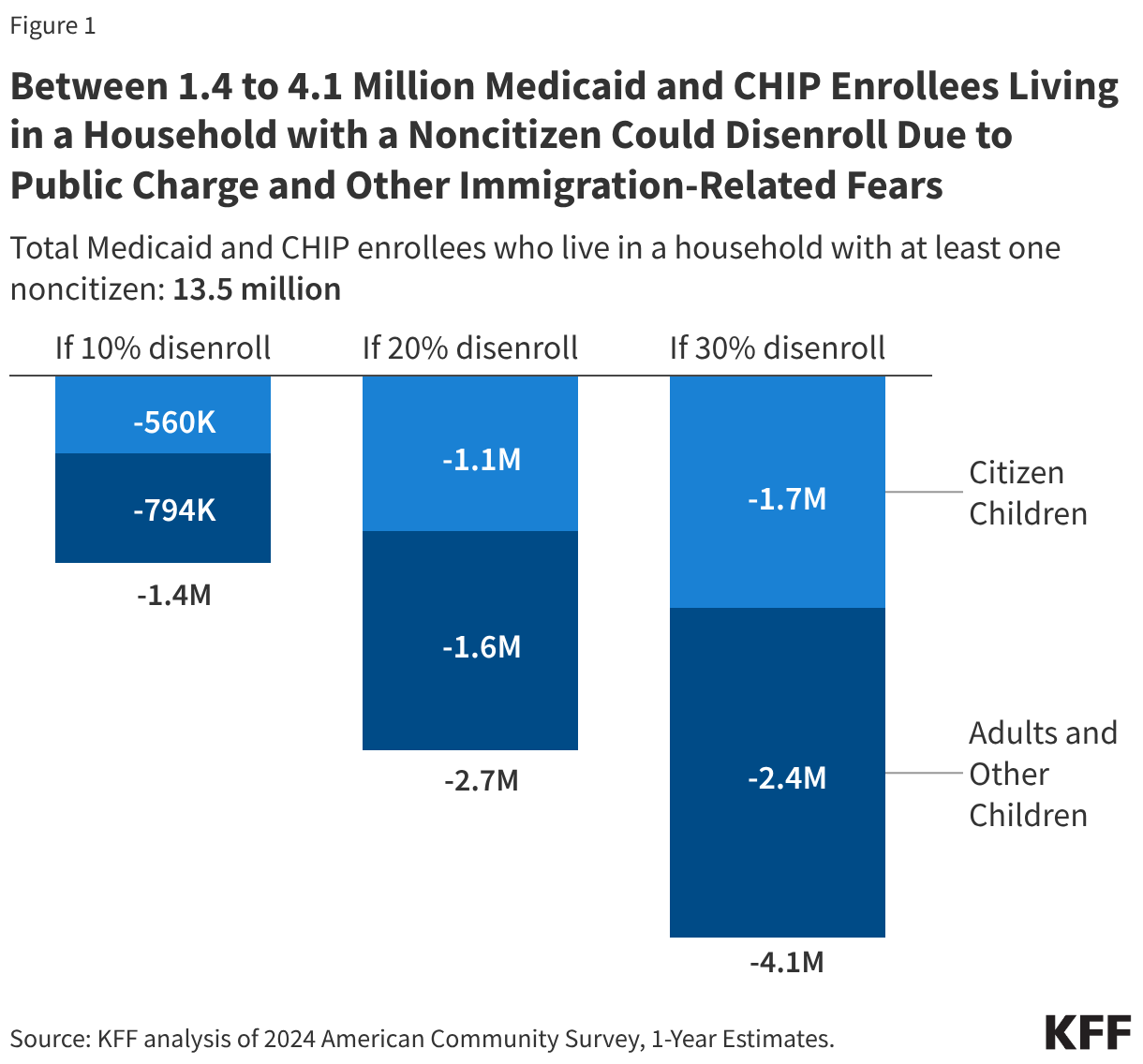
As shown in newly updated KFF analysis, there are about 13.5 million Medicaid or CHIP enrollees living in a household with at least one noncitizen, including 5.6 million citizen children, who may be at risk for decreased enrollment. If disenrollment rates range from 10% to 30%, between 1.4 million to 4.1 million people could disenroll from Medicaid or CHIP, including about 560,000 to about 1.7 million citizen children (Figure 1). Additionally, nearly 1.7 million uninsured individuals are eligible for Medicaid and CHIP but are not enrolled and are living in a household with a noncitizen, including over 600,000 citizen children. Assuming the same forgone enrollment rates, between about 166,000 to 498,000 uninsured people could forgo enrolling in Medicaid or CHIP despite being eligible, including over 60,000 to more than 181,000 citizen children.