Talking about STDs with Health Professionals: Women’s Experiences – Report

Published: Aug 31, 1997

Talking About STDs with Health Professionals

Women’s Experiences

More than 12 million new cases of sexually transmitted diseases (STDs) other than HIV/AIDS, including three million among teenagers alone, occur every year. At current rates, at least one person in four will contract an STD at some point in his or her life. With as many as 56 million individuals – more than one in five Americans – estimated to be currently infected with an incurable viral STD such as herpes or genital warts, STDs remain a serious health threat in this country. In fact, STD rates in the United States are the highest in the industrialized world, and are higher than in some developing countries.

More than 1 in 5 Americans is estimated to be currently infected with an incurable viral STD.

Source: Centers for Disease Control and Prevention, 1993While public education efforts by the Centers for Disease Control and Prevention (CDC) and the American Social Health Association (ASHA) along with the release of studies such as the one issued November 1996 from the Institute of Medicine (IOM), The Hidden Epidemic: Confronting Sexually Transmitted Diseases, have helped to focus greater national attention on the STD epidemic, the general public remains largely unaware of the prevalence and risk of STDs. In a Kaiser Family Foundation survey conducted at the time of the release of the IOM report, less than a quarter of Americans over the age of 18 when asked what STDs they were aware of, named chlamydia – the most common STD and, according to the CDC, the most prevalent reportable infectious disease of any kind. Just 2 percent could name trichomoniasis or ‘trich,’ the STD with the second highest incidence in the U.S., at 3 million estimated cases annually. One in ten respondents could not name any STDs. Perhaps even more disconcerting was how limited most Americans’ knowledge is about the link between STDs and HIV, with more than half (56%) of respondents unaware that STD infections increase susceptibility to the HIV virus.

Another survey by the Foundation conducted with Glamour magazine earlier this year also found that many women may be mistakenly assuming they are being screened for STDs during routine gynecological exams. Two out of five women 18-44 years old (42%) said they believed they are automatically tested, that is without requesting it, for at least some STDs other than HIV as part of their regular gynecological exams. A pap smear – the primary purpose of which is to screen for cervical cancer – can also detect genital warts, in some cases. However, the test does not detect other more common STDs such as chlamydia, gonorrhea, and trich. Specific STD screening and testing is generally at the discretion of the doctor or at the request of the patient. Although the American College of Obstetricians and Gynecologists (ACOG) recommends testing for STDs other than HIV for women at ‘risk’ for STDs (defined in general as women who have a history of STDs or of multiple sex partners), routine screenings are not necessarily always – or ever – included as part of a woman’s routine exam.

percentages.jpg

Building on this previous study as well as on anecdotal evidence that many women may not always be getting the care they assume they are getting or even assessing their own risk appropriately when it comes to STDs, Kaiser Family Foundation and Glamour partnered again for a second survey to learn more about how women and their health providers approach the issue of STDs during gynecological or obstetrical visits. In particular, we were curious to learn about how often and with which patients doctors and other health professionals are discussing STDs, whether health providers are counseling women on the risk factors for STDs, and how women feel about their experiences talking about – or not talking about – STDs with their health provider.

The topics asked about are based on ASHA’s Personal Health History form and ACOG’s Guidelines for Women’s Health Care. To attempt to answer these questions, staff at the Foundation in coordination with Glamour magazine staff devised a survey that queried 482 women between the ages of 18-44 who had been to a new doctor within the last year for gynecological or obstetrical care. Criteria used to select the sample were based on an assumption that the first gynecological or obstetrical visit with a new patient was the one most likely for doctors or other health professionals to discuss STDs.

The survey found that not only do STDs rarely get discussed during gynecological or obstetrical visits, but many women may not be adequately screened by their health providers for their risk of STDs. The survey also indicated that women generally expected STDs to be discussed with them by their provider as part of routine reproductive care, and that many are very receptive to automatic testing even at additional costs. A summary of the key findings follows. The survey is also reported on in the October 1997 issue of Glamour.

What the Experts Say…According to the American Social Health Association (ASHA), information on sexual history is integral to assessing a patient’s risk for STD infection. In fact, questions about sexual history are part of an STD risk assessment form developed by ASHA for use by doctors. A woman’s number of sexual partners is important information her health professional should know, according to Contraceptive Technology (1994) and the American College of Obstetricians and Gynecologists (ACOG) Guidelines for Women’s Health Care (1996). Contraceptive Technology recommends asking every patient how many sexual partners he/she has had in the last year. ACOG’s guidelines also recommend a clinician ask every patient about his/her sexual history and practices, which includes their number of sexual partners. ACOG states that a patient’s number of sexual partners may not only indicate STD risk, but also help determine the best method of contraception for her.Findings:

Many women may not be screened adequately for STDs by their health providers.

Only 15 percent of women of reproductive age say they had a conversation with a health professional about STDs at their first visit for gynecological or obstetrical care. Many of the women who did not have a conversation about STDs reported not providing their health professional with the information he or she would have needed to adequately assess the patient’s risk for STDs, such as:

  • 35 percent of these women said they did NOT provide information about whether they were currently sexually active;
  • 61 percent said they did NOT provide information about whether they were in a monogamous relationship;
  • 67 percent said they did NOT provide information about whether they used condoms regularly;
  • 77 percent said they did NOT provide information about how many sexual partners they had had in the last year;
  • 94 percent said they did NOT provide information about oral or anal sex.

In fact, one in five of these women (20%) said they did not think their health provider had enough information to make an adequate assessment of their risk. Of those women who did not have a conversation about STDs with a health professional but thought that he or she should have discussed the subject with them, almost one in three (30%) said they did not think their health provider had enough information to accurately assess their risk.

There is also evidence that many women may not be informed about STD risk factors. Significant percentages of women who felt their health provider had enough information to know whether they were at risk for STDs reported that they did not provide basic information about their current and past sexual activity that may have affected that assessment. Because American men and women have such limited knowledge about STDs, many of these women may not know what information specifically their health provider should have gathered from them to assess their STD risk. Given the national estimates for STDs in this country, it is likely that some of these women are under-estimating their risks or may not even be aware of whether they have an STD.

Although most women – 92 percent – filled out a form with questions about their medical history when they saw their new health provider for the first time, only half – 54 percent – said that form included questions about sexual history or current sexual activity even though the purpose of their visit was for gynecological or obstetrical care.

Health providers rarely discuss STDs as part of gynecological or obstetrical visits.

As compared to other reproductive and sexual health topics, such as birth control or breast exams, health professionals initiated conversations about STDs far less often. Only about one in ten (12%) health professionals raised the subject of STDs with a new patient. Eight in ten (83%) believe it is a topic that should be a part of routine counseling when seeing a new doctor for gynecological care.

About a third (32%) of health providers who talked about STDs with a patient recommended testing. Women were most likely to report the provider recommended tests for gonorrhea, HIV/AIDS, chlamydia, and syphilis. Those who did have conversations generally reported being made to feel ‘very comfortable’ about the discussion (76%). Few felt ‘judged’ in any way (94% said no; 6% yes).

topics_discussed.jpg

Women expect their health providers to raise the subject of STDs.

Most women (64%) say it is up to the health professional to raise the topic of STDs during a gynecological visit. A quarter (23%) say it is primarily the patient’s responsibility to initiate this conversation, and 12 percent say the responsibility is shared. In fact, a third (33%) of the women who did not discuss STDs during their visit thought their health provider should have raised the subject with them.

Eighty-six percent of women who did discuss STDs during their first visit with a new doctor said they felt it was ‘expected’ that the topic would come up. About half (47%) said they were ‘relieved’ once it was discussed.

The Real Facts: The Most Common STDs

pix.gif

STD

pix.gif

Incidence(in US pop.)

pix.gif

Curable?

pix.gif

Symptoms

pix.gif

Long-term Health Effects

pix_black.gif

Chlamydia4,000,000YesGenital discharge, burning during urination. Women: lower abdominal pain, pain during intercourse. Men: swelling or pain in testicles.If left untreated, may lead to PID

pix_black.gif

Trichomoniasisor”Trich”3,000,000YesVaginal discharge, vaginal odor, discomfort during intercourse, and painful urination.Inflammation of fallopian tubes, low birth weight and premature infants.

pix_black.gif

Pelvicinflammatory disease(PID)1,000,000YesDull pain or tenderness in the lower abdomen, abnormal periods, abnormal vaginal discharge, nausea and/or vomiting, fever and chills.Damages the fallopian tubes, making it difficult or impossible for a woman to have children. Increased risk for ectopic pregnancy, chronic abdominal pain, pelvic adhesions (tissue grows which connects internal organs together), pelvic abscesses.

pix_black.gif

HPVorgenitalwarts500,000 – 1,000,000NoWarts on the vulva, vagina, anus, cervix, penis or scrotum, which may lead to itching, pain or bleeding.Increased risk of cervical cancer.

pix_black.gif

Gonorrhea80,000YesDischarge from penis, vagina or rectum, and burning or itching during urination. Sore throat.If left untreated, may lead to PID.

pix_black.gif

Genitalherpes200,000 – 500,000NoItching or burning in genital area; pain in the legs, buttock, or genital area, or vaginal discharge. Flu-like symptoms.Nerve pain, inflammation of spinal cord, urethral strictures, and miscarriage, stillbirth, or non surviving premature infant.

pix_black.gif

Syphilis101,000YesPainless sore (chancre) on genitals or in vagina, skin rash and flu-like symptoms, mild fever, fatigue, sore throat, hair loss and swollen glands throughout body.In late, or tertiary stage, mental illness, blindness, heart disease and death.

pix_black.gif

HIV/AIDS80,000NoFlu-like symptoms, such as fever, loss of appetite and weight, fatigue, enlarged lymph modes.Partial paralysis/weakness of muscles, symptoms affecting the spinal cord, lowered resistance to opportunistic infections, increased risk of cervical cancer, and death.

Return to top Next

Talking About STDs with Health Professionals: Women’s Experiences: Report Part One Part Two Press Release Survey
Small Employers and Health Insurance and State Reforms of Small Group Health Insurance – Fact Sheet

Published: Aug 30, 1997

Small Employers and Health Insurance

Nearly half of all uninsured workers are either self-employed or work for firms with fewer than 25 employees; another 14% are in firms with 25-99 workers (EBRI, 1996). Differences in health coverage depending on the size and type of businesses have existed for years. Today, only half of small businesses sponsor health benefits.

Health insurance among small employers has changed dramatically during the first half of the 1990s, however. More are offering coverage and there has also been a major shift in the nature of health coverage. Now two-thirds of small firms offering insurance provide coverage through a managed care plan. This contrasts sharply with a few years ago when small employer offerings of health maintenance organizations (HMOs), preferred provider organizations (PPOs), and point-of-service plans (POSs) were relatively rare.

Who Offers Coverage?

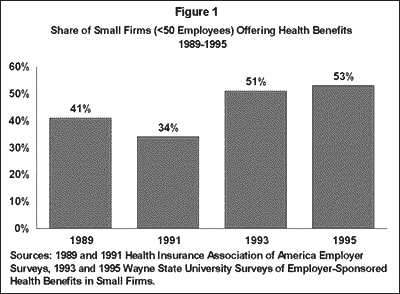
Fifty-three percent of businesses with less than 50 employees offered health insurance in 1995. Firms with more employees, those that are incorporated, and firms that are older are much more likely to sponsor insurance.

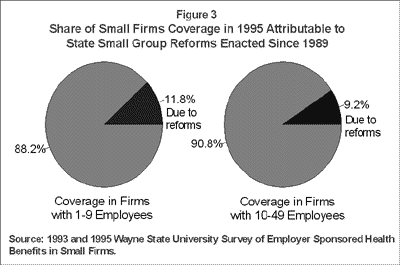
Within nearly all sizes of small firms, health coverage declined between 1989 and 1991, due largely to the economic recession. The improving economy and to a small extent, state reforms in the small group market, are responsible for the increase in coverage since then (Figure 1).

1315-fig1.gif

The Changing Nature of Coverage Provided

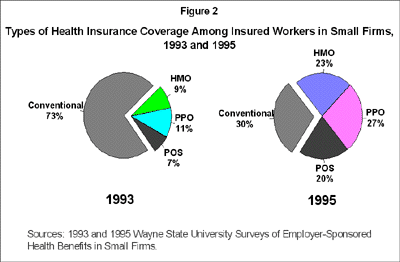
Between 1993 and 1995 many small businesses began offering managed care plans for the first time. By 1995 managed care became the dominant form of health coverage in the small group market, covering 70% of all workers insured through small firms, from only 27% just two years earlier (Figure 2).

1315-fig2.gif

Small firms have shifted to managed care plans for a combination of reasons: the limited nature of their previous conventional coverage, the rising price of such plans relative to managed care premiums, and the expansion of managed care plans into the small group market.

It is still the case however, that most small businesses that offer insurance offer only one plan. Today that plan is much more likely to be a managed care plan rather than conventional insurance (i.e., indemnity or fee-for-service). Only 10% of insured workers in small firms are offered a choice of plans, whereas in firms with 200 or more workers, 84% can choose from a menu of plans.

Why More Small Firms Don’t Sponsor Insurance

Small firms choose not to provide health benefits for many different reasons. Most small businesses (83%) say it is because premiums are too high (Figure 3). Additional reasons include: the firm’s profits are too uncertain to commit to it, health insurance is not a high priority among its workers, or the administrative burden would be too great. The problem is not a lack of opportunity to buy coverage. Most uninsured firms report they are inundated with solicitations to purchase a plan.

1315-fig3a.gif

Studies of insurance demand suggest that small firms are extremely price sensitive, e.g., a 5% decrease in price would result in a 10-15% increase in the likelihood of purchasing a plan. On the other hand, recent evaluations of several state subsidy programs for small businesses have found that these programs did not spur much new coverage.

The findings from these demonstration projects however, may have resulted from a lack of knowledge about the programs, the short-term nature of the subsidies, and in some instances, the fact that no premium subsidy was provided for insuring the business-owner and his or her family, rather, only employees’ premiums were eligible for a subsidy.

Policies Available in the Small Group Market

Access:

Health insurance has become more accessible to small firms in recent years. Fewer firms in 1995 said that an inability to qualify for group coverage was a major barrier to their offering a plan (46% vs. 54% in 1993). Fewer also reported that particular workers or their dependents were being excluded from the company plan due to poor health. One reason for these changes is that many states enacted “guaranteed issue” legislation in the early 1990s. Another reason is that more HMOs have expanded into the small group market and since most HMOs are federally qualified, they must guarantee the issue and renewal of their policies to all within the market.

Cost-sharing:

Overall, the gap between the cost-sharing provisions in small and large firms plans is narrower than it was just a few years ago. Average deductibles for conventional insurance have actually fallen for small businesses. This is partly a result of the shift to managed care because many of the conventional plans that small firms dropped had higher-than-average deductibles. While small firms’ deductibles are still higher than those in large firms, the gap has narrowed since 1993. At the same time, copayments in HMOs offered by small firms have increased significantly. Copayments of $10 to $20 per visit are now the norm, instead of $3 to $9 per visit, as in 1993. Small firms’ copays are still higher than those of large firms, but the differences are not that large.

Premium-sharing:

Small businesses have also made changes in their premium-sharing arrangements since 1993. Significantly fewer workers are being asked to contribute toward premiums, however the average percent contribution among those required to contribute has risen (Figure 4.)

Figure 4Premium-Sharing in Small Firms (<50 Employees), 1993 and 1995 Single Coverage: 1993 1995 Percent of workers required to contribute to single coverage premium 49% 30% Avg. contribution as a percent of single premium (among those required to contribute) 39% 44% Family Coverage: 1993 1995 Percent of workers required to contribute towards family coverage premium 59% 46% Avg. contribution as a percent of family premium (among those required to contribute) 47% 54% Source: 1993 and 1995 Wayne State University Survey of Employer Sponsored Health Benefits in Small Firms Issues

  • The provision of health insurance has increased among small firms in the first half of the 1990s. While encouraging, it is still the case that close to half of small firms do not sponsor coverage, and for them, price is paramount to offering coverage.
  • So many small firms switched to managed care between 1993 and 1995, it became the dominant form of small business health coverage.
  • Unlike large firms, the vast majority of small firms offer only a single health plan– most often, a managed care product. Thus, workers in small firms lack a choice of health plans and are limited also on their choice of providers. In other respects, however, the differences between small and large firm coverage are narrowing.
  • Fewer workers in small firms have to contribute toward premiums, but workers’ average contributing share (among those asked to pay) has risen.
  • Access to health insurance plans has improved. Between 1993 and 1995, fewer small firms said they were being denied coverage, or that particular workers or their dependents were excluded from the company plan due to poor health.

Funding for the sources of information on this fact sheet and the 1995 Survey of Small Businesses was provided by the Henry J. Kaiser Family Foundation:

  • GA Jensen, MA Morrisey, S Gafney, and DK Liston, “The New Dominance of Managed Care: Insurance Trends in the 1990s,” Health Affairs, January/February 1997, 16 (1), pp. 125-136.
  • MA Morrisey and GA Jensen, “Switching to Managed Care in the Small Employer Market,” Inquiry, Fall 1997, 34 (3), forthcoming.
  • GA Jensen and MA Morrisey, “Managed Care and the Small Group Market,” in MA Morrisey (ed.), Managed Care and Changing Health Care Markets. Washington, DC: AEI Press, forthcoming 1998.

Return to top

Small Employers: Health Insurance Coverage and the Impact of State Reforms:Fact Sheet Fact Sheet 2

Small Employers and Health Insurance and State Reforms of Small Group Health Insurance

Published: Aug 30, 1997

Fact sheets on health insurance among small employers and state reforms of small group health insurance.

  • Fact Sheet: Small Employers and Health Insurance
  • Fact Sheet: Small Employers and Health Insurance
  • Fact Sheet: State Reforms of Small Group Health Insurance
  • Fact Sheet: State Reforms of Small Group Health Insurance

Why Some Men Don’t Use Condoms: Male Attitudes about Condoms and Other Contraceptives

Published: Aug 30, 1997
  • Report: Why Some Men Don’t Use Condoms: Male Attitudes About Condoms and Other Contraceptives

Retiree Health Trends and Implications of Possible Medicare Reforms – Report

Published: Aug 30, 1997

Retiree Health Trends and Implications of Possible Medicare Reforms

Prepared by: Hewitt Associates LLC

Prepared for: Kaiser Medicare Policy Project

September 1997

Preparation of this report was supported by The Henry J. Kaiser Family Foundation Grant Number 96-1710B. The study consists of a review and analysis of recent trends in the provision of employer-sponsored health benefits to retirees, as well as an assessment of potential changes to employer-sponsored retiree health plans in the future, including the effects of certain proposed changes to Medicare. The views expressed in this paper are solely the responsibility of the authors and do not necessarily represent those of The Henry J. Kaiser Family Foundation.

Acknowledgments

This report was prepared by Frank B. McArdle, Ph.D., and Dale H. Yamamoto, F.S.A., of Hewitt Associates, a global management consulting firm specializing in human resource solutions. Saline Leckman prepared the tables allowing for a comparison of trends between 1991 and 1996. Libby Terry and Nancy Newman collaborated on many aspects of this report.

For Further Information Contact:

    Frank B. McArdle, Ph.D.Hewitt Associates LLC2401 Pennsylvania Avenue, N.W.Suite 450Washington, DC 20037(202) 331-1155

Contents

Executive Summary

Retiree Health Benefits Play an Important Role

Employer-sponsored retiree health benefits are a source of valuable coverage to individuals, both through the provision of coverage to early retirees before they become eligible for Medicare and as a supplement to Medicare for retirees age 65 and over. More than a third (approximately 12 million) of Medicare aged and disabled beneficiaries have employer-sponsored coverage.

In 1996, most large employers (1,000 or more employees) provided some form of retiree health benefits, of which the vast majority provided coverage both before and after age 65. However, because of rising health care costs and changes in accounting rules, and after years of expanding coverage and benefits, the prevalence of employers offering such coverage has been declining since the early 1990s; eligibility has been tightened; and more of the costs have been shared with retirees.

In addition, because Medicare pays a large portion of the costs for post-65 retirees, certain proposed changes to Medicare could potentially accelerate the decline in retiree health coverage by shifting financial liability to employers and to retirees.

The purpose of this study is twofold:

  • Document trends in retiree health benefits using an extensive database that annually tracks benefit provisions of major employers, and
  • Analyze the potential impact on retiree health plans of major Medicare reform proposals, such as increasing the age of eligibility.

Key Trends

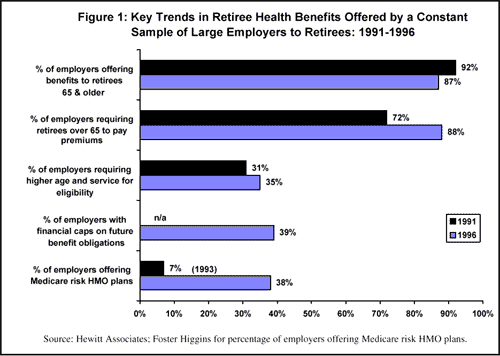
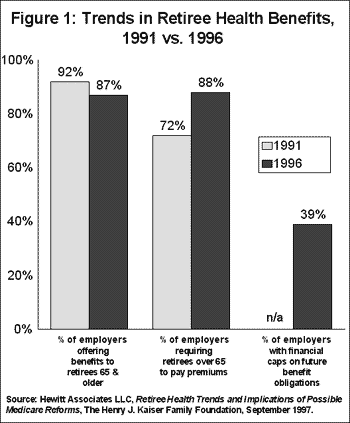
Part I of this report analyzes key trends in retiree health plans for a constant sample1 of large companies in the Hewitt database, finding that between 1991 and 1996, the vast majority of large employers continued to provide retiree health benefits, but there were significant changes in coverage, eligibility rules, and beneficiary contribution requirements. (Figure 1 summarizes selected key findings with respect to coverage of retirees.)

Availability of coverage declined for retirees ages 65 and over

  • For retirees age 65 and over, the share of large employers offering retiree benefits declined from 92 percent in 1991 to 87 percent in 1996.2

More retirees charged premiums

  • The share of large employers requiring pre-65 retirees to pay premiums increased from 85 percent in 1991 to 95 percent in 1996, and increased for post-65 retirees from 72 percent in 1991 to 88 percent in 1996.

Eligibility for postretirement medical coverage tightened through higher age and service requirements

  • The percentage of large employers setting minimum eligibility requirements for benefits at age 55 and 10-15 years of service (versus age 50 and shorter years of service) increased from 31 percent in 1991 to 35 percent in 1996.

Financial caps placed on future retiree health obligations

  • Virtually no large employers had financial caps on their future benefit obligations in 1991. By 1996, 39 percent of large employers have some form of dollar cap on the employer’s contribution for post-65 retiree coverage, and 36 percent had caps on pre-65 coverage.

More employers encourage use of managed care for retirees

  • The number of large employers offering Medicare risk HMOs has grown sharply from 7 percent in 1993 to 38 percent in 1996, according to other survey data.3

Implications of Medicare Reforms

Changing our focus from existing trends to possible future changes in retiree health plans, Part II of this report considers another potential wave of changes that might result from three significant Medicare reform proposals.

Option #1: Proposed increase in the Medicare age of eligibility

During the recent Medicare reform debate in connection with the Balanced Budget Act of 1997, the Senate included a provision that would have gradually raised the Medicare age of eligibility from 65 to 67, in tandem with the already scheduled increase in the Social Security eligibility age. Although dropped from the final bill, this issue will likely be revisited, and if enacted, could have a significant impact on retiree health plans. A few examples of the impact of raising the eligibility age include:

  • Raising the Medicare eligibility age to 67 would mean that plan costs for a 65-year-old retiree could be two to four times higher (depending on plan design) for each year of coverage without Medicare.
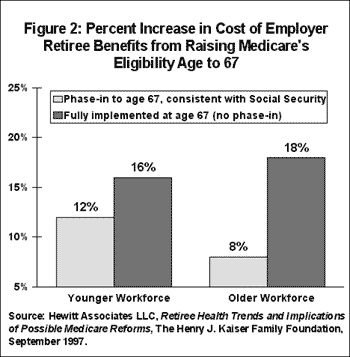
  • For a typical large company with a predominately younger workforce, the employer’s actuarial cost for lifetime retiree health benefits would rise about 16 percent (18 percent for a large employer with an older workforce).
  • Employer response to the eligibility age increase will vary, but the increased costs could encourage them to reduce (or eliminate) their retiree health financial commitment to active employees, while preserving coverage for current retirees, along with plan design changes.
    • For example, eliminating Medicare eligibility may increase the retiree health plan costs for a 66-year old from $1,000 per person per year to $4,000. To keep the cost effect neutral, the employer could require the retiree to pay the extra $3,000 for coverage, or redesign the plan to offset the increased cost. A cost-neutral plan redesign might include, for example, a $10,000 deductible, 50 percent coinsurance, with a $50,000 out-of-pocket limit on the retiree’s obligations.

Option #2: Changes in Medicare payments to Medicare HMOs

With employers increasingly moving toward Medicare managed care to keep costs down and provide comprehensive coverage to retirees, the favorable financial impact of that strategy could be significantly affected by changes in the way Medicare pays health plans in the future.

The Balanced Budget Act of 1997 makes significant changes in payments to Medicare managed care plans, in part to increase payment rates in rural areas but also to reduce future Medicare spending increases. Employers will soon begin the process of assessing what the specific financial impact of these changes may be. The revised payment formulas may significantly alter the geography of Medicare managed care plan offerings to retirees, as well.

Smaller payment increases in certain areas of the country as a result of the 1997 legislation could potentially make managed care plans less attractive to employers and to retirees in those areas if HMO benefits are reduced or premiums rise. Alternatively, payment and other policies that support the expansion of Medicare managed care may help to stabilize retiree health benefit coverage by helping to manage employer costs over the long term.

Option #3: Proposed shift to a defined contribution program

Another option for reforming Medicare, supported by some experts in the health care community, is to shift away from having Medicare pay the cost of each beneficiary’s care, e.g., a defined benefit approach, toward a defined contribution approach in which Medicare would pay a fixed sum for each beneficiary, who would then use that sum, e.g., through a voucher-like mechanism, to select coverage from competing health plans. In fact, the Balanced Budget Act of 1997 creates a private fee-for-service option under Medicare+Choice. The conferees note that this private fee-for-service option “represents the first defined contribution plan in which beneficiaries may enroll in the history of the [Medicare] program.”4

Broad-based use of a defined contribution approach, while empowering retirees to choose their own health plan, also shifts financial risk to employers sponsoring retiree health plans and to retirees. In addition, that cost shift could grow over time if the defined contribution rate increases yet fails to keep pace with medical inflation. This is particularly worrisome to employers because Medicare coverage is already less generous than what large employers typically offer active employees. Comparing the plan value of Medicare benefits to those of 250 large employers participating in the 1996 Hewitt Health Value InitiativeTM database, 82 percent of the indemnity plans offered to active employees provide higher benefit levels than Medicare.

A broad-based defined contribution scheme for Medicare could also create administrative complexities for employers, in terms of the difficulty of coordinating the retiree plan with the specific Medicare health plans retirees choose, and determining an appropriate price for them.

The combination of financial and administrative impacts could thus lead employers to reassess the manner and the extent of coverage they offer to future retirees.

Summary

Retiree health benefits remain important to employees and retirees, even though the prevalence of such coverage has declined, eligibility has tightened, and more cost sharing is required of retirees. Potentially the biggest source of profound changes to employer-sponsored retiree health programs in the future would come from proposals to restructure the Medicare program. Depending on their specific nature, such changes could either create a safety net beneath employer-sponsored coverage for retirees or create additional incentives for employers to cut back. Policymakers focusing on potential reforms of Medicare would be well advised to take a more integrated look at the interactions between Medicare coverage and the employer-sponsored retiree health coverage on which millions of retirees still depend.

About the Hewitt Associates Database

Hewitt Associates has been tracking the salaried employee benefit provisions of major employers since 1972 through annual updates to its database of companies. The 1996 Hewitt database contains plan design information on 1,050 major employers, including 62 percent of Fortune 500 companies. Analyses of trends based on large employers (e.g., those with usually at least 1,000 employees) provides a reliable indication of the main sponsors of employer-provided coverage for retirees, because smaller firms are far less likely to provide such coverage. Ninety percent of the Hewitt database consists of companies employing 1,000 or more employees; 57 percent of the database consists of companies with 5,000 or more employees, representing roughly 25 percent of all public and private companies in the United States of that size.

1318-chart1.gif

Return to top

Retiree Health Trends And Implications Of Possible Medicare Reforms:Press Release Fact SheetReport Part One Part Two Part Three Part Four Part Five Part Six Part Seven Part Eight

Retiree Health Trends and Implications of Possible Medicare Reforms – Fact Sheet

Published: Aug 30, 1997

Retiree Health Trends And Implications Of Possible Medicare Reforms

September 1997

Approximately 12 million of Medicare’s 39 million beneficiaries receive employer-sponsored retiree health benefits as a supplement to their Medicare coverage. In addition, millions of retired workers under age 65 rely on retiree health benefits as their primary source of health insurance coverage. While employer-sponsored health insurance is an important source of coverage for current retirees, health benefits for future retirees are uncertain.

Retiree Health Benefits Decline, 1991-1996

A declining share of large employers offered health benefits to retirees in 1996 compared to 1991, and an increasing share implemented reforms to limit their financial liability for retiree coverage (Figure 1), based on an analysis of a constant sample of about 600 large employers (with 1,000+ employees) conducted by Hewitt Associates LLC.

1318-fig1.gif

Availability of retiree coverage has declined:

Based on a constant sample of large employers, the share of employers offering retiree benefits to retirees age 65 and over declined from 92 percent in 1991 to 87 percent in 1996. Coverage for pre-65 retirees remained relatively stable. By comparison, the proportion of all large firms offering retiree coverage declined from 80% in 1991 to 71% in 1996, based on the Hewitt database.

Required payment of premiums has increased:

The share of large employers requiring post-65 retirees to pay premiums increased from 72 percent in 1991 to 88 percent in 1996; for pre-65 retirees, the share increased from 85 percent to 95 percent.

Use of financial caps has grown:

Dollar caps on future employer obligations for retiree health costs has emerged as a new feature of retiree benefits. In 1991, virtually no large employers had such caps; by 1996, 39 percent had caps on post-65 retiree coverage and 36 percent had caps on pre-65 coverage.

Other reforms have been implemented:

Between 1991 and 1996, a growing share of large employers tightened eligibility requirements, increased deductibles, raised contributions for dependent coverage, and increased enrollment of retirees in managed care plans.

The trend toward declining retiree benefits in the 1990s is due to a number of factors including: the pressure to control increasing health care costs; new accounting rules (FAS 106) which require companies to report accrued future retiree health benefit liabilities on their current financial statements; and employer concerns about the future financial impact of an aging population.

Medicare Reforms Affect Employer-Sponsored Retiree Coverage

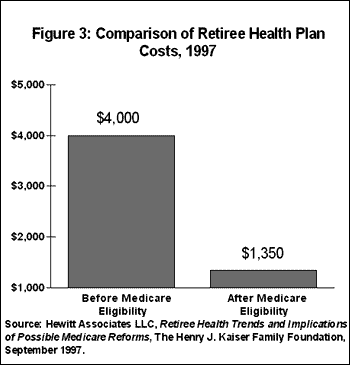
Because retiree health benefits generally supplement Medicare for retirees age 65 and older, changes in the Medicare program are likely to affect health care costs incurred by both employers and retirees. For example, raising Medicare’s eligibility age gradually from 65 to 67 (linking the Medicare and Social Security eligibility age) would increase the actuarial costs for lifetime retiree benefits by 12 percent for large employers with a younger workforce and by 8 percent for employers with an older workforce (Figure 2). When fully implemented at age 67 (no phase-in), this change would increase costs by 16 percent for employers with a younger workforce and by 18 percent for employers with an older workforce. This is because the average per person cost of health coverage for a retiree before Medicare eligibility is about three times the cost of a retiree with Medicare coverage ($4,000 vs. $1,350, respectively) (Figure 3).

1318-fig2.gif
1318-fig3.gif

Changes in Medicare HMO payments could also impact retiree health costs. Higher Medicare HMO payments in rural areas, as enacted under the Balanced Budget Act of 1997, could encourage the migration of plans to rural areas and allow employers in these areas to move additional retirees into managed care plans. However, reductions in future Medicare payments to HMOs in other areas could make managed care a less attractive option for employers and retirees if HMOs respond to payment changes by offering fewer benefits or charging higher premiums.

More comprehensive Medicare reforms under discussion, such as a shift to a defined contribution program, could also impact employer-sponsored retiree coverage. Under a defined contribution approach, Medicare would pay a fixed sum on behalf of each beneficiary and beneficiaries could apply the amount to the cost of coverage from a variety of Medicare-approved private health plans. If Medicare’s defined contribution rate does not keep pace with medical inflation, additional costs are likely to be shifted to employers, retiree with employer-sponsored coverage, and other beneficiaries.

Issues

Employer-sponsored retiree health plans play an important role in covering retirees both before and after Medicare eligibility. Retirees are generally at an age when health problems tend to increase, annual incomes decline, and coverage for medical expenses becomes more critical. Since 1991, there have been declines in the availability and generosity of retiree health benefits offered by employers. Employers and retirees face significant financial risks from potential changes to the Medicare program because of the strong interaction between employer-sponsored retiree health benefits and the Medicare program.

This fact sheet is based on Retiree Health Trends and Implications of Possible Medicare Reforms, prepared by Hewitt Associates LLC with support from the Kaiser Family Foundation, September 1997. This study analyzed key trends in retiree health plans from 1991 through 1996 using a constant sample of large companies (generally those with at least 1,000 employees) in the Hewitt Associates database. The 1996 Hewitt database contains plan design information for 1,050 major employers. The study also analyzed the potential impact of Medicare reform options on retiree health plans.

Return to top

Retiree Health Trends And Implications Of Possible Medicare Reforms:Press Release Fact Sheet Report

What are HIV Prevention Needs of Adults Over 50?

Published: Aug 30, 1997
  • Fact Sheet: What Are HIV Prevention Needs of Adults Over 50?

A Forum on the Implications of Changes in the Health Care Environment for Native American Health Care

Published: Jul 30, 1997

With the assistance of the First Nations Development Institute, the Henry J. Kaiser Family Foundation commissioned several studies of critical issues in Native-American health care. These studies examined the trends shaping the future of Native-American health care; the existing health systems and planning capacity in the Native-American health care system; the changes occurring in the IHS; the role of Medicaid in Native-American health care; the attitudes and preferences of Native American health care consumers; and the factors shaping the decisions being made by tribal leaders. The findings from these studies were presented at a Kaiser Forum on the “Implications of Changes in the Health Care Environment for Native-American Health Care,” in Washington, D.C., November 1996. The studies and a synthesis of the Forum discussion are published in this report.