KFF designs, conducts and analyzes original public opinion and survey research on Americans’ attitudes, knowledge, and experiences with the health care system to help amplify the public’s voice in major national debates.
Teenage Sexual and Reproductive Behavior in the United States
The Changing Face of Teen Sexual Activity and Unplanned Pregnancy
Over the past two decades, the pregnancy rate among sexually experienced teenage girls aged 15-19 has declined by 19%, indicating that many are doing a better job at using contraception. But, because the percentage of teens who have had sex has been steadily increasing at the same time, in real terms, the problem of teen pregnancy is getting worse. In addition, as of the late 1980s, a higher proportion of teenage girls who get pregnant are giving birth and, over the last three decades, dramatically fewer are getting married when they become teen mothers, resulting in more children in households with single teen mothers.
Sexual Activity
The proportion of 15- 19-year-old girls who are sexually active rose from 47% in 1982 to 55% in 1990.
Fifty-six percent of teenage girls and 73% of teenage boys today have had sexual intercourse by their18th birthday. In the early 1970s, 35% of girls and 55% of boys had had sex by that age.
Most very young teenage boys and girls have not had intercourse — 84% of 13-year-olds, 77% of 14-year-olds and 70% of 15-year-olds.
While the likelihood of having intercourse increases steadily with age, 1 in 5 teenagers do not have intercourse during their teenage years.
Seven in 10 girls who had sex before age 14 and 6 in 10 of those who had sex before age 15 report having sex involuntarily.
Most teenagers begin having intercourse in their mid-to-late teens, about 8 years before they marry.
Among the most common reasons teens have sex, according to 55% of teens, is that “they think they’re ready.”
Six out of ten teenage girls say another reason why teen girls may have sex is because a boyfriend is pressuring them.
Contraceptive Use
Five out of ten (48%) teens say they use birth control “all the time,” an additional 24% say they use it “most of the time,” and 15% say they use it “sometimes.” Only 11% of sexually active teens say they never use birth control, approximately the same percentage as sexually active adults who don’t.
The contraceptive most frequently used by teens is the condom (44%), followed by birth control pills (40%). One-quarter of the teenagers who use the pill also use the condom.
Two-thirds of teenagers use some contraceptive method — usually a condom — the first time they have intercourse.
Teenage girls’ birth control use at first intercourse rose from 48% to 65% during the 1980s, almost entirely because of a doubling in condom use (from 23% to 48%).
A sexually active teenage girl using no contraception over one year has a 90% chance of becoming pregnant.
Sexually Transmitted Diseases (STDs)
Three million teenagers — about 1 in 4 sexually experienced teenagers — acquire an STD every year.
In a single act of unprotected sex with an infected partner, a woman has a 1% risk of acquiring HIV, a 30% risk of getting genital herpes, and a 50% chance of contracting gonorrhea.
Chlamydia is more common among teenagers than among older men and women; in some studies, up to 30% of sexually active teenage girls and 10% of teenage boys tested for STDs have been found to have chlamydia.
Teenagers have higher rates of gonorrhea than sexually active men and women aged 20-44. In some studies, up to 15% of sexually active teenage girls have been found to be infected with HPV, the virus that causes genital warts, many with a strain of this virus linked with cervical cancer.
By the end of 1995, there were more than 2,300 teenagers known to have AIDS.
Teens are worried about getting AIDS or other STDs. Four out of ten teens say they worry at least some about getting AIDS someday or another STD.
Teenage Pregnancy
About one million teenage girls — 11% of all girls aged 15-19 (112 per 1,000) and 20% of those who have had sexual intercourse (204 per 1,000) — become pregnant each year.
Eighty-five percent of teenage pregnancies are unplanned, accounting for one-quarter of all unplanned pregnancies each year.
Fifty-four percent of teenage pregnancies each year (960,000 in 1992) end in birth (most of which are unplanned); about one-third end in abortion (32%) and the rest in miscarriage (14%).
Among sexually experienced teenagers, about 16% of 14-year-olds, 17% of 15- 17-year-olds and 23% of 18- 19-year-olds become pregnant each year.
Teenage pregnancy rates are much higher in the United States than in many other developed countries — twice as high as in England and Wales, France and Canada; and 9 times as high as in the Netherlands or Japan.
Of all births to U.S. women, 13% are to teenagers.
Twenty percent of U.S. abortions each year are to teenagers.
A majority of teens (55%) say when teens have unplanned pregnancies, it’s “often” a result of having sex when drunk or on drugs. Forty-six percent say it’s “often” because teens have sex when they don’t have birth control with them.
Sources of Data:
The data in this fact sheet are from research conducted by the Kaiser Family Foundation, The Alan Guttmacher Institute, the National Center for Health Statistics, and/or were published in Family Planning Perspectives.
For More Information:
Kaiser Family Foundation Survey on Teens and Sex: What They Say Teens Today Need to Know, And Who They Listen To,1996.
Centers for Disease Control and Prevention.
Sex and America’s Teenagers, The Alan Guttmacher Institute, 1994.
Testing Positive: Sexually Transmitted Disease and the Public Health Response, The Alan Guttmacher Institute, 1993.
A fact sheet, Q&A and resource list prepared for a briefing held for journalists in New York City on December 18, 1997 in New York City as part of a joint program by The Alan Guttmacher Institute, The Kaiser Family Foundation and the National Press Foundation. This program focused on efforts to break through barriers to emergency contraception, as well as future opportunities for expanding access. New surveys conducted for the Kaiser Family Foundation of American women and men, and obstetrician/gynecologists, family practice physicians, as well as, nurse practitioners and physician assistants on emergency contraception are available separately as package #1352.
The 1997 Kaiser Family Foundation Survey of Americans on Emergency Contraception examined public knowledge and attitudes regarding unplanned pregnancy and contraception, with a particular focus on emergency contraceptive pills. The survey, conducted by Princeton Survey Research Associates for Kaiser Family Foundation, consisted of telephone interviews with a nationally representative sample of 1000 women and 300 men aged 18 to 44 years old living in telephone households in the continental United States. The interviews were conducted from May 13, 1997 through June 8, 1997. The margin of error is plus or minus 3 percent for the national sample, plus or minus 3 percent for women, and plus or minus 6 percent for men.
The surveyors called back potential respondents 15 times before removing them from the sample, achieving a response rate of 59 percent. Averaging 15 minutes in length, all interviews were conducted by female interviewers. Respondents were told they would be participating in “a confidential national opinion survey about some important health issues.” Of those who agreed to be interviewed, 6 percent (89 people) terminated the interview before it was completed. The analyses reported here weight the data to be proportional to the actual U.S. population’s demographic characteristics with respect to gender, race, age, income and educational attainment.
The 1995 Kaiser Survey on Public Knowledge and Attitudes on Contraception and Unplanned Pregnancy, conducted by Louis Harris Associates for Kaiser Family Foundation, examined public knowledge and attitudes regarding the magnitude and scope of unplanned pregnancy and various contraceptive options, including emergency contraceptive pills. The national random sample consisted of 2,002 adults, 18 years of age and older, and was conducted between October 12 and November 13, 1994. The margin of error is plus or minus 3 percent for Americans 18-44, plus or minus 4 percent for women 18-44, and plus or minus 4 percent for men 18-44.All interviews were matched for gender of the interviewer and respondent. The surveyors called back potential respondents four times before discarding them from the sample. Among 4,000 women and men contacted by telephone, 1,000 women and 1,002 men completed the survey, for an overall response rate of 50 percent. One hundred and eighty one individuals out of the 4,000 (4%) refused the survey outright, and 1868 (46%) terminated the interview before it was completed. The analyses reported here weight the data to be proportional to the actual U.S. population’s demographic characteristics with respect to gender, race, age, educational attainment, and health insurance status.
Survey of Health Care Providers on Emergency Contraception
The 1997 Kaiser Family Foundation Survey of Health Care Providers on Emergency Contraception was designed by Kaiser Family Foundation and Fact Finders, Inc. and conducted by Fact Finders, Inc. The national telephone survey, which included 754 women’s health care providers, including 305 obstetrician-gynecologists, 236 family practice physicians, and 229 nurse practitioners and physician assistants, examined knowledge, attitudes and practices regarding reproductive health services, with a focus on emergency contraception. Using three separate random probability samples, Fact Finders, Inc. drew nationally representative samples of obstetrician-gynecologists, family practice physicians and nurse practitioners from the American Medical Association Physicians Masterfile. Obstetrician-gynecologists and family practice physicians were drawn directly from the Masterfile, while the sample for nurse practitioners/physician assistants was drawn from a separate sample of obstetrician-gynecologist and family practice offices. The statistical sampling error associated with the overall findings based on a random probability sampling of 300 ranges from plus or minus 3.4 to plus or minus 5.7 percent (+/- 3.4-5.6% for Ob/Gyns, +/- 3.7-6.2% for family practice physicians, and +/- 3.7-6.2% for nurse practitioners and physician assistants). Fact Finders, Inc., contacted providers by phone and facsimile to schedule phone interviews which took place between March 5, and June 12, 1997. Health care providers were contacted up to 15 times before being discarded from the sample, with refusal rates of 18 percent for the obstetrician-gynecologists, 22 percent for the family practice physicians, and 2 percent for the nurse practitioners/physician assistants.
The 1995 survey was a national telephone survey of 307 obstetrician-gynecologists and 154 family practice physicians, examining knowledge and attitudes toward unplanned pregnancy and contraception, including emergency contraceptive pills. Fact Finders, Inc. drew separate nationally representative samples of obstetrician-gynecologists and family practice physicians from the American Medical Association Physicians’ Masterfile and contacted them by phone and facsimile to schedule phone interviews which took place between February 1 and March 21, 1995. Physicians were contacted up to 15 times before being discarded from the sample, with a refusal rate of 23 percent. The statistical sampling error associated with the overall findings based on a random probability sampling of 307 ranges from plus or minus 3.4 to plus or minus 5.7 percent for obstetrician-gynecologists and plus or minus 4.8 to plus or minus 8.0 percent for family practice physicians. The survey respondents mostly practiced in urban and suburban locations, in solo or single-specialty group practices, were men and were between the ages of 40 and 64. Those refusing to respond to the survey were similar to the respondents with respect to practice characteristics, age and gender patterns, and geographic diversity.
The 1997 Kaiser Family Foundation Survey of Americans on Emergency Contraception examined public knowledge and attitudes regarding unplanned pregnancy and contraception, with a particular focus on emergency contraceptive pills. The survey, conducted by Princeton Survey Research Associates for Kaiser Family Foundation, consisted of telephone interviews with a nationally representative sample of 1000 women and 300 men aged 18 to 44 years old living in telephone households in the continental United States. The interviews were conducted from May 13, 1997 through June 8, 1997. The margin of error is plus or minus 3 percent for the national sample, plus or minus 3 percent for women, and plus or minus 6 percent for men.
The surveyors called back potential respondents 15 times before removing them from the sample, achieving a response rate of 59 percent. Averaging 15 minutes in length, all interviews were conducted by female interviewers. Respondents were told they would be participating in “a confidential national opinion survey about some important health issues.” Of those who agreed to be interviewed, 6 percent (89 people) terminated the interview before it was completed. The analyses reported here weight the data to be proportional to the actual U.S. population’s demographic characteristics with respect to gender, race, age, income and educational attainment.
The 1995 Kaiser Survey on Public Knowledge and Attitudes on Contraception and Unplanned Pregnancy, conducted by Louis Harris Associates for Kaiser Family Foundation, examined public knowledge and attitudes regarding the magnitude and scope of unplanned pregnancy and various contraceptive options, including emergency contraceptive pills. The national random sample consisted of 2,002 adults, 18 years of age and older, and was conducted between October 12 and November 13, 1994. The margin of error is plus or minus 3 percent for Americans 18-44, plus or minus 4 percent for women 18-44, and plus or minus 4 percent for men 18-44.
All interviews were matched for gender of the interviewer and respondent. The surveyors called back potential respondents four times before discarding them from the sample. Among 4,000 women and men contacted by telephone, 1,000 women and 1,002 men completed the survey, for an overall response rate of 50 percent. One hundred and eighty one individuals out of the 4,000 (4%) refused the survey outright, and 1868 (46%) terminated the interview before it was completed. The analyses reported here weight the data to be proportional to the actual U.S. population’s demographic characteristics with respect to gender, race, age, educational attainment, and health insurance status.
Survey of Health Care Providers on Emergency Contraception
The 1997 Kaiser Family Foundation Survey of Health Care Providers on Emergency Contraception was designed by Kaiser Family Foundation and Fact Finders, Inc. and conducted by Fact Finders, Inc. The national telephone survey, which included 754 women’s health care providers, including 305 obstetrician-gynecologists, 236 family practice physicians, and 229 nurse practitioners and physician assistants, examined knowledge, attitudes and practices regarding reproductive health services, with a focus on emergency contraception. Using three separate random probability samples, Fact Finders, Inc. drew nationally representative samples of obstetrician-gynecologists, family practice physicians and nurse practitioners from the American Medical Association Physicians Masterfile. Obstetrician-gynecologists and family practice physicians were drawn directly from the Masterfile, while the sample for nurse practitioners/physician assistants was drawn from a separate sample of obstetrician-gynecologist and family practice offices. The statistical sampling error associated with the overall findings based on a random probability sampling of 300 ranges from plus or minus 3.4 to plus or minus 5.7 percent (+/- 3.4-5.6% for Ob/Gyns, +/- 3.7-6.2% for family practice physicians, and +/- 3.7-6.2% for nurse practitioners and physician assistants). Fact Finders, Inc., contacted providers by phone and facsimile to schedule phone interviews which took place between March 5, and June 12, 1997. Health care providers were contacted up to 15 times before being discarded from the sample, with refusal rates of 18 percent for the obstetrician-gynecologists, 22 percent for the family practice physicians, and 2 percent for the nurse practitioners/physician assistants.
The 1995 survey was a national telephone survey of 307 obstetrician-gynecologists and 154 family practice physicians, examining knowledge and attitudes toward unplanned pregnancy and contraception, including emergency contraceptive pills. Fact Finders, Inc. drew separate nationally representative samples of obstetrician-gynecologists and family practice physicians from the American Medical Association Physicians’ Masterfile and contacted them by phone and facsimile to schedule phone interviews which took place between February 1 and March 21, 1995. Physicians were contacted up to 15 times before being discarded from the sample, with a refusal rate of 23 percent. The statistical sampling error associated with the overall findings based on a random probability sampling of 307 ranges from plus or minus 3.4 to plus or minus 5.7 percent for obstetrician-gynecologists and plus or minus 4.8 to plus or minus 8.0 percent for family practice physicians. The survey respondents mostly practiced in urban and suburban locations, in solo or single-specialty group practices, were men and were between the ages of 40 and 64. Those refusing to respond to the survey were similar to the respondents with respect to practice characteristics, age and gender patterns, and geographic diversity.
1997 Kaiser Family Foundation Survey of Americans on Emergency Contraception
Conducted for the Henry J. Kaiser Family Foundation By Princeton Survey Research Associates
Topline For Men
May 13-May 26, 1997
Introduction:
Hello, my name is _____, and I’m calling from Princeton Survey Research of Princeton, New Jersey. We are conducting a confidential national opinion survey about some important health issues.
N = 300 men, age 18-44 Margin of error: plus or minus 5 percent * Men were asked a subset of the women’s questions.
1. My first question is, In general, how would you describe your own health? Is it excellent, good, only fair, or poor?
35Excellent55Good7Only fair3Poor*Don’t know0Refused100 2. These next few questions are about your own sexual behavior. Please keep in mind that all of your answers are confidential. First, have you had sexual intercourse within the last six months?
82Yes17No0Gay (Vol.)*Don’t know1Refused100 3. Have you ever had sexual intercourse?
Based on those who have not had sexual intercourse within the last six months (n=55)
76Yes24No0Gay (Vol.)0Don’t know0Refused100 4. Do you have a partner who is currently pregnant or trying to get pregnant?
Based on those who have had sexual intercourse within the last six months (n=245)
15Yes85No*Gay (Vol.)0Don’t know*Refused100 5. Have you or your partner, if you have one, been sterilized, or have any condition that makes it impossible for your partner to ever get pregnant? (Birth Control Devices Not Included)
Based on those who have had sexual intercourse within the last six months and whose partners are not pregnant or trying to get pregnant (n=210)
25Yes73No0Gay (Vol.)1Don’t know1Refused100 6. When you have sexual intercourse, how often do you and your partner use birth control or do anything else to try to prevent pregnancy? Would you say … (Read)
Based on those who have had sexual intercourse within the last six months, whose partners are not pregnant or trying to get pregnant, and who are able to conceive (n=166)
12Never8Only sometimes,19Most of the time, or59All of the time use birth control?0Don’t know (Do Not Read)2Refused (Do Not Read)100 7. I am going to read a list of birth control methods. We are interested in which of these methods you use most often. Please tell me which of these you or your most recent partner use by saying “yes” when I mention it. You can say “yes” to more than one type of birth control if you currently use more than one method at the same time. Here’s the list. (Read 1 – 10 In Order. Record Up To Three Mentions. If Respondent Has More Than One Current Partner, Ask About His Main Partner.)
Based on those who have had sexual intercourse within the last six months, whose partners are not pregnant or trying to get pregnant, who are able to conceive, and who use birth control at least sometimes (n=143)
71Condoms60Birth control pills4A diaphragm or cervical cap1An IUD, or intrauterine device7Depo-Provera, or contraceptive shots1Norplant, or contraceptive implants9Spermicides, or foams and suppositories with spermicides10The rhythm method, or having sex only during the safe time of the month18Withdrawal or “pulling out”2Refused (Do Not Read)1Some other method? (Specify)20Don’t know0Refused 8. If a woman has just had sex and thinks she might become pregnant, is there anything she can do in the next few days to prevent the pregnancy? (Accept Multiple “Yes” Responses)
21Yes, there is something (Unspecified)*Yes, there is something — RU-486/French abortion pill (Vol.)2Yes, there is something — birth control pills (Vol.)3Yes, there is something — morning-after pills (Vol.)1Yes, there is something — emergency contraceptive pills (Vol.)1Yes, there is something — other (Specify)34No, there is not anything1Too late to prevent pregnancy (Vol.)38Not sure/Don’t know*Refused9. What could she do in the next few days to prevent the pregnancy? (Do Not Read. Record Only One Response.)
Based on respondents who said yes to Q8 but did not specify a method (n=60)
19Take morning-after pills2Take emergency contraceptive pills15Take birth control pills11Take RU-486/French abortion pill0Insert an IUD6Get an abortion15Other32Not sure/Don’t know (Do Not Probe)0Refused100 10. Have you ever heard of emergency contraceptive pills? (Accept Multiple “Yes” Responses)
Based on those who did not mention emergency contraceptive pills for Q8 or Q9 (n=298)
19Yes, have heard of it (Unspecified)2Yes, is RU-486 (Vol.)2Yes, is birth control pills (Vol.)1Yes, it is the same thing as morning-after pills (Vol.)*Yes, is other (Specify)76No, have not heard of it*Not sure/Don’t know0Refused
The availability of employer-sponsored retiree health benefits from large companies has declined since 1991, according to a new study conducted for the Kaiser Family Foundation by Hewitt Associates LLC. The study also shows that the number of big businesses charging premiums, tightening eligibility requirements, encouraging use of managed care, and placing dollar caps on coverage increased. In addition, the report concluded that potential changes in the Medicare program, such as a higher eligibility age, could accelerate the decline in retiree benefits by shifting additional health care coststo employers and retirees and thus encouraging companies to scale back or eliminate retiree plans.
Medicaid’s transition from fee-for-service to managed care has enormous implications for safety net providers – those hospitals and clinics that deliver basic health care to large numbers of the uninsured. Medicaid has been a major revenue source for many of these providers, because it has reimbursed for the care and services they deliver to low-income patients who, without Medicaid coverage, generally would have no other source of payment. The revenues from these Medicaid patients often allow these hospitals and clinics to maintain the staffing, equipment, and other capacity to serve the uninsured. Loss of some or all of these Medicaid revenues due to lower payment rates for beneficiaries or to their diversion elsewhere could lead to the contraction of service capacity or, in extreme cases, closure of safety net facilities. As a result, the uninsured in these communities will have much greater difficulty in accessing needed care.
Current state practices and policies with respect to safety net providers vary. A 1996 survey by the National Academy of State Health Policy found that, in the 38 states with Medicaid risk contracting programs, 30 states reported that federally-qualified health centers participated as contractors or subcontractors in these programs; 22 states reported that community health centers or rural health clinics participated; and 256 states reported that local health departments participated. The survey found that few states reported requiring Medicaid MCOs to contract with any particular safety net providers.58
The Balanced Budget Act does not articulate a clear policy for the support of safety net providers. It contains some provisions intended to give states the ability to reduce Medicaid payments to these providers, and it contains some provisions intended to protect these providers from harm at the hands of Medicaid MCOs. The policies toward “safety net” hospitals differ from those toward “safety net” clinics. In each case, the real-world impact of these changes will vary from community to community and state to state.
Disproportionate Share Hospitals
The Balanced Budget Act contains a number of provisions designed to achieve federal savings by reducing Medicaid reimbursement to hospitals generally, and to “disproportionate share” hospitals like public and children’s hospitals in particular. The Act repeals the so-called Boren amendment, which required “reasonable and adequate” payments to hospitals for inpatient care delivered to Medicaid patients. (This change is not likely to have much effect on hospital Medicaid revenues in states with high managed care penetration because, under HCFA interpretation, MCOs were not subject to the Boren amendment in setting payment rates to affiliated hospitals.) The Act still requires states to make additional payments to hospitals serving high volumes of Medicaid or uninsured patients, but it limits the federal Medicaid matching funds available for these DSH payments in each state.59
The Act does not require Medicaid MCOs to contract with DSH hospitals or, if they elect to do so, to pay them any particular rate or to guarantee them a certain volume of patient referrals. In general, the Act leaves it to Medicaid MCOs and DSH hospitals to work out any affiliations, subject to the following constraints. (As in the case of other MCO performance standards, these provisions do not apply in states currently operating section 1115 waivers or under current section 1915(b) waivers.)
DSH Payments
States must make DSH payments directly to DSH hospitals rather than funneling them through MCOs.60 Direct payment is obviously beneficial to DSH hospitals, as it eliminates any possibility of delay or diversion of DSH payments by an MCO.
Emergency Services
Both MCOs and PCCMs must provide coverage for emergency services “without regard to prior authorization or the emergency care provider’s contractual relationship with” the MCO or the PCCM. Emergency services are defined broadly as those needed to “evaluate or stabilize” an emergency medical condition that a “prudent layperson” could reasonably expect to require immediate medical attention. This requirement should protect DSH hospitals from MCOs that might deny payment to unaffiliated hospital emergency rooms for care provided to Medicaid enrollees (even though the cost of that care is part of the MCO’s Medicaid capitation rate). It applies to MCO or PCCM contracts entered into or renewed on or after October 1, 1997.
Timely Payments
MCOs must pay hospitals and other health care providers on a timely basis for services provided to those Medicaid enrollees who are covered under their risk contract with the state. As with state Medicaid reimbursement to fee-for-service providers, timely means that the MCO pays 90 percent of “clean” claims (for which no further substantiation is required) within 30 days and 99 percent within 90 days. This requirement should help protect DSH hospitals from cash flow problems resulting from long delays in payment by MCOs for emergency care or other covered services, whether or not the hospital is affiliated with the MCO whose enrollee it treats.
Default Enrollments
As described in section 4, the Act contains provisions related to “default” or “auto” enrollment in the case of states implementing mandatory managed care under section 1932. These provisions require that states, in the process of enrolling beneficiaries who do not choose among the MCOs offered to them, “take into consideration maintaining . . . relationships with providers that have traditionally served [Medicaid] beneficiaries.” DSH hospitals are not expressly referenced, but they are surely among the providers that have “traditionally” served beneficiaries. In states that implement this provision, it could make DSH hospitals attractive as affiliates to those managed care plans seeking to increase the number of beneficiaries they enroll through the default enrollment process.
Liberalized Solvency Requirements
The Act’s provisions relating to emergency services and timely payments should be helpful to DSH hospitals that are not themselves MCOs. For those DSH hospitals that choose to operate as an MCO, capitalization and cash reserve requirements relating to state insolvency standards for health maintenance organizations or insurers may be a concern. The Act specifies that, as a general rule, MCOs meet state-established solvency standards for private HMOs or be state-certified as a “risk bearing entity.” However, two exceptions are relevant to DSH hospitals. First, any organization that is a “public entity” is not subject to the solvency standards applicable to private HMOs or risk bearing entities; this is obviously relevant to DSH hospitals operated by counties or localities. Second, any DSH hospital, public or private, that qualifies as a “provider-sponsored organization” is exempt from these solvency standards. Presumably, a DSH hospital could qualify as a PSO under the new Medicare provisions in the Balanced Budget Act or under relevant state law.
Federally-Qualified Health Centers
As in the case of Medicaid DSH hospitals, the Balanced Budget Act contains changes designed to reduce federal spending on payments to federally qualified health centers. Among these are federally funded community and migrant health centers, health clinics run by Indian tribes or urban Indian organizations, and urban or rural primary care clinics that meet the requirements applicable to community health centers but do not receive federal grant funds. These requirements include providing primary care services to people living in an FQHC’s service area, regardless of their ability to pay. Though the Act retains the current legal requirement that state Medicaid programs cover the services provided by FQHCs, it phases out the requirement that states pay FQHCs at a rate that fully reflects their costs of delivering care to Medicaid patients. CBO assumes that states will take advantage of this flexibility to reduce payments to FQHCs, yielding some federal savings as well.
Emergency Services
States may choose to cover FQHC services through contracts with MCOs or “carve out” these services from these contracts. In either case, the Act does not require MCOs to contract with FQHCs, nor does it address the terms of any contractual arrangements MCOs might elect to enter into with FQHCs. The Act does, however, include a few provisions that should help to maintain the fiscal viability of FQHCs as state Medicaid programs transition to managed care. (In contrast to the situation with respect to DSH hospitals, these provisions appear to apply in states operating under section 1115 or section 1915(b) waivers.)
Payment Rates
Under current law, state Medicaid programs must cover the services provided by FQHCs and must pay participating FQHCs 100 percent of the cost of delivering covered services to Medicaid patients. The Act phases out this requirement beginning in fiscal year 2000, when states are allowed to pay only 95 percent of costs. The phase-out continues through fiscal year 2003, when states are permitted to pay only 70 percent of costs, and then repeals the requirement altogether effective October 1, 2003. During this same “transitional” period – October 1, 1997 through October 1, 2003 – the Act sets forth two requirements related to reimbursement of FQHCs subcontracting with Medicaid MCOs.
First, MCOs that enter into contracts with FQHCs must make payments on behalf of Medicaid enrollees treated by the FQHCs that are “not less than the level and amount of payments” the MCO would make for the same services if delivered by another provider within the MCO’s network. Second, the Act requires the state Medicaid program to supplement, on a quarterly basis, the payment made by the MCO to the FQHC, so that the total amount the FQHC receives for treating the MCO’s enrollees equals what it would be entitled to get had the patient been a fee-for-service beneficiary. For example, if in fiscal year 1999 the MCO paid its FQHCs 90 percent of cost, the state would have to provide the other 10 percent. These requirements do not guarantee the FQHC any defined volume of Medicaid patients or any aggregate amount of Medicaid revenues. But they do, however, attempt to ensure that, during the transition period, FQHCs do not receive less for treating MCO Medicaid enrollees than for beneficiaries in fee-for-service arrangements.
Timely Payments
The requirements for timely payment by MCOs to DSH hospitals described above also apply to FQHCs. Thus, MCOs must pay 90 percent of the clean claims submitted by FQHCs for covered services provided to MCO Medicaid enrollees within 30 days of receipt, and 99 percent within 90 days of receipt.
Default Enrollment
As with DSH hospitals, the Act provides for default enrollment processes that have the potential to give some priority to FQHCs. The Act requires that states using the section 1932 route to mandatory managed care assign beneficiaries that do not choose among MCOs offered to them in a way that “takes into consideration maintaining existing provider-individual relationships or relationships with providers that have traditionally served [Medicaid] beneficiaries.” FQHCs have patient relationships with many Medicaid beneficiaries and have traditionally served them. MCOs that contract with, or are owned by, FQHCs, could potentially benefit from this statutory standard by enrolling beneficiaries (including patients who they have served in the past) who have failed to select an MCO.
Liberalized Solvency Requirements
As with DSH hospitals, the Act provides for liberalized solvency requirements for FQHCs that want to operate their own MCOs rather than contract with MCOs owned by hospitals or other providers or by investors. (Currently, FQHCs own or operate between 20 and 30 Medicaid MCOs; in six states, these MCOs have the largest Medicaid enrollment.) The Act provides that the solvency standards generally applicable to MCOs – those set by the state for private HMOs or for risk bearing entities – do not apply to an MCO that “is or (is controlled by)” one or more FQHCs and that meets solvency standards “established by the State for such an organization.”
Implementation of the Medicaid managed care provisions of the Balanced Budget Act presents HCFA and the states with a daunting set of implementation issues. HCFA, which is also responsible for implementing the Health Insurance Portability and Accountability Act of 1996 (P.L. 104-191), the Medicare provisions of the Balanced Budget Act, and the new Child Health Block Grant, will have significant new responsibilities with respect to Medicaid. A major task will be to issue administrative guidance on these managed care provisions, as well as monitor and enforce state and MCO compliance with that guidance. HCFA action on these Medicaid managed care provisions, is particularly important: without timely federal guidance and monitoring, in some states federal Medicaid dollars may inadvertently finance the underservicing of low-income women and children and other Medicaid beneficiaries who have been required to enroll in MCOs that do business only with Medicaid.
From the state standpoint, the Balanced Budget Act provides broad new flexibility with respect to mandatory managed care. However, the Act also establishes a number of new federal requirements that may make state Medicaid agencies more accountable for their expenditure of federal Medicaid managed care funds. One is a reinstatement of the requirement for federal prior approval of all state managed care contracts in excess of $1 million. Another concerns new conflict-of-interest rules governing state officials involved in Medicaid managed care contracting. Yet others involve new management information system reporting requirements and a new requirement to develop a quality assessment and improvement strategy consistent with federal standards. The extent to which these requirements actually improve the performance of state agencies and ultimately the performance of contracting MCOs depends largely on how clearly and effectively HCFA (and the HHS Inspector General) implement these requirements.
A critical first-priority issue for both HCFA and the Inspector General is the availability of accurate, policy-relevant data. Currently, most states do not report on a quarterly basis the number of beneficiaries enrolled in MCOs or the cost of those enrollees. Similarly, states generally do not report such information by beneficiary group (e.g., children, adults, disabled, or elderly) or by type of managed care arrangement (e.g., MCO or PCCM). Without this basic information, it is extremely difficult for federal officials or policy analysts to monitor the Medicaid program’s transition to managed care.61 The Secretary of HHS has the statutory authority to require such information; the Medicaid statute has long required state Medicaid agencies to “make such reports, in such form and containing such information, as the Secretary may from time to time require.” This authority was augmented by provisions of the Balanced Budget Act relating to upgrading the state Medicaid management information systems. As the amount of federal Medicaid matching funds flowing through Medicaid MCOs increases, it will become even more essential that the Secretary use this authority to gain a current understanding of the expenditure of those funds and the patterns of enrollment of Medicaid beneficiaries.62
Ultimately, the test of the Balanced Budget Act’s Medicaid managed care changes will come not during the nation’s current economic expansion, but when regional or national economic growth slows significantly, driving down state revenues and increasing the number of people enrolled in MCOs. Will the fiscally pressed states maintain capitation rates high enough to enable even MCOs made up exclusively of Medicaid beneficiaries to provide covered services? If states freeze or even reduce Medicaid capitation rates, how will MCOs react? Will these MCOs leave the program altogether, or will they begin to reduce or withhold covered services from their enrollees? Whatever the response, how will beneficiary access to care, beneficiary health status, and the fiscal capacity of safety net providers be affected? The answers to these questions will not be known for several years. In the interim, careful monitoring of Medicaid’s shift from fee-for-service to managed care will be essential to assess and refine the Balanced Budget Act’s provisions.
Endnotes
58. Jane Horvath and Neva Kaye, Medicaid Managed Care: A Guide for States, 3rd Edition, National Academy for State Health Policy, 1997, pp. I-19 – 1-20. 59. Andy Schneider, Stephen Cha, and Sam Elkin, Overview of Medicaid “DSH” Provisions in the Balanced Budget Act of 1997, P.L. 105-33, Center on Budget and Policy Priorities, September 3, 1997, available on this website60. An exception is made for “payment arrangements” in effect on July 1, 1997, which appears to apply to Alabama and Wisconsin. 61 As analysts at the Urban Institute recently noted, “Existing national data sources tell us very little about who [Medicaid beneficiaries enrolled in managed care] are, what types of services they use, and how much was spent on these services. As more beneficiaries are enrolled into managed care plans, this problem will be exacerbated.” David Liska et al., Medicaid Expenditures and Beneficiaries: National and State Profiles and Trends, 1990-1995, Kaiser Commission on the Future of Medicaid, November 1997, p. xiii. 62. In connection with the implementation of the Child Health Block Grant, HCFA has issued Medicaid reporting forms calling for the number of unduplicated children and adults enrolled in managed care arrangements, as well as Medicaid payments to MCOs. HCFA, Financing Provisions of the Child Health Insurance Program (CHIP) and Related Medicaid Program Provisions, December 5, 1997 Draft, Forms HCFA-64EC, HCFA-64-EA, and HCFA-37.3.
Nearly 10 million children are uninsured, often resulting in difficulties in obtaining needed health care. To expand coverage to low-income uninsured children, Congress enacted the State Children’s Health Insurance Program (CHIP) as part of the Balanced Budget Act (BBA) of 1997 (P.L. 105-33). This new program allocates $20.3 billion in federal matching funds over five years to states to expand insurance for children. States can use the federal funds to expand coverage either through a separate state program or by broadening their Medicaid programs — or both.
Eligibility
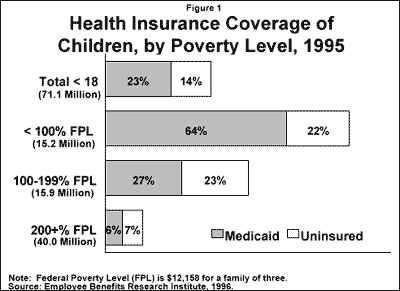
The intent of CHIP is to expand health insurance coverage to uninsured children under age 19 in families with incomes below 200% of poverty (Figure 1). Children with private insurance or who are covered by or qualify for Medicaid are ineligible for CHIP, as are those who are residents of public institutions or whose families are eligible for state employee health benefits. Undocumented children and legally resident children arriving in the U.S. after August 22, 1996 are ineligible for coverage but may qualify for emergency Medicaid assistance. States that implement their child health insurance programs through Medicaid may use federal funds to cover legally resident children in the country prior to August 22, 1996.
States that choose to operate a separate state child insurance program can establish eligibility based on geographic area, age, income and resources, residency, and disability status, as well as limit duration of coverage. States cannot exclude children based upon a preexisting condition or diagnosis, and cannot cover higher income children before lower income children.
If states use the Medicaid option, children become entitled to full Medicaid coverage. States that have already broadened Medicaid income eligibility levels above 150% of the federal poverty level (FPL) can expand coverage to children up to 50 percentage points above the current level. For example, a state with eligibility set at 175% FPL could expand to 225% FPL.
Benefits and Cost-sharing
The benefit package options available to states fall into three general categories: Benchmark, benchmark-equivalent, or Medicaid.
Benchmark Packages: States can offer one of three existing benefit packages: including the Federal Employees Blue Cross/Blue Shield PPO plan; coverage available to state employees; or coverage offered by the HMO with the state’s largest commercially enrolled population.
Benchmark-Equivalent Coverage: States can use a package with aggregate value greater than or equal to a benchmark plan. Hospital, physician, laboratory and x-ray, and well baby/child services must be included at a value at least actuarially equivalent to the benchmark benefit package. If prescription drugs, mental health, vision, and hearing services are included in the benchmark plan, then they must be part of the benchmark-equivalent coverage with a value of at least 75% of the benchmark plan’s actuarial value.
Medicaid: States that expand Medicaid must provide the complete benefit package, which includes well-child care, immunizations, prescription drugs, doctor visits, hospitalization, and EPSDT, as well as long-term care for disabled children. The Medicaid benefit package for children is broad and should satisfy the benchmark requirement in a state that administers a separate CHIP program.
The Secretary has the authority to approve a different benefit package that is determined to be appropriate for low-income children. The existing New York, Florida, and Pennsylvania child health programs are deemed to satisfy federal requirements for benefits.
Under the new program, states cannot impose cost-sharing for preventive services including well-baby and well-child care and immunizations. For children with family incomes below 150% FPL, cost-sharing must be “nominal” as under the Medicaid statute. Medicaid currently permits premiums of $15 to $19 per month per family and co-payments of up to $3 per service. Cost-sharing for children with incomes above 150% FPL can be imposed based on an income-related sliding scale, but total cost sharing cannot exceed 5% of family income. Coverage can be provided directly by the state Medicaid program, an insurer, or any other entity considered to be qualified by the state.
Financing
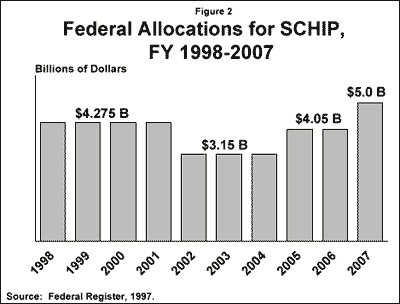
The BBA authorizes $20.3 billion in federal funds from FY 1998 through FY 2002 and $19.4 billion over the second five years. Over the ten-year period, the funds are allocated as follows: $4.275 billion per year in FY 1998-2001, falling to $3.15 billion annually in FY 2002 through 2004, and then rising to $4.05 billion from FY 2005 through 2006, and reaching $5 billion for 2007, for a total of $40 billion.
Annual federal allocations to states are based on the states’ share of low-income and uninsured children using estimates from the Current Population Survey, conducted by the U.S. Census Bureau. The allotment formula changes over time to adjust for reductions in the number of uninsured children.
States do not receive their allotments automatically. States must have their child health plan approved by HHS and are required to contribute state funds in order to draw down, or “match” their federal allotment. The state share cannot include beneficiary cost-sharing and is subject to the same provider tax and donation limitations specified in the Medicaid statute.
Under the new state program, states receive an “enhanced” federal matching rate based on their Medicaid matching rate. The CHIP enhanced rate essentially reduces by 30 percent the share states pay as compared to what they would contribute under their Medicaid match. For example, a state with a federal match of 60% under Medicaid would receive an “enhanced” rate of 72% under the new program. In essence, the state would pay 28 cents of every dollar spent under the new children’s program. No state may receive a matching rate greater than 85% and the minimum annual payment for a state is $2 million. States can receive an enhanced matching rate for providing Medicaid coverage to an expanded group of children. All Medicaid rules, including the entitlement to coverage, would apply to the newly covered group of children. States would continue to receive the regular Medicaid matching rate after their CHIP allotment was depleted.
While the states have considerable latitude in designing and structuring their CHIP programs, there are some limits on what federal CHIP payments can be used for:
No more than 10 percent of federal payments can be used for outreach, administrative costs or direct service payments to clinics or hospitals. The Secretary can authorize waivers to allow states to create community-based programs or to purchase family coverage.
States cannot adopt Medicaid eligibility criteria that are more restrictive than those in effect as of June 1, 1997.
Maintenance of effort is also required in state-only programs in New York, Pennsylvania, and Florida.
Abortions cannot be covered by federal or state funds except to save the life of the mother or in the case of rape or incest.
Child-Related Medicaid Provisions
In addition to the creation of the new state child health insurance program, several changes to Medicaid were made to strengthen coverage for children under the Balanced Budget Act of 1997. States can now opt to:
Extend presumptive eligibility to children — This means that services provided to uninsured children will be covered by Medicaid before eligibility determination is complete. For children who are determined to be eligible for the new program, the costs will be paid through new program funds.
Offer 12 month continuous eligibility to children — States can provide up to one year of continuous eligibility for children under Medicaid, regardless of any changes in family income during that period.
Accelerate the phase-in to cover poor children born before September 30, 1983. In the past, states could cover these children under Section 1902(r)(2) at state option or through a Section 1115 waiver. The BBA of 1997 clarifies this option. Some 27 states have used these options to expand coverage to older children.
States must also restore Medicaid eligibility to disabled children who lost SSI under the 1996 welfare reform legislation. The Balanced Budget Act also includes numerous provisions that grant states increased flexibility over their Medicaid programs. These include the ability to mandate managed care enrollment without a waiver and greater control over provider payment through the repeal the Boren Amendment and a phase-out of cost-based reimbursement for Federally Qualified Health Centers.