1998 National Survey of Latinos on HIV/AIDS – Report (HTML version)
1998 National Survey of Latinos on HIV/AIDSThis Report is also available in PDF
CONTENTS
- Introduction
- The Latino Population in the United States
- Epidemiology and Transmission of HIV/AIDS
- The Health Gap and Access to Care
- Latino’s Perceptions of the HIV/AIDS Epidemic
- Methodology
- Findings
- Language and Perceptions of HIV/AIDS
- Regional Location and Perceptions of HIV/AIDS among Latinos
- Income, Education and Attitudes Towards/Knowledge of HIV/AIDS Among Latinos
- Religion and Perceptions of HIV/AIDS among Latinos
- Latinas and HIV/AIDS
- Latino Parents and HIV/AIDS
- Younger Latinos and HIV/AIDS
- HIV/AIDS and Local Opinion Leaders in the Latino Community
- Implications of Survey Findings
- Endnotes
- Toplines (Survey Questionnaire)
The number of reported AIDS cases in the United States has reached 600,000 including 65,000 new cases reported since July of 1996.1 There are an estimated 650,000 to 900,000 2 individuals living with HIV, including AIDS, in the US. Despite treatment advances, transmission continues at alarming rates, particularly for certain subpopulations. Latinos 3 and other ethnic and racial minorities have been particularly hard hit.
Latinos have been disproportionately impacted by HIV since the beginning of the epidemic. Although Latinos accounted for only 7 percent of the US population, they represented 13 percent of all AIDS cases in 1982. 4 Today, 20 percent of new AIDS cases are among Latinos even though Latinos account for just 11 percent of the total population. 5 Approximately 110,000 to 170,000 Latinos are currently infected with HIV 6 of whom an estimated 45,400 are living with AIDS. 7
THE LATINO POPULATION IN THE UNITED STATESLatinos constitute one of the fastest growing ethnic minorities in the US, with a resident population of nearly 30 million. The Latino population is expected to reach 96 million, 25 percent of the predicted US population, halfway into the next century. 8 The Latino population living in the US is diverse, representing multiple ethnicities and countries of origin. Latinos are primarily from the following countries of origin: Mexico, Puerto Rico, Cuba, and the Dominican Republic. The Latino population is concentrated in the northeastern, western and southwestern regions of the US. These areas also include many of the nation’s AIDS epicenters. Among Latinos, AIDS case rates per 100,000 are highest in the Northeastern states 9 (see special section on the relationship between Regional Location and attitudes toward/ knowledge of HIV/AIDS among Latinos).
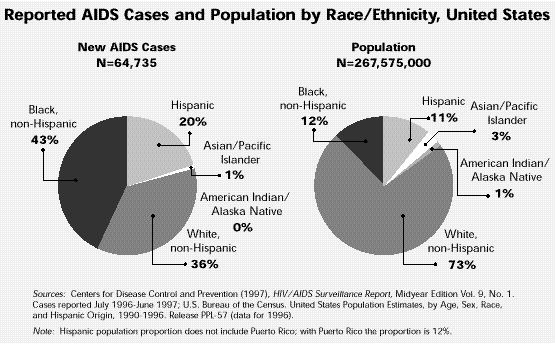
Overall, the nation’s Latino population is younger, disproportionately poor, and has lower educational attainment than the US population as a whole. The population includes different waves of immigration and, for many, a language barrier still exists (see special section on the relationship between Language and attitudes about/knowledge of HIV/AIDS among Latinos).
Values and traditions unique to Latino culture play an important role in shaping attitudes and behaviors with respect to sex, sexuality, drug use and HIV/AIDS. These attitudes and behaviors may affect risk for HIV/AIDS as well as diagnosis and treatment. 10
EPIDEMIOLOGY AND TRANSMISSION OF HIV/AIDSIn the United States, Latinos make up 18 percent of the total AIDS cases reported since the start of the epidemic through June of 1997. Latinos represent 17 percent of all cases among men and 20 percent of the total number of cases reported among women. 11For Latino men, the current AIDS case rate (the number of cases relative to population size) is nearly three times that for white non-Hispanic men (94.5 cases per 100,000 compared to 32.5 cases per 100,000). For women, the rate is six times higher (23 cases per 100,000 compared to 3.8 cases per 100,000). 12
In general, sex with men is the most common reported mode of transmission among Latino men (37 percent of new cases, 44 percent of all cases reported) followed by injection drug use (32 percent of new cases, 37 percent of all cases reported). Injection drug use also figures significantly in HIV transmission among Latino women (Latinas), though infection due to injection drug use has declined in recent years. Injection drug use is the primary risk factor for 33 percent of new cases and 43 percent of all cases reported among Latinas. Heterosexual contact is the leading HIV transmission route for Latinas and accounts for 47 percent of new AIDS cases (compared to 40 percent of new cases among all women and 46 percent of all reported cases). 13
THE HEALTH GAP AND ACCESS TO CARERecent treatment advances, particularly the increasing availability of effective drug therapies to prevent AIDS-related opportunistic infections (OIs) and the introduction of new drugs which combat HIV (e.g., protease inhibitors) have positively impacted individuals living with HIV. Treatment advances have led to some optimism about the future of the epidemic. For example, AIDS-related mortality is dropping and many people are living longer with HIV. However, this drop has not been occurring at the same rate for all populations. Whereas the number of AIDS deaths in 1996 declined by 32 percent from the previous year among non-Hispanic whites, the decline was only 20 percent among Latinos. 14
Latinos continue to die from AIDS at a rate two and a half times that of non-Hispanic whites. Today HIV is the fourth leading cause of death for Latinos and the eighth leading cause in the general population. 15
These disparities in health outcomes may reflect differential access to health care services. Lack of insurance limits access to health care for a significant proportion of the Latino population. Approximately one in three Latinos (34 percent) are uninsured, and 30 percent report having no regular source of health care. And families with Latino heads of household are more likely than families headed by white or African American individuals to report barriers to receiving health care, most often citing inability to pay for care as the major obstacle. 16 Such obstacles may stand in the way of HIV prevention education as well as early diagnosis and ongoing treatment of HIV. The impact of HIV/AIDS on Latinos should thus be considered in the context of broader disparities in access to health care services.
LATINOS’ PERCEPTIONS OF THE HIV/AIDS EPIDEMICGiven the disproportionate impact of the HIV/AIDS epidemic on Latinos, it is important to understand the opinions and perceptions of Latinos with respect to HIV/AIDS. How do Latinos view the HIV/AIDS epidemic? What are Latinos’ perceptions of America’s response to the HIV/AIDS crisis? Do Latinos differ in their knowledge and information needs with respect to the disease?
From the outset of the AIDS epidemic, public opinion and knowledge have significantly shaped the US response to the epidemic and have informed national dialogues about prevention, treatment and research. Public attitudes and perceptions have influenced not only local and national responses (including public health measures, federal spending priorities, and community mobilization) but also the experiences of individuals confronting HIV/AIDS in their own lives. And these efforts and experiences, in turn, have shaped what people living in the US think and understand about HIV/AIDS.
Past surveys have aimed to capture general public sentiment about HIV/AIDS, including perceptions of the epidemic; personal worry about becoming infected with HIV; knowledge of transmission, course and treatment of HIV and AIDS; experiences with testing; views of national and local efforts to halt the epidemic; and sources of information about HIV/AIDS. Less understood are public opinion and knowledge among minority groups, whose views are often overshadowed in surveys of the population at large. Racial and ethnic minorities are typically sampled in proportion to their contribution to the total population. While these surveys give an important voice to minority groups, they often lack samples of sufficient size to permit detailed analysis. The importance of doing more to understand the perceptions and knowledge of US Latinos is underscored not only by the impact of HIV/AIDS on the Latino community but also by the diversity of the Latino population. For these reasons, the Kaiser Family Foundation surveyed a large sample of Latino adults to characterize their views, concerns, and knowledge about HIV/AIDS today.
In this report, we first present findings from the overall sample of Latino respondents, and then take a closer look at several Latino subgroups.
The Kaiser Family Foundation Survey of Latinos on HIV/AIDS is intended to inform and stimulate increased dialogue about HIV/AIDS in Latino communities as well as provide a better understanding of Latino perspectives on HIV/AIDS to all those who are working to reduce the social, economic and individual costs of the AIDS epidemic.
METHODOLOGYThe Kaiser Family Foundation National Survey of Latinos on HIV/AIDS was designed by the Kaiser Family Foundation and conducted for the Foundation by Princeton Survey Research Associates. The data were collected from a national sample of Latinos in conjunction with a larger study of the general public knowledge and opinion about HIV/AIDS. The sample included respondents living in the continental US only (Puerto Rico, Alaska, and Hawaii were not included). Participants in the Latino survey were interviewed by telephone in either English or Spanish between September 19 and October 26, 1997. Respondents were selected if they selfidentified as Hispanic or Latino. The responses from a total of 802 interviews of Latino adults, age 18 or older, are reported here. Data were weighted to match US Census Bureau estimates of age, sex, education and regional distribution of Latino adults living in households with telephones in the continental United States. The margin of sampling error for results based on the total sample is plus or minus 4 percentage points although the margin of error is larger for some subgroups.
FINDINGS: AIDS VIEWED WITH URGENCY AND GROWING PERSONAL CONCERNLatinos clearly see the impact of AIDS on the nation and in local communities. Nine in ten Latinos (91 percent) say AIDS is a major threat to public health in this country.
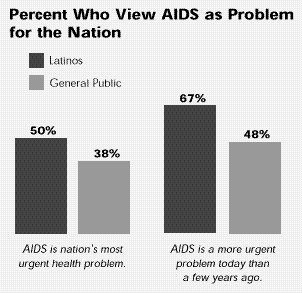
One in two Latinos (50 percent) rate AIDS as the most urgent health problem facing the nation today. Half as many (24 percent) say cancer is the most urgent problem. By comparison, 38 percent of the general public 17 says AIDS is the most urgent health problem today, tying it with cancer (also 38 percent).
Latinos view AIDS not only as a serious problem but also one that is becoming more pressing. Two in three Latinos (67 percent) say AIDS is a more urgent problem for the country today than it was even a few years ago. While many Latinos believe the country is making progress in fighting the AIDS epidemic (44 percent), one in three (32 percent) say the country is losing ground.
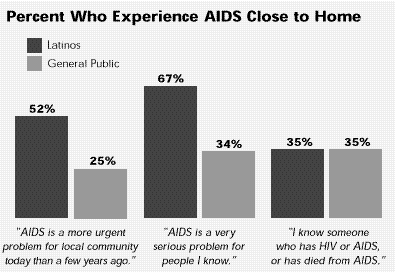
In addition to viewing AIDS as an escalating problem for the nation, Latinos view AIDS with increasing concern for local communities. One in two (52 percent) say AIDS is a more urgent problem in their local communities than just a few years ago and one in five (20 percent) say their community is losing ground in the fight against AIDS. By comparison, 25 percent of the general public sees AIDS as a more urgent problem for local communities and 11 percent says their community is losing ground. The public overall is twice as likely as Latinos to say AIDS has never been a problem for their local community (41 percent for the general public compared to 21 percent of Latinos).
PERSONAL EXPERIENCE WITH AND WORRY ABOUT HIV/AIDSFor Latinos, AIDS is not something that only happens to others; for many, AIDS hits close to home. Two thirds (67 percent) of Latinos say AIDS is a very serious problem for people they know compared to 34 percent of the general public. And one in three Latinos (35 percent) say they personally know someone who has HIV or AIDS or who died from AIDS.
Latinos’ sense of urgency about AIDS is reflected in heightened personal worry about becoming infected with HIV. Nearly half (46 percent) of Latinos are very concerned about getting HIV and two in five (41 percent) say their concern about infection has grown in recent years. Latino worry is nearly twice as high as that of the general public (24 percent of the general public is very concerned about becoming infected with HIV).
Personal worry also extends to worry about children. Seven in ten Latino parents (70 percent) are very concerned about their kids getting HIV (compared to 52 percent of all parents). For 58 percent of Latinos, concern about kids is greater today than a few years ago.
Latinos are slightly more likely than the general public to have been tested for HIV (42 percent of Latinos compared to 38 percent of the general public), with most having tested in the past year (23 percent compared to 16 percent of the general public).
LATINOS RATE COMMUNITY GROUPS HIGHER THAN GOVERNMENT IN THE FIGHT AGAINST AIDSMore than half of Latinos (59 percent) say local health care providers care “a lot” about the fight against AIDS and one in two say local churches (50 percent) and public schools (49 percent) care “a lot.” Approximately three in ten Latinos say each level of government (local, state, and federal) cares a lot about the fight against AIDS.
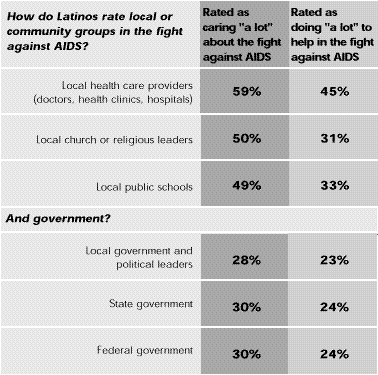
Almost half (45 percent) of Latinos say local health care providers are doing “a lot” to help fight AIDS. About a third say local public schools (33 percent) and local churches (31 percent) are doing “a lot.” And approximately one in four Latinos say government – local (23 percent), state (24 percent), and federal (24 percent) – is doing “a lot” to help fight against AIDS. Latinos are more likely than the general public to say the church cares “a lot” in the fight against AIDS compared to 39 percent of the general public. Thirty-one percent of Latinos also say the church is doing “a lot” to help fight AIDS compared to 18 percent of the general public.
MOST KNOW THE BASICS ABOUT HIV/AIDS, BUT IMPORTANT KNOWLEDGE GAPS EXISTMost Latinos know that AIDS is sexually transmitted (98 percent) and that a woman with HIV can give it to her baby (92 percent). Eighty-two percent, know that there are drugs available which can lengthen the life of a person infected with AIDS. Fewer, 55 percent, know that a pregnant woman with HIV can take steps to reduce the risk of transmitting it to her baby.
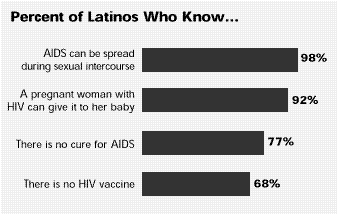
While 68 percent of Latinos know that there is no vaccine available to protect a person from getting AIDS, one in five (20 percent) incorrectly believes that a vaccine is available (compared to 5 percent of the general public). And although 77 percent says there is no cure for AIDS, another 20 percent mistakenly believes there is a cure (compared to 11 percent of the general public).
Most Latinos (92 percent) agree with the statement that, “by now, adults in this country should know how to protect themselves from HIV.” Seventy-seven percent says that adults who become infected today should be held more personally responsible than those infected years ago. One in two Latinos (50 percent) says that adults who become infected with HIV today should have to pay more of their medical bills themselves than those who were infected years ago (compared to 42 percent of all the general public).
OPTIMISM ABOUT NEW TREATMENTSLatinos appear slightly more optimistic than the general public about the amount of progress that has been made in treating HIV and AIDS. Nearly one in two Latinos (49 percent) say “a lot” of progress has been made in keeping people who have AIDS alive longer, compared to 44 percent of the general public.
And two in five Latinos (43 percent) say “a lot” of progress has been made in finding a cure for AIDS, compared to 28 percent of the general public.
Latinos are more likely than the general public to believe the new drugs are effective for most people with HIV and widely available to those who want them. More than one in three Latinos (36 percent) say the new combination drugs are effective in helping most or nearly all of those who take them (compared to 25 percent of the general public). And 30 percent say most or nearly all of those who want the new drug treatments actually get them (12 percent of the general public holds this view).
LATINOS SUPPORTIVE OF FEDERAL SPENDING ON AIDSLatinos are very supportive of spending to prevent, treat and research HIV and AIDS. Most Latinos favor spending for research to find more effective AIDS treatments (95 percent) as well as to find an AIDS vaccine (94 percent). And nine in ten favor spending on HIV and AIDS education and other prevention activities as well as spending to make the new combination drug treatments available to more people (both 94 percent). Asked to rank these spending areas in order of priority, vaccine research is ranked first (43 percent) and education/prevention is number two (33 percent).
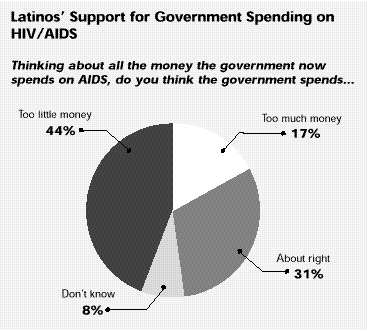
Forty-four percent of Latinos say the federal government spends too little on AIDS and 31 percent say spending is about right. Seventeen percent say spending on AIDS is too high. And when asked about federal spending on AIDS compared to other health problems, such as heart disease and cancer, about one third of Latinos (35 percent) say spending on AIDS is too low, 17 percent say spending is too high, and 37 percent say it is about right.
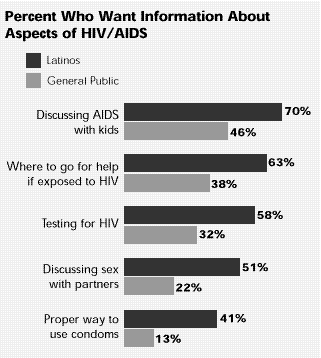
INFORMATION NEEDSLatinos cite greater needs for information about HIV/AIDS than the general public.
- Seven out of ten (70 percent) want more information about what to discuss with children about HIV and AIDS, which is much higher than the general public (46 percent).
- Sixty-three percent say they need information about where to go for help if exposed to HIV (compared to 38 percent of the general public).
- More than half of all Latinos (58 percent) want more information about testing for HIV (compared to 32 percent of the general public).
- One in two (51 percent) want to know what to discuss with partners about sex (compared to 22 percent of the general public); and
- Two in five (41 percent) would like information about the proper way to use condoms (compared to 13 percent of the general public).
When asked which ONE area was most important to get more information in, discussing AIDS with children (40 percent) and getting information about where to go for help if exposed to HIV (17 percent) were ranked highest.
MEDIA AND OTHER INFORMATION SOURCESLatinos see a role for television and other media in the fight against AIDS. Most Latinos (71 percent) say that major television networks should accept advertising from condom manufacturers for broadcast (compared to 62 percent of the general public). A majority of Latinos (59 percent) favor more condom references in movies and shows that deal with sexual relationships (compared to 55 percent of the general public).
Television is the number one source of HIV/AIDS information according to Latinos. Seven in ten (70 percent) say they got information about AIDS in the last month from television news programs (compared to 56 percent of the general public). Two in five (44 percent) say they got information from television entertainment shows (compared to 25 percent of the general public).
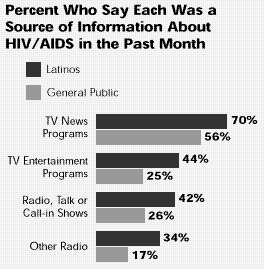
Radio is also a significant information source: 42 percent say they got information from radio talk or call in shows in the last month (compared to 26 percent of the general public) and 34 percent say they got information from “other radio programming” (compared to 17 percent of the general public).
More than one in three Latinos (39 percent) say they received information about AIDS from street signs or billboards (compared to 21 percent of the general public), 28 percent from family members, friends or acquaintances (compared to 20 percent of the general public), and 32 percent from their doctor or another health care provider (compared to 18 percent of the general public). One in five Latinos (20 percent) say they received information about HIV/AIDS from their church or a local religious group (compared to 10 percent of the general public).
Ten percent of Latinos said they didn’t get information about HIV/AIDS from any of the sources in the past month (see special section on Language for differences by language of interview). Latinos report higher levels of consumption of news about HIV and AIDS than the general public. One in three Latinos (37 percent) say they saw or heard “a lot” of news about HIV/AIDS on television, radio, in newspapers and other media in the past year and 23 percent say they heard or saw a lot of news about the new combination drug treatments, in particular. By comparison, 21 percent of the general public has seen or heard a lot of news about HIV/AIDS, 11 percent about combination drug treatments, in particular.
One in two Latinos (50 percent) say recent news coverage gives people the impression that AIDS is a more urgent problem today than it was a few years ago (compared to 28 percent of the general public). One in five Latinos (20 percent) say news coverage depicts AIDS as less urgent.
NEEDLE EXCHANGESlightly more than half of Latinos (56 percent) favor “needle exchange programs which offer clean needles to IV drug users in exchange for used ones, to help stop the spread of HIV,” (compared to 58 percent of the general public).
Similar to the general public, when offered an argument voiced by opponents of needle exchange, namely that these programs might give tacit approval of illegal drug use, support drops among Latinos: 41 percent favor, 56 percent oppose.
HIV TESTINGAs noted earlier, two in five Latinos (42 percent) have tested for HIV, 23 percent in the last year. More than half (58 percent) say they discussed the results of their tests with a doctor or other medical professional or counselor (compared to 50 percent of the general public).
Among those who have never tested for HIV, most say it is because they are married or in a monogamous relationship (42 percent), they are not sexually active (19 percent) or there is no need/reason to suspect a problem (9 percent). Fifteen percent say they don’t know why they haven’t tested or decline to give a reason.
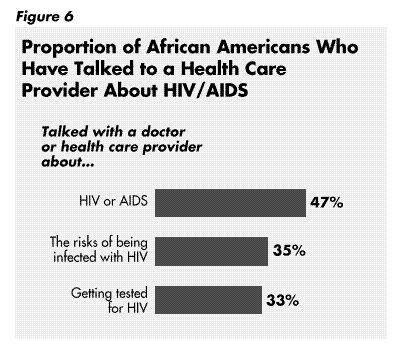
More than two-thirds of Latinos (69 percent) have never talked with a health care provider about any aspect of HIV or AIDS. Just three in ten have ever discussed HIV/AIDS with a health care provider (31 percent) – one quarter (24 percent) have talked specifically about the risks of being infected with HIV and one in five (19 percent) have discussed getting tested.
Of the small group who have had conversations occur, the majority say they brought up the topic as opposed to their health care provider raising the issue – 52 percent brought up the risks of HIV infection and 58 percent raised the issue of testing with their provider.
Language and Perceptions of HIV/AIDS
The Kaiser Family Foundation National Survey of Latinos on HIV/AIDS was administered in both English and Spanish. Half the surveys were administered in Spanish, half in English. Our analysis of responses demonstrates that perceptions of and attitudes toward HIV/AIDS among Latinos vary by language of interview. These differences may be attributed to many factors including:
- Level of acculturation. Language is one component of acculturation, a measure of the strength of values from country of origin. Acculturation may be associated with disease risk. 18
- Access to information and prevention initiatives. Fewer AIDS education and prevention materials are provided in languages other than English and non-English speaking individuals may have more difficulty accessing prevention and care programs.
- Socioeconomic factors. Income, education, and religion, for example, may be related to language and these socioeconomic factors may influence attitudes and opinions.
- Survey translation. The Spanish language version of the survey may convey different kinds of meanings and messages to survey respondents and/or Spanish speaking Latinos may respond to surveys differently.
The profile of those interviewed in Spanish is as follows:
- Latinos interviewed in Spanish are less educated than Latinos interviewed in English. Almost two-thirds (63 percent) have less than a high school education compared to 23 percent of Latinos interviewed in English.
- They are older than those interviewed in English. Whereas 40 percent of those interviewed in English were between 18 and 29 years old, 26 percent of those interviewed in Spanish were in this age range.
- They are slightly more likely to be of Mexican ancestry (63 percent of those interviewed in Spanish compared to 58 percent of those interviewed in English) and less likely to be of Puerto Rican ancestry (5 percent compared to 15 percent);
- Latinos interviewed in Spanish are more likely to be Catholic (84 percent compared to 66 percent of those interviewed in English).
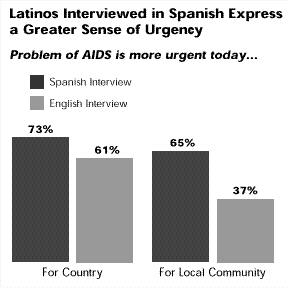
Latinos interviewed in Spanish expressed a greater sense of urgency about AIDS.
- Over half (53 percent) rate AIDS as the most urgent health problem in the country today, compared to 46 percent of those interviewed in English.
- They are also more likely to say the problem of AIDS is more urgent today than a few years ago (73 percent compared to 61 percent).
- Latinos interviewed in Spanish are more likely to say that the country is losing ground in the fight against AIDS (40 percent compared to 25 percent of those interviewed in English).
- Finally, Latinos interviewed in Spanish express a greater sense of the impact of AIDS on their local communities. They are almost twice as likely to say the problem of AIDS in their local communities is more urgent today (65 percent compared to 37 percent of Latinos interviewed in English).
In addition, Latinos interviewed in Spanish express greater personal concern about HIV.
- Most of those interviewed in Spanish (80 percent) say that AIDS is a very serious problem for those they know, compared to 53 percent of those interviewed in English.
- They are also more likely to be very concerned about becoming infected with HIV (51 percent compared to 41 percent) and are more likely to be more concerned today than a few years ago (46 percent compared to 37 percent).
- Despite the heightened sense of urgency and personal concern, Latinos interviewed in Spanish are less likely to say they know someone who has AIDS, has died from AIDS or has tested positive for HIV (28 percent compared to 42 percent of those interviewed in English).
Concern about children becoming infected with HIV among Latinos also appears to be related to language.
- Those interviewed in Spanish are more likely to be parents (60 percent compared to 48 percent).
- They are slightly more likely to be concerned about their kids becoming infected with HIV (73 percent compared to 68 percent of those interviewed in English) but concern is high among all Latinos.
- Latinos interviewed in Spanish are also more likely to be more concerned about their kids becoming infected today than they were a few years ago (62 percent compared to 53 percent).
Knowledge about AIDS appears to be related to language of interview in a couple of areas.
- Latinos interviewed in Spanish are more than twice as likely to incorrectly state that there is an AIDS vaccine (28 percent compared to 11 percent of those interviewed in English).
- They are also less likely to know that there is no cure for AIDS (72 percent of those interviewed in Spanish compared to 82 percent of those interviewed in English).
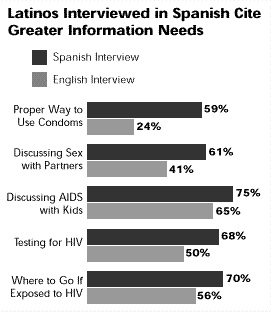
- But Latinos interviewed in Spanish are more likely to know that a pregnant woman with HIV can transmit the virus to her baby (95 percent compared to 89 percent of those interviewed in English) and that a pregnant woman with HIV can take steps to reduce the risk to her baby (62 percent compared to 49 percent). Latinos interviewed in Spanish cite much greater information needs.
- Latinos interviewed in Spanish cite greater information needs across the board. For example, Latinos interviewed in Spanish are more than twice as likely (60 percent compared to 24 percent of Latinos interviewed in English) to say they want information about the proper way to use condoms.
- They are also much more likely to say they want information about discussing sex with partners (61 percent compared to 41 percent).
 |  |
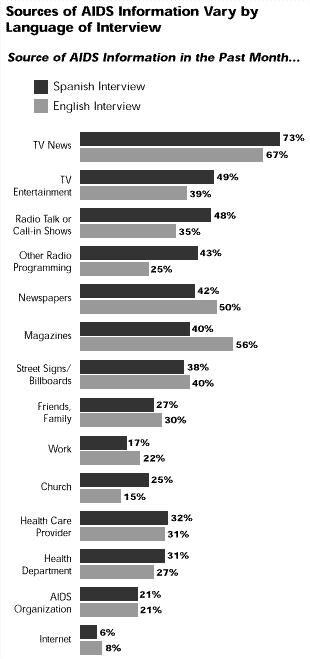
Sources of AIDS Information also vary by language of interview.
- Latinos interviewed in Spanish are more likely to have received AIDS information from TV news programs, TV entertainment programs, radio, and church.
- Latinos interviewed in English are more likely to have received information from newspapers, magazines, and the workplace.
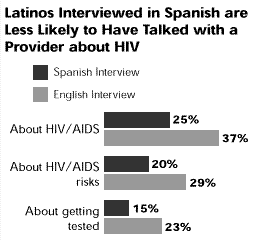
- In addition, those interviewed in Spanish are less likely to have talked with a provider about HIV, about HIV/AIDS risks, and about getting tested.
Regional Location and Perceptions of HIV/AIDS among Latinos
The US Latino population is concentrated primarily in the West (43 percent) and the South (33 percent) with 16 percent of Latinos residing in the Northeast and 7 percent in the Midwest. Most of the Latino population (87 percent) resides in 10 states – California, Texas, New York, Florida, Illinois, New Jersey, Arizona, New Mexico, Colorado, and Massachusetts – which include many of the major AIDS epicenters in the US. 19
The distribution of the US Latino population across the country is highly correlated with country of origin. 20 The distribution of country of origin among those surveyed, which approximates the US Latino population overall, is as follows: 60 percent of Mexican ancestry, 10 percent of Puerto Rican ancestry, 7 percent of Cuban ancestry, 5 percent of Dominican ancestry, and 17 percent Latinos of other ancestries (other Central/South American or Spanish).
The AIDS epidemic among Latinos in the US is concentrated in the Northeast, where Puerto Ricans and Dominicans are most likely to live. Latinos living in the West and South, primarily of Mexican and Cuban ancestry, have a lower incidence of HIV. Higher incidence of HIV in the Northeast among Puerto Rican and Dominican Latinos may be related to higher use of injection drugs. Puerto Rican Latinos have the highest prevalence of drug use, in part due to the fact that most (70 percent) living in the US reside in New York City, New Jersey, and Chicago, areas which have greater availability of illegal drugs. 21 AIDS case rates per 100,000 population among Latinos are highest in the Northeastern States, including: New York (142.3), New Jersey (69.0), Pennsylvania (115.4), Rhode Island (58.8), Massachusetts (91.3), and Delaware (87.8). 22
Although the sample size did not allow for an analysis of perceptions of AIDS by ethnicity/country of origin, we were able to analyze perceptions by region. 23 Latinos living in the Northeast and the West are more likely to have been interviewed in Spanish (53 percent and 56 percent respectively). Latinos living in the South are more likely to have been interviewed in English (60 percent).
Latinos living in all regions of the US express urgency about AIDS with some regions expressing greater urgency
- .
- The sense of urgency about the AIDS epidemic appears to be greatest in the Northeast. Latinos in the Northeast are more likely to say AIDS is the most urgent health problem facing the nation today (59 percent compared to 49 percent of those in the West and 45 percent of those in the South).
Personal experience with AIDS varies somewhat by region and may in part reflect the epidemiology of HIV/AIDS.
- In terms of the severity of the problem of AIDS for people they know, there are some regional differences among Latinos. Seventy-one percent of Latinos in the Northeast say AIDS is a very serious problem for those they know compared to 68 percent of those in the West and 62 percent of those in the South.
- Latinos in the Northeast are much more likely to know someone who has AIDS, has died from AIDS, or has tested positive for HIV. Fifty-six percent of those in the Northeast know someone compared to 30 percent of those in the West and 32 percent of those in the South.
Personal concern about becoming infected with HIV follows similar regional patterns among Latinos.
- Personal concern about becoming infected with HIV is roughly similar across the country although more than half of those in the Northeast (51 percent) say they are very concerned about becoming infected with HIV. Forty-four percent of Latinos in the West and 46 percent of Latinos in the South say they are very concerned about becoming infected with HIV.
- Latinos in the Northeast are more likely to have been tested for HIV. Over half of those in the Northeast (51 percent) have ever tested compared to 41 percent of those in the West and 43 percent of those in the South.
AIDS knowledge also varies somewhat by region.
- In particular, knowledge that there are drugs available to lengthen the life of those with HIV is highest in the Northeast (88 percent compared to 76 percent of those in the South and 84 percent of those in the West).
- Knowledge that a pregnant woman with AIDS can give it to her baby is highest among Latinos in the South (94 percent compared to 87 percent of Latinos in the Northeast and 93 percent of Latinos in the West).
- Knowledge that a pregnant woman with HIV can take certain steps to reduce the risks to her baby also varies by regions (74 percent of those in the Northeast compared to 58 percent of those in the West and 45 percent of those in the South).
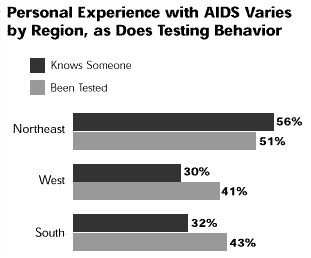
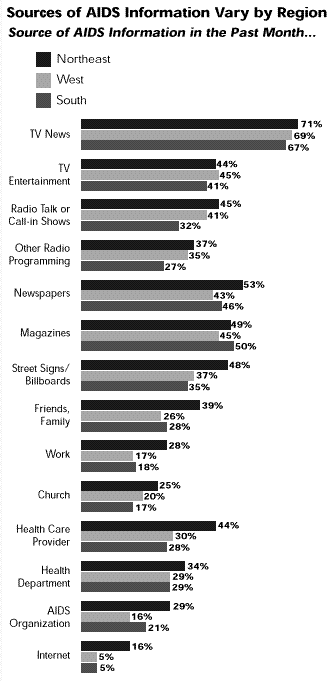
While stated information needs are similar across regions, there are some differences in AIDS information sources.
- For example, Latinos in the South are less likely to have received AIDS information from the radio (32 percent) compared to those in the Northeast (45 percent) and West (41 percent). Latinos in the Northeast are more likely to have received AIDS information from newspapers (53 percent) than those in the West (43 percent).
- Latinos in the Northeast are also more likely to have talked with a provider about HIV/AIDS (43 percent compared to 33 percent of those in the South and 27 percent of those in the West).
- Support for condom references on TV also varies by region. There is much more support in the Northeast for condom references on television shows (70 percent compared to 56 percent of Latinos in the West and 58 percent of Latinos in the South).
Income, Education and Attitudes Towards/Knowledge of HIV/AIDS Among Latinos
Income and education may play a role in the disproportionate impact of HIV infection on certain populations. In addition, new research indicates that those with less education are significantly less likely to have access to important and cost-effec-tive drugs needed to prevent AIDS-related opportunistic infections, such as Pneumocystis Carinii Pneumonia. 24
Risk may be compounded for Latinos who are disproportionately poor and, on average, have lower educational attainment relative to the US population overall. Approximately 30 percent of all Latinos live in poverty and only 53 percent, compared to 83 percent of the general public, have a high school degree or more. We analyzed perceptions of the AIDS epidemic among Latinos who have less than a high school education (43 percent) and earn less than $20,000 per year (47 percent). There is significant overlap between these subpopulations. Close to two thirds (62 percent) of those with less than a high school education earn less than $20,000 per year and over half (56 percent) of those with less than $20,000 income also have less than a high school education.
Latinos with less than a high school education are much more likely to have been interviewed in Spanish (72 percent) than English (28 percent) as are Latinos who earn less than $20,000 per year (69 percent were interviewed in Spanish and 31 percent were interviewed in English).
Latinos with less education and lower incomes share a sense of urgency about AIDS with Latinos overall.
- Over half (52 percent) of Latinos with less than a high school education and 50 percent of Latinos who earn less than $20,000 per year say that AIDS is the most urgent health problem in the country today, as do half of all Latinos. Most (95 percent of Latinos with less education and 93 percent of Latinos with lower incomes) say that AIDS is a major public health threat.
- Latinos with less education are more likely to say that the country is losing ground in the fight against AIDS (40 percent compared to 32 percent of all Latinos) and less likely to say the country is making progress (37 percent compared to 44 percent of all).
- Thirty-five percent of Latinos with lower incomes say the country is losing ground in the fight against AIDS, while 40 percent say the country is making progress.
- Latinos with lower incomes are more likely to say that AIDS is a more urgent problem for their local community (60 percent compared to 52 percent of all Latinos and 55 percent of those with less education).
There is greater personal concern about AIDS among Latinos with less education and lower incomes.
- Latinos with less than a high school education and those with lower incomes are more likely to say AIDS is a very serious problem for people they know (78 percent and 73 percent respectively, compared to 67 percent of all Latinos).
- Personal concern about becoming infected with HIV is slightly higher among these subpopulations; 53 percent of Latinos with less education are very concerned compared to 46 percent of all Latinos and they are more likely to be more concerned today (49 percent compared to 42 percent of all Latinos). Half (50 percent) of Latinos with lower incomes are very concerned about becoming infected with HIV and 44 percent are more concerned today.
- Testing rates are slightly lower among Latinos with less than high school education (36 percent compared to 43 percent of Latinos with lower incomes and 42 percent of all Latinos).
Perceptions of government and community group activity in the fight against AIDS appear to vary by education and income.
- Latinos with less education are more likely to say each group is doing a lot in fight against AIDS and more likely to say each group cares a lot than are Latinos overall.
- Latinos with lower incomes are more likely to say each group is doing a lot in the fight against AIDS than are Latinos overall. There are somewhat different levels of knowledge among Latinos with less education.
- Latinos with less education are more likely to incorrectly state that there is an AIDS vaccine (32 percent compared to 24 percent of those with lower incomes and 20 percent of all Latinos) and are less likely to know there is no cure for AIDS (69 percent compared to 74 percent of those with lower incomes and 77 percent of all).
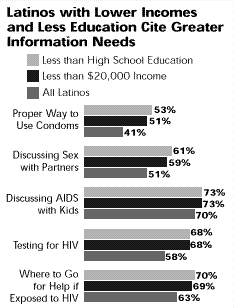
Latinos with less education and lower incomes cite greater information needs than Latinos overall.
- They are more likely to want information about the proper way to use condoms, what to discuss with partners about sex, talking with children about AIDS prevention, testing, and where to go for help if exposed to HIV.
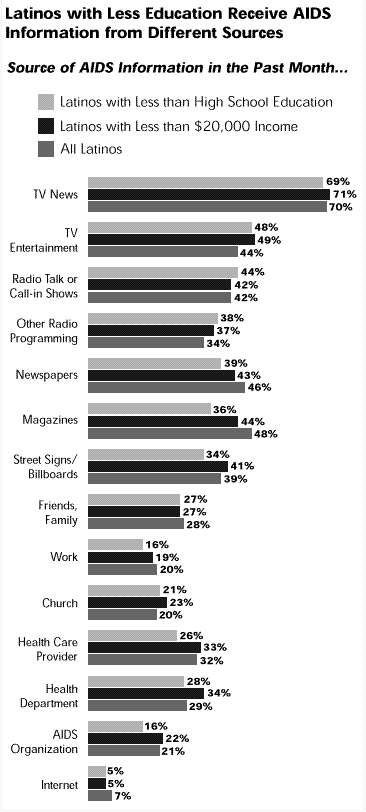
Latinos with less education receive AIDS information from different sources.
- For example, Latinos with less education are less likely to receive AIDS information from newspapers (39 percent compared to 46 percent of all Latinos) and magazines (36 percent compared to 48 percent).
- In addition, those with less education are slightly less likely to have talked with a provider about AIDS (24 percent compared to 27 percent of those with lower incomes and 31 percent of all Latinos), about risks of HIV (19 percent compared to 22 percent of those with lower incomes and 25 percent of all), and getting tested for HIV (15 percent compared to 17 percent of those with lower incomes and 19 percent of all).
Religion and Perceptions of HIV/AIDS among Latinos
Religion may be related to perceptions of HIV/AIDS and risk behaviors. For example, religion may influence attitudes about gender roles, sex, sexuality, and condom use. Most Latinos identify as Catholic (75 percent), which differs from the US population overall (24 percent identify as Catholic). Eighteen percent of Latinos identify as Protestant compared to almost two-thirds (63 percent) of the US population overall. Catholic Latinos are more likely to have been interviewed in Spanish (55 percent) than English. Protestant Latinos are more likely to have been interviewed in English (72 percent).
Urgency about AIDS varies slightly by religion.
- Over half of Catholic Latinos (52 percent) say that AIDS is the most urgent health problem in the country today, compared to 45 percent of Protestant Latinos.
Similarly, the sense of concern for those they know and personal concern about AIDS appear to be related to religion.
- Catholic Latinos are more likely to say AIDS is very serious for people they know (69 percent compared to 61 percent of Protestant Latinos).
- Almost half of Catholic Latinos (49 percent) are very concerned about becoming infected with HIV, compared to 35 percent of Protestant Latinos.
- Catholic Latinos are more concerned about becoming infected today than they were a few years ago (43 percent compared to 33 percent of Protestant Latinos).
- Despite the greater expressed concern about AIDS among Catholic Latinos, they are slightly less likely than Protestant Latinos to report knowing someone who has HIV, AIDS, or has died of AIDS (34 percent compared to 41 percent of Protestant Latinos).
Support for government spending is high among Latinos of all religions, with Catholic Latinos being the most supportive.
- Almost all Catholic Latinos (96 percent) support spending on AIDS edu cation and prevention activities compared to 87 percent of Protestant Latinos.
- Ninetysix percent of Catholic Latinos support spending on AIDS vaccine research compared to 85 percent of Protestant Latinos.
- And 87 percent of Catholic Latinos believe that the government should be spending money to help HIV infected people with lower incomes pay for new treatments compared to 64 percent of Protestant Latinos.
Support for condom advertising and references on TV also varies by religion, but is generally high.
- Catholic Latinos are much more supportive of condom advertising (74 percent compared to 56 percent of Protestant Latinos) and more references to condoms on TV programs (62 percent compared to 47 percent of Protestant Latinos).
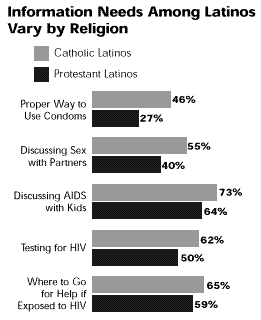
Desire for information among Latinos differs by religion, although there are few differences in information sources.
- Catholic Latinos state greater information needs in all areas compared to Protestant Latinos. For example, 46 percent of Catholic Latinos compared to 27 percent of Protestant Latinos want more information about the proper way to use condoms.
- Sources of information generally appear to be the same with a couple of exceptions. Catholic Latinos are more likely (48 percent) than Protestant Latinos (37 percent) to say they received AIDS information from newspapers, and more likely to have received AIDS information from radio programming (not talk or callin) than Protestant Latinos (35 percent of Catholic Latinos compared to 27 percent of Protestant Latinos).
- Finally, perceptions of news coverage about AIDS vary. Catholic Latinos are more likely to say news coverage gives the impression that AIDS is more urgent today (53 percent compared to 38 percent of Protestant Latinos).
Latinas and HIV/AIDS
Latina women (Latinas) have been disproportionately impacted by HIV/AIDS. Latinas represent 20 percent of all reported AIDS cases and 19 percent of new cases among women 25 but only comprise 10 percent of the female population. 26 The AIDS case rate (standardized to population size) among Latinas is six times that of non-Hispanic white women (23.0 compared to 3.8 per 100,000). 27 Heterosexual transmission of HIV accounts for most cases of AIDS among Latinas (47 percent of new cases) and the proportion of AIDS cases among Latinas today due to heterosexual transmission has been steadily increasing. As such, heterosexual transmission plays a greater role in HIV transmission among Latinas today than among women overall (40 percent), white non-Hispanic women (40 percent), and Black non-Hispanic women (38 percent). HIV infection due to injection drug use is the primary mode of transmission in one third of new AIDS cases (33 percent).
Half of Latina respondents (50 percent) were interviewed in Spanish, as were half of Latino men. Their attitudes about and knowledge of HIV/AIDS are presented below:
A majority of Latinas view AIDS as the most urgent health problem facing the nation today, slightly more than Latino men and more than US women overall.
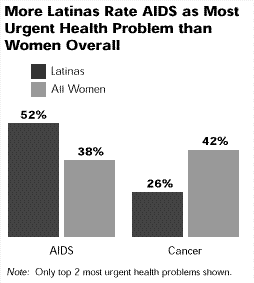
- Fifty-two percent of Latinas, compared to 47 percent of Latino men, rate AIDS as the most urgent health problem facing the nation today. Cancer is rated most urgent by half as many Latinas (26 percent). By comparison, the plurality of women overall rate cancer as their top concern (42 percent), followed by AIDS (38 percent).
- Two thirds of Latinas (67 percent) say that AIDS is a more urgent problem today, and 9 in 10 Latinas (91 percent) say AIDS is a major threat to public health today.
Latinas are concerned about AIDS in their local communities.
- Half (50 percent) of all Latinas say that the problem of AIDS facing their local community is more urgent today.
- Twenty-nine percent of Latinas say their local community is making progress in the fight against AIDS while 21 percent say that their local community is losing ground.
- Latinas are less likely than Latino men (17 percent compared to 26 percent) to say that AIDS has never been a problem for the local community.
In addition, AIDS has affected Latinas personally, in terms of concern for people they know and their own concern about becoming infected.
- Seven out of ten (70 percent) Latinas say that AIDS is a very serious problem for people they know, which is slightly more than Latino men (64 percent) and much greater than women overall (35 percent).
- Slightly more than a third (37 percent) of Latinas say they know someone who has HIV, AIDS, or has died of AIDS.
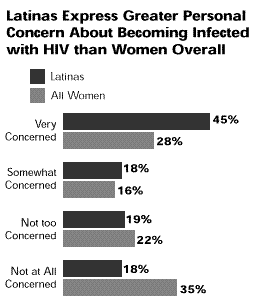
- Forty-five percent of Latinas are very concerned about becoming infected with HIV and many say they are more concerned today than a few years ago (43 percent). By comparison, 28 percent of all women are very concerned about becoming infected with HIV.
Almost all Latinas express concern about their children becoming infected with HIV.
- About 7 in 10 mothers (69 percent) are very concerned about their children becoming infected with HIV. Another 16 percent are somewhat concerned.
- A majority (56 percent) are more concerned about their children becoming infected today than they were a few years ago.
Despite personal concern about HIV, less than half of Latinas have ever been tested for HIV and most have never talked with a provider about HIV/AIDS.
- Forty-three percent of Latinas have been tested for HIV, with 24 percent having tested in the past year.
- Two thirds of Latinas (66 percent) have never talked with a provider about HIV/AIDS.
- Among those who have tested for HIV, 60 percent report discussing the results with a provider.
Why have more than half (57 percent) of all Latinas not been tested for HIV?
- Among those who have not tested, 24 percent say it is because they are not sexually active.
- Forty-two percent say it is because they are married or in monogamous relationships.
Latinas cite similar information needs as Latino men.
- Overall, Latinas cite similar levels of information needs as Latino men including wanting more information on condom use, talking with partners about sex, and HIV testing.
- Latinas are slightly more likely to say they want information about talking with kids about AIDS (73 percent of Latinas compared to 66 percent of Latino men).
- Information about talking with kids about AIDS is Latinas’ highest ranked information need (42 percent).
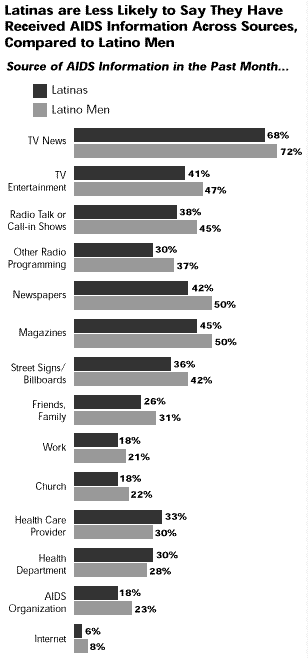
In general, Latinas have received slightly less information about AIDS across most sources compared to Latino men.
- For example, forty-one percent of Latinas say they have received AIDS information from TV entertainment programs in the past month compared to 47 percent of Latino men and 38 percent say they have received information from radio shows compared to 45 percent of men.
- Indeed, Latinas are, across the board, more likely than Latino men to say they have not received AIDS information from most sources.
Latino Parents and HIV/AIDS
Attitudes of Latino parents toward HIV/AIDS are similar to those of Latinos in general and to parents overall. Over half (54 percent) of Latinos are parents of children 21 and younger.
- Seven out of every 10 Latino parents (70 percent) are very concerned about their son or daughter becoming infected with HIV.
- Over half (58 percent) of Latino parents are more concerned today than they were a few years ago.
- Almost all Latino parents believe that the federal government should spend money on HIV and AIDS education and other prevention efforts (95 percent).
- More than three quarters of Latino parents (76 percent) say they need information about discussing AIDS prevention with children. Parents rate this as their most important information need (46 percent).
- Most Latino parents think that major television networks should accept advertising from condom manufacturers for broadcast (70 percent) and are very supportive of movies and television shows which deal with sexual relationships having more references to condom use (60 percent).
Younger Latinos and HIV/AIDS
The number of HIV infections continues to rise among young people and young people of color may even be at higher risk for HIV infection. One in every four Americans newly infected with HIV is under the age of 22 28 and almost two thirds (63 percent) of all reported AIDS cases among 20 to 24-year-olds are among people of color. 29 Twenty-one percent of all cases among 20 to 24-year-old males and 21 percent of cases among 20 to 24-year-old females are among Latinos/as. We know that young people engage in sexual and drug using behaviors that put them at risk; for example, 53 percent of high school students report being sexually active. 30
The relative youth of the Latino population may be related to HIV risk among Latinos. The median age of Latinos in the US is 26.5 years compared to 33.9 years for the US population overall. 31 We looked at the perceptions of AIDS among younger Latinos, 18 to 24 years old, who represent approximately 19 percent of the Latino population. Latinos ages 18 to 24 are more likely to have been interviewed in English (71 percent) than in Spanish (29 percent).
The sense of urgency about the AIDS epidemic is heightened among younger Latinos.
- More younger Latinos think AIDS is the most urgent health problem today (59 percent compared to 50 percent of Latinos of all ages and 49 percent of all young people)
- Most consider AIDS a major threat to the country’s public health (92 percent).
Younger Latinos express concern about AIDS for people they know.
- More than half of younger Latinos say that AIDS is a very serious problem for people they know (57 percent). By comparison, 39 percent of all 18 to 24-year-olds say AIDS is a very serious problem for people they know.
- One third of younger Latinos (33 percent) know someone who has HIV, AIDS, or has died of AIDS.
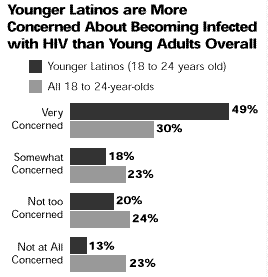
And younger Latinos are very concerned about becoming infected with HIV, more so than young adults overall.
- Almost half of younger Latinos (49 percent) are very concerned about becoming infected with HIV, compared to less than a third (30 percent) of all 18 to 24-year-olds.
- Forty-seven percent of younger Latinos are more concerned about becoming infected today than they were a few years ago.
Have younger Latinos been tested for HIV?
- Less than half of younger Latinos have been tested.
- Testing rates among younger Latinos are similar to those of Latinos over-all, with 42 percent of younger Latinos (and Latinos overall) ever testing.
- Testing rates among younger Latinos are slightly lower than rates among all 18 to 24-year-olds (48 percent).
Overall, AIDS knowledge among younger Latinos is high.
- Knowledge levels among younger Latinos appear to be greater in some areas compared to Latinos overall. For example, younger Latinos are slightly more likely to know that there are drugs available to lengthen the life of people with HIV (86 percent compared to 82 percent of all Latinos) and that there is no AIDS vaccine (77 percent compared to 69 percent of all Latinos).
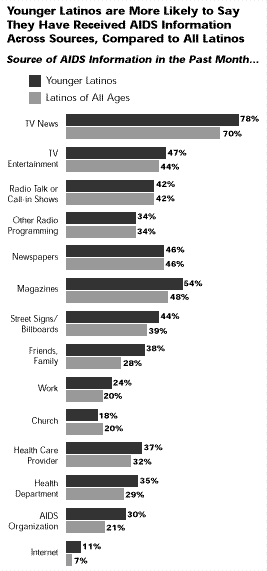
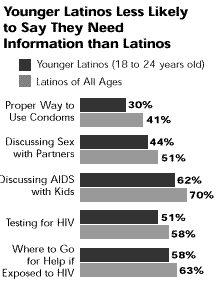
Younger Latinos cite fewer information needs across the board and are more likely to have received AIDS information than Latinos overall.
- Younger Latinos cite less need for AIDS information than Latinos of all ages. For example, only 30 percent of younger Latinos cite a need for information about condom use compared to 41 percent of Latinos overall and 51 percent say they want information about HIV testing (compared to 58 percent of all Latinos).
- Younger Latinos are more likely to say they have received AIDS information from a variety of sources, including TV news programs, magazines, and family and friends.
- In addition, more young Latinos have talked with health care providers about HIV (41 percent compared to 31 percent of all Latinos), about the risks of HIV (34 percent compared to 25 percent) and about getting tested for HIV (26 percent compared to 19 percent).
- Finally, younger Latinos are more supportive of condom advertising on TV (78 percent compared to 71 percent) and condom references on TV programs (70 percent compared to 59 percent) than are Latinos overall.
HIV/AIDS and Local Opinion Leaders in the Latino Community
What makes them local opinion leaders?
They are opinion leaders because in the past 12 months, they have participated in at least three of the following activities:
- Attended a public meeting on town or school affairs (78 percent);
- Helped organize a group or event in support of a cause (73 percent);
- Served as an officer of some club or organization (66 percent);
- Served on a local committee, such as a school board or community council (50 percent)
- Made a public speech (40 percent);
- Contacted members of Congress or a US Senator (36 percent);
- Were interviewed or quoted by the media about an important issue (34 percent);
- Worked on a political campaign (31 percent);
- Wrote a letter to a newspaper that was published (21 percent).
Who are local opinion leaders?
- Latino opinion leaders represent 11 percent of the Latino sample.
- They are more educated than Latinos overall; more than half (59 percent) have some college education or more. Only 28 percent of Latinos overall have some college education or more.
- Opinion leaders also earn significantly more than Latinos overall, with 41 percent reporting incomes of $40,000 or more. Only 14 percent of Latinos overall fall into this category.
- Most opinion leaders are from the West (41 percent) or the South (37 percent). Seventeen percent are from the Northeast and 5 percent are from the Midwest. This distribution is similar to Latinos overall.
- Latino opinion leaders have similar ethnic and religious distributions as Latinos overall.
- Finally, Latino opinion leaders are more likely to be Democrats (48 percent compared to 38 percent of Latinos overall) and are as likely to be Republican (15 percent of opinion leaders and Latinos overall).
Given their role in Latino communities, how do their attitudes toward and knowledge of HIV/AIDS com pare to Latinos in general?
Latino opinion leaders rate AIDS as the most urgent health problem facing the nation today.
- Forty-four percent of opinion leaders say AIDS is the most urgent health problem.
- Eight in ten (82 percent) say AIDS is a major public health threat, although this is slightly less than Latinos overall (91 percent). Personal concern about AIDS is less among Opinion Leaders.
- Opinion leaders are less likely to say AIDS is a very serious problem for those they know (55 percent compared to 67 percent of all Latinos).
- Opinion leaders express less personal concern about becoming infected with HIV (33 percent are very concerned compared to 46 percent of all Latinos).
- They are also less likely to say their concern about becoming infected has grown over the past few years (30 percent compared to 41 percent of all Latinos).
- On the other hand, opinion leaders are more personally touched by HIV/AIDS, given that over half (54 percent) say they know someone who has HIV, AIDS, or has died of AIDS compared to 35 percent of Latinos overall.
- Opinion leaders are slightly more likely to have been tested for HIV (51 percent compared to 42 percent of all Latinos). Support for spending is high across the board, although opinion leaders are slightly less likely than Latinos overall to support spending in some areas.
- Eighty-seven percent of opinion leaders, for example, support spending to make new treatments available, compared to 94 percent of all Latinos. Ninety percent support spending on HIV/AIDS education and prevention programs (compared to 94 percent of all Latinos).
IMPLICATIONS OF SURVEY FINDINGSThe Kaiser Family Foundation Survey of Latinos on HIV/AIDS provides new data on Latinos’ perceptions, knowledge, and information needs regarding HIV/AIDS which may offer direction for continued efforts to address the HIV/AIDS epidemic within the Latino community. In particular, the survey finds Latinos to be very worried about the scope of the epidemic nationally and at the local level. Latinos view HIV/AIDS as a more urgent problem today than just a few years ago. Latinos also experience HIV/AIDS close to home: many report knowing someone with HIV and most express worry for themselves as well as their children and people they know.
Despite heightened worry, Latinos express higher levels of optimism about progress in the epidemic compared to the general public. Many Latinos say there has been a lot of progress in treating and preventing HIV/AIDS and more than half say a lot of progress has been made towards finding a cure. Latinos give higher marks to local community groups than government in terms of how much they care about and actually do in the fight against AIDS. Still, there is room for more action.
Latinos express high expectations for personal responsibility in preventing the transmission of HIV and are eager for more information relating to preventing the spread of AIDS. In fact, Latinos are more likely than the general public to say they want more information across a variety of topics related to HIV/AIDS. In particular, Latinos voice the need for more information about talking to children about HIV/AIDS, as well as discussing sex with partners, where to go for help if exposed to HIV, and HIV testing. And two in five Latinos cite the need for information about the proper use of condoms.
There are important differences in information sources about HIV/AIDS among Latinos compared to the general public. For example, television and radio play a much greater role, as do street signs and billboards. Latinos also get more information about HIV/AIDS from churches and religious organizations.
Additionally, the survey reveals differences in perceptions, knowledge and information sources regarding HIV/AIDS within the Latino population. These differences appear to be related to language of interview, ethnicity/ region, income, education, religion, gender, and age, factors which have been identified by other researchers as playing a potentially important role in HIV risk and related behaviors and attitudes. 32 As such, our survey findings bolster existing recommendations for identifying information needs within subgroups of the Latino population and targeting interventions accordingly.
Endnotes1 Centers for Disease Control and Prevention. (1997). HIV/AIDS Surveillance Report, Midyear Edition, Vol. 9, No. 1.
2 Karon, J.M. et. al. (1996). “Prevalence of HIV Infection in the United States, 1984 to 1992,” Journal of the American Medical Association, Vol. 276, No. 2. For other estimates see P.S. Rosenberg, 1995 and S.D. Holmberg, 1996.
3 The term Latino is used herein to describe US residents of Hispanic origin, regardless of race. These designations are based on selfreport.
4 Centers for Disease Control and Prevention. (1982). Kaposi’s Sarcoma (KS), Pneumocyctis Carinii Pneumonia (PCP), and Other Opportunistic Infections (OI): Cases Reported to CDC as of June 15, 1982. First Report.
5 Centers for Disease Control and Prevention. (1997). HIV/AIDS Surveillance Report, Midyear Edition, Vol. 9, No. 1; U.S. Bureau of the Census. (1997). Statistical Abstract of the United States: 1997 (117th Edition). Washington, DC.
6 Karon, J.M. et. al. (1996). “Prevalence of HIV Infection in the United States, 1984 to 1992,” Journal of the American Medical Association, Vol. 276, No. 2.
7 Centers for Disease Control and Prevention. (1997). HIV/AIDS Surveillance Report, Midyear Edition, Vol. 9, No. 1. Note that HIV/AIDS Surveillance case data are reported for the United States and its territories, including Puerto Rico. Data from our survey include only those living in the continental US.
8 US Bureau of the Census. (1997). Statistical Abstract of the United States: 1997 (117th Edition). Washington, DC.
9 Centers for Disease Control and Prevention, National Center for HIV, STD, & TB Prevention. 1996 data. For example, 142.3 in New York State compared to 22.9 in California.
10 Marin, B. and Gomez, C. (1994). Latinos, HIV Disease, and Culture: Strategies for HIV Prevention. The AIDS Knowledge Base, HIV InSite.
11 Centers for Disease Control and Prevention. (1997). HIV/AIDS Surveillance Report, Midyear Edition, Vol. 9, No. 1.
12 National Center for Health Statistics. (1997). Health, United States, 1996-1997 and Injury Chartbook. Hyattsville, Maryland. Deaths per 100,000 population for the 12 month period ending June 30, 1996.
13 Centers for Disease Control and Prevention. (1997). HIV/AIDS Surveillance Report, Midyear Edition, Vol. 9, No. 1.
14 Centers for Disease Control and Prevention (1997). “Update: Trends in AIDS Incidence – United States, 1996”, Morbidity and Mortality Weekly Report, Volume 46, No. 37.
15 National Center for Health Statistics. (1997). Health, United States, 1996-1997 and Injury Chartbook. Hyattsville, Maryland.
16 Agency for Health Care Policy and Research and National Center for Health Statistics, Medical Expenditure Panel Survey. (May 1997). Health Insurance Status of the U.S. Civilian Noninstitutionalized Population, First half of 1996; Agency for Health Care Policy and Research and National Center for Health Statistics, Medical Expenditure Panel Survey (Oct. 1997). Access to Health Care in America , Estimates for U.S. Civilian Noninstitutionalized Population, First half of
17 Refers to the Kaiser Family Foundation 1997 National Survey of Americans on AIDS/HIV, a nationally representative sample of American adults, including representative proportions of minority respondents.
18 Peragallo, N. (1996). “Latino Women and AIDS Risk”, Public Health Nursing, Vol. 13, No. 3.
19 Marin, B. and Gomez, C. (1994). Latinos, HIV Disease, and Culture: Strategies for HIV Prevention. The AIDS Knowledge Base, HIV InSite.
20 Country of origin may include nationality and/or ethnic identity.
21 Marin, B. and Gomez, C. (1994). Latinos, HIV Disease, and Culture: Strategies for HIV Prevention. The AIDS Knowledge Base, HIV InSite.
22 Centers for Disease Control and Prevention, National Center for HIV, STD, and TB Prevention. 1996 Data.
23 In addition, we were unable to analyze data for the Midwest due to the small number of Latinos sampled who live in the Midwest.
24 Preliminary Data from HIV Cost and Services Utilization Study (HCSUS). Personal communication, Drs. Martin Shapiro and Samuel Bozzette, February 1998.
25 Centers for Disease Control and Prevention. (1997). HIV/AIDS Surveillance Report, Midyear Edition Vol. 9, No.1.
26 U.S. Bureau of the Census. United States Population Estimates, by Age, Sex, Race, and Hispanic Origin, 1990-1996. Release PPL-57.
27 National Center for Health Statistics. (1997). Health, United States, 1996-97 and Injury Chartbook. Hyattsville, Maryland. Cases per 100,000 population for 12 month period ending June 30, 1996. 1996.
28 AIDS Research Institute, The Center for AIDS Prevention Studies, University of California and the Harvard AIDS Institute (1997). Dangerous Inhibitions: How America is Letting AIDS Become an Epidemic of the Young.
29 Centers for Disease Control and Prevention. (1997). HIV/AIDS Surveillance Report, Midyear Edition Vol. 9, No.1.
30 Centers for Disease Control and Prevention, 1995 Youth Risk Behavior Surveillance System.
31 U.S. Bureau of the Census. Selected Social Characteristics of All Persons and Hispanic Persons, by Type of Origin: March 1996. Internet Release date: Frebruary 3, 1998.
32 Marin, B. and Gomez, C. (1994). Latinos, HIV Disease and Culture: Strategies for HIV Prevention. The AIDS Knowledge Base, HIV InSite; Peragallo, N. (1996). “Latino Women and AIDS Risk”, Public Health Nursing, Vol. 13, No. 3; Center for AIDS Prevention, UCSF Fact Sheet: What Are Latinos’ HIV Prevention Needs?;National Council of La Raza (1996). Center for Health Promotion HIV/AIDS Information Guide: HIV/STDs and Hispanic Women.
| Return to top Two New Studies On Latinos And AIDS In AmericaReport | Press Release | Library Index |
 This Report is available in Adobe Acrobat Format
 The Report is available in Adobe Acrobat Format
 The Chart Pack is available in Adobe Acrobat Format
