
Women's Health Policy

ABORTION IN THE U.S.

CONTRACEPTIve care IN THE U.S.

New and noteworthy

Over-the-Counter Oral Contraceptive Pills

In July 2023, the FDA approved Opill, the first daily oral contraceptive pill to become available over the counter (OTC) without a doctor’s prescription. This issue brief provides an overview of OTC oral contraceptives and laws and policies related to insurance coverage.

featured

A promotional image for the the KFF Health Policy 101 Issues in Women’s Health chapter

Health Policy Issues in Women’s Health

Examine the core health coverage and access issues —shaped by federal and state policies—that affect women’s health today, including health coverage and costs, reproductive health services, maternal health, mental health, and intimate partner violence.

State Profiles for Women’s Health

Explore the latest national and state-specific data and policies on women’s health. Topics include health status, insurance and Medicaid coverage, use of preventive services, sexual health, maternal and infant health, and abortion policies. Many indicators provide state-level information for women of different racial and ethnic groups.

The essentials
  • Women’s Health Insurance Coverage

    This factsheet reviews major sources of coverage for women residing in the U.S., discusses the ACA's impact on coverage, and the coverage challenges that many women continue to face.
  • Medicaid Coverage for Women

    This data note presents key data points describing the current state of the Medicaid program as it affects women, including eligibility, reproductive health, chronic conditions, and more.
  • Dobbs: What are the Implications for Racial Disparities?

    This analysis examines the implications of the Dobbs decision and state restrictions on abortion coverage for racial disparities in access to care and health outcomes.
  • State Health Facts: Women's Health Indicators

    Information on women’s health status, utilization of services, health insurance coverage, family planning and childbirth, and abortion statistics and policies.
  • Key Facts on Abortion in the United States

    This report answers some key questions about abortion in the United States and presents data collected before the overturn of Roe v. Wade.

Subscribe to KFF Emails

Choose which emails are best for you.
Sign up here

Filter

761 - 770 of 868 Results

  • The Status of Abortion-related State Ballot Initiatives Since Dobbs

    Tracker

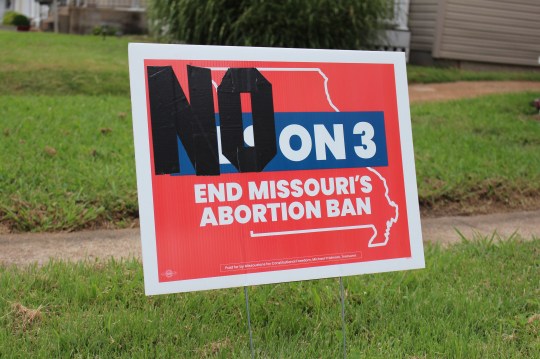
    Last updated on March 24, 2026 Since the Supreme Court’s Dobbs decision, overturning Roe v. Wade, voters in 17 states have weighed in on ballot measures regarding abortion-- some more than once. In November 2026, voters in Missouri, Nevada, and Virginia will weigh in on abortion measures that could change the legal status of abortion in their state. In addition, measures in Idaho and Nebraska are in the process of collecting signatures.
  • Medicaid Family Planning Programs: Case Studies of Six States After ACA Implementation

    Report

    In light of the coverage trends and other ACA-related changes, this paper describes the impact on women and their partners, as well as family planning providers, of the impact of family planning expansion programs under Medicaid. It is based largely on interviews with state officials, providers and consumer advocates in Alabama, California, Connecticut, Illinois, Missouri and Virginia – a cross-section of states in terms of geography, Medicaid expansion status, and implementation of a Medicaid family planning program. State interviews were supplemented by interviews with national experts, policymakers and family planning provider organizations. This study was conducted in Summer 2016 before the Presidential election.

  • Medicaid Managed Care and the Provision of Family Planning Services

    Report

    Three quarters of reproductive age women on Medicaid are enrolled in managed care arrangements. This analysis explores the experiences and perspectives of leaders of Medicaid Managed Care Organizations (MCOs) in structuring their networks and services to provide family planning and reproductive health services to women. It finds that MCOs rely heavily on safety net clinics including Community Health Centers and Family Planning Clinics such as Planned Parenthood to provide in-network family planning services to their members. MCO leaders also identified churning in enrollment, the high costs of stocking IUDs and implants, global hospital payment methodologies for maternity care, and the inclusion of faith-based providers in plan networks as potential barriers to certain family planning services.

  • Get Ready for a Lot of Biden Executive Orders on Health Care

    Perspective

    In this column for the JAMA Health Forum, Larry Levitt explores what President-elect Biden might do to advance his health care vision both through legislation and through executive orders and waivers and demonstrations.




