Women's Health Policy

ABORTION IN THE U.S.

KFF infographic explaining who regulates mifepristone, showing four entities and their roles: the U.S. Food and Drug Administration approves and regulates medications for safety and effectiveness; state legislatures pass laws that can restrict or protect access; courts rule on legal cases affecting regulation; and Congress can pass federal legislation influencing regulation.

Louisiana v. FDA: Access to Mifepristone Back at the Supreme Court

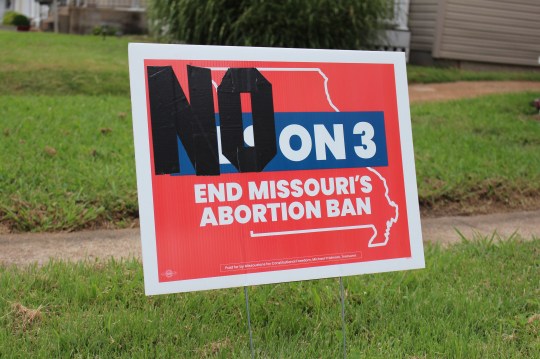
Louisiana sued the FDA in October 2025, claiming the FDA’s 2023 regulatory change eliminating the requirement that mifepristone be dispensed in-person—allowing it to be mailed or dispensed at retail pharmacies—harm the state's ability to enforce its abortion ban. This brief reviews the Louisiana v. FDA case now before the Supreme Court, and provides an overview of the other pending litigation involving mifepristone, as well as the mounting tension between states seeking to protect abortion and those banning the provision of abortion.

CONTRACEPTIve care IN THE U.S.

New and noteworthy

Over-the-Counter Oral Contraceptive Pills

In July 2023, the FDA approved Opill, the first daily oral contraceptive pill to become available over the counter (OTC) without a doctor’s prescription. This issue brief provides an overview of OTC oral contraceptives and laws and policies related to insurance coverage.

featured

A promotional image for the the KFF Health Policy 101 Issues in Women’s Health chapter

Health Policy Issues in Women’s Health

Examine the core health coverage and access issues —shaped by federal and state policies—that affect women’s health today, including health coverage and costs, reproductive health services, maternal health, mental health, and intimate partner violence.

State Profiles for Women’s Health

Explore the latest national and state-specific data and policies on women’s health. Topics include health status, insurance and Medicaid coverage, use of preventive services, sexual health, maternal and infant health, and abortion policies. Many indicators provide state-level information for women of different racial and ethnic groups.

The essentials
  • Women’s Health Insurance Coverage

    This factsheet reviews major sources of coverage for women residing in the U.S., discusses the ACA's impact on coverage, and the coverage challenges that many women continue to face.
  • Medicaid Coverage for Women

    This data note presents key data points describing the current state of the Medicaid program as it affects women, including eligibility, reproductive health, chronic conditions, and more.
  • Dobbs: What are the Implications for Racial Disparities?

    This analysis examines the implications of the Dobbs decision and state restrictions on abortion coverage for racial disparities in access to care and health outcomes.
  • State Health Facts: Women's Health Indicators

    Information on women’s health status, utilization of services, health insurance coverage, family planning and childbirth, and abortion statistics and policies.
  • Key Facts on Abortion in the United States

    This report answers some key questions about abortion in the United States and presents data collected before the overturn of Roe v. Wade.

Subscribe to KFF Emails

Choose which emails are best for you.
Sign up here

Filter

691 - 700 of 870 Results

  • The Availability and Use of Medication Abortion

    Fact Sheet

    This factsheet provides an overview of medication abortion, with a focus on federal and state regulations pertaining to its provision and coverage, and the role of the drug in self-managed abortions.

  • Attitudes Towards COVID-19 Vaccination Among Black Women And Men

    Poll Finding

    This analysis examines Black adults’ attitudes, concerns, and intentions regarding a COVID-19 vaccine. While Black men and women are similar in many of their views, there is a gender gap in some COVID-19 vaccine attitudes and intentions.

  • KFF COVID-19 Vaccine Monitor: Attitudes Towards COVID-19 Vaccination Among Black Women and Men

    News Release

    The latest from the KFF COVID-19 Vaccine Monitor finds that Black men (45%) and women (41%) are more likely than other groups to want to “wait and see” how the COVID-19 vaccine works for others before getting it themselves, making them a key target for public health officials seeking to boost vaccination rates equitably. This analysis explores similarities and differences in the attitudes of Black men and women toward COVID-19 vaccination. Highlights include: Providing accurate…

  • Women’s Experiences with Health Care During the COVID-19 Pandemic: Findings from the KFF Women’s Health Survey

    Issue Brief

    This brief provides new data from the KFF Women’s Health Survey, a nationally representative survey of 3,661 women and 1,144 men ages 18-64 that was conducted November 19, 2020 – December 17, 2020. In this brief, we document how experiences accessing health care during the COVID-19 pandemic have differed by gender, age, race/ethnicity, insurance coverage, and income and what this could mean moving forward.

  • Women, Work, and Family During COVID-19: Findings from the KFF Women’s Health Survey

    Issue Brief

    This brief provides new data from the KFF Women’s Health Survey, a nationally representative survey of 3,661 women and 1,144 men ages 18-64 conducted November 19, 2020 – December 17, 2020. In this brief, we highlight how experiences during the COVID-19 pandemic related to work, childcare, and caregiving differ by gender and among different subpopulations of women.

  • Potential Scenarios for Issuing New Title X Regulations

    Issue Brief

    This issue brief examines two possible scenarios and timelines for issuing new Title X regulations and distributing program funding to those grantees and sites that may seek to return to the Title X network if the abortion referral restrictions are lifted.

  • KFF Health Misinformation Tracking Poll Pilot

    Poll Finding

    The poll reveals that at least four in ten U.S. adults saying they’ve heard each of 10 specific false claims about COVID-19, reproductive health, and gun violence. While relatively small shares definitely believes the false claims, many more are uncertain about them. The survey also examines the public’s social and traditional media use and trust in sources of health information.