Uninsured

New and noteworthy

Quote from KFF President and CEO Drew Altman reads, "when it comes to the “affordability crisis” driving the national discussion of health care today, the chronically ill, and most of all the chronically ill uninsured, are the tip of the spear."

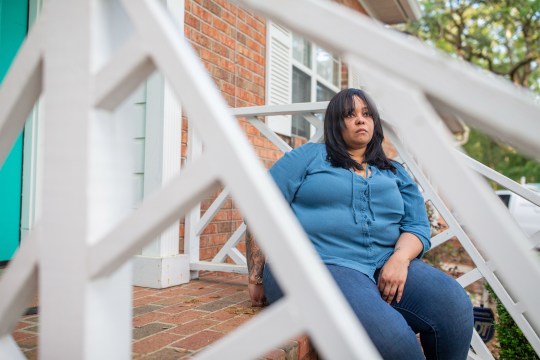
The Group that Struggles the Most in American Health Care

In a new column, Dr. Drew Altman, KFF’s Founding President and CEO, previews findings about the chronically ill uninsured from a large KFF survey of 25,000 Americans focusing on the cost and access challenges facing the chronically ill, which will be released tomorrow. He writes: “There are more than enough needs to go around in American health care, but if I had to pick the one group that struggles the most with costs and access, it would be people with chronic illnesses who are also uninsured.”


Other “Beyond the Data” columns >>

Key Facts about the Uninsured Population

The number and share of people without insurance grew in 2024, increasing for the first time since 2019, according to KFF’s analysis of data from the American Community Survey (ACS). This issue brief describes trends in health coverage in 2024, examines the characteristics of the uninsured population , and summarizes the access and financial implications of not having coverage.

Data and analysis

The coverage gap exists because some states did not expand Medicaid under the ACA to cover adults under age 65 without dependent children with incomes at/below 138% of the federal poverty level (FPL)

How Many Uninsured Are in the Coverage Gap?

An estimated 1.4 million uninsured individuals in the 10 states without Medicaid expansion, including many working adults, people of color, and those with disabilities, remain in the "coverage gap," ineligible for Medicaid or for ACA tax credits that would make coverage affordable.

The Uninsured and Health Coverage

This Health Policy 101 chapter examines the share of the United States population who are uninsured, highlighting their demographics and the challenges they face because of the lack of coverage.

Key Facts on Health Coverage of Immigrants

This fact sheet provides an overview of health coverage for immigrants based on data from the 2023 KFF/LA Times Survey of Immigrants. As of 2023, half of likely undocumented immigrant adults and one in five lawfully present immigrant adults reported being uninsured.

Who was uninsured in 2024?

Latest Polling
9.8%

The share of people under age 65 without insurance
62%

The share of uninsured adults who said they were uninsured because coverage is not affordable
59%

The share of uninsured adults who said they or someone living with them had problems paying for health care
39%

The share of uninsured adults who reported delaying or not getting needed care or medication due to cost

Stay informed.

Stay informed.

Filter

671-680 of 1,315 results

  • Pulling it Together: Separating the Forest from the Trees in the Health Reform Debate

    Perspective

    The good news for those who care about health care is that the issue is rising again on the national agenda. If we have a big debate about health in the presidential campaign and if it is a factor at the polls in 2008, it will help create a mandate for the new president and Congress to make health care a priority in 2009. But the real health care debate has been delayed by the…

  • Five Basic Facts on Immigrants and Their Health Care

    Issue Brief

    As discussions on national health care reform move to the forefront, some have focused on the role of immigrants in the health care system, including their impact on the nation’s uninsured problem, their participation in public health coverage programs, and their use of hospital emergency rooms. To address questions about how immigrants use and affect the health care system, this brief draws on available research and data to highlight five key facts about immigrants’ health…

  • Healthy San Francisco

    Fact Sheet

    In 2007, San Francisco became the first city in the nation to begin implementation of a plan to provide health care services to all uninsured residents. Healthy San Francisco is not health insurance, but rather it provides access to affordable basic and ongoing health care services for uninsured residents. The program provides medical homes to uninsured adults and focuses on prevention and the management of chronic conditions. Fact Sheet (.pdf)

  • Pulling It Together: Moving Away From Employer Based Coverage: Don’t Forget Public Opinion

    Perspective

    One of the underlying big issues in the unfolding health reform debate is whether most Americans should continue to get insurance through work where they get it today, or purchase it themselves in the individual private health insurance marketplace. Senator McCain promotes moving to individual insurance and having individuals rather than employers make coverage decisions, as has President Bush.  But this is not only a conservative idea.  Many on the liberal side -- such as…

  • Medicaid and Other Public Programs for Low-Income Childless Adults:  An Overview of Coverage in Eight States

    Report

    Medicaid and Other Public Programs for Low-Income Childless Adults: An Overview of Coverage in Eight States This report profiles childless adult programs in eight state-level jurisdictions: the District of Columbia, Maine, Massachusetts, Minnesota, New York, Oregon, Pennsylvania, and Washington. Report (.pdf) Background State Reports prepared by the Economic and Social Research Institute

  • Approaches to Covering the Uninsured: A Guide

    Issue Brief

    The guide explains the key strategies for expanding coverage to the nation's 45 million uninsured people and explains and how different policy options can be combined to form comprehensive reform proposals. It organizes the various policy strategies under four overall approaches: strengthening current coverage arrangements, improving the affordability of coverage, improving the availability of coverage and changing the tax treatment and financing of health insurance. Guide (.pdf)

  • Next Steps in Covering Uninsured Children: Findings from the Kaiser Survey of Children’s Health Coverage

    Issue Brief

    This issue brief provides key findings from the Kaiser Survey of Children's Health Coverage, including that many low- and middle-income working families with an uninsured child do not have access to employer-sponsored health insurance. The telephone survey of parents that was conducted in 2007 to learn more about children’s access to coverage and care and the health care cost-related pressures facing their families. Issue Brief (.pdf)

  • Children’s Health Insurance Program Reauthorization Act of 2009 (CHIPRA)

    Fact Sheet

    This fact sheet provides an overview of provisions of the Children's Health Insurance Program Reauthorization Act of 2009 (CHIPRA), which was signed into law in February 2009. The Act extends and expands the State Children's Health Insurance Program (now referred to as CHIP, not SCHIP) that was enacted with bipartisan support a decade ago as part of the Balanced Budget Act of 1997 (BBA). Fact Sheet (.pdf) Fact Sheet: State Adoption of Coverage and Enrollment…