Uninsured

New and noteworthy

Quote from KFF President and CEO Drew Altman reads, "when it comes to the “affordability crisis” driving the national discussion of health care today, the chronically ill, and most of all the chronically ill uninsured, are the tip of the spear."

The Group that Struggles the Most in American Health Care

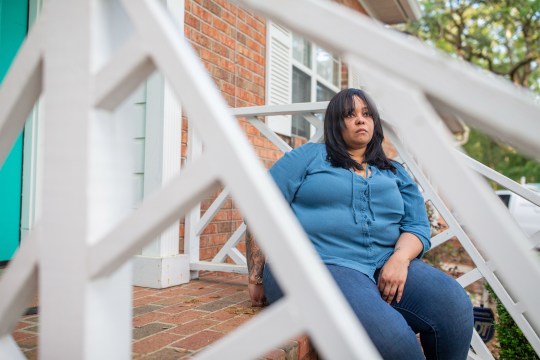
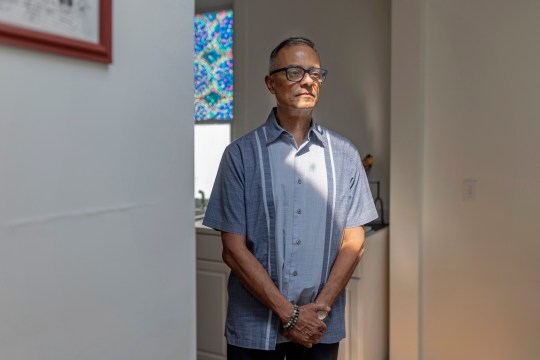
In a new column, Dr. Drew Altman, KFF’s Founding President and CEO, previews findings about the chronically ill uninsured from a large KFF survey of 25,000 Americans focusing on the cost and access challenges facing the chronically ill, which will be released tomorrow. He writes: “There are more than enough needs to go around in American health care, but if I had to pick the one group that struggles the most with costs and access, it would be people with chronic illnesses who are also uninsured.”

Other “Beyond the Data” columns >>

Key Facts about the Uninsured Population

The number and share of people without insurance grew in 2024, increasing for the first time since 2019, according to KFF’s analysis of data from the American Community Survey (ACS). This issue brief describes trends in health coverage in 2024, examines the characteristics of the uninsured population , and summarizes the access and financial implications of not having coverage.

Data and analysis

The coverage gap exists because some states did not expand Medicaid under the ACA to cover adults under age 65 without dependent children with incomes at/below 138% of the federal poverty level (FPL)

How Many Uninsured Are in the Coverage Gap?

An estimated 1.4 million uninsured individuals in the 10 states without Medicaid expansion, including many working adults, people of color, and those with disabilities, remain in the "coverage gap," ineligible for Medicaid or for ACA tax credits that would make coverage affordable.

The Uninsured and Health Coverage

This Health Policy 101 chapter examines the share of the United States population who are uninsured, highlighting their demographics and the challenges they face because of the lack of coverage.

Key Facts on Health Coverage of Immigrants

This fact sheet provides an overview of health coverage for immigrants based on data from the 2023 KFF/LA Times Survey of Immigrants. As of 2023, half of likely undocumented immigrant adults and one in five lawfully present immigrant adults reported being uninsured.

Who was uninsured in 2024?

Latest Polling
9.8%

The share of people under age 65 without insurance
62%

The share of uninsured adults who said they were uninsured because coverage is not affordable
59%

The share of uninsured adults who said they or someone living with them had problems paying for health care
39%

The share of uninsured adults who reported delaying or not getting needed care or medication due to cost

Stay informed.

Stay informed.

Filter

371-380 of 1,315 results

  • Employment-Based Health Insurance Coverage and its Decline:-2134

    Report

    Employment-Based Health Insurance Coverage and its Decline:The Growing Plight of Low-Wage Workers This background paper examines the increase in uninsured workers and the growing disparity in health insurance coverage between low- and high-wage workers. While a larger proportion of higher wage workers had health coverage in 1996 than a decade before, coverage deteriorated for low-wage and less-educated workers, especially young men. The paper explores many explanations for this widening disparity. The primary cause is that…

  • The Characteristics and Roles of Medicaid-Dominated Managed Care Plans

    Report

    This policy brief (Publication #2180) provides a national profile of Medicaid-dominated managed care plans - those in which Medicaid enrollees make up at least 75 percent of total enrollment. While recent policy and market forces have encouraged the growth of these plans, basic information about them has been lacking, partly because many are not licensed as HMOs by states. As of June 1997, 118 of these Medicaid-dominated plans served 3.4 million Medicaid enrollees across the…

  • Medicare Restructuring: The FEHBP Model – Report

    Report

    Medicare Restructuring: The FEHBP Model Executive Summary As policymakers consider measures to assure the long-range solvency of Medicare, one option that has received increasing attention is a "premium support" system. Under such a system beneficiaries would choose between the original Medicare fee-for-service program and a variety of competing health plans. They would receive a fixed government contribution toward the plan of their choice and would pay any remaining costs themselves. Proponents of a premium support…

  • A Medicare Buy-In for the Near Elderly: Design Issues and Potential Effects on Coverage

    Report

    This report examines a Medicare-based approach to reducing the ranks of the uninsured that would permit early retirees between the ages of 62 and 65 to purchase coverage under Medicare. The paper begins with an overview of the challenges of insuring the near-elderly and explores the potential effects of a Medicare buy-in on coverage of this population. The authors conclude that, unless premiums for such coverage were low or tied to enrollees' income, this approach…

  • Prescription Drug Coverage for Medicare Beneficiaries: A Side-by-Side Comparison of Selected Proposals

    Report

    Updated, July 31, 2002 This document, prepared by Health Policy Alternatives, Inc., provides a side-by-side comparison of five major federal proposals to provide outpatient prescription drug coverage to Medicare beneficiaries, introduced as of July 31, 2002: H.R. 4954, The Medicare Modernization and Prescription Drug Act of 2002 (passed by the House of Representatives on June 28, 2002); H.R. 5019, The Medicare Rx Drug Benefit and Discount Act of 2002 (Rep. Rangel/House Democratic proposal); S. 2625,…

  • Medicare’s Disabled Beneficiaries: The Forgotten Population in the Debate Over Drug Benefits

    Report

    About 5 million Americans under age 65 qualify for Medicare coverage because they are totally and permanently disabled. They are more likely than the elderly to live in poverty, to be in poor health, and to experience difficulties living independently and performing basic daily tasks. A new study from The Commonwealth Fund and the Henry J. Kaiser Family Foundation, reports that the disabled have few options other than Medicaid for obtaining prescription coverage. In ,…

  • New NPR/Kaiser Family Foundation/Harvard Kennedy School of Government Survey on Health Care

    Poll Finding

    A new survey by NPR, the Kaiser Family Foundation, and Harvard s Kennedy School of Government finds that many Americans have real problems when it comes to accessing and paying for health care, and even if they haven't yet faced a problem, many worry about getting and paying for care in the future. The survey also shows that, while people think helping seniors with the cost of prescription drugs should be a priority, most seniors…

  • The President’s Fiscal Year 2003 Budget:  An Overview of Health Programs

    Report

    The President's Fiscal Year 2003 Budget: An Overview of Health Programs A new chartbook describes the government's overall budget situation and examines the health policies and programs proposed in the President's latest budget. Chartbook View a webcast of A Capitol Hill briefing on budgets and health care

  • Seniors and Prescription Drugs: An 8-State Survey

    Report

    A new study conducted by researchers at Tufts-New England Medical Center, the Henry J. Kaiser Family Foundation, and the Commonwealth Fund, reports results from a 2001 survey of 10,927 noninstitutionalized seniors in eight geographically diverse states: California, Colorado, Illinois, Michigan, New York, Ohio, Pennsylvania, and Texas. State-level data on drug coverage, medication use, out-of-pocket costs, and cost-related medication skipping among community-dwelling seniors are highlighted to examine how coverage and experiences differ by state and how…