Racial Equity and Health Policy

Survey of Immigrants

KFF-New York Times Survey: Immigrants Report Rising Fear, Negative Economic and Health Impacts, and Changing Political Views During the First Year of President Trump’s Second Term

The 2025 Survey of Immigrants, a partnership between KFF and The New York Times, takes an in-depth look at the experiences of immigrants during the first year of President Trump’s second term, including their worries related to increased immigration enforcement, their health and economic wellbeing, and the political views and preferences of immigrant voters. The survey paints a portrait of families under strain — where fear of detention and economic instability are negatively impacting immigrants’ health and reshaping immigrant families’ daily lives and views of U.S. political parties.

Read the News Release | Explore The New York Times’ Reporting
the Essentials
  • Disparities in Health and Health Care: 5 Key Questions and Answers

    This brief provides an introduction to what health and health care disparities are, why it is important to address them, what the status of disparities is today, recent federal actions to address disparities, and key issues related to addressing disparities in the future.
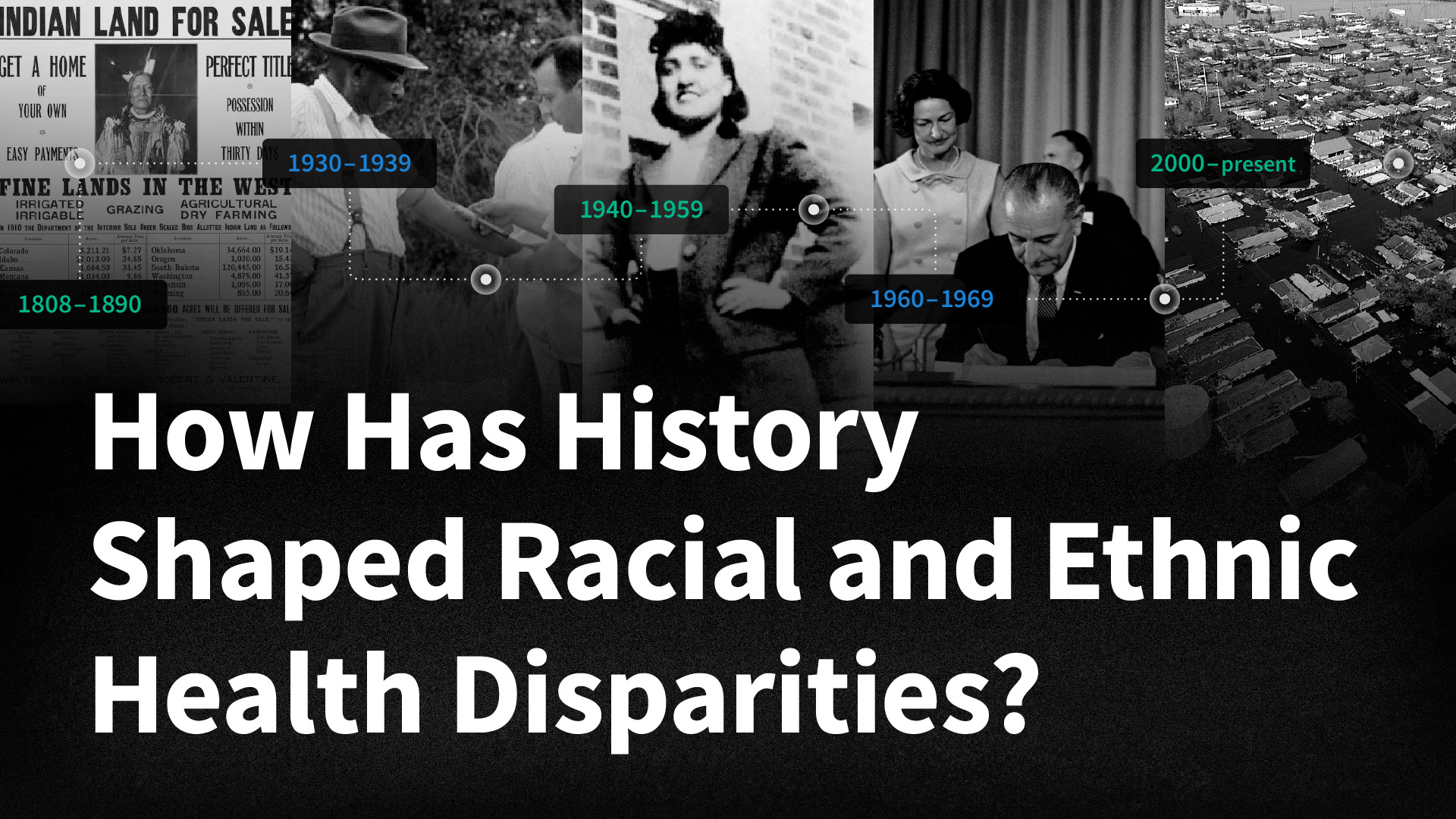
  • Timeline: How History Has Shaped Racial and Ethnic Health Disparities

    This timeline offers a historical view of significant U.S. federal policies and events spanning the early 1800s to today that have influenced present-day health disparities.
  • Health Policy 101: Chapter on Race, Inequality and Health

    Addressing persistent racial and ethnic disparities in health and health care is important for improving the nation’s health and economic prosperity. KFF explains such disparities and the factors that drive them, examines the actions to address them, and outlines future considerations.
  • Key Data on Health and Health Care by Race and Ethnicity

    Racial and ethnic disparities in health and health care remain a persistent challenge in the United States. An updated KFF resource examines how people of color fare compared to White people across 64 measures of health, health care, and social determinants of health.

Subscribe to KFF Emails

Choose which emails are best for you.
Sign up here

Filter

61 - 70 of 595 Results

  • How Employer Actions Could Facilitate Equity in COVID-19 Vaccinations

    Policy Watch

    Providing paid time off to employees to get and recover from any side effects could help boost vaccination rates. Overall, nearly three in ten (28%) employed adults who not yet ready to get the vaccine say that they would be more likely to get the COVID-19 vaccine if their employer gave them paid time off to get vaccinated and recover from any side effects.

  • KFF COVID-19 Vaccine Monitor: COVID-19 Vaccine Access, Information, and Experiences Among Hispanic Adults in the U.S.

    Feature

    This report from the KFF COVID-19 Vaccine Monitor examines vaccine attitudes and experiences among Hispanic adults in the U.S., including key groups such as those with lower incomes, the uninsured, and those who are potentially undocumented. It finds that many unvaccinated Hispanic adults are eager to get a COVID-19 vaccine, and barriers to access include information gaps, cost concerns, requests for documentation, and immigration concerns.

  • Disparities in Health and Health Care: 5 Key Questions and Answers

    Issue Brief

    Disparities in health and health care for people of color and underserved groups are longstanding challenges. This brief provides an introduction to what health and health care disparities are, why it is important to address disparities, the status of disparities today, recent federal actions to address disparities, and key issues related to addressing disparities looking ahead.

  • 5 Key Facts About Immigrants and Medicaid

    Issue Brief

    This brief provides five key facts on Medicaid and immigrants as context for understanding the potential impacts of policy changes under the Trump administration.

  • A Look at Federal Health Data Taken Offline

    Policy Watch

    This post looks at federal government databases with key health data that went offline on Jan. 31, 2025, including several related to HIV, some of which had returned by Feb. 2, 2025. It briefly describing the affected databases, which include widely used, large-scale national health surveys, indices, and data dashboards, that inform research, policy making, and media coverage about health care and public health.

  • Title 42 and its Impact on Immigration and Migrant Families

    Issue Brief

    This brief provides an explanation of Title 42 and its application in border regions, the impact of Title 42 on border expulsions and the health and well-being of migrants during COVID-19, and a discussion of the potential implications of reinvoking Title 42 restrictions for immigration and the health of migrants.

  • Children of Immigrants: Key Facts on Health Coverage and Care

    Issue Brief

    This brief provides key data on socioeconomic characteristics and health coverage among children of immigrants based on KFF analysis of the American Community Survey data. It also examines potential implications of policies and actions that may be implemented by the incoming Trump administration.