Racial Equity and Health Policy

Survey of Immigrants

KFF-New York Times Survey: Immigrants Report Rising Fear, Negative Economic and Health Impacts, and Changing Political Views During the First Year of President Trump’s Second Term

The 2025 Survey of Immigrants, a partnership between KFF and The New York Times, takes an in-depth look at the experiences of immigrants during the first year of President Trump’s second term, including their worries related to increased immigration enforcement, their health and economic wellbeing, and the political views and preferences of immigrant voters. The survey paints a portrait of families under strain — where fear of detention and economic instability are negatively impacting immigrants’ health and reshaping immigrant families’ daily lives and views of U.S. political parties.

Read the News Release | Explore The New York Times’ Reporting
the Essentials
  • Disparities in Health and Health Care: 5 Key Questions and Answers

    This brief provides an introduction to what health and health care disparities are, why it is important to address them, what the status of disparities is today, recent federal actions to address disparities, and key issues related to addressing disparities in the future.
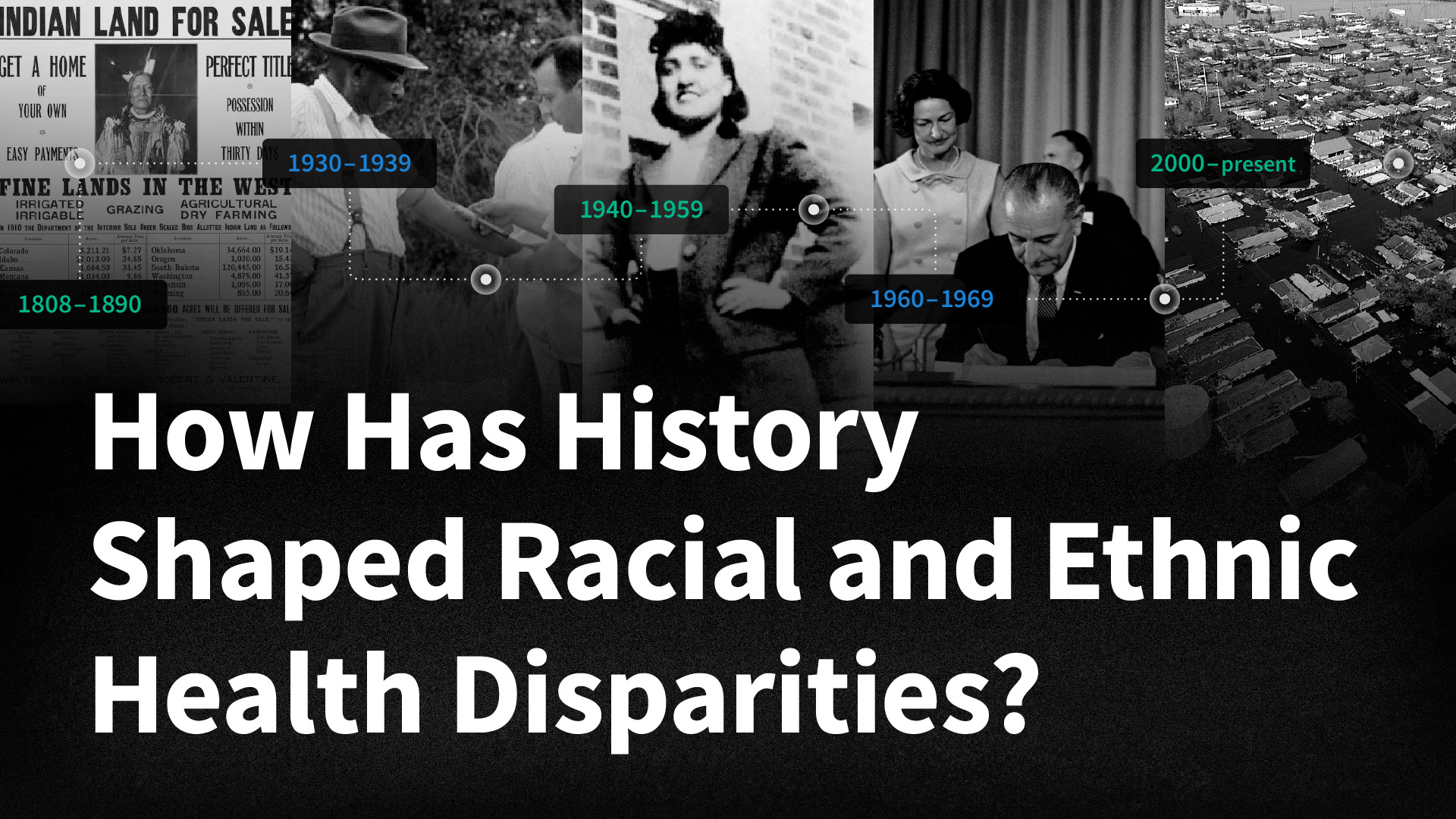
  • Timeline: How History Has Shaped Racial and Ethnic Health Disparities

    This timeline offers a historical view of significant U.S. federal policies and events spanning the early 1800s to today that have influenced present-day health disparities.
  • Health Policy 101: Chapter on Race, Inequality and Health

    Addressing persistent racial and ethnic disparities in health and health care is important for improving the nation’s health and economic prosperity. KFF explains such disparities and the factors that drive them, examines the actions to address them, and outlines future considerations.
  • Key Data on Health and Health Care by Race and Ethnicity

    Racial and ethnic disparities in health and health care remain a persistent challenge in the United States. An updated KFF resource examines how people of color fare compared to White people across 64 measures of health, health care, and social determinants of health.

Subscribe to KFF Emails

Choose which emails are best for you.
Sign up here

Filter

571 - 580 of 597 Results

  • Language Barriers in Health Care: Findings from the KFF Survey on Racism, Discrimination, and Health

    Poll Finding

    In the U.S., 26 million people have limited English proficiency, representing about 8% of people ages 5 and older. Those with limited English proficiency report worse overall health status than those who are English proficient, but data suggests that having access to providers who speak their preferred language may help these disparities and can improve health care experiences.

  • Are Health Centers Facilitating Equitable Access to COVID-19 Vaccinations? A June 2021 Update.

    Issue Brief

    This analysis updates earlier work and examines the extent to which vaccination efforts through community health centers are reaching people of color using data from the federal government’s weekly Health Center COVID-19 Survey. We include data from the survey weeks of January 8 through May 21, 2021, finding that people of color made up the majority of people who received vaccinations at community health centers.

  • May 20 Web Event: Latinos and the Nation’s COVID-19 Vaccine Rollout

    Event Date:
    Event

    New Campaign from THE CONVERSATION / LA CONVERSACIÓN to Address Information Needs in the Community KFF and UnidosUS presented an interactive web event on Thursday, May 20th on the latest insights on what is working and what barriers must be overcome in ensuring equitable access to the COVID-19 vaccines for Latinos in the

  • 3 Charts: Hispanic Immigrants’ Experiences in the United States

    News Release

    Hispanic immigrants comprise the largest group of immigrants in the United States, and one in three Hispanic or Latino adults in the U.S. are immigrants. Most report a higher quality of life in the U.S. than in their countries of birth and believe their children’s lives will be better than their own.

  • Compare the Candidates on Health Care Policy

    Feature

    The side-by-side comparison tool provides a quick overview of former President Trump's and Vice President Harris' records, positions, public statements, and proposed policies on a range of key health care topics.

  • Medicaid Efforts to Address Racial Health Disparities

    Issue Brief

    Medicaid programs are a major source of coverage for people of color and a potential mechanism to address racial health disparities. This issue brief provides insight into ways Medicaid can mitigate racial health disparities, how coverage may vary by race and ethnicity, and other Medicaid initiatives states pursuing to address racial disparities in health and health care.