Racial Equity and Health Policy

Survey of Immigrants

KFF-New York Times Survey: Immigrants Report Rising Fear, Negative Economic and Health Impacts, and Changing Political Views During the First Year of President Trump’s Second Term

The 2025 Survey of Immigrants, a partnership between KFF and The New York Times, takes an in-depth look at the experiences of immigrants during the first year of President Trump’s second term, including their worries related to increased immigration enforcement, their health and economic wellbeing, and the political views and preferences of immigrant voters. The survey paints a portrait of families under strain — where fear of detention and economic instability are negatively impacting immigrants’ health and reshaping immigrant families’ daily lives and views of U.S. political parties.

Read the News Release | Explore The New York Times’ Reporting
the Essentials
  • Disparities in Health and Health Care: 5 Key Questions and Answers

    This brief provides an introduction to what health and health care disparities are, why it is important to address them, what the status of disparities is today, recent federal actions to address disparities, and key issues related to addressing disparities in the future.
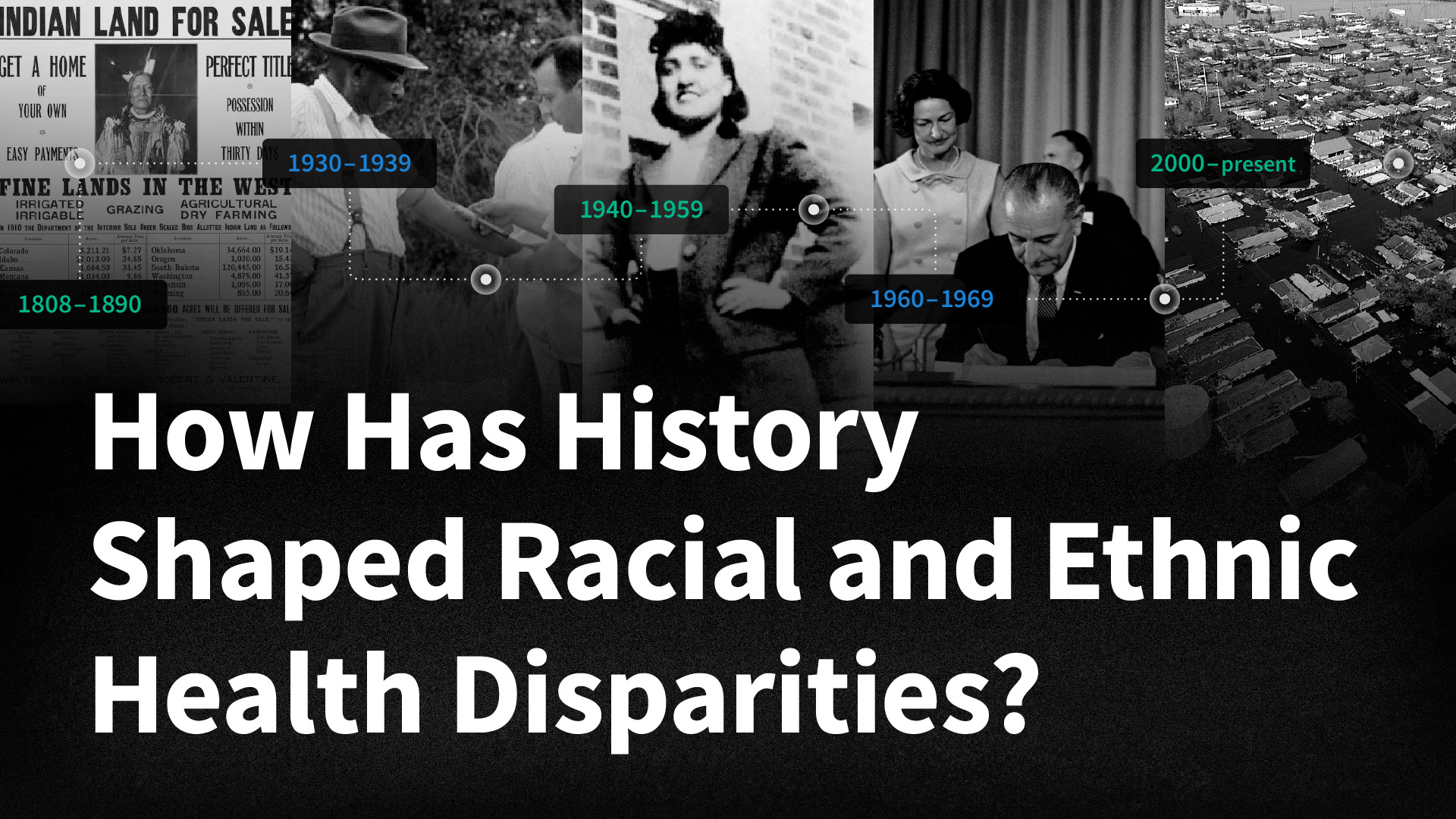
  • Timeline: How History Has Shaped Racial and Ethnic Health Disparities

    This timeline offers a historical view of significant U.S. federal policies and events spanning the early 1800s to today that have influenced present-day health disparities.
  • Health Policy 101: Chapter on Race, Inequality and Health

    Addressing persistent racial and ethnic disparities in health and health care is important for improving the nation’s health and economic prosperity. KFF explains such disparities and the factors that drive them, examines the actions to address them, and outlines future considerations.
  • Key Data on Health and Health Care by Race and Ethnicity

    Racial and ethnic disparities in health and health care remain a persistent challenge in the United States. An updated KFF resource examines how people of color fare compared to White people across 64 measures of health, health care, and social determinants of health.

Subscribe to KFF Emails

Choose which emails are best for you.
Sign up here

Filter

501 - 510 of 601 Results

  • New Analysis: In Pursuit of a National Vaccination Benchmark, Hispanic and Black People’s Rates Projected to Lag Behind

    News Release

    Much attention has focused on President Biden’s stated goal of vaccinating 70% of U.S. adults by July 4th. While achieving a high overall vaccination rate is important for recovery from the COVID-19 pandemic, a new analysis of people ages 12 and older—a different population than President Biden’s goal, but one that is currently eligible for vaccination—projects that 65% will have received at least one dose by July 4th, but 63% of Hispanic people and only…

  • Vaccine Hesitancy Among Hispanic Adults

    Poll Finding

    Based on data from the KFF COVID-19 Vaccine Monitor, this poll finding explores attitudes among Hispanic Americans toward the coronavirus and a generational gap in willingness to get a potential vaccine.

  • Most Hispanic Adults Lean Towards Getting a COVID-19 Vaccine, But Many Younger Adults are Hesitant

    News Release

    A new analysis of KFF COVID-19 Vaccine Monitor survey data finds that most Hispanic adults across the country want to get a COVID-19 vaccine at some point though younger adults are more hesitant, in part because of lower confidence that it is safe and effective. Overall a quarter (26%) of Hispanic adults say they will get a COVID-19 vaccine “as soon as possible” and an additional 43% say they will “wait until it has been…

  • Vaccine Monitor: Nearly Half of the Public Wants to Get a COVID-19 Vaccine as Soon as They Can or Has Already Been Vaccinated, Up across Racial and Ethnic Groups Since December

    News Release

    Most Convincing Messages to Promote Vaccination Highlight Effectiveness at Preventing Illness and a Return to Normal Life; Hearing about Rare Allergic Reactions and Side Effects May Discourage Some New KFF Dashboard Features Key Data and Insights from the Vaccine Monitor With millions of Americans getting their first COVID-19 vaccinations, the public’s eagerness to get a vaccine is rising across racial and ethnic groups, though Republicans and rural residents remain the most reluctant groups, the latest…

  • Data as of February 1 on State Vaccinations by Race/Ethnicity

    News Release

    Updated analysis of state-reported data as of February 1, 2021 on COVID-19 vaccinations, cases, and deaths by race/ethnicity is now available. Based on nearly half of states reporting vaccination data by race/ethnicity, Black and Hispanic people continue to receive smaller shares of vaccinations compared to their shares of cases and deaths and compared to their proportions of the total population. In all 23 states reporting data, Black people account for a smaller share of vaccinations compared…

  • Health and Health Care Experiences of Hispanic Adults

    Poll Finding

    The COVID-19 pandemic has exposed and exacerbated longstanding underlying disparities in health and health care facing Hispanic people. Using data from the COVID-19 Vaccine Monitor, this report provides insights into the health care experiences of Hispanic adults and examines how they vary by key factors, including insurance and immigration status.

  • Medicaid Authorities and Options to Address Social Determinants of Health

    Issue Brief

    Social determinants of health (SDOH) are the conditions in which people are born, grow, live, work and age. While there are limits, states can use Medicaid – which, by design, serves a primarily low-income population with greater social needs – to address social determinants of health. This brief outlines the range of Medicaid authorities and flexibilities that can be used to add benefits and design programs to address the social determinants of health.