Racial Equity and Health Policy

the Essentials
  • How Experiencing Racial Discrimination Impacts Health

    This brief highlights research examining mechanisms underlying health outcomes linked to self-reported experiences of racial discrimination, including biological changes, chronic stress, mental health, substance use, pregnancy-related outcomes, and sleep.
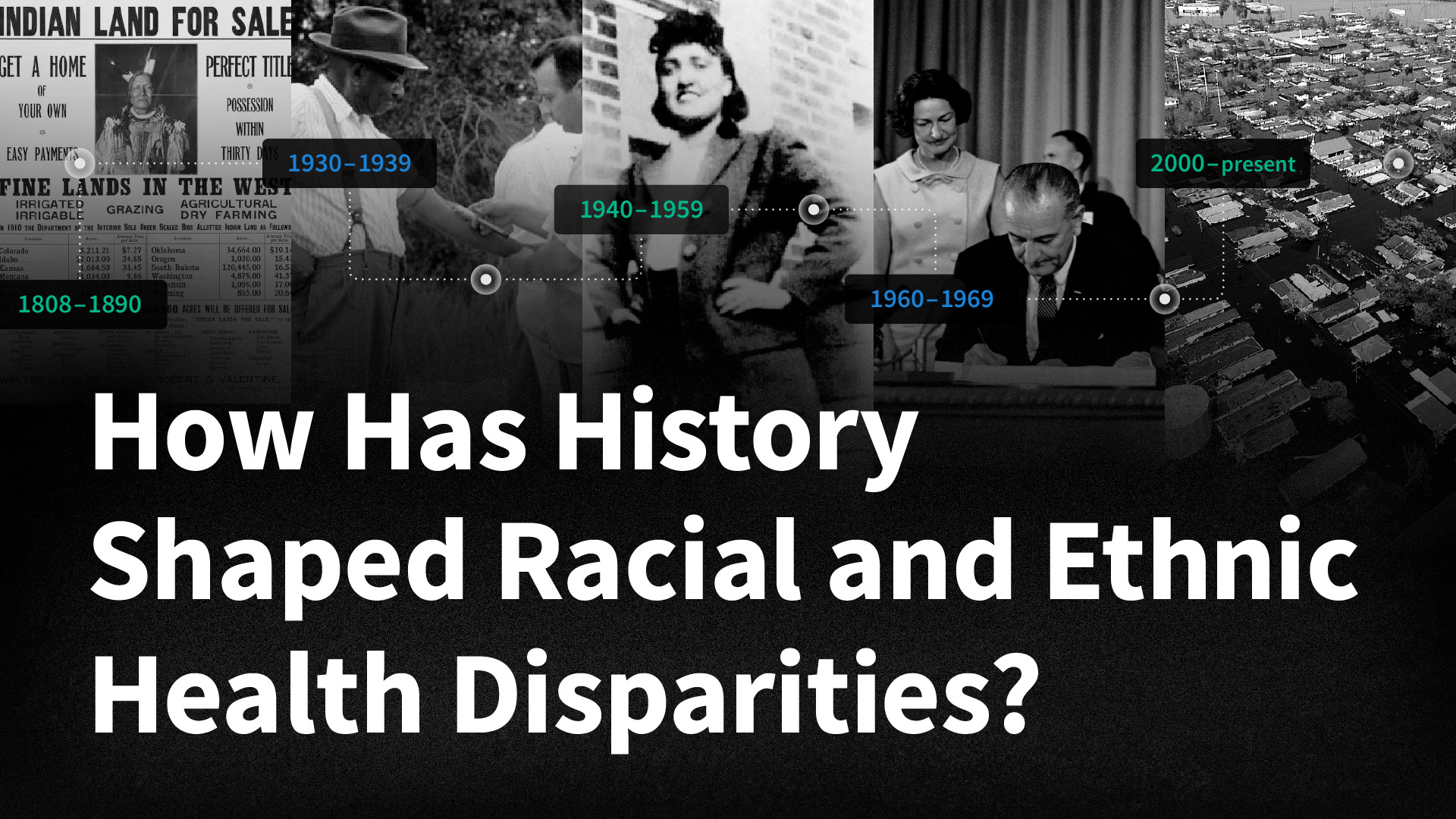
  • Timeline: How History Has Shaped Racial and Ethnic Health Disparities

    This timeline offers a historical view of significant U.S. federal policies and events spanning the early 1800s to today that have influenced present-day health disparities.
  • Health Policy 101: Chapter on Race, Inequality and Health

    Addressing persistent racial and ethnic disparities in health and health care is important for improving the nation’s health and economic prosperity. KFF explains such disparities and the factors that drive them, examines the actions to address them, and outlines future considerations.
  • Key Data on Health and Health Care by Race and Ethnicity

    Racial and ethnic disparities in health and health care remain a persistent challenge in the United States. An updated KFF resource examines how people of color fare compared to White people across 64 measures of health, health care, and social determinants of health.

Survey of Immigrants

KFF-New York Times Survey: Immigrants Report Rising Fear, Negative Economic and Health Impacts, and Changing Political Views During the First Year of President Trump’s Second Term

The 2025 Survey of Immigrants, a partnership between KFF and The New York Times, takes an in-depth look at the experiences of immigrants during the first year of President Trump’s second term, including their worries related to increased immigration enforcement, their health and economic wellbeing, and the political views and preferences of immigrant voters. The survey paints a portrait of families under strain — where fear of detention and economic instability are negatively impacting immigrants’ health and reshaping immigrant families’ daily lives and views of U.S. political parties.

Read the News Release | Explore The New York Times’ Reporting
Stay informed.

Stay informed.

Filter

381 - 390 of 602 Results

  • As the COVID-19 Pandemic Enters the Third Year Most Adults Say They Have Not Fully Returned to Pre-Pandemic ‘Normal’

    News Release

    People of Color, Lower Income Adults, and Those With Chronic Conditions Are More Vigilant About COVID-19 Precautions Like Masking, and Want Others to Continue Them as Well The Public Is Divided About Public Transportation Mask Requirement, With Half Wanting the Mandate Extended and the Other Half Wanting to Let it Expire Conventional wisdom may be that Americans are ready to put COVID-19 in the rearview mirror and cast precautions aside, but the latest KFF COVID-19…

  • Sources of Financing and the Level of Health Spending for Native Americans

    Report

    This study of Native Americans health care funding and expenditures includes the following: An analysis of all sources of financing and the level of total health expenditures by and on behalf of Native Americans, a detailed analysis of the same data for each of the 12 Indian Health Service areas across the country, an estimate of per-capita spending for health services to Native Americans overall, an illustration of the tribal discrepancies in per capita spending…

  • Minority Graduates of U.S. Medical Schools: Trends, 1950-1998

    Other Post

    While significant efforts have been made to increase minority representation in the medical profession, very little information about minority medical school graduates and minority physicians has been available to evaluate progress towards this goal. This report, prepared by the Association of American Medical Colleges, provides both trend information in minority medical graduates, as well as the current practice characteristics of minority physicians. It is the first product from a unique database developed from the archives…

  • Compendium of Cultural Competence Initiatives in Health Care

    Report

    Public and private sector organizations are involved in a number of activities that seek to reduce cultural and communication barriers to health care. These activities are often described as cultural competency and/or cross-cultural education. A recent Institute of Medicine report recommended that the health care system pursue several of these techniques as part of a multi-level strategy to reduce racial and ethnic disparities in medical care. To address this need, the Henry J. Kaiser Family…

  • Key Health and Health Care Indicators by Race/Ethnicity and State

    Fact Sheet

    This updated fact sheet shows variations across states and racial and ethnic groups for six key health and health care indicators. It provides a quick glance at disparities in rates of infant mortality and diabetes-related mortality and AIDS cases in all 50 states and the District of Columbia, as well as similar breakdowns showing the percentage of each group in each state that is uninsured, enrolled in Medicaid, and living in poverty. Fact Sheet (.pdf)

  • A Forum on the Implications of Changes in the Health Care Environment for Native American Health Care

    Report

    With the assistance of the First Nations Development Institute, the Henry J. Kaiser Family Foundation commissioned several studies of critical issues in Native-American health care. These studies examined the trends shaping the future of Native-American health care; the existing health systems and planning capacity in the Native-American health care system; the changes occurring in the IHS; the role of Medicaid in Native-American health care; the attitudes and preferences of Native American health care consumers; and…

  • What’s the Diagnosis? Latinos, Media & Health: A Series of Three Reports – Report

    Report

    What's the Diagnosis? A Series of Three Reports on Latinos, Media & Health Summary of Key Findings June 1998 Overview: A Series of 3 Reports Latinos are disproportionately affected by some of the most serious health problems facing our country. They are more likely to be uninsured and face problems getting health care when needed. Young Latinos, in particular, are confronting very high rates of unintended pregnancy and sexually transmitted diseases (STDs). Latinos have also…

  • Medicare’s Role for Latinos

    Fact Sheet

    Medicare's Role for Latinos Fact Sheet: The Medicare Program: Medicare's Role For Latinos

  • Native Americans and Medicaid: Coverage and Financing Issues

    Report

    Medicaid plays several different roles of significance to Native Americans. Through its purchase of managed care products, Medicaid is reshaping the health care delivery system for many Native Americans and other underserved low-income populations. Medicaid also assists low-income elderly and disabled Indians who are eligible for Medicare in meeting their premium and cost-sharing obligations. Finally, Medicaid offers coverage for nursing home care and other long-term care services needed by frail elderly and disabled Native Americans.…