Racial Equity and Health Policy

the Essentials
  • Health Coverage by Race and Ethnicity, 2010-2024

    There have been longstanding racial and ethnic disparities in health coverage that contribute to disparities in health. This brief examines trends in health coverage by race and ethnicity from 2010 through 2024 and discusses the implications for such disparities.
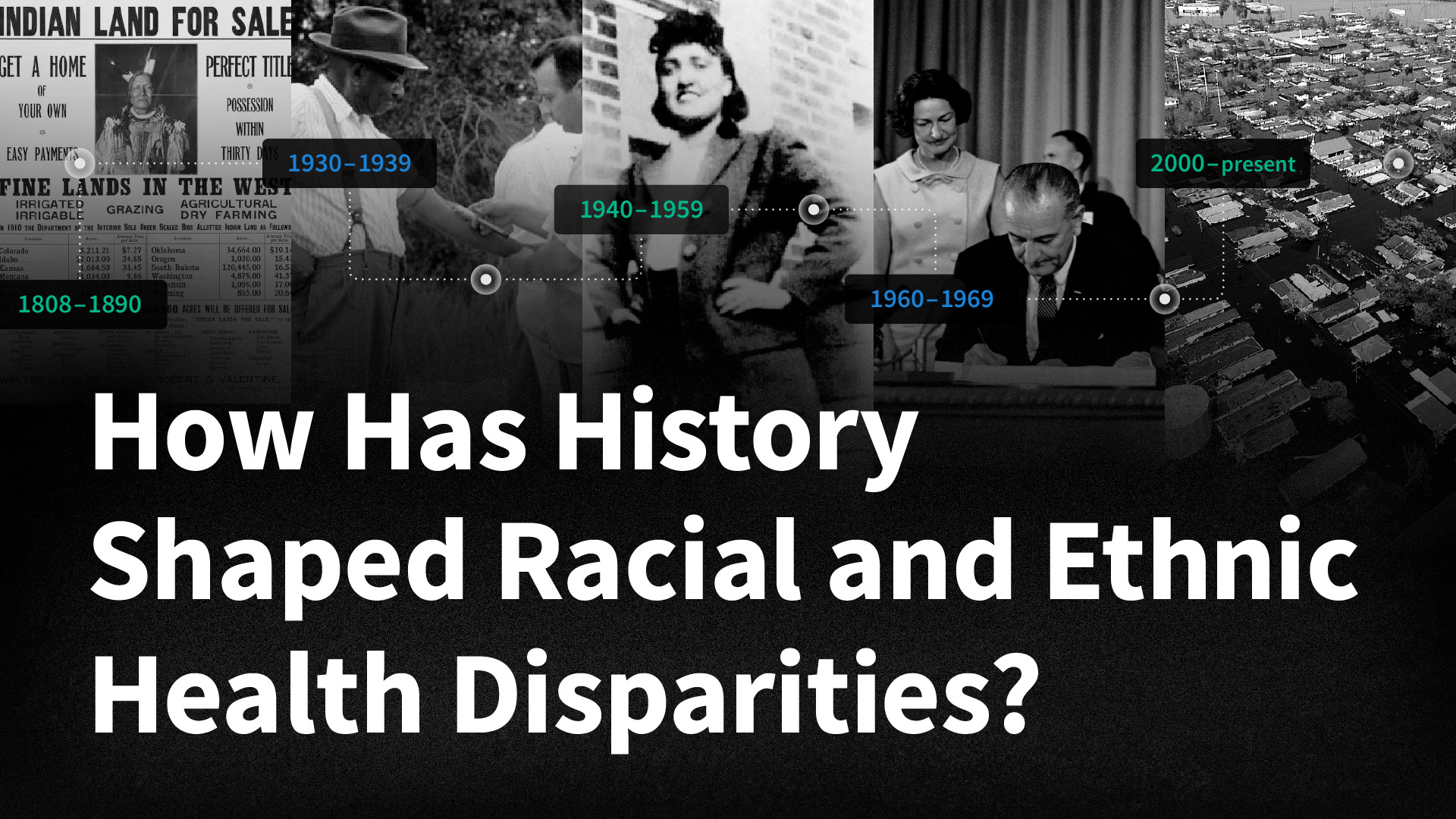
  • Timeline: How History Has Shaped Racial and Ethnic Health Disparities

    This timeline offers a historical view of significant U.S. federal policies and events spanning the early 1800s to today that have influenced present-day health disparities.
  • Health Policy 101: Chapter on Race, Inequality and Health

    Addressing persistent racial and ethnic disparities in health and health care is important for improving the nation’s health and economic prosperity. KFF explains such disparities and the factors that drive them, examines the actions to address them, and outlines future considerations.
  • Key Data on Health and Health Care by Race and Ethnicity

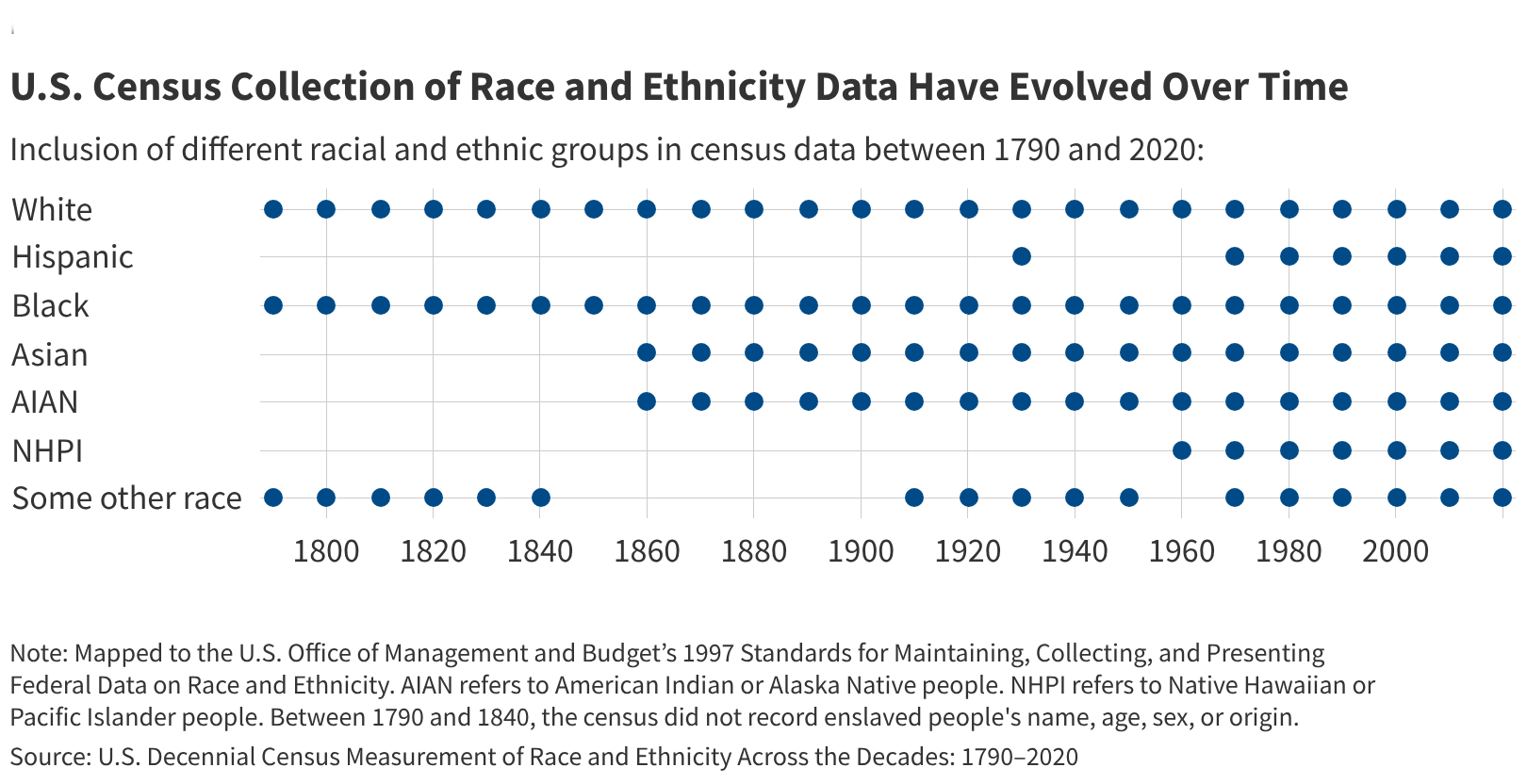
    Racial and ethnic disparities in health and health care remain a persistent challenge in the United States. An updated KFF resource examines how people of color fare compared to White people across 64 measures of health, health care, and social determinants of health.

Survey of Immigrants

KFF-New York Times Survey: Immigrants Report Rising Fear, Negative Economic and Health Impacts, and Changing Political Views During the First Year of President Trump’s Second Term

The 2025 Survey of Immigrants, a partnership between KFF and The New York Times, takes an in-depth look at the experiences of immigrants during the first year of President Trump’s second term, including their worries related to increased immigration enforcement, their health and economic wellbeing, and the political views and preferences of immigrant voters. The survey paints a portrait of families under strain — where fear of detention and economic instability are negatively impacting immigrants’ health and reshaping immigrant families’ daily lives and views of U.S. political parties.

Read the News Release | Explore The New York Times’ Reporting
Stay informed.

Stay informed.

Filter

351 - 360 of 602 Results

  • Monkeypox (MPX) Cases and Vaccinations by Race/Ethnicity

    Issue Brief

    A small number of states, as well as some local jurisdictions, are reporting race/ethnicity data on MPX cases and vaccinations and these data show a disproportionate impact of MPX cases on Black and Hispanic people. The data available to date on vaccinations also suggest that Black and Hispanic people are receiving smaller shares of vaccinations despite accounting for larger shares of cases.

  • Annual Update of Key Health Data Collection by Race and Ethnicity, Now Including Mental Health Measures

    News Release

    The annual update of KFF’s collection of wide-ranging data on health and health care by race and ethnicity is now available, and this year includes measures on mental health care access, mental illness, substance use disorder, suicide rates, and drug overdose death rates. The handy reference, "Key Data on Health and Health Care by Race and Ethnicity," has nearly 50 charts and up to 70 data measures that highlight the scale and scope of disparities…

  • Nearly Half of Those Likely Eligible for DACA are Uninsured

    News Release

    Yesterday, the Biden Administration announced a plan to expand eligibility for Medicaid and ACA Marketplace health coverage to Deferred Action for Childhood Arrivals (DACA) recipients. A KFF analysis finds 47% of individuals likely eligible for DACA are uninsured compared to 10% of U.S. born individuals in their age group. The analysis estimates that among those likely eligible for DACA: 84% are in a family with at least one full-time worker, 54% of adults work full-time,…

  • The Impact of the Coverage Gap for Adults in States not Expanding Medicaid by Race and Ethnicity

    Issue Brief

    The Affordable Care Act (ACA) expansion of Medicaid to adults with incomes at or below 138% of the federal poverty level (FPL) effectively became a state option following the Supreme Court decision, creating a “coverage gap” for many poor uninsured adults in states that do not expand Medicaid. This brief examines the coverage gap by race and ethnicity.

  • Voices from Puerto Rico: Reflections Two Months After Maria (Video)

    Video

    Residents of Puerto Rico discuss their daily lives and their views on recovery efforts two months after Hurricane Maria. In this video, they describe job loss and continuing economic disruption, a lack of basic services such as electricity and a rising toll on the population's mental and physical health.

  • Living in an Immigrant Family in America: How Fear and Toxic Stress are Affecting Daily Life, Well-Being, & Health

    Issue Brief

    This brief examines the experiences of immigrant parents and children, including immigrants who are undocumented and those lawfully present, with the new restrictions on immigration and increased immigration enforcement being pursued by the Trump Administration that are reshaping U.S. immigration policy. Findings are based on focus groups in eight cities and four states with 100 parents in immigrant families from 15 countries, as well as telephone interviews with 13 pediatricians who serve immigrant communities.

  • U.S. Virgin Islands: Fast Facts

    Fact Sheet

    This fact sheet presents demographic, economic, and health indicators of the U.S. Virgin Islands and briefly discusses some of the territory's short and long-term challenges facing the territory after Hurricanes Irma and Maria struck the island in September 2017.

  • Vivir en una Familia de Inmigrantes en los Estados Unidos: Cómo el Miedo y el Estrés Tóxico Están Afectando la Vida Diaria, el Bienestar y la Salud

    Issue Brief

    Este informe examina las experiencias de los padres y hijos de inmigrantes, incluidos los inmigrantes indocumentados y aquellos legalmente presentes, con las nuevas restricciones de inmigración y el aumento de las leyes de inmigración siendo perseguidos por la Administración de Trump que están reformando la política de inmigración del EE.UU.. Realizamos grupos focales con 100 padres de 15 países y 13 entrevistas con pediatras para obtener una idea de cómo el ambiente actual está afectando…

  • Serious Illness in Late Life: The Public’s Views and Experiences

    Report

    In context of the rapidly growing number of older adults in the U.S. and increasing challenges that this population faces, the Kaiser Family Foundation conducted a large scale, nationally representative telephone survey to better understand people’s expectations about later life and efforts they’ve taken to plan for if they become seriously ill. To learn more about the experiences of those with serious illness specifically, this survey also included interviews with adults who are either personally…