Racial Equity and Health Policy

the Essentials
  • How Experiencing Racial Discrimination Impacts Health

    This brief highlights research examining mechanisms underlying health outcomes linked to self-reported experiences of racial discrimination, including biological changes, chronic stress, mental health, substance use, pregnancy-related outcomes, and sleep.
  • Timeline: How History Has Shaped Racial and Ethnic Health Disparities

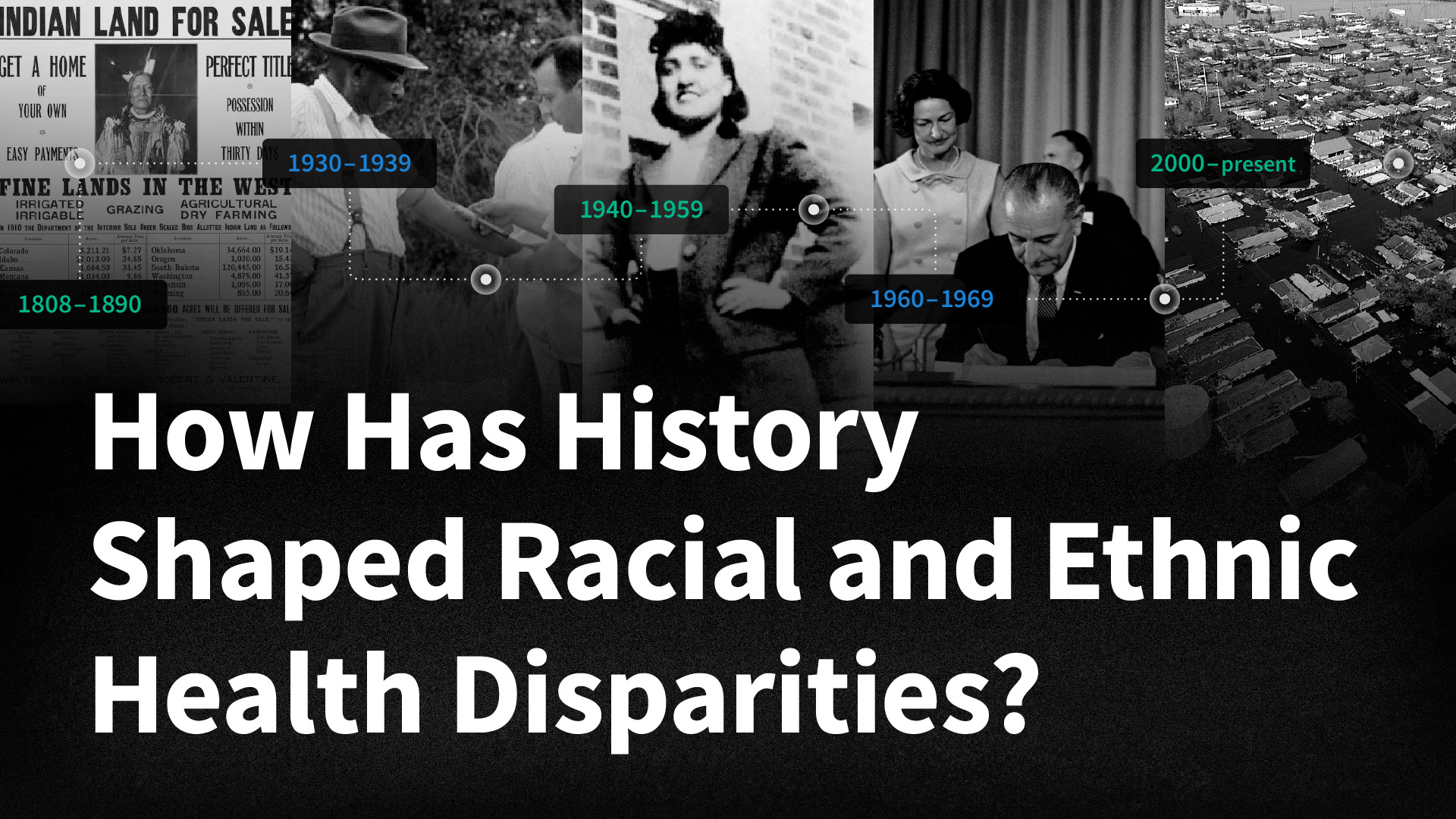
    This timeline offers a historical view of significant U.S. federal policies and events spanning the early 1800s to today that have influenced present-day health disparities.
  • Health Policy 101: Chapter on Race, Inequality and Health

    Addressing persistent racial and ethnic disparities in health and health care is important for improving the nation’s health and economic prosperity. KFF explains such disparities and the factors that drive them, examines the actions to address them, and outlines future considerations.
  • Key Data on Health and Health Care by Race and Ethnicity

    Racial and ethnic disparities in health and health care remain a persistent challenge in the United States. An updated KFF resource examines how people of color fare compared to White people across 64 measures of health, health care, and social determinants of health.

Survey of Immigrants

KFF-New York Times Survey: Immigrants Report Rising Fear, Negative Economic and Health Impacts, and Changing Political Views During the First Year of President Trump’s Second Term

The 2025 Survey of Immigrants, a partnership between KFF and The New York Times, takes an in-depth look at the experiences of immigrants during the first year of President Trump’s second term, including their worries related to increased immigration enforcement, their health and economic wellbeing, and the political views and preferences of immigrant voters. The survey paints a portrait of families under strain — where fear of detention and economic instability are negatively impacting immigrants’ health and reshaping immigrant families’ daily lives and views of U.S. political parties.

Read the News Release | Explore The New York Times’ Reporting
Stay informed.

Stay informed.

Filter

251 - 260 of 602 Results

  • Coverage and Access of Adults 18-64 in the District of Columbia: Key Facts

    Fact Sheet

    This fact sheet summarizes the findings of the DC Health Access Survey, released in the Fall of 2003. It includes information on topics including: the demographics of the uninsured adults in the District of Columbia, findings about where and to what extent uninsured adults in the District of Columbia get medical care, and financial barriers to care. Fact Sheet (.pdf) Survey Highlights, Chartpack, and Toplines

  • Medicaid’s Role for Black Americans

    Fact Sheet

    This fact sheet examines Medicaid's role for black Americans. It includes data on Medicaid's coverage of black Americans and the program's impact on their access to care, as well as the impacts of the recent recession and the coming expansion of Medicaid under health reform on enrollment in Medicaid among black Americans. The fact sheet also has a chart showing state-by-state data on health insurance coverage of black Americans. Fact Sheet (.pdf)

  • Poll: Family Members of Older Adults with Serious Illness Are More Confident That They Know Their Medical Wishes When They Have Written Documents

    News Release

    Most Seriously Ill Seniors Struggle with Cognitive and Mental Health Challenges; Nearly Half Reportedly Have Problems Understanding Drug and Medical Instructions Seniors with serious illness and their families are more likely to feel their wishes for medical care are being followed when they have written them down, finds a new Kaiser Family Foundation survey on the public’s views and experiences with illness in late life. As America grows older and more people face serious illness…

  • COVID-19 Cases, Deaths, and Vaccinations by Race/Ethnicity as of Winter 2022

    Issue Brief

    Over the course of the pandemic, racial disparities in cases and deaths have widened and narrowed. However, overall, Black, Hispanic, and American Indian and Alaska Native (AIAN) people have borne the heaviest health impacts of the pandemic. While Black and Hispanic people were less likely than their White counterparts to receive a vaccine during the initial phases of the vaccination rollout, these disparities have narrowed over time and reversed for Hispanic people.

  • Addressing Health and Social Needs of Immigrant Families: Lessons from Local Communities

    Issue Brief

    This brief presents findings from discussions with service providers across sectors (including health, legal, and education), local officials, and parents in immigrant families in the San Francisco Bay Area and San Diego about issues facing immigrant families and providers in the current environment, how the local communities have responded to growing needs, and key priorities and opportunities identified for serving immigrant communities.

  • Examining Racial and Ethnic Disparities Among Women at the State Level

    Event Date:
    Event

    A decade after U.S. Surgeon General David Satcher called for the elimination of racial disparities in health, women of color in every state continue to fare worse than white women on a variety of measures of health and health care access. The Foundation has created a package of resources, including a comprehensive report, state fact sheets, and interactive data tables, that illuminate and document the persistence of disparities on 25 indicators between white women and…