Racial Equity and Health Policy

Survey of Immigrants

KFF-New York Times Survey: Immigrants Report Rising Fear, Negative Economic and Health Impacts, and Changing Political Views During the First Year of President Trump’s Second Term

The 2025 Survey of Immigrants, a partnership between KFF and The New York Times, takes an in-depth look at the experiences of immigrants during the first year of President Trump’s second term, including their worries related to increased immigration enforcement, their health and economic wellbeing, and the political views and preferences of immigrant voters. The survey paints a portrait of families under strain — where fear of detention and economic instability are negatively impacting immigrants’ health and reshaping immigrant families’ daily lives and views of U.S. political parties.

Read the News Release | Explore The New York Times’ Reporting
the Essentials
  • Disparities in Health and Health Care: 5 Key Questions and Answers

    This brief provides an introduction to what health and health care disparities are, why it is important to address them, what the status of disparities is today, recent federal actions to address disparities, and key issues related to addressing disparities in the future.
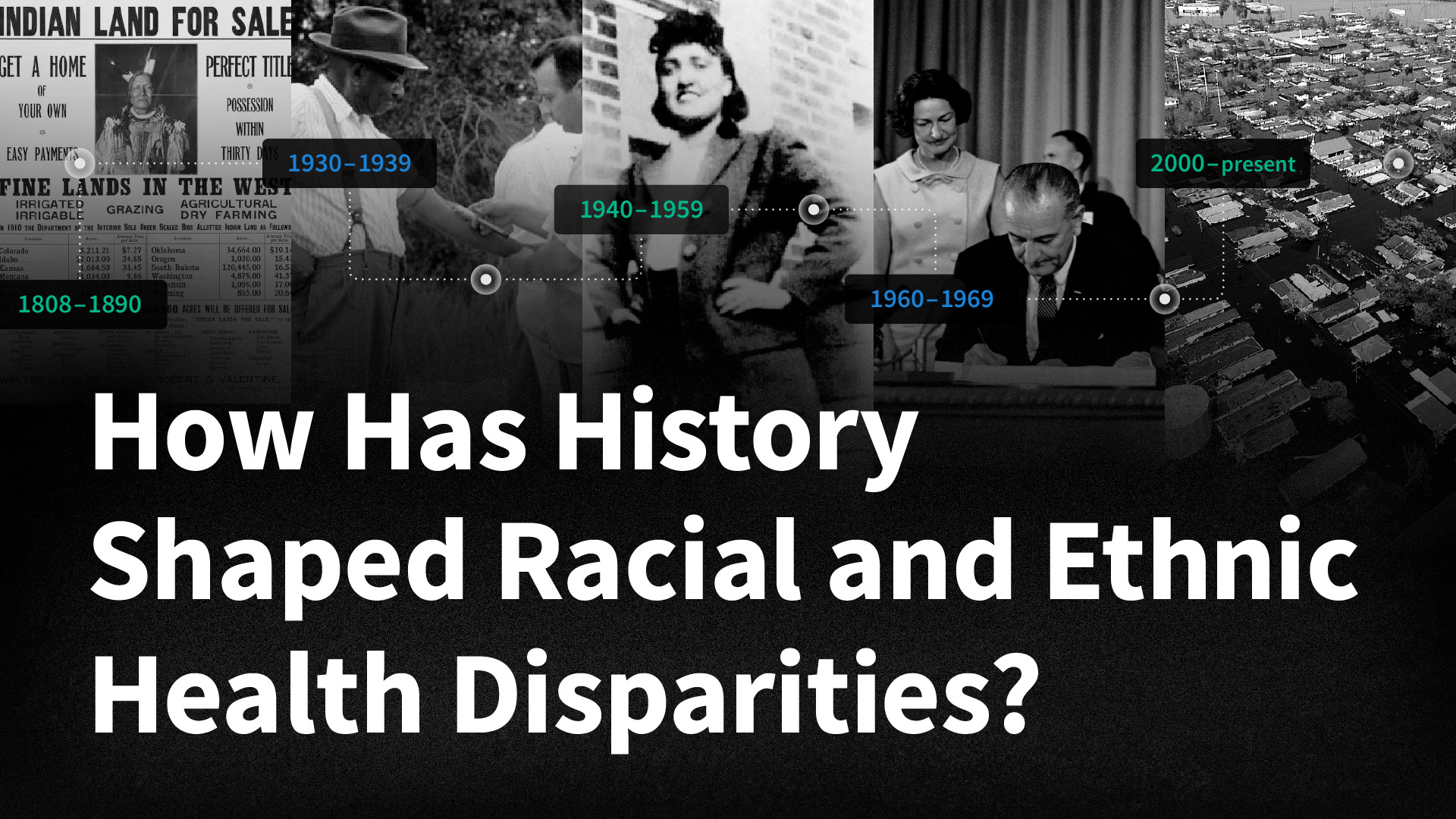
  • Timeline: How History Has Shaped Racial and Ethnic Health Disparities

    This timeline offers a historical view of significant U.S. federal policies and events spanning the early 1800s to today that have influenced present-day health disparities.
  • Health Policy 101: Chapter on Race, Inequality and Health

    Addressing persistent racial and ethnic disparities in health and health care is important for improving the nation’s health and economic prosperity. KFF explains such disparities and the factors that drive them, examines the actions to address them, and outlines future considerations.
  • Key Data on Health and Health Care by Race and Ethnicity

    Racial and ethnic disparities in health and health care remain a persistent challenge in the United States. An updated KFF resource examines how people of color fare compared to White people across 64 measures of health, health care, and social determinants of health.

Subscribe to KFF Emails

Choose which emails are best for you.
Sign up here

Filter

241 - 250 of 598 Results

  • Key Facts: African Americans and HIV/AIDS

    Report

    provides comprehensive data on the impact of HIV/AIDS epidemic on African Americans. Based on the most recent data and research on the epidemiology of HIV/AIDS among African Americans, the report includes an overview and epidemic profile, as well as data on major trends, access to and use of health services, and perceptions of HIV/AIDS.

  • African American and HIV/AIDS Survey – News Release

    Other Post

    Despite Widespread Concern About AIDS, Few African Americans See 'A Lot' of Action From Community Groups and Government in Fight Against Disease African Americans Want Practical Help on HIV/AIDS:How to Talk with Children and Partners, More Information About Testing and Treatment Media Named As Most Important Resource on HIV/AIDS Embargoed for release until: 9:00 am,…

  • Urban Indian Health

    Report

    More than half (57%) of the 2.5 million people who identify themselves solely as American Indian and Alaska Native in the 2000 Census live in metropolitan areas.

  • Capitol Hill Briefing on Latinos and HIV/AIDS

    Event Date:
    Event

    As part of the Kaiser Family Foundation’s ongoing effort to raise awareness about critical issues related to HIV/AIDS, we co-hosted a Capitol Hill briefing with the National Alliance of State and Territorial AIDS Directors (NASTAD) on Latinos and HIV/AIDS.

  • Designating English as the Official Language of the United States Could Impact Millions with Limited English Proficiency

    Other Post

    This issue brief provides an overview of Executive Order (EO) 14224 designating English as the official language of the United States and its potential implications for multilingual resources, including data on the shares of individuals with LEP across different socioeconomic characteristics based on KFF analysis of 2023 American Community Survey (ACS) data.

  • Native Americans and Medicaid: Coverage and Financing Issues

    Report

    Medicaid plays several different roles of significance to Native Americans. Through its purchase of managed care products, Medicaid is reshaping the health care delivery system for many Native Americans and other underserved low-income populations. Medicaid also assists low-income elderly and disabled Indians who are eligible for Medicare in meeting their premium and cost-sharing obligations.