Racial Equity and Health Policy

the Essentials
  • Health Coverage by Race and Ethnicity, 2010-2024

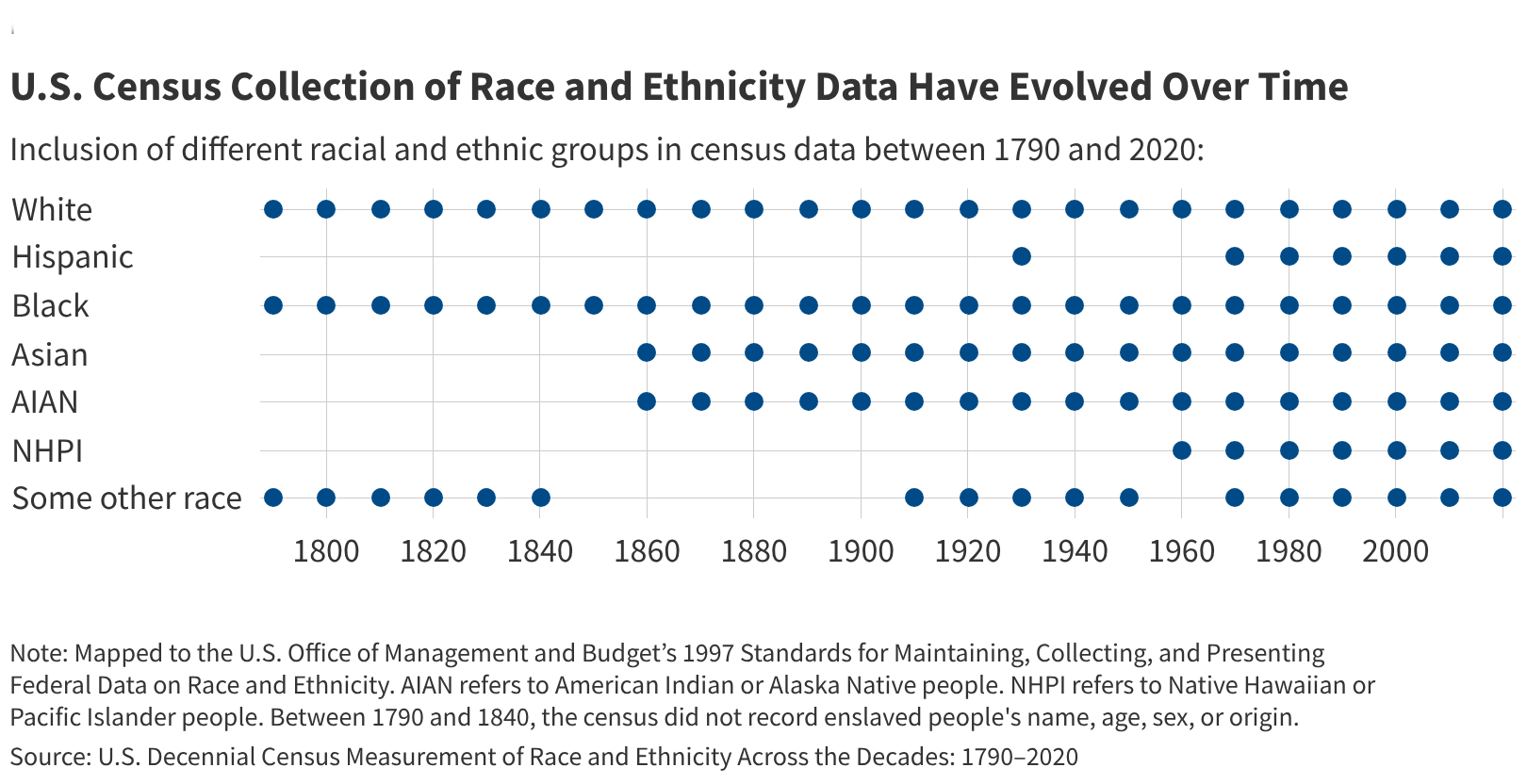
    There have been longstanding racial and ethnic disparities in health coverage that contribute to disparities in health. This brief examines trends in health coverage by race and ethnicity from 2010 through 2024 and discusses the implications for such disparities.
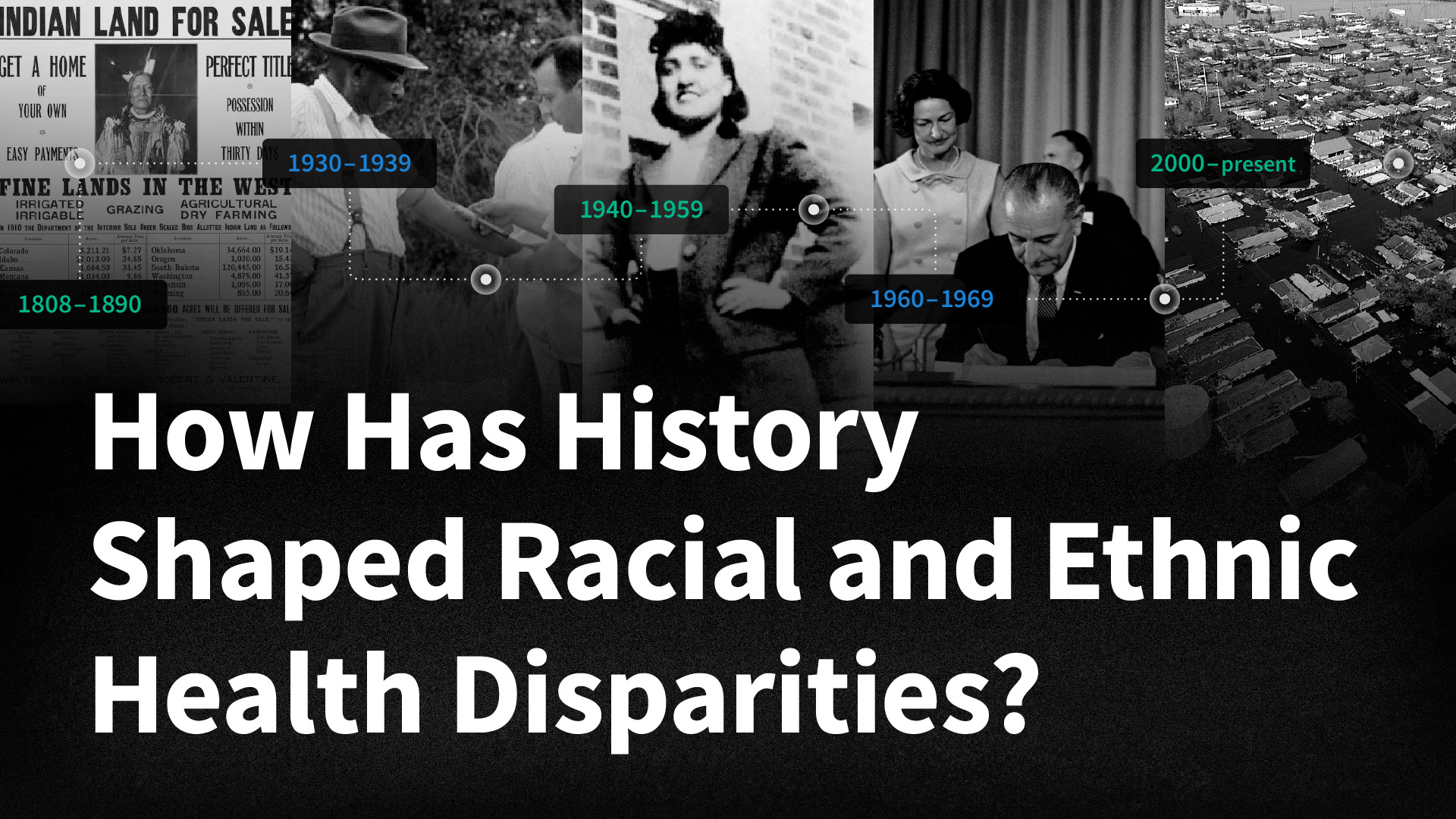
  • Timeline: How History Has Shaped Racial and Ethnic Health Disparities

    This timeline offers a historical view of significant U.S. federal policies and events spanning the early 1800s to today that have influenced present-day health disparities.
  • Health Policy 101: Chapter on Race, Inequality and Health

    Addressing persistent racial and ethnic disparities in health and health care is important for improving the nation’s health and economic prosperity. KFF explains such disparities and the factors that drive them, examines the actions to address them, and outlines future considerations.
  • Key Data on Health and Health Care by Race and Ethnicity

    Racial and ethnic disparities in health and health care remain a persistent challenge in the United States. An updated KFF resource examines how people of color fare compared to White people across 64 measures of health, health care, and social determinants of health.

Survey of Immigrants

KFF-New York Times Survey: Immigrants Report Rising Fear, Negative Economic and Health Impacts, and Changing Political Views During the First Year of President Trump’s Second Term

The 2025 Survey of Immigrants, a partnership between KFF and The New York Times, takes an in-depth look at the experiences of immigrants during the first year of President Trump’s second term, including their worries related to increased immigration enforcement, their health and economic wellbeing, and the political views and preferences of immigrant voters. The survey paints a portrait of families under strain — where fear of detention and economic instability are negatively impacting immigrants’ health and reshaping immigrant families’ daily lives and views of U.S. political parties.

Read the News Release | Explore The New York Times’ Reporting
Stay informed.

Stay informed.

Filter

161 - 170 of 602 Results

  • Climate Change and Health Equity: Key Questions and Answers

    Issue Brief

    While climate change poses health threats for everyone, people of color, low-income people, and other marginalized or high-need groups face disproportionate risks due to underlying inequities and structural racism and discrimination.

  • Immigrants in the U.S. Continue to Face Health Care Challenges

    Feature

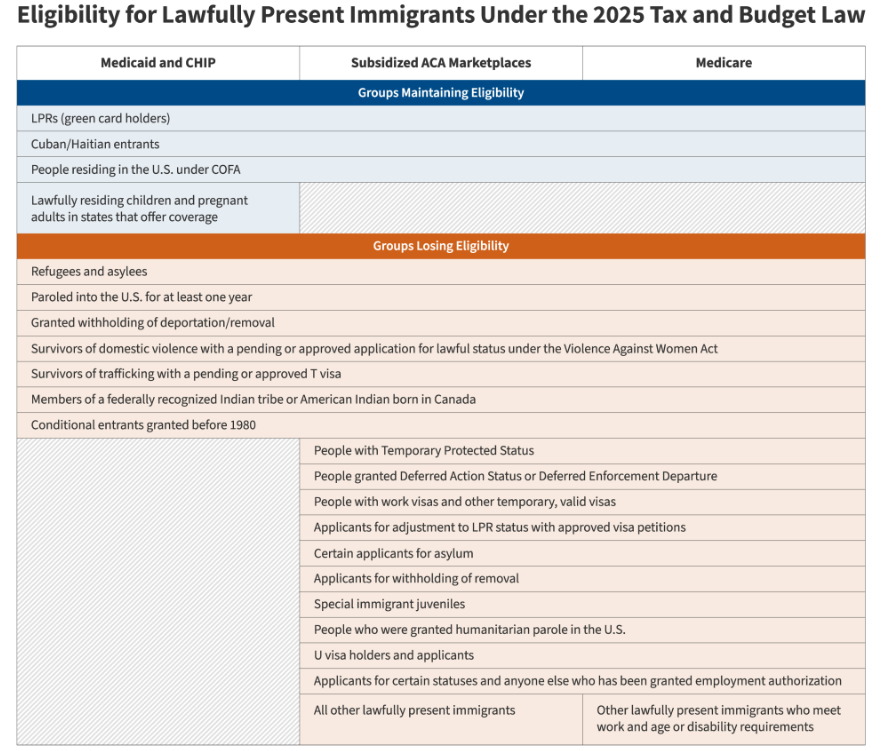
    June marks National Immigrant Heritage Month, which honors the contributions of immigrants to the U.S. As of 2020, there were close to 45 million immigrants residing in the U.S., accounting for 14% of the total U.S. population. Immigrants make up a significant part of the nation’s workforce and families yet face increased barriers to accessing health coverage and care. While citizens account for the majority of the nonelderly uninsured population, noncitizens are much more likely…

  • 3 Charts: Hispanic Immigrants’ Experiences in the United States

    News Release

    Hispanic immigrants comprise the largest group of immigrants in the United States, and one in three Hispanic or Latino adults in the U.S. are immigrants. Most report a higher quality of life in the U.S. than in their countries of birth and believe their children’s lives will be better than their own. A large majority are working, and many send money to their family living outside the U.S. Hispanic immigrants are more likely than other immigrant…

  • Health and Health Care Among Adults with Previous Experiences of Homelessness: Findings from the KFF Survey on Racism, Discrimination, and Health

    Poll Finding

    This report examines the circumstances and health needs of adults who report previous experiences with homelessness. Analysis of KFF's Racism, Discrimination, and Health survey finds that people who have experienced homelessness have disproportionate health needs and face great socioeconomic challenges than those who have never experienced homelessness.

  • Recent and Anticipated Actions to Reverse Trump Administration Section 1557 Non-Discrimination Rules

    Issue Brief

    The Biden Administration has started taking steps to reverse Trump Administration policy and regulations that significantly narrowed the implementation and administrative enforcement of Section 1557, the Affordable Care Act’s nondiscrimination provision, particularly as the regulations apply to gender identity and sexual orientation. In addition, several lawsuits challenging the regulations, which were initially issued by the Obama Administration and later substantially revised by the Trump Administration, are pending. Section 1557 prohibits discrimination based on race, color,…

  • New Nationwide Poll by the Kaiser Family Foundation and The Undefeated Reveals Distrust of the Health Care System Among Black Americans

    News Release

    Half of African Americans say they will not take a coronavirus vaccine KFF/The Undefeated poll shows disparate views on health care between Black and white America Poll results published on The Undefeated beginning today The Kaiser Family Foundation (KFF) and The Undefeated have conducted a joint nationwide survey that explores the views and experiences of African Americans during the coronavirus pandemic. Despite the disproportionate impact of the virus on Black communities, 49 percent of African…

  • New KFF Analysis Examines Rapidly Evolving Federal Policies For Substance Use Disorder Treatment for the Opioid Epidemic  

    News Release

    A new KFF analysis finds that 24 percent more buprenorphine, a medication to treat opioid use disorder, was dispensed in 2022 than in 2019, the year before the pandemic brought a surge of opioid overdose deaths – and a focus on how to expand access and treatment. This upward trend in buprenorphine distribution, already in motion before the pandemic, continued throughout the COVID public health crisis, suggesting continued improvements in access to treatment even as…