
Racial Equity and Health Policy

the Essentials
  • Health Coverage by Race and Ethnicity, 2010-2024

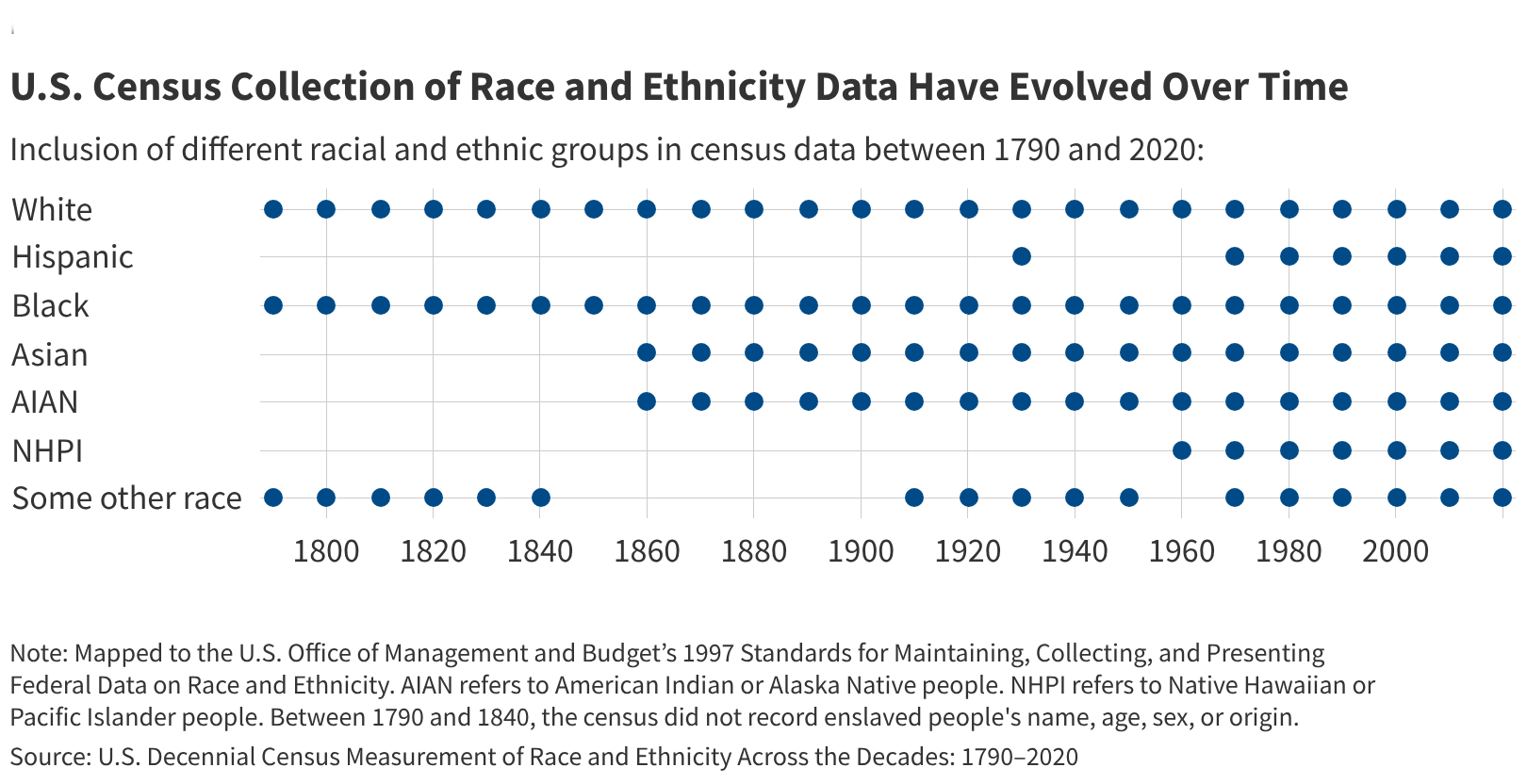
    There have been longstanding racial and ethnic disparities in health coverage that contribute to disparities in health. This brief examines trends in health coverage by race and ethnicity from 2010 through 2024 and discusses the implications for such disparities.
  • Timeline: How History Has Shaped Racial and Ethnic Health Disparities

    This timeline offers a historical view of significant U.S. federal policies and events spanning the early 1800s to today that have influenced present-day health disparities.
  • Health Policy 101: Chapter on Race, Inequality and Health

    Addressing persistent racial and ethnic disparities in health and health care is important for improving the nation’s health and economic prosperity. KFF explains such disparities and the factors that drive them, examines the actions to address them, and outlines future considerations.
  • Key Data on Health and Health Care by Race and Ethnicity

    Racial and ethnic disparities in health and health care remain a persistent challenge in the United States. An updated KFF resource examines how people of color fare compared to White people across 64 measures of health, health care, and social determinants of health.

Survey of Immigrants

KFF-New York Times Survey: Immigrants Report Rising Fear, Negative Economic and Health Impacts, and Changing Political Views During the First Year of President Trump’s Second Term

The 2025 Survey of Immigrants, a partnership between KFF and The New York Times, takes an in-depth look at the experiences of immigrants during the first year of President Trump’s second term, including their worries related to increased immigration enforcement, their health and economic wellbeing, and the political views and preferences of immigrant voters. The survey paints a portrait of families under strain — where fear of detention and economic instability are negatively impacting immigrants’ health and reshaping immigrant families’ daily lives and views of U.S. political parties.

Read the News Release | Explore The New York Times’ Reporting
Subscribe to KFF Emails

Choose which emails are best for you.
Sign up here

Filter

421 - 430 of 602 Results

  • Gaps Between Average Income of the Richest and Poorest Households in the United States

    Feature

    Gaps Between Average Income of the Richest and Poorest Households in the United States Download Source Economic Policy Institute/Center on Budget and Policy Priorities analysis of U.S. Census Bureau Data. Income is post-federal. tax and includes the value of the EITC, food stamps, and housing subsidies. Income is adjusted for inflation (to 2009 dollars) and for household size. Pulling Apart, A State-by-State Analysis of Income Trends, November 15, 2012, http://www.cbpp.org/cms/index.cfm?fa=view&id=3860  

  • Excess Medical Expenditures Due to Health Inequities

    Feature

    Excess Medical Expenditures Due to Health Inequities Download Source LaVeist, T., Gaskin, D., and P. Richard, “The Economic Burden of Health Inequalities in the United States,” Joint Center for Political and Economic Studies, September 2009,   

  • Distribution of U.S. Population by Race/Ethnicity, 2010 and 2050

    Feature

    Distribution of U.S. Population by Race/Ethnicity, 2010 and 2050 Download Source U.S. Census Bureau, 2008, Projected Population by Single Year of Age, Sex, Race, and Hispanic Origin for the United States: July 1, 2000 to July 1, 2050.  http://www.census.gov/population/www/projections/downloadablefiles.html.   

  • Age-Adjusted Death Rates, by Race/Ethnicity, 2006-2008

    Feature

    Age-Adjusted Death Rates, by Race/Ethnicity, 2006-2008 Download Source Centers for Disease Control and Prevention. National Vital Statistics Report. January 2012. http://www.cdc.gov/nchs/data/nvsr/nvsr60/nvsr60_04.pdf    

  • Health Coverage by Race and Ethnicity: The Potential Impact of the Affordable Care Act

    Issue Brief

    Executive Summary One of the key goals of the Affordable Care Act (ACA) is to reduce the number of uninsured through a Medicaid expansion and the creation of health insurance exchange marketplaces with advance premium tax credits to help moderate-income individuals pay for this coverage. Given that people of color are at disproportionate risk of being uninsured and having low incomes, the ACA coverage expansions could particularly benefit communities of color and advance efforts to…