Racial Equity and Health Policy

Survey of Immigrants

KFF-New York Times Survey: Immigrants Report Rising Fear, Negative Economic and Health Impacts, and Changing Political Views During the First Year of President Trump’s Second Term

The 2025 Survey of Immigrants, a partnership between KFF and The New York Times, takes an in-depth look at the experiences of immigrants during the first year of President Trump’s second term, including their worries related to increased immigration enforcement, their health and economic wellbeing, and the political views and preferences of immigrant voters. The survey paints a portrait of families under strain — where fear of detention and economic instability are negatively impacting immigrants’ health and reshaping immigrant families’ daily lives and views of U.S. political parties.

Read the News Release | Explore The New York Times’ Reporting
the Essentials
  • Disparities in Health and Health Care: 5 Key Questions and Answers

    This brief provides an introduction to what health and health care disparities are, why it is important to address them, what the status of disparities is today, recent federal actions to address disparities, and key issues related to addressing disparities in the future.
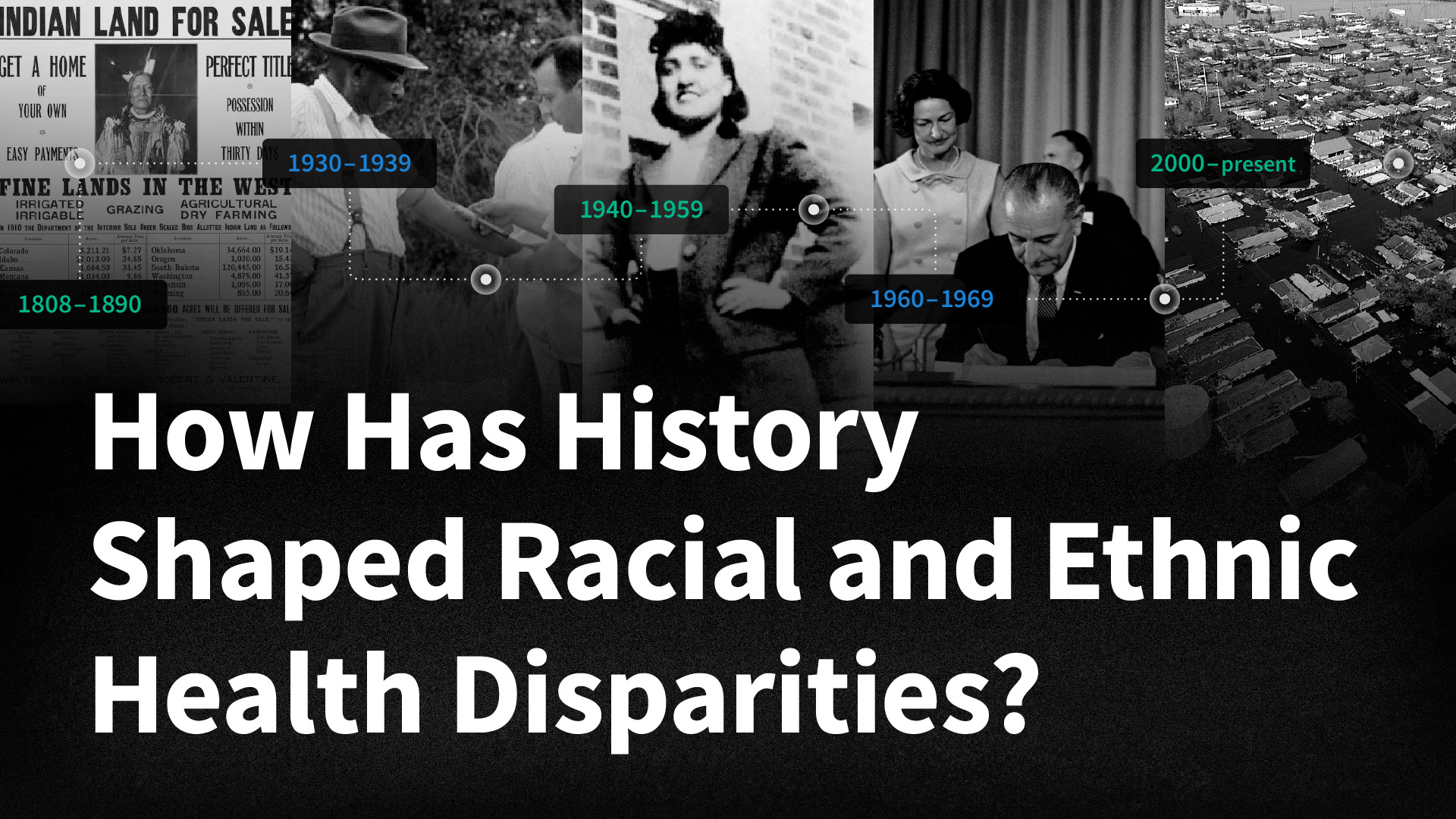
  • Timeline: How History Has Shaped Racial and Ethnic Health Disparities

    This timeline offers a historical view of significant U.S. federal policies and events spanning the early 1800s to today that have influenced present-day health disparities.
  • Health Policy 101: Chapter on Race, Inequality and Health

    Addressing persistent racial and ethnic disparities in health and health care is important for improving the nation’s health and economic prosperity. KFF explains such disparities and the factors that drive them, examines the actions to address them, and outlines future considerations.
  • Key Data on Health and Health Care by Race and Ethnicity

    Racial and ethnic disparities in health and health care remain a persistent challenge in the United States. An updated KFF resource examines how people of color fare compared to White people across 64 measures of health, health care, and social determinants of health.

Subscribe to KFF Emails

Choose which emails are best for you.
Sign up here

Filter

431 - 440 of 589 Results

  • Black Residents' Views on HIV/AIDS in the District of Columbia

    Poll Finding

    This data note examines public opinion among Washington, D.C.’s black residents about HIV/AIDS through a new analysis of the findings of the May 2011 Washington Post/Kaiser Family Foundation 2011 Survey of District of Columbia Residents.

  • 2004 National Survey of Latinos: Politics and Civic Participation

    Poll Finding

    This comprehensive survey assesses Latino attitudes in the 2004 election year. The third annual survey of Latinos from the Pew Hispanic Center and the Kaiser Family Foundation, the new survey examines political issues and the presidential election campaign, the economy, health care, Iraq and immigration. News Release Chartpack/Summary of Findings Toplines Election Survey (.

  • Survey of Asians In the Bay Area – Toplines

    Poll Finding

    This document includes the toplines from a survey exploring the attitudes and experiences of the Asian community in the Bay Area, which has the largest Asian population in the country. The Kaiser Family Foundation and San Jose Mercury News collaborated on the survey. Survey Toplines (.

  • Survey Brief: Views and Experiences with HIV Testing Among African Americans in the U.S.

    Issue Brief

    This survey brief, based on the 2009 Survey of Americans on HIV/AIDS, examines African Americans' reported views and experiences with HIV testing. The U.S. AIDS epidemic has disproportionately affected African Americans, who account for nearly half of new infections, while representing just 12 percent of the U.S. population.

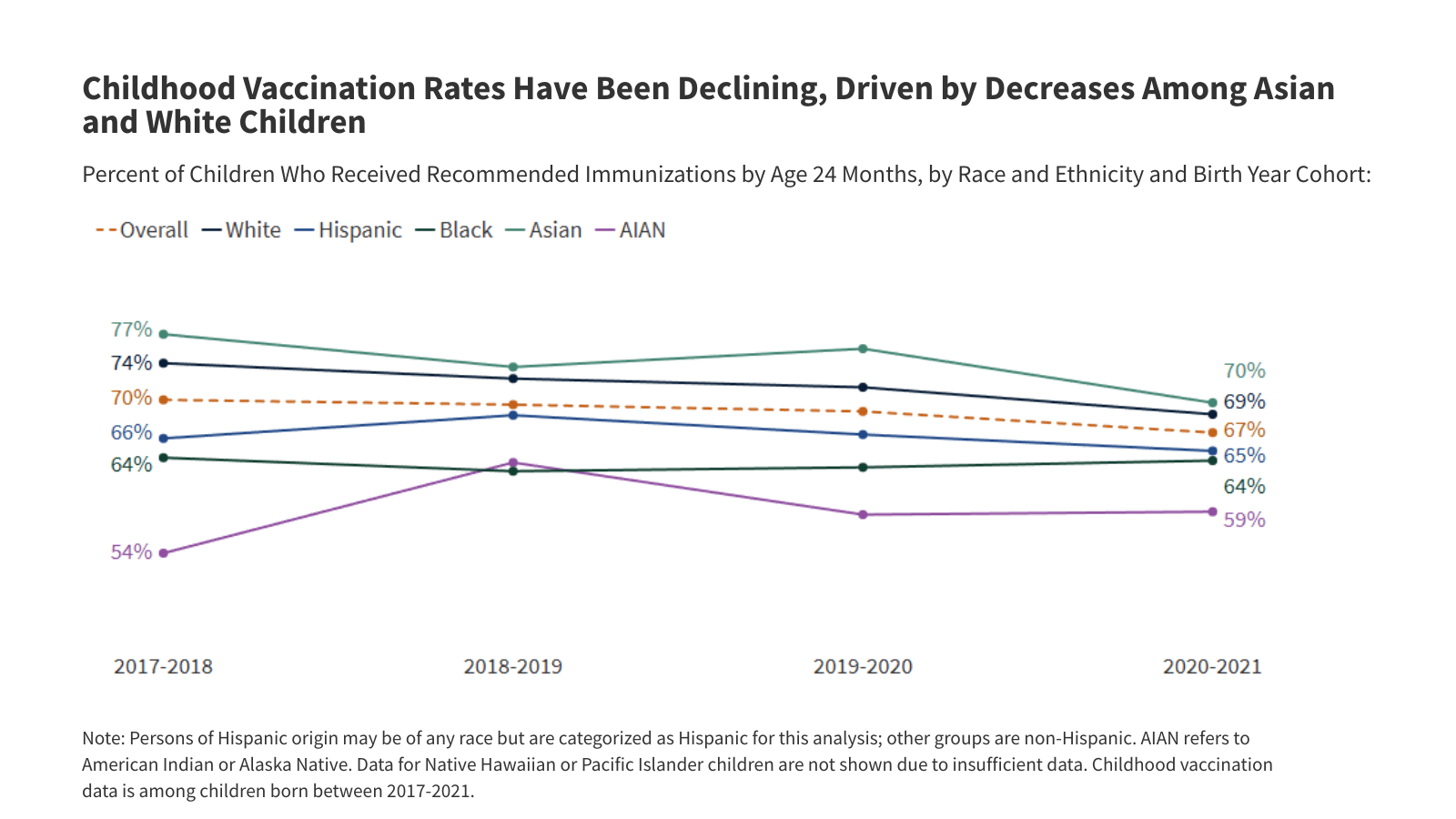
  • Recent Changes in Children’s Vaccination Rates by Race and Ethnicity

    Issue Brief

    Data show that children’s vaccination rates, including MMR and seasonal flu vaccines, have declined in recent years largely due to decreases in vaccinations among White and Asian children. At the same time, and despite the declines among White and Asian children, Black and AIAN children remain least likely to have received recommended childhood vaccinations and the MMR vaccine specifically.

  • The Effects of the Economic Recession on Communities of Color

    Issue Brief

    This issue brief examines some of the challenges associated with employment, daily life and access to health care among racial minorities, who tend to be disproportionately affected by many of the consequences of economic hard times.

  • The Role of Race and Ethnicity in Health Services

    Other Post

    This is a special issue of Health Services Research on the role of race and ethnicity in health services research. Based on a December 1992 conference sponsored by the Association of American Medical Colleges, the issue contains eight papers and as editorial preface by Mark Smith and Pancho Chang.

  • Washington Post/Kaiser Family Foundation/Harvard Survey of African-American Men

    Poll Finding

    Washington Post/Kaiser Family Foundation/Harvard African-American Men Survey The Washington Post, the Kaiser Family Foundation and Harvard University have released a new, comprehensive survey looking at how African-American men view their lives in the United States and their outlook for the future.