Medicaid

Work Requirements

Challenges with Implementing Work Requirements

Many states are anticipating a variety of implementation challenges, including the need for complex system changes, a compressed implementation timeline, and limited staff capacity.

What is the Medicaid Hardship Exception?

The number of Medicaid expansion enrollees who ultimately qualify for the high unemployment hardship exception will depend on how the exception is implemented and how unemployment rates changes.

Tracking Implementation of the 2025 Reconciliation Law: Medicaid Work Requirements

KFF’s interactive tracks key data and policies that will affect how states implement Medicaid work requirements, which are required under the 2025 budget reconciliation law starting in January 2027. The tracker includes state-level data on Medicaid enrollment and renewal outcomes as well as current state enrollment and renewal policies.

Medicaid Budget Survey

Medicaid Home Care

Using data from the 23rd KFF survey of officials administering Medicaid home care programs, this issue brief describes the mechanisms states are currently using to limit Medicaid spending on home care and their plans for adopting new mechanisms in state fiscal year (FY) 2026.

A Look at Waiting Lists for Medicaid Home- and Community-Based Services from 2016 to 2025

This data note provides new information about waiting lists in Medicaid home care before many of the provisions in the 2025 reconciliation law go into effect. The data come from KFF’s 23rd survey on Medicaid home care programs in all 50 states and DC.

KFF regularly surveys states about their Medicaid home- and community-based services (HCBS) programs and their eligibility policies for people who are eligible for Medicaid on the basis of having a disability or being 65 and older.

states-are-most-likely-to-offer-home-care-to-eligible-people-with-intellectual-developmental-disabilities_FI_v2_7f7f71.png

This issue brief provides an overview of what Medicaid home care (also known as “home- and community-based services” or HCBS) is, who is covered, and what services were available in 2024.

Eligibility and coverage
  • Eligibility, Enrollment, and Renewal Policies

    KFF's survey findings capture state actions that seek to improve the accuracy and efficiency of Medicaid and CHIP enrollment and renewal processes, as of January 2025.
  • Seniors and People with Disabilities

    More than 1 in 3 people with disabilities (15 million) have Medicaid (35%). In comparison, only 19% of people without disabilities have Medicaid.
  • Children with Special Needs

    Amid debates about proposed cuts to federal Medicaid spending, this brief analyzes key characteristics of children with special health care needs and explores how Medicaid provides them with coverage.
  • People With Intellectual and Developmental Disabilities

    Among the estimated 8 million people with intellectual and developmental disabilities (I/DD), over three million have Medicaid coverage.
  • Adults with Chronic Conditions

    Among working age adults enrolled in Medicaid, approximately three quarters have one or more chronic conditions, and nearly one-third have three or more.

The Essentials
  • 5 Facts: Immigrants and Medicaid

    This brief provides five key facts on Medicaid and immigrants as context for understanding the potential impacts of policy changes under the Trump administration.
  • 5 Facts: Medicaid and Hospitals

    This brief explains the role of Medicaid for hospitals, including how much spending on hospital care comes from Medicaid, the share of births covered by the program, and how Medicaid expansion has impacted hospital finances.
  • Medicaid Financing: The Basics

    Medicaid is a major source of financing for states to provide health coverage and long-term services and supports for low-income residents. This brief examines key questions about Medicaid financing and how it works.
  • 5 Facts: Medicaid’s Share of National Health Spending

    This brief explores how Medicaid spending contributes to national health spending and how different service areas contribute to Medicaid costs.
  • 5 Facts: Medicaid and Nursing Facilities

    The substantial Medicaid savings in the reconciliation bill could have major implications for nearly 15,000 federally certified nursing facilities and the 1.2 million people living in them.

Subscribe to KFF Emails

Choose which emails are best for you.
Sign up here

Filter

111 - 120 of 2,670 Results

  • Utilization of Health Care Services by Medicaid Expansion Status

    Issue Brief

    Some critics of Medicaid expansion have argued that expansion diverts resources away from other groups of Medicaid enrollees, including people with disabilities and children, and that expansion enrollees are “able-bodied” implying they have minimal health care needs. However, data show that expansion states spend more per enrollee overall and on each eligibility group than non-expansion states and that nearly half of expansion enrollees have a chronic condition. This data note analyzes 2021 Medicaid claims data to compare utilization of health care services among Medicaid expansion enrollees with other Medicaid enrollees in expansion states and to compare utilization of health care services among adult Medicaid enrollees living in expansion and non-expansion states.

  • Proposed Medicaid Federal Match Penalty for States that Have Expanded Coverage for Immigrants: State-by-State Estimates

    Issue Brief

    This analysis examines the potential impacts of a provision in the House reconciliation bill that proposes reducing the federal matching rate for the Affordable Care Act (ACA) Medicaid expansion population from 90% to 80% for states that either provide health coverage or financial assistance to purchase health coverage to individuals who are not “a qualified alien.”

  • Mapping Hospital Employment By State

    Issue Brief

    Changes to Medicaid funding, eligibility and enrollment could impact hospital finances. These interactive 50-state maps show the number of hospital employees by state and how hospital employment ranks among industry subsectors. Hospitals employed 6.7 million people in 2023, and more than 100,000 people in each of 23 states.

  • State Profiles for Dual-Eligible Individuals

    Interactive

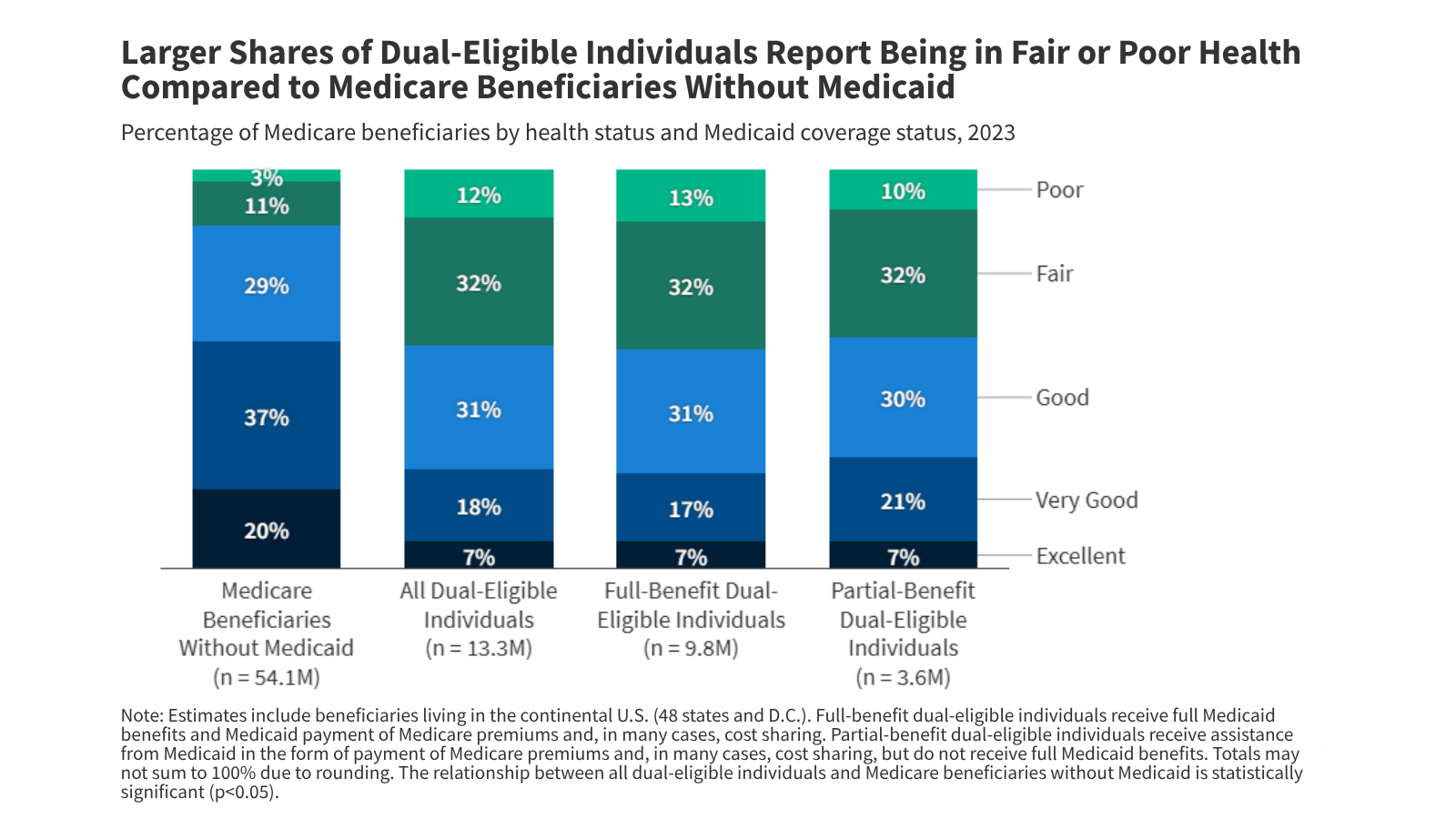
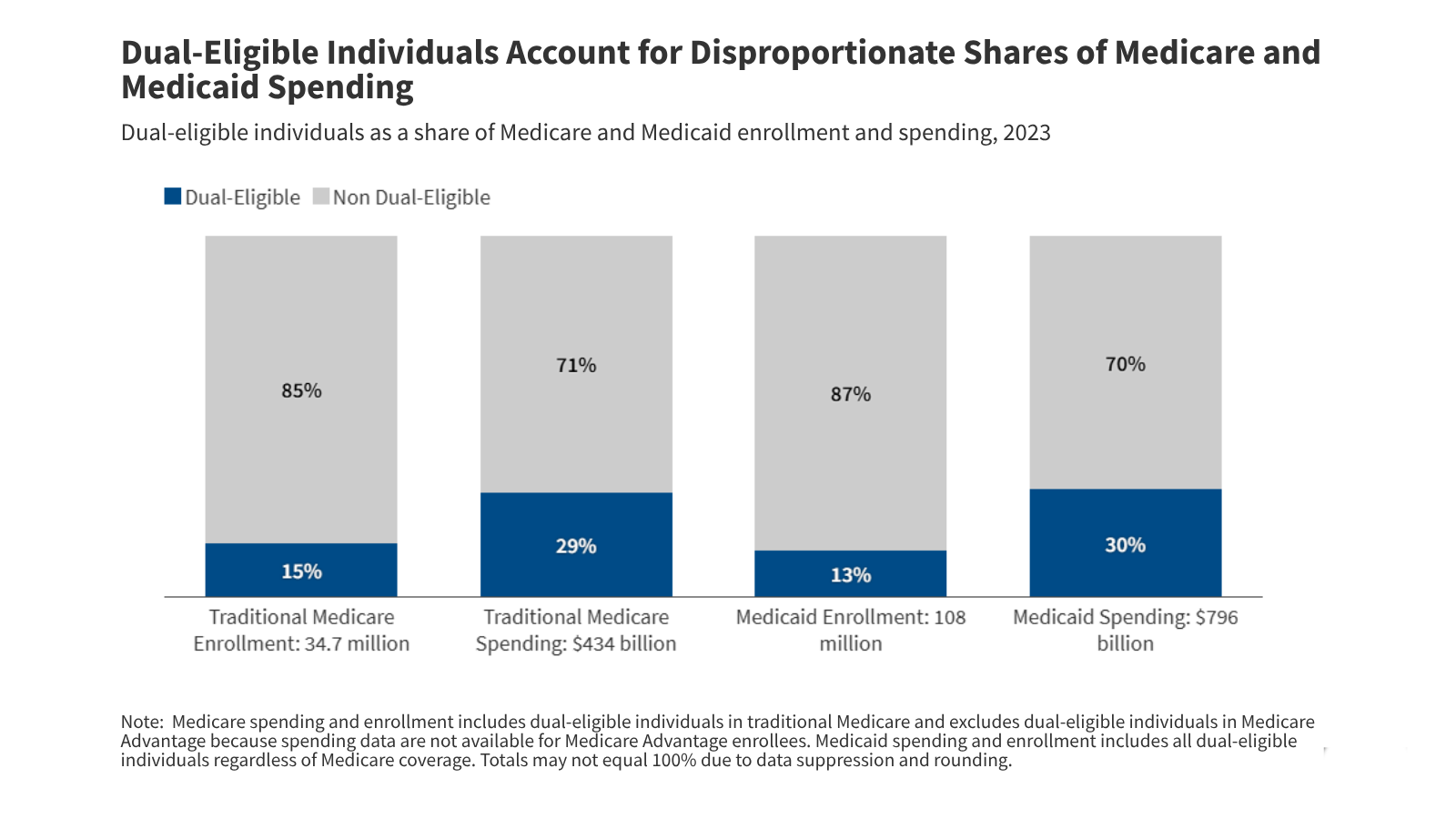
    This data collection draws on Medicare and Medicaid administrative data to present national and state-level information on people who are covered by both Medicare and Medicaid, referred to as dual-eligible individuals (also known as dually-enrolled beneficiaries).

  • Medicaid State Fact Sheets

    Feature

    What percentage of people are covered by Medicaid in your state? Our State Medicaid fact sheets provide a snapshot with key data for Medicaid in every state related to current coverage, access, and financing, as well as a politics section for each state.

  • The Spotlight Is on Medicaid Cuts, But the ACA Marketplaces Could See a One-Third Cut in Enrollment

    From Drew Altman

    In his latest column, President and CEO Drew Altman shows how proposals contained in the House reconciliation bill could result in a one-third reduction in ACA Marketplace enrollment. “While all eyes are on the big Medicaid cuts being proposed in the House,” he writes, “significant changes are also being proposed that together would dramatically reduce enrollment in the ACA Marketplaces.”

  • Implementing Work Requirements on a National Scale: What We Know from State Waiver Experience

    Policy Watch

    On May 18, the House Budget Committee advanced a budget reconciliation bill that includes significant changes to the Medicaid program. As anticipated, Medicaid work requirement provisions are included and preliminary estimates released by the Congressional Budget Office (CBO) show that this provision would reduce federal spending by $280 billion over ten years, nearly half of all estimated Medicaid savings in the bill. The provisions raise many operational and implementation questions, particularly considering the experience of Arkansas and Georgia with implementing work requirements through waivers.

  • Major Federal and State Funding Cuts Facing Planned Parenthood

    Issue Brief

    This issue brief presents data from the most recent tracking poll asking if people have ever visited a Planned Parenthood clinic for health care services and looks at the funding cuts Planned Parenthood is currently facing including Medicaid, Title X, and Teen Pregnancy Prevention funds.