Affordable Care Act

The ACA Marketplace

2025 KFF Marketplace Enrollees Survey

In 2025, about one in three ACA enrollees said they would be “very likely” to look for a lower-premium Marketplace plan If their premium payments doubled.

Cost Concerns and Coverage Changes: A Follow-Up Survey of ACA Marketplace Enrollees

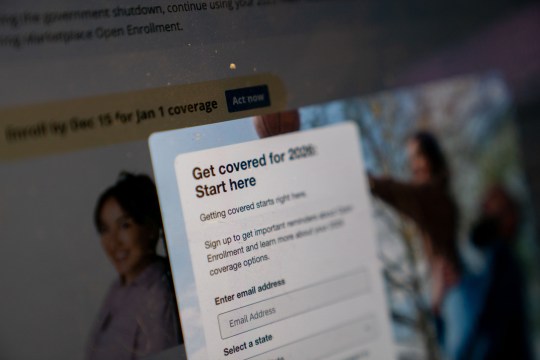
Following the expiration of the enhanced premium tax credits for people with Affordable Care Act (ACA) Marketplace plans, a new KFF follow-up survey of the same Marketplace enrollees KFF surveyed in 2025 finds half (51%) of returning enrollees say their health care costs are “a lot higher” this year compared to last year, including four in 10 who specifically say their premiums are “a lot higher.”

Timely insights and analysis from KFF staff

Latest News

No Posts to Show

Subscribe to KFF Emails

Choose which emails are best for you.
Sign up here

Filter

871 - 880 of 2,769 Results

  • President Obama’s Campaign Position on Health Reform and Other Health Care Issues

    Issue Brief

    During the 2008 Presidential campaign now President Barack Obama announced a comprehensive health care reform proposal and laid out his positions on a number of other key health care issues. The two documents below summarize these campaign policies and positions. They were prepared by the Kaiser Family Foundation with the assistance of Health Policy Alternatives, Inc., and are based on information compiled from Obama's campaign Web site, speeches, campaign debates and news reports. They are…

  • Boomers Come of Age: Covering Early Retirees and Other 50-64 Year-Olds

    Event Date:
    Event

    The Patient Protection and Affordable Care Act contains provisions that can help workers age 50-64 if they lose their jobs and their employer-sponsored health benefits, such as incentives for employers to maintain retiree benefits. This briefing, cosponsored by the Alliance for Health Reform and AARP, answered many questions about provisions of interests to 50-64 year olds. For more information, please visit Alliance's event page. Speakers for this session: The panel is moderated by Ed Howard…

  • Strengthening Medicaid with Health Information Technology: Are Providers & States Up to the Challenge?

    Event Date:
    Event

    Health care providers can receive Medicare and Medicaid payment incentives when they adopt electronic health records and demonstrate their "meaningful use." Additionally, states must establish a website by 2014 for Medicaid beneficiaries to electronically enroll and renew coverage. Yet many challenges remain so that health information technology (HIT) can help the Medicaid program operate more effectively. How can Medicaid health plans and providers use HIT to provide better care delivery and improve health outcomes while…

  • Quick Take: An Update on the ACA & HIV: Medicaid Health Homes

    Fact Sheet

    We recently wrote about the different ways in which the Affordable Care Act (ACA) changes pathways to health insurance coverage for people with HIV, and chronicled these specifics, as well as several outstanding questions, in a policy brief.  As we noted, among the many provisions of the ACA designed to improve care is a new option available to state Medicaid programs to provide “health homes” for Medicaid enrollees with chronic conditions, with a temporary enhanced…

  • Explaining Health Care Reform: Questions About Health Insurance Exchanges

    Issue Brief

    The Patient Protection and Affordable Care Act (PPACA), signed into law in March 2010, made broad changes to the way health insurance will be provided and paid for in the United States. PPACA created a new mechanism for purchasing coverage called Exchanges, which are entities that will be set up in states to create a more organized and competitive market for health insurance by offering a choice of health plans, establishing common rules regarding the…

  • Income-Relating Medicare Part B and Part D Premiums: How Many Medicare Beneficiaries Will Be Affected?

    Issue Brief

    Income-Relating Medicare Part B and Part D Premiums: How Many Medicare Beneficiaries Will Be Affected? New in February 2012: Brief Examines Proposals to Further Expand Medicare's Income-Related Premiums This new analysis from the Kaiser Family Foundation examines the number of Medicare beneficiaries who will pay higher Part B or Part D premiums as a result of newly enacted provisions included the 2010 health reform law. Part B Premiums. The health reform law modifies a requirement…

  • Implementing Health Reform in the States

    Event Date:
    Event

    The Alliance for Health Reform, Robert Wood Johnson Foundation and the Association of Health Care Journalists sponsored this live webinar on March 27, 2012, to take a look at what's happening in the states with implementation of the Patient Protection and Affordable Care Act. Many of the key decisions implementing the health reform law are left to the states. For example, states have leeway in how they set up health insurance exchanges, where uninsured individuals…

  • How Five Leading Safety-Net Hospitals Are Preparing For The Challenges and Opportunities of Health Care Reform

    Report

    This study, published in the journal Health Affairs, examines how five leading safety-net hospitals are preparing for major changes expected to result from the Affordable Care Act (ACA), including less government support for uncompensated care and the need to compete for newly insured people. The hospitals studied are Bellevue Hospital Center in New York City; Denver Health Medical Center in Colorado; Parkland Health and Hospital System in Dallas; San Francisco General Hospital in California; and…

  • Two New Analyses: House COVID-19 Relief Plan Would Temporarily Lower Marketplace Premiums for Millions and More than Offset Short-Term State Costs to Expand Their Medicaid Programs

    News Release

    The House COVID-19 relief proposal would temporarily lower what millions of Marketplace enrollees and uninsured potential enrollees would pay toward premiums and would provide states that have not expanded their Medicaid programs a financial boost that would more than offset their costs initially, two new KFF analyses find. The analyses assess two parts of the House plan aimed at expanding access to affordable health coverage by expanding the Affordable Care Act’s tax credits for people…