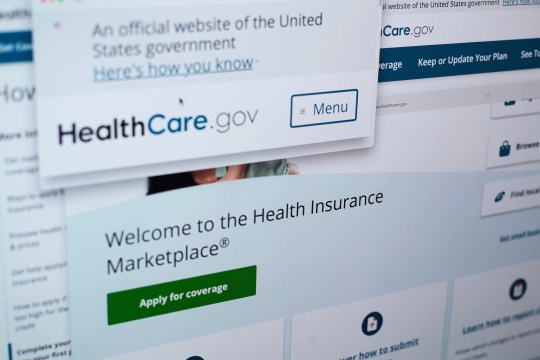
Affordable Care Act

ACA Open Enrollment

9 Things to Watch for the 2027 ACA Open Enrollment Period

9 Things to Watch for the 2027 ACA Open Enrollment Period 

ACA Marketplace Open Enrollment is here—and this year comes with major changes. Marketplace premiums are up 13% on average, more insurers are leaving the Marketplaces than entering, and there is narrower eligibility for health insurance subsidies. Learn more about what to watch.


Health Insurance Marketplace Calculator

The Health Insurance Marketplace Calculator, updated with 2027 premium data, provides estimates of health insurance premiums and subsidies for people purchasing insurance on their own in health insurance exchanges (or “Marketplaces”) created by the Affordable Care Act (ACA).

About the ACA

Promotional image for KFF video How Affordable is the Affordable Care Act

Did the Affordable Care Act Make Health Care More Affordable?

The expiration of the ACA’s enhanced premium tax credits at the start of 2026, combined with rising insurer premiums, put a spotlight on health care affordability that extends beyond Marketplace enrollees. KFF’s Cynthia Cox examines the ACA’s record and the broader underlying question it raises: what’s a fair price for Americans people to pay for health care?

Stay informed.

Stay informed.

Filter

671-680 of 2,431 results

  • What the Actuarial Values in the Affordable Care Act Mean

    Issue Brief

    The Patient Protection and Affordable Care Act (PPACA) establishes four levels of coverage based on the concept of "actuarial value," which represents the share of health care expenses the plan covers for a typical group of enrollees. As plans increase in actuarial value – bronze, silver, gold, and platinum – they would cover a greater share of enrollees' medical expenses overall, though the details could vary across plans. The levels of coverage provided for in…

  • A Reporter’s Guide to Supreme Court Arguments on Health Reform

    Event Date:
    Event

    The Alliance for Health Reform and the Robert Wood Johnson Foundation sponsored this reporters-only briefing to help journalists cover the Supreme Court arguments challenging the Patient Protection and Affordable Care Act and their aftermath with greater depth and understanding. Panelists focus on tips, story ideas and angles that have perhaps been underreported or overlooked, as well as angles for after the court ruling comes down, expected in June. The panel was co-moderated by Ed Howard…

  • Quick Take: Geographic Variation in Dual Eligible Enrollment

    Fact Sheet

    Over 9 million elderly Americans and younger persons with disabilities are jointly enrolled in the Medicaid and Medicare programs.  These “dual eligibles” receive coverage for most medical services from Medicare, and they also receive Medicaid assistance for Medicare premiums and cost-sharing and coverage of benefits not offered under Medicare (such as long-term care).  Dual eligibles are among the sickest and poorest individuals covered by Medicare and Medicaid and, as a group, account for a disproportionate…

  • Trends in Employer-Sponsored Insurance Offer and Coverage Rates, 1999-2014

    Issue Brief

    This issue brief uses data from the National Health Interview Survey (NHIS) to examine trends in employer-sponsored health insurance (ESI) for different of individuals and households in the United States. While ESI remains the leading source of coverage for nonelderly people, the percentage covered by an employer plan has declined over the past 15 years. A similar pattern exists with firm offer rates; fewer workers were offered health insurance from their employer in 2014 than…

  • Kaiser Health Tracking Poll: Election 2008 – December 2007

    Poll Finding

    This December 2007 tracking poll finds finds that Iraq continues to top the list of issues that the public wants to hear presidential candidates talk about, with more than a third (35%) naming the war as one of the top two issues in an open-ended question. Health care (30%) ranks second, followed by the economy (21%) and immigration (17%). Health care ranks second behind Iraq for Republicans, Democrats, and independents alike. However, while health ranks…

  • The Public’s Health Care Agenda for the New President and Congress

    Poll Finding

      The Public's Health Care Agenda for the New President and Congress This survey captures the public's attitudes regarding the health care agenda for President Obama and the new Congress in 2009. It assesses the relative priority placed on health care by the American public as part of addressing the economic recession and as a large scale reform issue. The public's priorities for health care reform and their views on a range of other health…

  • Article and Policy Forum Examine Medicare, Health Reform and the Challenges Facing People With Disabilities

    Event Date:
    Event

    Wednesday, Sept. 8, the Foundation held a policy workshop examining Medicare, health reform and the challenges facing people with disabilities. Younger Medicare beneficiaries with disabilities are much more likely than seniors in the program to report problems accessing and paying for needed medical services, Kaiser Family Foundation researchers report in this Health Affairs article. Based on a national random-sample survey of people on Medicare, the study finds that half of nonelderly disabled beneficiaries report problems…

  • Medicaid and Community Health Centers: The Relationship Between Coverage for Adults and Primary Care Capacity in Medically Underserved Communities

    Issue Brief

    Community health centers play an important role in providing care to uninsured and low-income individuals living in medically underserved communities. They rely on many different revenue sources and, over time, Medicaid has become a central source of funding for most health centers. To better understand how Medicaid influences health center practice, this paper compares the strength of health centers in states that have expanded Medicaid coverage for adults to health centers states with more limited…

  • Pulling It Together: The Falloff in Utilization: “There’s Something Happening, Here, What It Is Ain’t Exactly Clear”

    Perspective

    For as long as I have been in the field, we have seen cycles in health care costs. Per capita health spending would rise, then moderate, then rise gain. My colleague Larry Levitt and I documented this in The Sad History of Health Care Costs and my friend Dr. Jim Mongan called it “the peaks and valleys” of health care costs. We have never been sure whether the "valleys" were the result of government actions, such…

  • The Uninsured And The Difference Health Insurance Makes

    Fact Sheet

    This fact sheet describes the characteristics of the uninsured and explains the recent increase in this population. It also examines the difference that health insurance can make and how health reform is expected to cover millions more people.