Affordable Care Act

The ACA Marketplace

2025 KFF Marketplace Enrollees Survey

In 2025, about one in three ACA enrollees said they would be “very likely” to look for a lower-premium Marketplace plan If their premium payments doubled.

Cost Concerns and Coverage Changes: A Follow-Up Survey of ACA Marketplace Enrollees

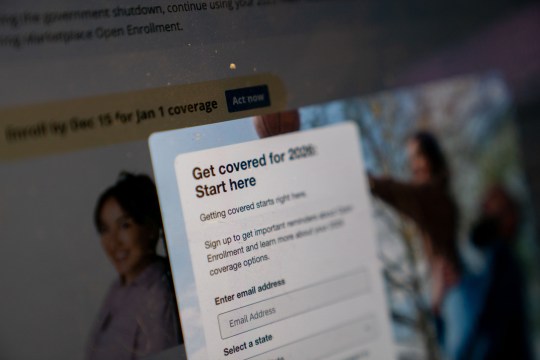
Following the expiration of the enhanced premium tax credits for people with Affordable Care Act (ACA) Marketplace plans, a new KFF follow-up survey of the same Marketplace enrollees KFF surveyed in 2025 finds half (51%) of returning enrollees say their health care costs are “a lot higher” this year compared to last year, including four in 10 who specifically say their premiums are “a lot higher.”

Timely insights and analysis from KFF staff

Latest News

No Posts to Show

Subscribe to KFF Emails

Choose which emails are best for you.
Sign up here

Filter

501 - 510 of 2,769 Results

  • Implications of Emerging Waivers on Streamlined Medicaid Enrollment and Renewal Processes

    Fact Sheet

    The Affordable Care Act (ACA) significantly modernized and streamlined Medicaid enrollment and renewal processes across all states. Through major investments of time, money, and staff, most states have implemented modernized systems that transformed lengthy, paperwork driven enrollment and renewal procedures to a simplified, technology-driven experience that minimizes burdens on individuals and states. Recently approved and proposed waivers and other proposed policies include new eligibility and enrollment requirements and restrictions that run counter to the ACA’s…

  • Medical Debt Among People With Health Insurance

    Report

    This report examines the causes and contributors to medical debt, medical bankruptcy, and other difficulties with medical bills among people with insurance. Through in-depth interviews of nearly two-dozen people and quantitative analysis of national survey data, the authors of this report find that in-network and out-of-net-work cost sharing primarily contribute to medical debt among the insured.

  • The Next Big Health-Care Issue

    From Drew Altman

    Drew Altman, in The Wall Street Journal‘s Think Tank, writes that the next big concern for the Affordable Care Act (ACA) will be how much premiums increase in exchanges for 2015. He discusses the factors to focus on to put this issue in perspective when states report premium increases.

  • New Analysis: Half of U.S. Households Eligible for a Tax Subsidy Under the Health Law Would Owe a Repayment, While 45 Percent Would Receive a Refund

    News Release

    Estimated Average Repayment is $794. Estimated Average Refund is $773. Half of U.S. households eligible for a 2014 tax subsidy under the Affordable Care Act would owe a repayment to the government, while 45 percent would receive a refund, according to estimates from a new analysis by the Kaiser Family Foundation. The analysis – which is a simulation based on historical patterns of income volatility among all households eligible for ACA premium subsidies -- estimates that the…

  • What Does the Election Mean for Health Reform and Other Health Issues?

    Event Date:
    Event

    How the new health reform law is implemented, and how quickly, depend in part on the results of the November 2 election. Now that the leadership of the House will soon change hands, what might Republicans do with respect to health reform? How might Democrats respond? Apart from reform, how might other health programs such as Medicare, Medicaid and CHIP be affected by the new congressional lineup? This November 12 briefing, cosponsored by the Alliance…

  • Compare Proposals to Replace The Affordable Care Act

    Interactive

    President Donald Trump and Republicans in Congress have committed to repealing and replacing the Affordable Care Act (ACA). How do their replacement proposals compare to the ACA? How do they compare to each other? Includes the Graham-Cassidy-Heller-Johnson amendment (introduced 9/13/2017) as well as other proposals from key members of Congress.

  • Visualizing Health Policy: Eligibility and Coverage Trends in Employer-Sponsored Health Insurance

    Other Post

    This Visualizing Health Policy infographic looks at eligibility and coverage trends in employer-sponsored health insurance. Between 2000 and 2015, the share of workers covered by health benefits offered by their employers dropped from 63 percent to 56 percent, with some firms not offering coverage and some employees not enrolling when coverage is offered. The biggest decrease occurred among employees working for small firms (3-199 workers). Among people younger than 65, those with lower incomes continued to…

  • Trump Has No Health Plan, He Has the Art of the Health Care Deal

    From Drew Altman

    In his first column for the new year, KFF CEO Dr. Drew Altman analyzes President Trump’s “make a deal” approach to health care. He explains that while the president doesn’t have a health reform plan, or even “concepts of a plan,” or a replacement for the ACA, he does have a distinctive set of tactics that features one-off deals with the health care industry that are more like “health policy by transaction.” He writes that…

  • Emerging Medicaid Accountable Care Organizations: The Role of Managed Care

    Issue Brief

    This brief examines efforts by a number of states to set up Accountable Care Organizations (ACOs) within their Medicaid programs. An ACO is a provider-run organization in which participating providers are collectively responsible for the care of an enrolled population, and may share in any savings associated with improvements in the quality and efficiency of care. The structure of Medicaid ACO initiatives is influenced by individual states’ experience with managed care, other existing care delivery…