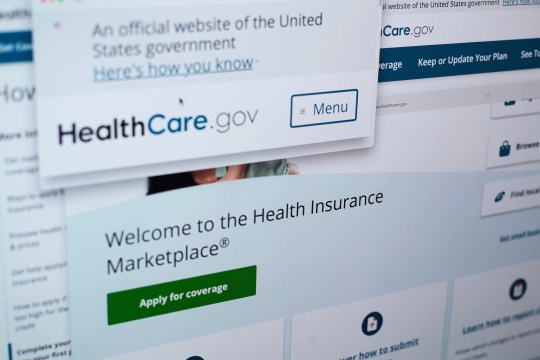
Affordable Care Act

ACA Open Enrollment

9 Things to Watch for the 2027 ACA Open Enrollment Period

9 Things to Watch for the 2027 ACA Open Enrollment Period 

ACA Marketplace Open Enrollment is here—and this year comes with major changes. Marketplace premiums are up 13% on average, more insurers are leaving the Marketplaces than entering, and there is narrower eligibility for health insurance subsidies. Learn more about what to watch.


Health Insurance Marketplace Calculator

The Health Insurance Marketplace Calculator, updated with 2027 premium data, provides estimates of health insurance premiums and subsidies for people purchasing insurance on their own in health insurance exchanges (or “Marketplaces”) created by the Affordable Care Act (ACA).

About the ACA

Promotional image for KFF video How Affordable is the Affordable Care Act

Did the Affordable Care Act Make Health Care More Affordable?

The expiration of the ACA’s enhanced premium tax credits at the start of 2026, combined with rising insurer premiums, put a spotlight on health care affordability that extends beyond Marketplace enrollees. KFF’s Cynthia Cox examines the ACA’s record and the broader underlying question it raises: what’s a fair price for Americans people to pay for health care?

Stay informed.

Stay informed.

Filter

441-450 of 2,431 results

  • For 3rd Year in a Row, More Insurers are Entering the ACA Marketplaces, Creating More Options for Consumers

    News Release

    For the third straight year, more insurers are entering the Affordable Care Act’s marketplaces and expanding their service areas, creating more options for consumers seeking to buy their own insurance for 2021, a new KFF analysis finds.  The analysis finds 30 insurers joining the marketplace across 20 states, and another 61 insurers are expanding their services within states that they already served. More than a third of counties (1,207, or 38%) will have more insurers…

  • Compare the Candidates on Health Care Policy

    Feature

    The side-by-side comparison tool provides a quick overview of former President Trump's and Vice President Harris' records, positions, public statements, and proposed policies on a range of key health care topics.

  • Many Women Use Preventive Services, but Gaps in Awareness of Insurance Coverage Requirements Persist: Findings from the 2022 KFF Women’s Health Survey

    Issue Brief

    This brief presents findings from the 2022 KFF Women’s Health Survey on women’s receipt of cancer screenings and other preventive services and differences between subgroups of women. We also present data on women’s and men’s awareness of federal requirements for private insurance coverage of preventive services.

  • Women and Health Care in the Early Years of the ACA: Key Findings from the 2013 Kaiser Women’s Health Survey

    Report

    This report addresses a wide range of topics that are at the heart of women’s health care, as well as changes that women may experience as a result of the Affordable Care Act (ACA). The findings in the report, based off a nationally representative survey conducted by the Kaiser Family Foundation, highlight differences in health care for uninsured, low-income, and minority women. Other focus areas include: coverage, access, and affordability; connections to health providers; access…

  • KFF Health Tracking Poll: Health Care Costs, Expiring ACA Tax Credits, and the 2026 Midterms

    Poll Finding

    Looking ahead to the midterm elections, health care costs are the public’s top economic concern, and many voters say the issue will have a major impact on their vote. On health care issues, including the cost of health care, voters currently trust Democrats more than Republicans, though neither party has an advantage on addressing the overall cost of living. Following the expiration of the ACA enhanced tax credits, two-thirds of the public say Congress did…

  • BTD Health Policy in 2026

    Health Policy in 2026

    From Drew Altman

    In a new column, President and CEO Dr. Drew Altman forecasts eight things to look for in health policy in 2026. “First and foremost,” he writes, “is the role health care affordability will play in the midterms.” And, he notes: “The average cost of a family policy for employers could approach $30,000 and cost sharing and deductibles will rise again after plateauing for several years.”

  • The New Ideas Conundrum in Health Policy

    From Drew Altman

    In a new column, President and CEO Dr. Drew Altman writes about the "conundrum of health policy ideas" facing Democrats searching for new proposals because of competing, and complex, priorities: rebuilding Medicaid and the ACA after trillion-dollar cuts, reconstructing federal health agencies, and tackling underlying health care costs, when candidates want simple ideas they can campaign on and voters want their costs to come down.

  • Most Democratic Voters Want To Hear Candidates Discuss Health Costs and Future of Health Programs; More Republicans Focused on Fraud

    KFF Health Tracking Poll: Public Views on Fraud in Government Health Programs

    Poll Finding

    As the 2026 midterms approach, health care costs remain voters' top health priority, but fraud in government health programs, including Medicaid and Medicare, is resonating with Republican voters, 55% of whom say it's extremely important for candidates to address. Most voters say there is at least “some” fraud in government health programs, but larger shares say there is fraud in the tax system, defense, and foreign aid, while the smallest share sees fraud in the…

  • Change in February effectuated enrollment, by state, 2025-2026

    How Has ACA Marketplace Enrollment Changed Across States in 2026?

    Issue Brief

    Following several years of rapid enrollment growth in the Affordable Care Act (ACA) Marketplaces that corresponded with temporary enhanced premium tax credits, enrollment fell for the first time in seven years in 2026, when those tax credits expired. Every state except for New Mexico saw a drop in ACA Marketplace enrollment from 2025 to 2026. State-based Marketplaces that run their own enrollment platforms, including those that partially offset the expiring federal enhanced tax credits, generally…

  • Poll: Costs Are the Top Health Care Issue for Voters in the Midterms, But Fraud Tops Republicans’ List As Trump Administration Pushes Crackdown

    News Release

    Health care costs top the list of voters’ health care priorities for the midterm elections, though more than half of Republican voters say it is extremely important for candidates to discuss the issue of fraud in government health programs, according to a new KFF Health Tracking Poll. Most voters say there is at least “some” fraud in government health programs, but larger shares of voters see fraud in the tax system, defense, and foreign aid…