Affordable Care Act

The ACA Marketplace

2025 KFF Marketplace Enrollees Survey

In 2025, about one in three ACA enrollees said they would be “very likely” to look for a lower-premium Marketplace plan If their premium payments doubled.

Cost Concerns and Coverage Changes: A Follow-Up Survey of ACA Marketplace Enrollees

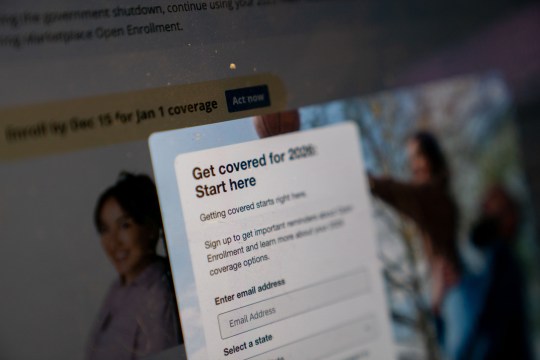
Following the expiration of the enhanced premium tax credits for people with Affordable Care Act (ACA) Marketplace plans, a new KFF follow-up survey of the same Marketplace enrollees KFF surveyed in 2025 finds half (51%) of returning enrollees say their health care costs are “a lot higher” this year compared to last year, including four in 10 who specifically say their premiums are “a lot higher.”

Timely insights and analysis from KFF staff

Latest News

No Posts to Show

Subscribe to KFF Emails

Choose which emails are best for you.
Sign up here

Filter

411 - 420 of 2,770 Results

  • Dissatisfaction with Health Insurance Despite Positive Ratings

    Perspective

    Personal experiences with the health care system are a key factor in Americans’ opinions on how the health care system should function and their expectations of how the Affordable Care Act (ACA) will change the system when fully implemented. In order to take a closer look at these personal experiences, this post explores findings from the March Kaiser Health Tracking Poll on Americans’ views of their health care and coverage, including health insurance ratings and…

  • Kaiser November Health Tracking Poll: Individual Elements of the ACA Popular with the Public

    Perspective

    After taking a negative turn in October, the public’s overall views on the Patient Protection and Affordable Care Act (ACA) returned to a more mixed status this month. Still, Americans remain somewhat more likely to have an unfavorable view of the law (44 percent) than a favorable one (37 percent). The Kaiser Family Foundation's November Health Tracking Poll also finds that individual elements of the law are viewed favorably by a majority of the public. The law’s…

  • Remember the People Outside of the Exchanges

    Perspective

    There has been a substantial amount of focus on the recently released draft regulations governing state-based health insurance exchanges under the Affordable Care Act (ACA). And that's appropriate, since the exchanges have the important roles under reform of providing consumers with easier access to insurance and facilitating tax credits and cost-sharing subsidies that make coverage more affordable. But, as central as exchanges will likely be, it's important to remember that there are other key provisions that help…

  • July Kaiser Health Tracking Poll: Public Still Divided on ACA, Few Believe the Law Will Improve Consumer Protections

    Perspective

    Overall public opinion on the health reform law remains unchanged this month, with 42 percent of Americans holding a favorable view and 43 percent an unfavorable view. Even though previous Health Tracking polls have consistently shown that consumer protections were one of the least controversial and most widely supported provisions of the health reform law, the July poll finds that just one in five Americans think the law will lead to improvements in consumer protections…

  • December Kaiser Health Tracking Poll: Public Again Divided on ACA, Independents Polarized, and Exchanges Widely Popular

    Perspective

    According to the December Kaiser Health Tracking Poll, the October downturn in the share of Americans with a favorable view of the health reform law has been fully reversed in December and overall opinion on the law returned to the roughly even split seen for most of 2011. Forty-three percent of Americans expressed unfavorable views of the law in December, while 41 percent had favorable views. Partisan divisions persist and the findings suggest not only…

  • The Budget Trigger and Health Reform

    Perspective

    No doubt it will take some time to sort out how elements of the debt deal (formally "The Budget Control Act of 2011") will all work. Delving into the details of how it affects subsidies in the Affordable Care Act (ACA) to make insurance more affordable helps to illustrate how complex this business can be. Let's start with a short primer on the ACA subsidies. Starting in 2014 people buying insurance on their own in…

  • Peering Into the Black Box of Insurance Rating

    Perspective

    Recently, the New York Times reported that private health insurers continue to seek large premium increases despite seeing lower than expected use of medical care and booking record profits. The story highlights a significant problem for health policy: the lack of good, public information about how health insurers manage health care use and what they pay for medical services. As a nation, we rely on competition among largely private health plans to ensure that health…

  • June Kaiser Health Tracking Poll: Americans Still Divided on Health Reform Law

    Perspective

    In the latest Kaiser Health Tracking Poll, the public remains divided in their overall assessments of the ACA, with 42 percent holding a favorable view of the law and 46 percent an unfavorable one. This month’s poll finds Americans are somewhat more likely to think their own families, seniors as a group, and the Medicare program will be worse off rather than better off under the law, though large shares say they don’t know or…

  • September Kaiser Health Tracking Poll: Pre-Existing Conditions

    Perspective

    With several elements of the ACA targeted toward individuals with pre-existing conditions, this month’s Kaiser Health Tracking Poll takes a closer look at this group. Fifty-two percent of Americans say that they or someone else in their household has what would be considered a “pre-existing condition,” and among this group, one in five (21 percent) say they or their family member has had difficulty getting health insurance because of this condition. Yet many of these people…

  • Increasing Medicaid Payments for Certain Primary Care Physicians in 2013 and 2014: A Primer on the Health Reform Provision and Final Rule

    Issue Brief

    To help ensure that access in Medicaid expands to meet anticipated higher demand for care, the health reform law requires states to pay certain physicians Medicaid fees that are at least equal to Medicare’s for a list of 146 primary care services in 2013 and 2014. The idea is to attract new physicians to Medicaid and provide greater support for physicians who already participate. As a result, Medicaid fees paid to certain physicians for primary…