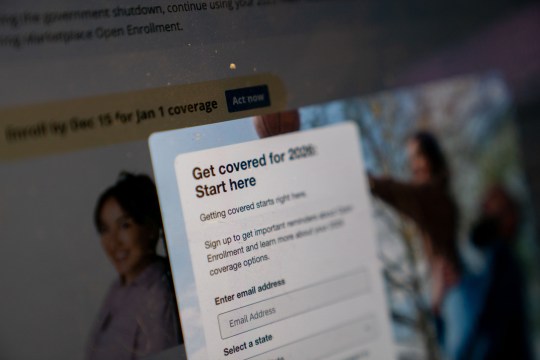
Affordable Care Act

The ACA MarketplaceS

Change in February effectuated enrollment, by state, 2025-2026

How Has ACA Marketplace Enrollment Changed Across States in 2026?

ACA Marketplace enrollment fell this year in every state except New Mexico, which was the only state to fully replace the enhanced premium tax credits that expired last year with a state-funded subsidy, according to a new KFF analysis of effectuated enrollment data. The Marketplace enrollment decline—the first in seven years—follows several years of rapid enrollment growth and coincides with the end of the enhanced federal subsidies.


How Much and Why ACA Marketplace Premiums Are Going Up in 2027

ACA Marketplaces insurers are proposing a median premium increase of 15% in 2027, according to KFF’s updated analysis of 276 insurers with publicly available filings across all 50 states and the District of Columbia. This is the second consecutive year of double-digit premium hikes. Last year’s median nationwide proposed rate change was 18%, and the median finalized rate change was 20%. While this proposed rate change is lower than last year, it represents the second-highest requested rate change since 2018, as premium growth had been relatively flat in this market for several years.

About the ACA

Promotional image for KFF video How Affordable is the Affordable Care Act

Did the Affordable Care Act Make Health Care More Affordable?

The expiration of the ACA’s enhanced premium tax credits at the start of 2026, combined with rising insurer premiums, put a spotlight on health care affordability that extends beyond Marketplace enrollees. KFF’s Cynthia Cox examines the ACA’s record and the broader underlying question it raises: what’s a fair price for Americans people to pay for health care?

Stay informed.

Stay informed.

Filter

241 - 250 of 2,787 Results

  • Health Coverage in an Economic Downturn: Impact of Tight Budgets on Families and States

    Fact Sheet

    The economic downturn has strained family finances and prompted some Americans to cut back on medications and forgo preventive care and visits to the doctor. At the same time, the downturn has triggered declines in tax revenue that inhibit states’ ability to meet rising Medicaid program costs as enrollment spikes during economic hard times. Many states are expected to struggle to close budget gaps despite moves by Congress and the Obama Administration to temporarily boost…

  • Kaiser Health Tracking Poll: October 2012

    Feature

    The October Health Tracking Poll finds, one week before the presidential election, the economy remains the primary concern on voters' minds, but health policy issues remain in the mix. The new survey finds that roughly a third of likely voters name the Affordable Care Act (37%), Medicare (36%), and Medicaid (30%) as "extremely important" to their vote, compared to half (52%) who say the same about the economy and jobs. But separate health care issues…

  • Current and Emerging Issues in Medicaid Risk-Based Managed Care: Insights from an Expert Roundtable

    Issue Brief

    Half of all Medicaid enrollees receive care through comprehensive risk-based managed care organizations (MCOs). Most Medicaid MCO enrollees today are low-income children and parents, but states are increasingly moving beneficiaries with more complex needs into MCOs. Managed care enrollment may grow more rapidly as states work with the Centers for Medicare & Medicare Services (CMS) to implement initiatives to better integrate Medicare and Medicaid benefits and care for dual eligibles. The Foundation’s Kaiser Commission on…

  • Kaiser Health Tracking Poll: July 2012

    Feature

    July's second Health Tracking Poll reports in further depth on public opinion toward the Affordable Care Act (ACA) in the wake of last month's key Supreme Court decision. When it comes to the individual mandate, the Court’s verdict that the controversial provision is constitutional as a tax appears to have had little impact on opinion, with upwards of six in ten viewing the mandate unfavorably whether it is described as "tax" or as a "fine."…

  • Program Integrity in Medicaid: A Primer

    Issue Brief

    Medicaid covers more than 60 million Americans and accounts for about one in six dollars spent on health care in the United States. Multiple agencies at the state and federal levels are involved in efforts to prevent waste, fraud and abuse in the program and ensure appropriate use of taxpayer dollars, and many program integrity initiatives are yielding positive results. The Affordable Care Act (ACA) builds on earlier efforts through the Deficit Reduction Act to…

  • Cost and Access Challenges: A Comparison of Experiences Between Uninsured and Privately Insured Adults Aged 55 to 64 with Seniors on Medicare

    Report

    This analysis looks at the difficulties uninsured people ages 55-64 have accessing and affording health care in 2010. Four in 10 of these near-seniors report having unmet health care needs or delaying treatment, while three in 10 uninsured near-seniors lived in families reporting problems paying their medical bills largely due to the cost. Seniors on Medicare report problems accessing care at a significantly lower rate than uninsured near-seniors and at a similar rate to near-seniors…

  • States Getting a Jump Start on Health Reform’s Medicaid Expansion

    Issue Brief

    One of the primary goals of the Affordable Care Act (ACA) is to decrease the number of uninsured through a Medicaid expansion to nearly all individuals with incomes up to 133 percent of the federal poverty level (FPL) ($14,856 for an individual or $25,390 for a family of three in 2012) and the creation of new health insurance exchanges. These coverage expansions, which will take effect in 2014, will eventually cover about 32 million uninsured…

  • Kaiser Health Tracking Poll — July 2011

    Feature

    Health care, and particularly Medicare and Medicaid, continue to play a role in the national discussion over the federal budget deficit. In the midst of this debate, the latest Kaiser Health Tracking poll finds that Americans of all political stripes see a role for both spending reductions and tax increases as part of an overall deficit reduction strategy. Still, few are willing to support major spending reductions in Medicare, and a large majority believes the…

  • Kaiser Health Tracking Poll — April 2011

    Feature

    As Congress and the president debate different approaches to reducing the deficit, the April Kaiser Health Tracking Poll indicates that initial public reaction is fairly evenly split when a premium support/voucher program like the one in House Budget Committee Chairman Paul Ryan’s "Path to Prosperity" proposal is described, but seniors prefer to keep the current Medicare system by a 2‐to‐1 margin. Meanwhile, public opinion on the health reform law remains remarkably steady. The April poll…

  • Federal Core Requirements And State Options In Medicaid: Current Policies And Key Issues

    Fact Sheet

    Medicaid is a jointly financed partnership between the federal government and states. The federal-state financing and administrative structure of Medicaid provides a framework of federal core requirements along with broad state options for program design and administration. This issue brief presents an overview of the current Medicaid program framework, with a focus on eligibility, benefits and cost sharing, care delivery and provider payment, long-term services and supports, and dual eligibles, as well as key issues…