
Affordable Care Act

ACA Open Enrollment

9 Things to Watch for the 2027 ACA Open Enrollment Period

9 Things to Watch for the 2027 ACA Open Enrollment Period 

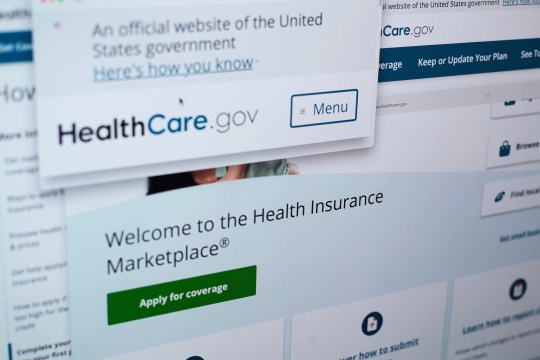
ACA Marketplace Open Enrollment is here—and this year comes with major changes. Marketplace premiums are up 13% on average, more insurers are leaving the Marketplaces than entering, and there is narrower eligibility for health insurance subsidies. Learn more about what to watch.

Health Insurance Marketplace Calculator

The Health Insurance Marketplace Calculator, updated with 2027 premium data, provides estimates of health insurance premiums and subsidies for people purchasing insurance on their own in health insurance exchanges (or “Marketplaces”) created by the Affordable Care Act (ACA).

About the ACA

Promotional image for KFF video How Affordable is the Affordable Care Act

Did the Affordable Care Act Make Health Care More Affordable?

The expiration of the ACA’s enhanced premium tax credits at the start of 2026, combined with rising insurer premiums, put a spotlight on health care affordability that extends beyond Marketplace enrollees. KFF’s Cynthia Cox examines the ACA’s record and the broader underlying question it raises: what’s a fair price for Americans people to pay for health care?

Stay informed.

Stay informed.

Filter

2,351-2,360 of 2,431 results

  • The Coverage and Cost Impacts of Expanding Medicaid

    Report

    This paper quantifies the impacts on coverage and cost of expanding Medicaid to cover more of the low-income uninsured, including adults, at various income levels and with improved participation rates. The analysis models two primary options to expand Medicaid (250% FPL for children, 100% FPL for adults; 300% FPL for children, 150% for adults) as well as the same options with no change for children. Report (.pdf)

  • Real Industry Action on Health Reform?

    Other Post

    The Washington Post published an op-ed authored by Foundation President and CEO Drew Altman which examines how the health industry's voluntary commitment to curb health care spending is similar and different from past efforts. Read the Article

  • Expanding Health Coverage for Low-Income Adults: Filling the Gaps in Medicaid Eligibility

    Issue Brief

    Low-income adults (those with incomes below 200 percent of poverty, or $33,200 for a family of three in 2007) account for just over half of the non-elderly uninsured in the United States. This brief reviews the health coverage of non-elderly low-income adults and discusses the implications for national health reform efforts of broadening coverage for this population by filling gaps in Medicaid eligibility. Low-income adults are more than twice as likely to be uninsured as…

  • Health Care Reform Newsmaker Series: Sen. Chris Dodd

    Event Date:
    Event

    This webcast captures an April 28, 2009 briefing with Sen. Chris Dodd (D-Conn.), senior member of the U.S. Senate Committee on Health, Education, Labor and Pensions. The briefing was part of the Health Care Reform Newsmaker series sponsored by the Kaiser Family Foundation, Families USA and the National Federation of Independent Business. The reporters-only briefings, designed to inform the public about prospects and options for health reform, feature a short presentation by an influential leader…

  • Pulling it Together: 19.7

    Perspective

    Several years ago Joanne Silberner from NPR offered some advice I liked. Joanne said that the secret to effective communication was to "have a killer anecdote and a killer number." Here is a killer number: 19.7. That's the average number of years between major attempts at health reform since Harry Truman made health reform a top priority and his plan was branded a socialist plot and soundly defeated in 1950. The chart below chronicles the…

  • Health Care Reform Newsmaker Series: Nancy-Ann DeParle, Director of the White House Office of Health Reform

    Event Date:
    Event

    Nancy-Ann DeParle, director of the White House Office of Health Reform, appeared as the third guest in a series of Health Care Reform newsmaker briefings sponsored by the Kaiser Family Foundation, Families USA and the National Federation of Independent Business. The reporters-only briefings, designed to inform the public about prospects and options for health reform, feature a short presentation by an influential leader followed by an extended question-and-answer session.  Transcript (.pdf) Video

  • The Public and the Health Care Delivery System — Summary and Chartpack

    Poll Finding

    This summary and chartpack of the results of a survey by NPR and researchers at the Kaiser Family Foundation and the Harvard School of Public Health highlight the public's attitudes and experiences with the American health care delivery system. The new survey sheds light on Americans' experiences with issues more typically discussed by health policy experts –- including electronic medical records, coordination of care and comparative effectiveness –- all of which have become serious components…

  • April 2009 Health Tracking Poll

    Poll Finding

    The April Kaiser Health Tracking Poll finds that six in ten Americans continues to say that they or a member of their household have delayed or skipped health care in the past year. A solid majority of the public believes health care reform is more important than ever because of current economic problems. The country’s overall economic problems have not dampened their interest in pursuing health care reform: a solid majority of the public (59%)…

  • The Public and the Health Care Delivery System

    Poll Finding

    This survey by NPR and researchers at the Kaiser Family Foundation and the Harvard School of Public Health highlights the public’s attitudes and experiences with the American health care delivery system. The new survey sheds light on Americans’ experiences with issues more typically discussed by health policy experts – including electronic medical records, coordination of care and comparative effectiveness – all of which have become serious components of reform plans and some of which have…

  • The Public and the Health Care Delivery System — Toplines

    Poll Finding

    These toplines from a survey by NPR and researchers at the Kaiser Family Foundation and the Harvard School of Public Health highlight the public's attitudes and experiences with the American health care delivery system. The new survey sheds light on Americans' experiences with issues more typically discussed by health policy experts –- including electronic medical records, coordination of care and comparative effectiveness –- all of which have become serious components of reform plans and some…



