
Affordable Care Act

ACA Open Enrollment

9 Things to Watch for the 2027 ACA Open Enrollment Period

9 Things to Watch for the 2027 ACA Open Enrollment Period 

ACA Marketplace Open Enrollment is here—and this year comes with major changes. Marketplace premiums are up 13% on average, more insurers are leaving the Marketplaces than entering, and there is narrower eligibility for health insurance subsidies. Learn more about what to watch.

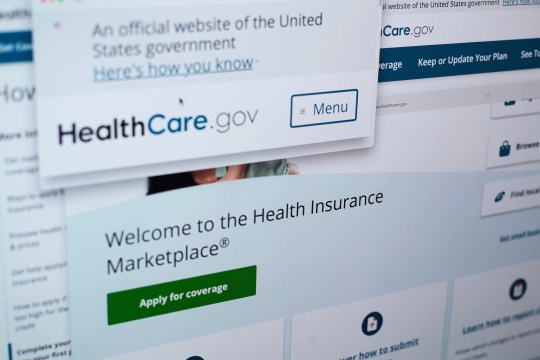
Health Insurance Marketplace Calculator

The Health Insurance Marketplace Calculator, updated with 2027 premium data, provides estimates of health insurance premiums and subsidies for people purchasing insurance on their own in health insurance exchanges (or “Marketplaces”) created by the Affordable Care Act (ACA).

About the ACA

Promotional image for KFF video How Affordable is the Affordable Care Act

Did the Affordable Care Act Make Health Care More Affordable?

The expiration of the ACA’s enhanced premium tax credits at the start of 2026, combined with rising insurer premiums, put a spotlight on health care affordability that extends beyond Marketplace enrollees. KFF’s Cynthia Cox examines the ACA’s record and the broader underlying question it raises: what’s a fair price for Americans people to pay for health care?

Stay informed.

Stay informed.

Filter

2,111-2,120 of 2,431 results

  • The Budget: What Would You Cut?

    Perspective

    As President Obama and Congress begin to hash out the 2012 budget, it is a good time to revisit results from our January 2011 survey showing that in spite of the fact that most Americans report being very concerned about the budget deficit, there is little public support for major reductions across a number of program areas. Majorities said they would not support any reductions in Social Security (64 percent), public education (63 percent), or…

  • Shared Medical Decision Making: We’re in This Together

    Event Date:
    Event

    In recent years, awareness of the patient’s important role in managing his or her own care has been steadily growing—fed not only by such trends as the proliferation of health information on the internet and direct-to-consumer advertising, but also by the emerging science of patient-centered decision making. One way to facilitate shared decision making is through the use of decision support tools, which offer the patient high quality medical information in an easily understandable format.…

  • Pulling it Together: Forget Math and Science, Teach Civics (Or Why We Need to Bring Back Schoolhouse Rock)

    Perspective

    I am seldom surprised by our poll findings, but this month’s tracking poll produced a doozy.  Twenty-two percent of the American people think the Affordable Care Act has been repealed, and another 26 percent aren't sure.  Those are surprisingly large numbers even with the 52 percent who still know it is the law of the land. How could a repeal "vote" in the House -- however dramatic but still, only symbolic -- be misunderstood as…

  • Pop Quiz: Assessing Americans’ Familiarity with the Health Care Law

    Perspective

    Based on the December Kaiser Health Tracking Poll, the latest KFF data note explores Americans’ awareness of what the Affordable Care Act (ACA) will do. As the 112th Congress prepared to take office and the discussion of repeal was on the rise, we 'quizzed' Americans on whether they thought a series of ten provisions were included in the new law, ranging from five items that are part of the law (i.e., Medicaid expansion, changes in…

  • Kaiser Health Tracking Poll — February 2011

    Feature

    In the wake of the health reform repeal vote in the U.S. House and the ongoing legal challenges over the individual mandate, nearly half the country either believes that the Patient Protection and Affordable Care Act (ACA) has been repealed and is no longer law (22 percent) or doesn’t know enough to say whether it is still law (26 percent). Roughly half of Americans (52 percent) accurately report that the ACA is still the law…

  • Pop Quiz: Assessing Americans’ Familiarity With the Health Care Law

    Feature

    The Affordable Care Act (ACA) is coming up on a year old, but in the midst of continuing debate over the merits of the landmark health care overhaul, how well do Americans understand what the new law will actually do? As the 112th Congress prepared to take office and the discussion of repeal was on the rise, the Foundation included a ten-question "quiz" on the December Kaiser Health Tracking poll to try to answer this…

  • Medicaid Spending Growth over the Last Decade and the Great Recession, 2000-2009

    Report

    This report examines Medicaid spending growth nationally during the last decade, with a focus on growth during the recession of 2007 to 2009. The recession-driven enrollment growth in recent years drove program spending to increase faster than national health spending overall, but on a per enrollee basis the growth in Medicaid spending has remained lower than the rise in private insurance premiums and overall national health expenditures. The recession-driven increase in Medicaid enrollment has been…

  • Medicaid Spending Growth and the Great Recession, 2007-2009

    Fact Sheet

    This fact sheet examines how the recent recession drove up Medicaid enrollment as millions of Americans lost jobs and income, and how that increase in enrollment has been the primary cause of the increase in overall Medicaid spending. Fact Sheet (.pdf)

  • Resources Examine Recession-Driven Record Medicaid Enrollment and Assess Medicaid Spending Growth

    Fact Sheet

    Three papers from the Foundation's Commission on Medicaid and the Uninsured examine Medicaid enrollment and spending during the recent recession. The analyses show Medicaid enrollment rose above 50 million people nationally for the first time in 2010, reflecting the program’s counter-cyclical role of helping people who become uninsured when the economy falters, with many turning to Medicaid after losing jobs and employer-based health insurance. Without access to Medicaid coverage, millions more people who suffered economic…

  • State Budgets Under Federal Health Reform: The Extent and Causes of Variations in Estimated Impacts

    Issue Brief

    This analysis examines the potential costs and savings that the health reform law may generate for state budgets, a topic of great interest at a time when states continue to struggle with tight budgets in the wake of the recession. The analysis seeks to explain why recent state estimates of the likely impact of health reform on their budgets vary widely, and discusses the major expected sources of costs and savings as the new law…



