Affordable Care Act

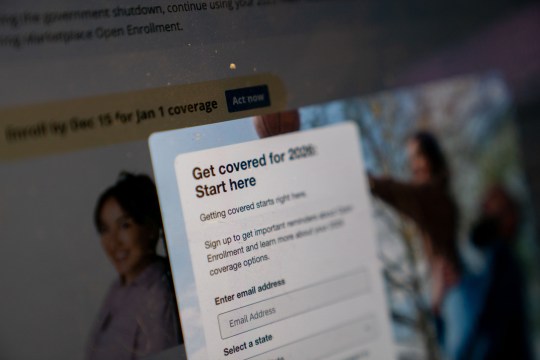
The ACA Marketplace

2025 KFF Marketplace Enrollees Survey

In 2025, about one in three ACA enrollees said they would be “very likely” to look for a lower-premium Marketplace plan If their premium payments doubled.

Cost Concerns and Coverage Changes: A Follow-Up Survey of ACA Marketplace Enrollees

Following the expiration of the enhanced premium tax credits for people with Affordable Care Act (ACA) Marketplace plans, a new KFF follow-up survey of the same Marketplace enrollees KFF surveyed in 2025 finds half (51%) of returning enrollees say their health care costs are “a lot higher” this year compared to last year, including four in 10 who specifically say their premiums are “a lot higher.”

Timely insights and analysis from KFF staff

Latest News

No Posts to Show

Subscribe to KFF Emails

Choose which emails are best for you.
Sign up here

Filter

1,841 - 1,850 of 2,771 Results

  • 10 FAQs: Medicare’s Role in End-of-Life Care

    Fact Sheet

    About eight of 10 of the 2.6 million people who died in the US in 2014 were people on Medicare, making Medicare the largest insurer of health care provided during the last year of life. These Frequently Asked Questions explain Medicare’s role in or coverage of end-of-life care, advance care planning, advance directives, and hospice care. They also provide information on Medicare spending on end-of-life care, changes to the physician fee schedule, and how related issues arose prior to the passage of the Affordable Care Act.

  • Data Note: Attempting to Measure Early Impact of the ACA through National Public Opinion Polls- A Note of Caution and What to Watch For

    Feature

    After the October start of open enrollment, under the Affordable Care Act, many journalists, policymakers, and the public at large are eager for early data indicating how the law is working from the perspective of potential enrollees. In particular, given the problems with Healthcare.Gov and some of the state exchange websites, many people want quantitative data about people’s experiences attempting to purchase or enroll in some sort of health insurance coverage using these mechanisms.
    This Data Note raises a note of caution about the possible pitfalls of using standard national public opinion polls to make judgments about Americans’ early experiences with health plan enrollment under the ACA.

  • A Profile of Community Health Center Patients: Implications for Policy

    Issue Brief

    Community health centers are a key source of primary care in underserved areas. Their role will grow as coverage expands under the ACA. To sharpen understanding of the health center patient population, this brief compares them to the low-income population overall, using the Health Center Patient Survey and National Health Interview Survey. The pre-ACA profile of health center patients that emerges sets the stage for measuring change and highlights important implications of states’ Medicaid expansion decisions.

  • A Guide to the Supreme Court’s Review of the Contraceptive Coverage Requirement

    Issue Brief

    This issue brief dissects the issues raised by the legal challenges to the Affordable Care Act’s requirement that private insurance plans include contraception as part of their coverage of preventive services for women. Over 40 for-profit corporations and over 40 nonprofit corporations have filed lawsuits claiming that the requirement to provide their employees with contraceptives violates their religious rights. On November 26, 2013, the Supreme Court agreed to hear two cases filed by for-profit corporations, Hobby Lobby and Conestoga Wood Specialties, that claim that this requirement violates their religious rights. At the crux of these cases is a question that the Supreme Court has not previously addressed: Do for-profit corporations have religious protections under the 1993 Religious Freedom Restoration Act and the First Amendment? The brief provides background on how the ACA’s contraceptive requirement works, summarizes some of the legal challenges brought by for-profit and non-profit organizations and discusses the implications of potential rulings by the Supreme Court.

  • How Will the Uninsured in Alabama Fare Under the Affordable Care Act?

    Fact Sheet

    This state report explains how the ACA expands coverage in Alabama, including a breakdown of how many uninsured people are eligible for Medicaid, how many are eligible for financial assistance to help them buy private insurance in the new Marketplace and how many will not receive any financial assistance at all. The report also details, in specific dollar figures, the income levels at which people in Alabama are eligible for Medicaid or financial assistance in the Marketplace. For states not expanding Medicaid, the report quantifies how many uninsured people fall into the “coverage gap,” meaning they will be ineligible for financial assistance in the Marketplace or for Medicaid in their state despite having an income below the federal poverty level.

  • How Will the Uninsured in the District of Columbia Fare Under the Affordable Care Act?

    Fact Sheet

    This state report explains how the ACA expands coverage in District of Columbia, including a breakdown of how many uninsured people are eligible for Medicaid, how many are eligible for financial assistance to help them buy private insurance in the new Marketplace and how many will not receive any financial assistance at all. The report also details, in specific dollar figures, the income levels at which people in District of Columbia are eligible for Medicaid or financial assistance in the Marketplace. For states not expanding Medicaid, the report quantifies how many uninsured people fall into the “coverage gap,” meaning they will be ineligible for financial assistance in the Marketplace or for Medicaid in their state despite having an income below the federal poverty level.

  • How Will the Uninsured in Georgia Fare Under the Affordable Care Act?

    Fact Sheet

    This state report explains how the ACA expands coverage in Georgia, including a breakdown of how many uninsured people are eligible for Medicaid, how many are eligible for financial assistance to help them buy private insurance in the new Marketplace and how many will not receive any financial assistance at all. The report also details, in specific dollar figures, the income levels at which people in Georgia are eligible for Medicaid or financial assistance in the Marketplace. For states not expanding Medicaid, the report quantifies how many uninsured people fall into the “coverage gap,” meaning they will be ineligible for financial assistance in the Marketplace or for Medicaid in their state despite having an income below the federal poverty level.