Affordable Care Act

ACA Open Enrollment

9 Things to Watch for the 2027 ACA Open Enrollment Period

9 Things to Watch for the 2027 ACA Open Enrollment Period 

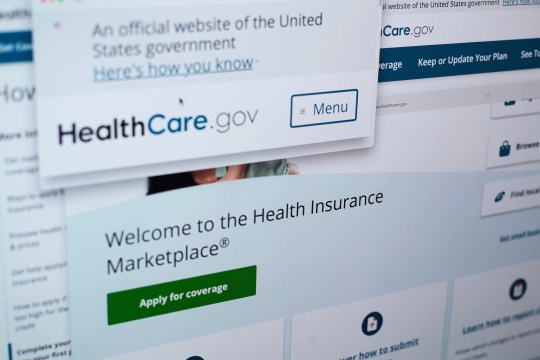
ACA Marketplace Open Enrollment is here—and this year comes with major changes. Marketplace premiums are up 13% on average, more insurers are leaving the Marketplaces than entering, and there is narrower eligibility for health insurance subsidies. Learn more about what to watch.


Health Insurance Marketplace Calculator

The Health Insurance Marketplace Calculator, updated with 2027 premium data, provides estimates of health insurance premiums and subsidies for people purchasing insurance on their own in health insurance exchanges (or “Marketplaces”) created by the Affordable Care Act (ACA).

About the ACA

Promotional image for KFF video How Affordable is the Affordable Care Act

Did the Affordable Care Act Make Health Care More Affordable?

The expiration of the ACA’s enhanced premium tax credits at the start of 2026, combined with rising insurer premiums, put a spotlight on health care affordability that extends beyond Marketplace enrollees. KFF’s Cynthia Cox examines the ACA’s record and the broader underlying question it raises: what’s a fair price for Americans people to pay for health care?

Stay informed.

Stay informed.

Filter

1,581-1,590 of 2,431 results

  • Massachusetts and Ohio: Capitated Financial Alignment Demonstrations for Dual Eligible Beneficiaries Compared

    Fact Sheet

    The Centers for Medicare and Medicaid Services (CMS) has finalized memoranda of understanding (MOUs) with Massachusetts and Ohio to test a capitated financial alignment model to integrate care and align financing for people who are dually eligible for Medicare and Medicaid in 2013. CMS also has signed an MOU with Washington to test a managed fee-for-service model. These three year demonstrations will introduce changes in the care delivery systems through which beneficiaries presently receive services…

  • Faces of the Medicaid Expansion: How Obtaining Medicaid Coverage Impacts Low-Income Adults

    Report

    The Affordable Care Act (ACA) seeks to fill the longstanding gap in Medicaid coverage for low-income adults by expanding eligibility to a minimum floor of 138% of the federal poverty level (FPL), or $24,344 for a family of 3 in 2012. However, the Supreme Court ruling on the ACA effectively made implementation of the Medicaid expansion a state choice. If a state does not expand Medicaid, poor uninsured adults in that state will not gain…

  • Immigration Reform and Access to Health Coverage: Key Issues to Consider

    Issue Brief

    The Obama administration and a bipartisan group of U.S. senators recently released blueprints for immigration reform proposals that include a roadmap to citizenship for the 11 million undocumented immigrants currently residing in the United States. Subject to meeting specified requirements, these individuals would be able to apply for a provisional lawful status. After completing an undefined number of years in this status, an individual would then be allowed to apply for lawful permanent residency and,…

  • New Orleans Residents Say Recovery Is Making Progress, But Many Believe The Gulf Oil Spill Will Be More Damaging Than Katrina

    News Release

    Crime is By Far The Biggest Concern in New Orleans Seven in 10 Residents Say Americans Have Forgotten The City’s Plight African-Americans View Their Recovery Differently; It’s Much Slower MENLO PARK, Calif. -- Five years after Hurricane Katrina, an increasing majority of the city’s residents says the rebuilding process is going well, but substantial majorities still report that the city has not recovered and feel the nation has forgotten them, according to a new comprehensive…

  • Filling the Gaps: Dental Care, Coverage and Access

    Event Date:
    Event

    While the Affordable Care Act is expected to expand public and private coverage for children when it takes effect in 2014, significant gaps will remain, especially for low-income adults age 21 and older. This June 19, 2012, a public forum at the Foundation's Washington, D.C. offices examined the gaps and disparities in dental coverage and care in the United States today; the health, social, and other consequences of these systemic deficiencies; and promising strategies for…

  • States Sustain and Expand Coverage For Low-Income Children and Families Despite Recession, But Gains Are Threatened By Impending End of Federal Assistance

    News Release

    New 50-State Survey Illustrates Key Role of CHIP Reauthorization and the Federal Stimulus Law in Safeguarding Coverage    WASHINGTON  – Despite the deep recession, most states have managed to safeguard and, in some cases, expand health coverage for children and parents in their Medicaid and Children's Health Insurance Programs in 2009, according to a new survey from the Kaiser Family Foundation's Commission on Medicaid and the Uninsured.  But the gains, which could serve as a…

  • Low-Income Adults Under Age 65 – Many are Poor, Sick, and Uninsured

    Issue Brief

    This policy brief from the Kaiser Commission on Medicaid and the Uninsured examines the characteristics and insurance coverage of low-income adults under age 65, a group numbering more than 50 million people. Members of this group are more likely to be in poor health than other Americans and are the least likely to have health insurance. Nearly a third are from families earning less than twice the poverty level. Fifteen percent live in poverty. Although…

  • Data Note: Americans’ Satisfaction with Insurance Coverage

    Issue Brief

    This data note explores who is more or less likely to say that they are satisfied with their health insurance plan, examines how people’s opinions of their plan vary with health status and what people’s health care experiences and concerns can tell us about their health coverage. Overall, the Foundation’s August 2009 tracking poll found that most Americans with insurance give their plan a favorable rating, and most are satisfied with various aspects of their…

  • Kaiser Health Tracking Poll — December 2011

    Poll Finding

    The October downturn in the share of Americans with a favorable view of the health reform law, a dip driven by an erosion of support among Democrats, has been fully reversed in December, with support among Democrats rebounding and overall national opinion on the law returning to the roughly even split seen in Kaiser polls for most of 2011.  The concept of health exchanges, a key piece of the law, has wide, bipartisan support.  The…