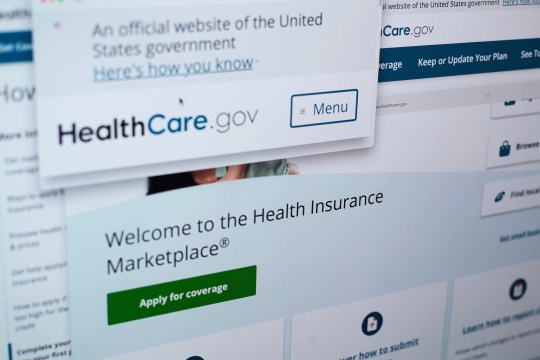
Affordable Care Act

ACA Open Enrollment

9 Things to Watch for the 2027 ACA Open Enrollment Period

9 Things to Watch for the 2027 ACA Open Enrollment Period 

ACA Marketplace Open Enrollment is here—and this year comes with major changes. Marketplace premiums are up 13% on average, more insurers are leaving the Marketplaces than entering, and there is narrower eligibility for health insurance subsidies. Learn more about what to watch.


Health Insurance Marketplace Calculator

The Health Insurance Marketplace Calculator, updated with 2027 premium data, provides estimates of health insurance premiums and subsidies for people purchasing insurance on their own in health insurance exchanges (or “Marketplaces”) created by the Affordable Care Act (ACA).

About the ACA

Promotional image for KFF video How Affordable is the Affordable Care Act

Did the Affordable Care Act Make Health Care More Affordable?

The expiration of the ACA’s enhanced premium tax credits at the start of 2026, combined with rising insurer premiums, put a spotlight on health care affordability that extends beyond Marketplace enrollees. KFF’s Cynthia Cox examines the ACA’s record and the broader underlying question it raises: what’s a fair price for Americans people to pay for health care?

Stay informed.

Stay informed.

Filter

1,561-1,570 of 2,431 results

  • A Medicaid Block Grant Would Reduce Federal Spending But Trigger Substantial Cuts in Medicaid Coverage in the States That Would Increase the Uninsured

    News Release

    NEWS RELEASEMay 10, 2011 New State-By-State Analysis Shows House Budget Plan For Medicaid Would Reduce Enrollment By Tens of Millions Of People And Cut Funding For Hospitals And Other Medicaid Services WASHINGTON, D.C. -- Converting Medicaid into a block grant and repealing the health reform law as adopted by the House last month in a party-line vote would trigger major reductions in program spending and enrollment compared to current projections, a shift with big implications…

  • Keeping Coverage Continuous: Smoothing the Path between Medicaid and the Exchange

    Event Date:
    Event

    A key challenge for those implementing the reform law is how to manage churning, when people cycle in and out of public programs as their income varies. What approaches are states and the federal government taking to minimize the disruption from churning? Will people be able to keep their provider as they move from Medicaid to private coverage and back? This briefing, sponsored by the Alliance for Health Reform and The Commonwealth, addressed these and…

  • Mapping Premium Variation in the Individual Market

    Issue Brief

    This analysis examines how premiums for individual health insurance differ around the nation, finding that premiums can vary substantially from state to state. The average per-person premium in 2010 ranged in cost from approximately $136 per month in Alabama to more than $400 per month in Vermont and Massachusetts. The average across all states was $215 per member per month. Given the fragmentation of the market and the lack of public data available about individual…

  • Medicare Advantage 2011 Data Spotlight: Medicare Advantage Enrollment Market Update

    Issue Brief

    This data spotlight examines enrollment trends in Medicare Advantage plans in 2011 and finds that, despite concerns about the effects of the 2010 health reform payment reductions on private Medicare Advantage plans, enrollment continued to rise this year. Additionally, Medicare Advantage enrollees are paying lower premiums, on average, than they did in 2010. Preferred Provider Organizations gained more enrollees than any other plan type, while enrollment in Private Fee-for-Service plans continued to decline. A companion…

  • The Texas Health Care Landscape

    Report

    This fact sheet summarizes the Texas health care landscape, including data on demographics, population health, the uninsured and the state Medicaid program. Fact Sheet (.pdf)

  • Implementing Health Reform in the States

    Event Date:
    Event

    The Alliance for Health Reform, Robert Wood Johnson Foundation and the Association of Health Care Journalists sponsored this live webinar on March 27, 2012, to take a look at what's happening in the states with implementation of the Patient Protection and Affordable Care Act. Many of the key decisions implementing the health reform law are left to the states. For example, states have leeway in how they set up health insurance exchanges, where uninsured individuals…

  • Insurer Rebates under the Medical Loss Ratio: 2012 Estimates

    Report

    Beginning in 2011, the Affordable Care Act (ACA) requires insurance plans to pay out a minimum percentage of premium dollars towards health care expenses and quality improvement activities, limiting the amount spent on administrative and marketing costs and profit. Under the law, large group plans are required to spend at least 85 percent of premium dollars on health care and quality improvement, while small group plans must spend at least 80 percent. These ratios are…

  • The Massachusetts Health Care Landscape

    Fact Sheet

    This fact sheet summarizes the Massachusetts health care landscape, including data on demographics, population health, the uninsured and the state Medicaid program. Fact Sheet (.pdf)

  • Quick Take: Timing Matters: States Waiting for a Supreme Court Decision to Plan an Exchange

    Fact Sheet

    State-based health insurance exchanges are an important component of the Patient Protection and Affordable Care Act (ACA) designed to extend subsidized private health insurance coverage to millions of Americans by 2014. Though projections show exchange enrollment could grow to 20 million individuals nationally, aggressive planning on the part of states will be necessary to meet implementation timelines—exchanges must be fully operational by January 1, 2014 and the Department of Health and Human Services will begin…

  • Emerging Medicaid Accountable Care Organizations: The Role of Managed Care

    Issue Brief

    This brief examines efforts by a number of states to set up Accountable Care Organizations (ACOs) within their Medicaid programs. An ACO is a provider-run organization in which participating providers are collectively responsible for the care of an enrolled population, and may share in any savings associated with improvements in the quality and efficiency of care. The structure of Medicaid ACO initiatives is influenced by individual states’ experience with managed care, other existing care delivery…