Affordable Care Act

ACA Open Enrollment

9 Things to Watch for the 2027 ACA Open Enrollment Period

9 Things to Watch for the 2027 ACA Open Enrollment Period 

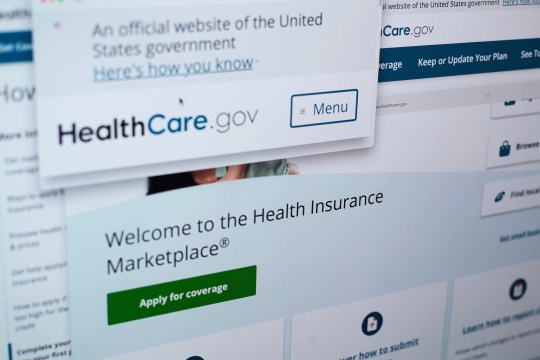
ACA Marketplace Open Enrollment is here—and this year comes with major changes. Marketplace premiums are up 13% on average, more insurers are leaving the Marketplaces than entering, and there is narrower eligibility for health insurance subsidies. Learn more about what to watch.


Health Insurance Marketplace Calculator

The Health Insurance Marketplace Calculator, updated with 2027 premium data, provides estimates of health insurance premiums and subsidies for people purchasing insurance on their own in health insurance exchanges (or “Marketplaces”) created by the Affordable Care Act (ACA).

About the ACA

Promotional image for KFF video How Affordable is the Affordable Care Act

Did the Affordable Care Act Make Health Care More Affordable?

The expiration of the ACA’s enhanced premium tax credits at the start of 2026, combined with rising insurer premiums, put a spotlight on health care affordability that extends beyond Marketplace enrollees. KFF’s Cynthia Cox examines the ACA’s record and the broader underlying question it raises: what’s a fair price for Americans people to pay for health care?

Stay informed.

Stay informed.

Filter

1,131-1,140 of 2,431 results

  • Real Industry Action on Health Reform?

    Other Post

    The Washington Post published an op-ed authored by Foundation President and CEO Drew Altman which examines how the health industry's voluntary commitment to curb health care spending is similar and different from past efforts. Read the Article

  • Testimony Related to Health Reform

    Event Date:
    Event

    The Kaiser Family Foundation is frequently invited to provide expert testimony before Congress on key health care issues. Testimony At NAIC Exchanges Subgroup Public HearingKaiser Family Foundation Vice President Gary Claxton, who directs the Foundation's Marketplace Policy Project, testified July 22, 2010, before the National Association of Insurance Commissioners' Exchanges (B) Subgroup established by the health reform law. Private Long-Term Care Insurance and the Challenge of Closing the Long-Term Care Funding GapAt a June 3…

  • Explaining Health Care Reform: Questions About Medicaid’s Role

    Issue Brief

    Medicaid plays a major role in covering more of the uninsured under the new health reform law. The new law includes a significant expansion of Medicaid, an individual requirement to obtain health insurance, and subsidies to help low-income individuals buy coverage through newly established Health Benefit Exchanges. This brief explains the how Medicaid works today and answers some key questions about Medicaid’s role in health reform. Issue Brief (.pdf)

  • How Will Uninsured Parents Be Affected By Health Reform?

    Issue Brief

    This brief examines uninsured parents and how they could be affected by health reform, including estimates of how many might qualify for coverage under a Medicaid expansion, how many would be eligible for subsidies and how many would not be eligible for such help. Issue Brief (.pdf)

  • Public Opinion on Health Reform: What Do the Polls Mean?

    Event Date:
    Event

    The Alliance for Health Reform and the Kaiser Family Foundation co-sponsored this briefing to have a panel of experts answer questions about how public support for health reform waxes and wanes depending, not only on what's being proposed in the reform proposals, but also on who asks the question and how it is asked. Issues addressed include: Do the majority of Americans support health care reform now? Do people want to pay for covering the…

  • Affordability and Health Reform: If We Mandate, Will They (and Can They) Pay?

    Event Date:
    Event

    The Alliance for Health Reform and The Commonwealth Fund co-sponsored this briefing to explore the health reform proposals being considered which may impose responsibilities on both individuals and employers to have and help pay for coverage and whether they will be able to pay the amounts above the subsidies. Questions addressed include:If Congress exempts people from the coverage requirement or significantly reduces the penalties for noncompliance, will enough healthy individuals purchase new coverage to adequately…

  • Massachusetts Special Election Poll

    Poll Finding

    The Foundation, as part of The Washington Post/Kaiser Family Foundation/Harvard University partnership series, conducted a poll to better understand how health care played into the mix of issues and frustrations that brought voters to the polls in the Massachusetts special election for U.S. Senate. The poll was conducted among a random sample of 880 voters in the Massachusetts special election on January 19, 2010 and also interviewed were 242 Massachusetts adults who did not participate…

  • Pulling it Together: REPOR(t)

    Perspective

    In today’s column I investigate a somewhat lighter topic than my last column on micro-simulation modeling: What was the impact of shows like Jon Stewart’s The Daily Show and Stephen Colbert’s The Colbert Report on the health reform debate?  Who among us has not wondered about the answer to this question?  Please don’t answer that. I should start by acknowledging that I am a frequent but not religious viewer of these shows, and believe that…

  • Financial Incentives in the Long-Term Care Context: A First Look at Relevant Information

    Report

    Financial Incentives in the Long-Term Care Context: A First Look at Relevant Information This report reviews Medicare's payment policies as they may affect medical care for residents in long-term care environments, including a look at the financial incentives that could play a role in hospital and skilled nursing facility admissions. The report was prepared by Henry Desmarais at Health Policy Alternatives for the Foundation and released at an Oct. 12, 2010, policy briefing. Report (.pdf)

  • Medicare Advantage 2011 Data Spotlight: Plan Availability and Premiums

    Report

      This Medicare Advantage Data Spotlight provides an overview of recent changes made to the Medicare Advantage program and examines trends in plan participation, premiums and certain benefits. About 12 million people, or nearly a quarter of the Medicare population, are enrolled in Medicare Advantage, the privately administered plans that are an alternative to the traditional fee-for-service Medicare program. The analysis was conducted by a team researchers at Mathematica Policy Research, Inc. and the Kaiser…