Deaths and Health Care Issues in ICE Detention Centers Under the Second Trump Administration
Introduction
As of March 18, 2026, Immigration and Customs Enforcement (ICE) reported that 46 people died while in their custody or detention facilities since the start of the second Trump administration in January 2025. The number of deaths of people in detention during 2025 exceeded the highest seen in over two decades, and deaths in 2026 are on track to meet or exceed that number. President Trump implemented immigration policy changes focused on increasing interior enforcement efforts to support mass deportation, which increased the number of immigrants detained by ICE to over 68,000 as of February 7, 2026, an increase of over 70% from the 39,000 immigrants held in detention at the end of the Biden administration in December 2024.
ICE is required to maintain certain basic health and safety standards in all detention facilities, which include an initial medical and mental health screening as well as comprehensive health services that include diagnoses and treatments, transfers to off-site medical care when necessary, and access to 24-hour emergency care. However, detention facilities have a history of inadequate compliance with health and safety standards, insufficient health care, shortages in health care staffing, and limited oversight, which may create health risks for those detained. The increased number of people in detention facilities and overcrowding of facilities may further increase health risks, particularly for communicable diseases like measles and people with complex medical conditions. This brief provides an overview of deaths in ICE custody and detention centers under the Trump administration based on KFF analysis of ICE detainee death reporting and news releases and reviews recent reports of health care issues in detention centers.
Deaths in ICE Custody and Detention
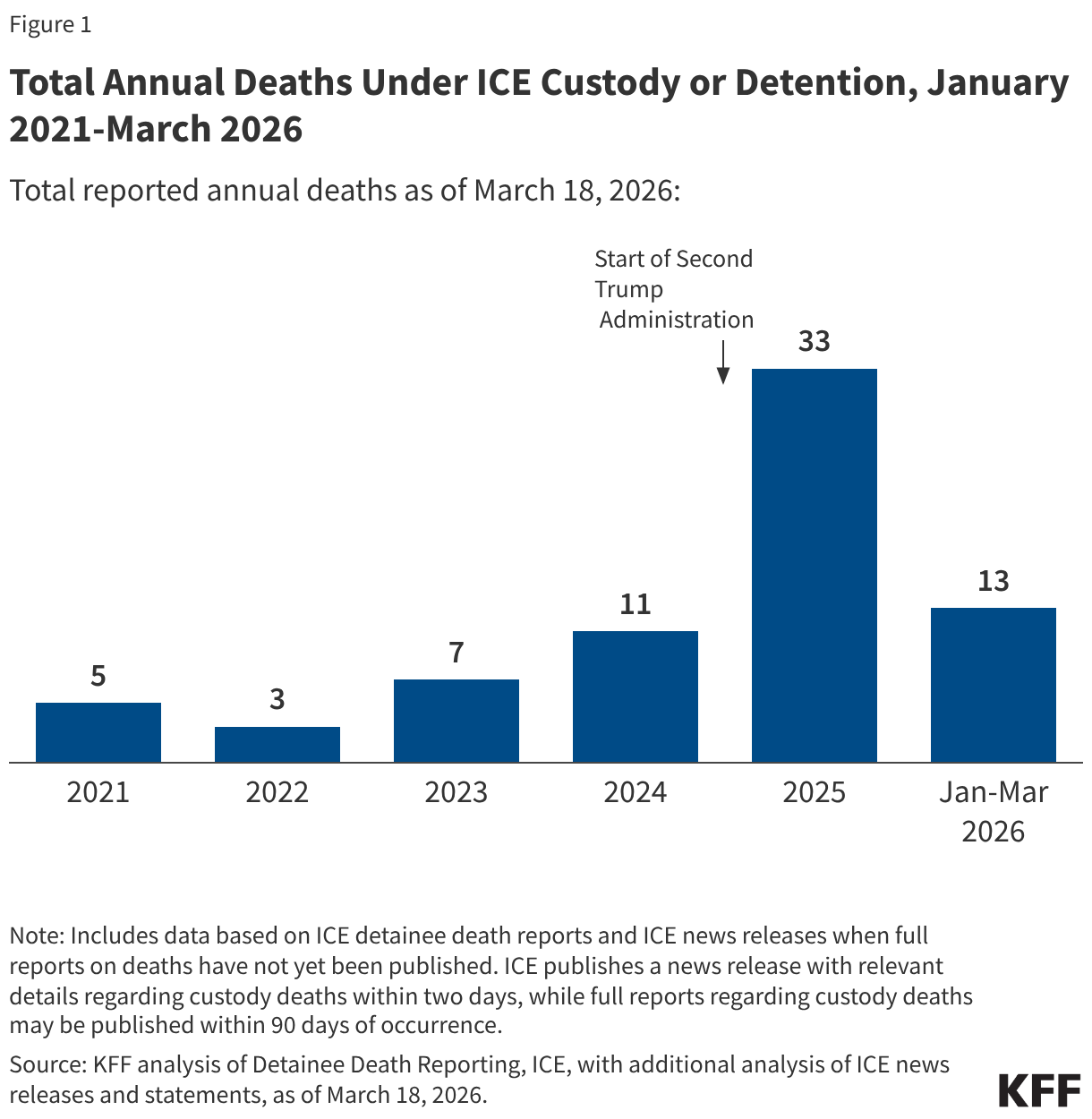
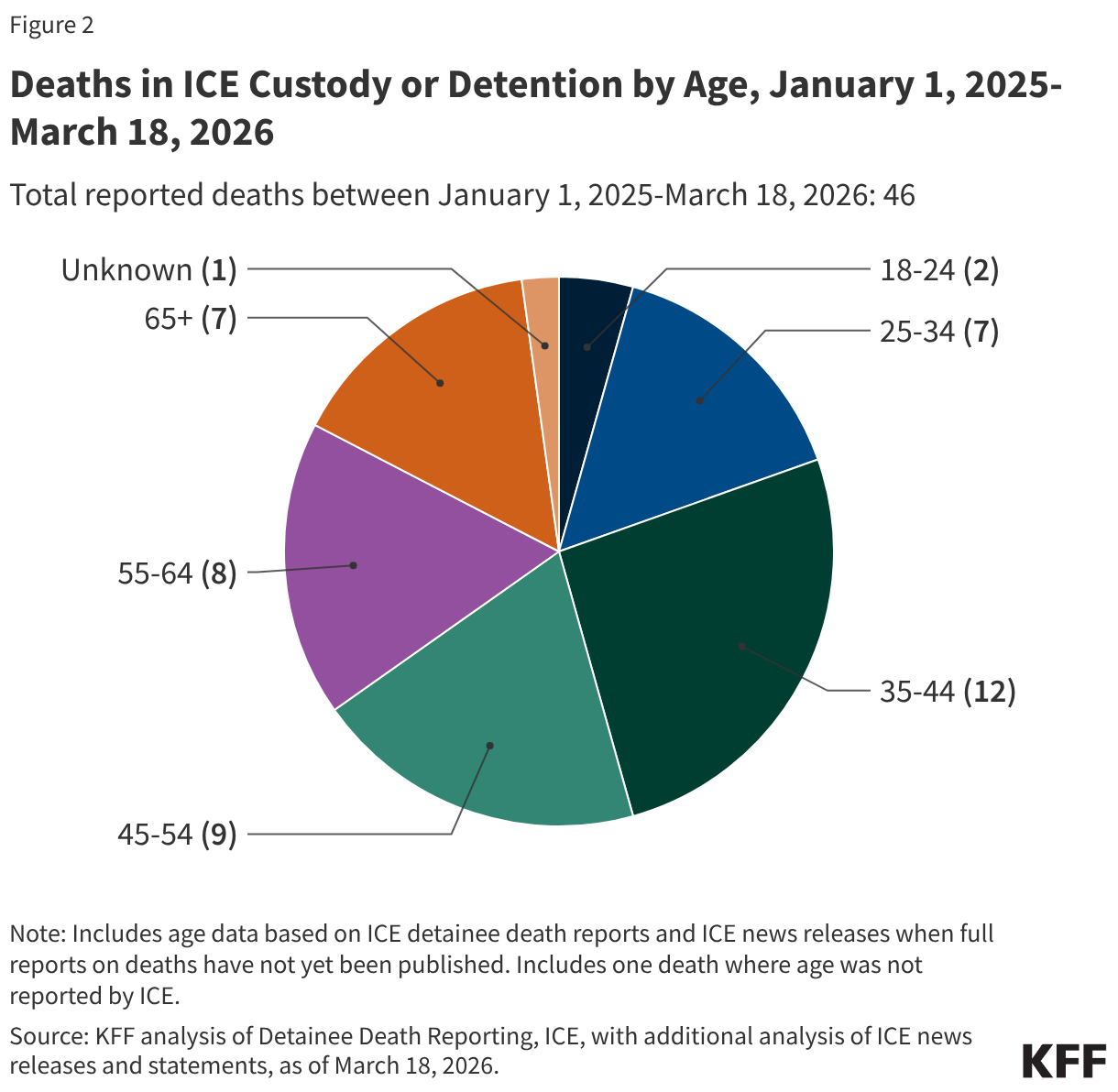
The number of deaths occurring among people in ICE custody or detention increased from 11 in 2024 and less than ten in earlier years to 33 in 2025 after the Trump administration took office (Figure 1). ICE is required to publish a news release with relevant details regarding custody deaths within two days, while full reports regarding custody deaths are published within 90 days of occurrence that may contain more details from investigations into the deaths. Six of the deaths that occurred between January 1, 2025 and March 18, 2026 were among people with no reported criminality or pending criminal charges. A total of 36 deaths occurred among people who spent three or fewer months in ICE detention, including those ICE transferred to a hospital for additional medical care. Thirty-eight (38) deaths occurred among people younger than age 65, and 21 were among those under age 45 (Figure 2). Twenty-two (22) deaths were among people from Mexico and Central America, while ten were among people from Asia.
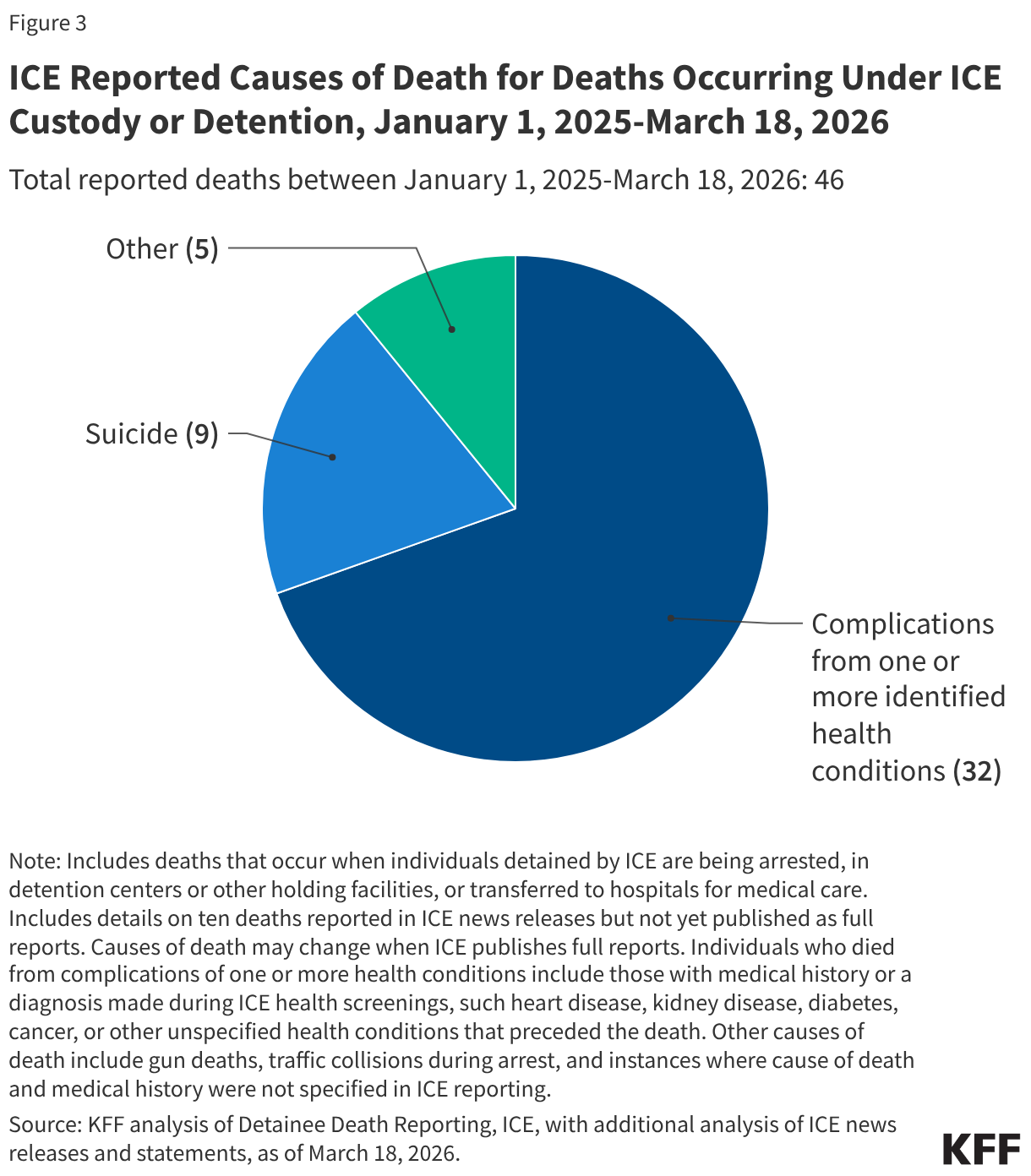
A total of 32 deaths among people in ICE custody or detention between January 2025 and March 2026 were among people with existing medical conditions who appeared to experience worsening health complications contributing to their death, while the remaining share were reported as due to suicide or other causes (Figure 3). While ICE does not always report an official cause of death as determined by a medical examiner, they report the details of initial health screenings and medical history. The causes of death due to health complications and the initial severity of health conditions varied. For example, ICE detained a 68-year-old adult with reported mild blood pressure issues who experienced steadily worsening symptoms over the course of two months that led to his hospitalization and death. In contrast, a 55-year-old adult with severe physical and mental health issues was transferred one day after his arrest to a hospital, where he stayed until his death. ICE reported the remaining deaths as suicide (9) and other causes (5), such as a fatal traffic collision during arrest. ICE reporting may differ from independent assessments of deaths. For example, the El Paso County Medical Examiner’s Office in Texas ruled a death in January 2026 to be a homicide due to the actions of enforcement officers, while ICE reported it as a suicide.
Reported Health Care Issues
The Trump administration’s mass deportation efforts led to a significant increase in immigrants held in detention centers, which can lead to overcrowding if deportations do not keep up with the pace of arrests as well as challenges to accessing health care due to limited capacity and resources. Moreover, ICE payments to contractors providing medical care in detention facilities lapsed after the Department of Veterans Affairs terminated a longstanding agreement to process medical reimbursement claims in October 2025, which may impact certain health care services as the new claims system may not be active until April 2026. Overcrowding as well as limited capacity and resources may also increase the risk of the spread of communicable diseases, such as measles. For example, media reports indicate that recent measles outbreaks in Arizona and Texas detention facilities may have been the result of overcrowding and delays in providing vaccinations. ICE also terminated the contract with a private company that operated the Texas detention facility in March 2026 according to a media report indicating that, despite having no prior experience, the company was selected to build and operate the largest ICE facility and that there were reports of inadequate health care.
Reports since January 2025 suggest ICE may not be maintaining health and safety standards for immigrants held in detention centers. ICE is responsible for oversight and management of health care in detention facilities, but it has a history of inadequate compliance with detention standards and provides little to no publicly available data on health care use, quality, and outcomes. A 2025 report based on an investigation launched by Democratic Senator Jon Ossoff of Georgia documented instances of lack of access to prescribed medications, mistreatment of pregnant women, malnutrition and dehydration, unsanitary conditions, sleep deprivation, and abuse in detention facilities. A report based on interviews with people held at an Arizona detention facility between July 2024 to November 2025 conducted by a nonprofit organization serving detainees found instances of medical and mental health care lapses, such as several month delays in necessary specialty treatment and people with serious mental illnesses never seeing a mental health provider. Other media reports indicate instances of lost medical treatments and prescriptions during transfers between detention facilities.
There have also been recent reports of health care issues for children and pregnant people held in detention under the Trump administration. A media report on a Texas facility, where over half of detainees during the first nine months of the Trump administration were children, identified problematic health care issues, including inadequate staffing of pediatricians and child psychologists. Additionally, although ICE policy limits the detention of pregnant, postpartum, and nursing individuals to “very limited circumstances,” ICE data shared in response to an inquiry from Democratic Senator Patty Murray of Washington showing that 121 were detained as of February 16, 2026. This stands in contrast to when most of these groups were released on parole according to the most recent publicly available ICE report on these groups from the first half of fiscal year 2024. A media report and interviews conducted by legal organizations in 2025 with pregnant, postpartum, and nursing individuals in ICE detention identified gaps in prenatal and postnatal care. Another media report based on interviews with pregnant individuals held in ICE detention between 2025 and 2026 identified reports of excessive bodily restraints, inadequate nutrition and prenatal care, delayed emergency care, and an instance where ICE attempted to deport an individual in a late-term and high-risk pregnancy.
Several legal challenges related to poor health care conditions and limited oversight have been brought against ICE, some of which resulted in court rulings requiring ICE to implement changes. In February 2026, a judge ruled that ICE was required to improve conditions in California detention facilities due to poor conditions, including by ensuring adequate health care staffing, access to medical specialists, and providing timely care and medications. ICE faces pending lawsuits alleging that they delayed providing cancer care medication for an extended period of time during transit between facilities between August and October 2025 and that they provided inadequate medical care in Illinois in October 2025. In March 2026, local officials in California filed lawsuit to gain access to ICE facilities and conduct public health inspections after being denied access, and Maryland filed a lawsuit to obtain records detailing conditions at an immigration detention facility in Baltimore after investigations revealed multiple issues, including denial of medical care. These lawsuits to increase oversight followed a previous court order for ICE to restore unannounced congressional oversight visits to DHS facilities. A court order also required the Trump administration to restore DHS oversight offices that investigated issues of neglect and mistreatment in the ICE facilities. Despite reversing their decision to close the offices, the administration faces additional legal challenges due to low staffing in the offices that may reduce their ability to investigate ICE facility health care issues. The outcomes of court orders may change due to appeals by the Trump administration.