
Survey: Adults With Multiple or Complex Health Conditions Face Significant Challenges with Health Costs and Commonly Struggle to Access Care
Uninsured Adults With Multiple Conditions Struggle the Most to Afford and Access Care
Adults with multiple or complex health conditions, who already face unique physical and mental challenges, commonly struggle to pay their medical bills and access needed care and medication—challenges that fall hardest on uninsured adults, according to a new KFF survey of more than 25 thousand adults. A companion Beyond the Data column by KFF Founding President and CEO Dr. Drew Altman explores the survey’s findings about uninsured adults with greater health needs and considers why the national discussion of the affordability crisis has largely ignored this group.
“If the first obligation of a health care system is to take care of the sick, we are failing that test. Cost and access problems are hitting the chronically ill hard, and the chronically ill and uninsured especially hard,” said Dr. Drew Altman.
The survey’s large sample size allowed KFF analysts to examine the experiences of adults with certain serious health conditions—including cancer, lung disease, diabetes, cardiovascular disease, or a mental health condition—as well as those managing care for multiple health problems.
About a third of adults ages 18-64 with multiple or certain complex health conditions say they struggled to pay or could not pay their medical bills in the past year. Adults with three or more conditions (36%), those with cardiovascular disease (37%), and those with a mental health condition (36%) are particularly likely to report struggling with medical bills. As part of these affordability challenges, about a quarter of adults with three or more conditions say they have had to cut back on household expenses to cover medical costs, compared to just about 1 in 10 of those without active health conditions.
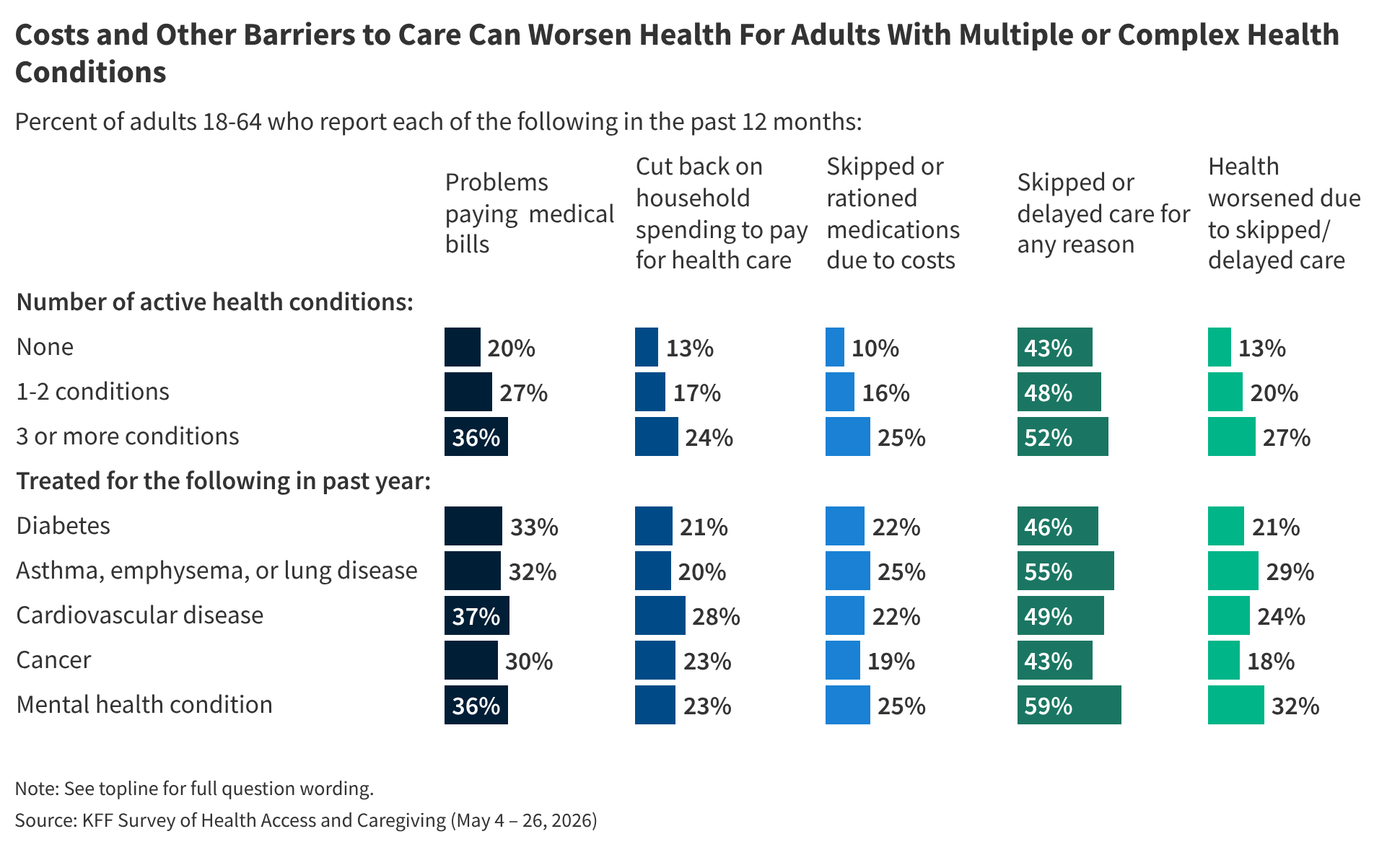
High health costs can create major barriers to care, sometimes determining who is able to access the treatments and medications they need. About half of adults with three or more health conditions say they skipped or delayed care in the past year, including about 1 in 3 who did so due to cost. About 1 in 5 or more adults with multiple or complex health conditions also report not taking their medications as prescribed because they could not afford the cost.
Skipping or delaying care can have serious consequences. Substantial shares of adults across health conditions say their health got worse because they skipped or delayed care, including about 3 in 10 of those with a mental health condition (32%) or lung disease (29%), one quarter of those with cardiovascular disease (24%), and about 1 in 5 of those with cancer (18%) or diabetes (21%).
In addition to challenges with costs, insured adults with greater health needs commonly encounter insurance coverage delays or denials—problems that occur across specific health conditions. About half of insured adults ages 18-64 with three or more conditions say their insurer denied or delayed coverage for a service, treatment, or medication their doctor prescribed, as do about 4 in 10 or more insured adults with certain complex conditions, including diabetes (38%), lung disease (43%), cancer (43%), cardiovascular disease (45%), or a mental health condition (47%).
Uninsured Adults Struggle the Most to Afford and Access Care
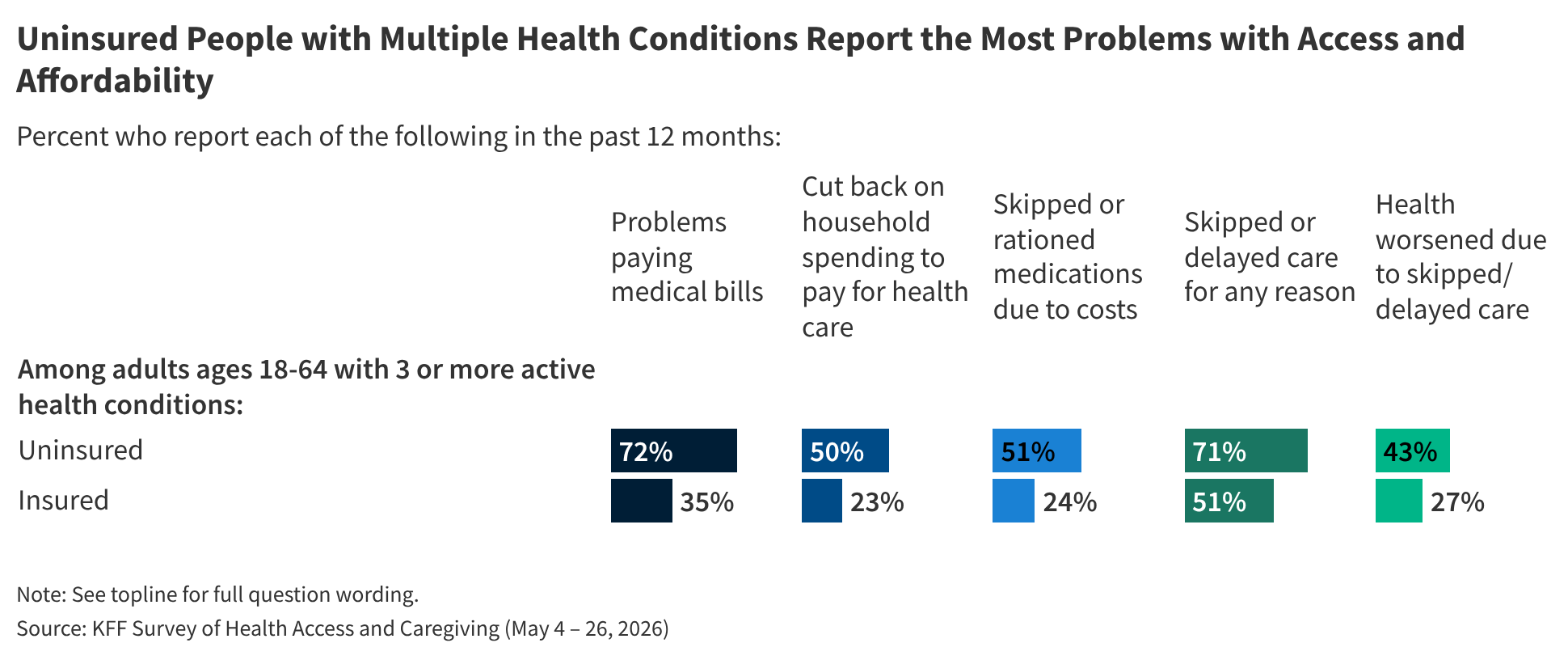
As Drew Altman writes in his new column, health care affordability is most challenging for uninsured adults with multiple health conditions—most of whom say they struggle with medical bills (72%) and half of whom say they cut back on household spending to cover their health costs. Uninsured adults with three or more health conditions are twenty percentage points more likely than their insured counterparts to say they skipped or delayed needed care in the past year (71% vs. 51%). They are also about twice as likely as those who are insured to say they did not take their medication as prescribed due to cost (51% vs. 24%).
For uninsured adults, going without needed care and medications may carry even greater risks that worsen existing barriers to care. Untreated health conditions can worsen over time and become more difficult and costly to treat. Among uninsured adults, about 4 in 10 with multiple conditions (43%) and about half with a mental health condition (47%) say their health got worse after skipping or delaying care—making them about one and a half times as likely as their insured counterparts to experience a decline in health.
Other findings about older adults (aged 65+) with multiple and complex health conditions are available in the full report.
Dr. Altman will discuss KFF’s findings about chronic health conditions and the broader health policy landscape in his keynote address at the National Academy of Medicine’s Annual Meeting in October.
Designed and analyzed by KFF public opinion researchers, KFF’s Survey of Health Access and Caregiving was conducted in English and in Spanish May 4 – 26, 2026, online and by telephone among a large, nationally representative sample of 25,873 adults, including 16,677 who say they have received treatment for at least one serious or complex health condition in the past year. The margin of sampling error is plus or minus one percentage point for the full sample. For results based on other subgroups, the margin of sampling error may be higher.