KFF designs, conducts and analyzes original public opinion and survey research on Americans’ attitudes, knowledge, and experiences with the health care system to help amplify the public’s voice in major national debates.
Toplines from a comprehensive survey of Latino attitudes toward education, public schools and a variety of education issues, including the No Child Left Behind Act. This national survey is released against the backdrop of major changes in the nation’s K-12 system as states and school districts apply sweeping new federal requirements. The survey includes substantial comparison samples of whites and African Americans.
This set of tables, prepared by the Urban Institue for the Kaiser Commission on Medicaid and the Uninsured, presents the most current state by state data on Medicaid enrollment and expenditures for dual eligibles.
Individual Tables:Implications of the Medicare drug law for full dual eligibles:Table 1: “Full” Dual Eligible Enrollment and Prescription Drug Expenditures, by State, 2002 (.pdf)
Enrollment and spending data for full and partial dual eligibles:Table 2: Total Dual Eligibles (Full & Partial) by State, 2002 (.pdf)Table 3: Total Dual Eligibles (Full & Partial) as a Share of Aged and Disabled Medicaid Enrollees by State, 2002 (.pdf)Table 4: Medicaid Expenditures for Full & Partial Dual Eligibles by State, 2002 (.pdf)Table 5: Distribution of Medicaid Expenditures for Full & Partial Dual Eligibles by State, 2002 (.pdf)
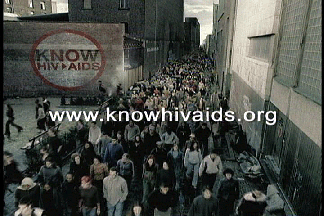
To launch the second year of the Kaiser Family Foundation and Viacom multimedia public education campaign, KNOW HIV/AIDS, the world premiere of a new PSA aired during the pre-game of the Super Bowl. The ad focuses on young people under 25 years old, who today account for more than half of new HIV infections both in the U.S. and worldwide.
The KNOW HIV/AIDS campaign, which includes media placements valued at $200 million in 2004, will run across Viacom’s broadcast networks CBS and UPN; cable networks MTV, BET, VH1, CMT: Country Music Television, TV Land, Nickelodeon, Nick at Nite, Showtime, Spike TV and Comedy Central; 185 Infinity Broadcasting radio stations in the top 50 markets; and billboard, bus and bus shelters advertising spaces in the nation’s largest markets. In addition, a number of television shows produced by Viacom companies have incorporated HIV/AIDS themes in upcoming episodes. And, MTV, MTV International, Nickelodeon, BET, VH1, Showtime, Sundance Channel and Infinity Broadcasting have special HIV/AIDS-related programming planned throughout the year.
A new project by National Public Radio, the Kaiser Family Foundation, and Harvard University’s Kennedy School examines Americans’ views on sex education in the nations public schools. The project reviews whether Americans think sex education should be taught in school, what kind of sex education should be taught, and surveys middle school and high school principals on what is actually happening in the schools.
A new project by National Public Radio, the Kaiser Family Foundation, and Harvard University’s Kennedy School examines Americans’ views on sex education in the nations public schools. The project reviews whether Americans think sex education should be taught in school, what kind of sex education should be taught, and surveys middle school and high school principals on what is actually happening in the schools.
A comprehensive survey of Latino attitudes toward education, public schools and a variety of education issues, including the No Child Left Behind Act. This national survey is released against the backdrop of major changes in the nation’s K-12 system as states and school districts apply sweeping new federal requirements. The survey includes substantial comparison samples of whites and African Americans (January 2004).
A new project by National Public Radio, the Kaiser Family Foundation, and Harvard University’s Kennedy School examines Americans’ views on sex education in the nations public schools. The project reviews whether Americans think sex education should be taught in school, what kind of sex education should be taught, and surveys middle school and high school principals on what is actually happening in the schools.
Is the State Fiscal Crisis Over? A 2004 State Budget Update – Issue Brief
This paper, which updates a September 2003 analysis by the Rockefeller Institute of Government, finds that although the state fiscal situation is improving, states are by no means out of the woods yet.
National Survey of Latinos: Education – Chartpack and Summary of Findings
The chartpack and summary of findings from a comprehensive survey of Latino attitudes toward education, public schools and a variety of education issues, including the No Child Left Behind Act. This national survey is released against the backdrop of major changes in the nation’s K-12 system as states and school districts apply sweeping new federal requirements. The survey includes substantial comparison samples of whites and African Americans.
In this report we examine how ten states from around the nation have responded to their budget crises in fiscal year 2004. While states vary in the depth of the budget pressures they faced, as state revenues remained depressed, all were required to make difficult choices among spending reductions, tax increases, or other revenue measures. In general, we found states with few exceptions relied on targeted revenue measures, such as cigarette and alcohol taxes, but were unwilling to engage in significant increases in personal or corporate income taxes or sales taxes. States did continue the pattern of recent years of drawing on reserves or rainy day funds, transferring monies from dedicated trust funds and shifting spending or taxes across time periods to address current shortfalls. Due to the length of the document, we have also provided the chapters broken down by state to facilitate viewing and downloading capabilities.