Uninsured

New and noteworthy

Quote from KFF President and CEO Drew Altman reads, "when it comes to the “affordability crisis” driving the national discussion of health care today, the chronically ill, and most of all the chronically ill uninsured, are the tip of the spear."

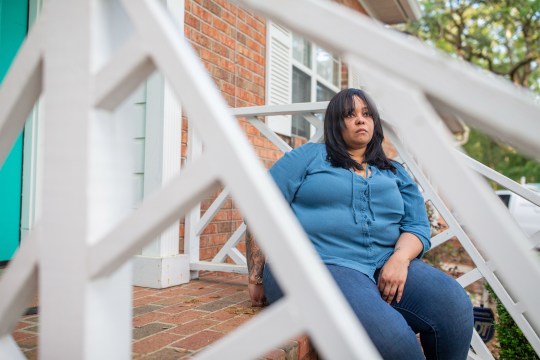
The Group that Struggles the Most in American Health Care

In a new column, Dr. Drew Altman, KFF’s Founding President and CEO, previews findings about the chronically ill uninsured from a large KFF survey of 25,000 Americans focusing on the cost and access challenges facing the chronically ill, which will be released tomorrow. He writes: “There are more than enough needs to go around in American health care, but if I had to pick the one group that struggles the most with costs and access, it would be people with chronic illnesses who are also uninsured.”


Other “Beyond the Data” columns >>

Key Facts about the Uninsured Population

The number and share of people without insurance grew in 2024, increasing for the first time since 2019, according to KFF’s analysis of data from the American Community Survey (ACS). This issue brief describes trends in health coverage in 2024, examines the characteristics of the uninsured population , and summarizes the access and financial implications of not having coverage.

Data and analysis

The coverage gap exists because some states did not expand Medicaid under the ACA to cover adults under age 65 without dependent children with incomes at/below 138% of the federal poverty level (FPL)

How Many Uninsured Are in the Coverage Gap?

An estimated 1.4 million uninsured individuals in the 10 states without Medicaid expansion, including many working adults, people of color, and those with disabilities, remain in the "coverage gap," ineligible for Medicaid or for ACA tax credits that would make coverage affordable.

The Uninsured and Health Coverage

This Health Policy 101 chapter examines the share of the United States population who are uninsured, highlighting their demographics and the challenges they face because of the lack of coverage.

Key Facts on Health Coverage of Immigrants

This fact sheet provides an overview of health coverage for immigrants based on data from the 2023 KFF/LA Times Survey of Immigrants. As of 2023, half of likely undocumented immigrant adults and one in five lawfully present immigrant adults reported being uninsured.

Who was uninsured in 2024?

Latest Polling
9.8%

The share of people under age 65 without insurance
62%

The share of uninsured adults who said they were uninsured because coverage is not affordable
59%

The share of uninsured adults who said they or someone living with them had problems paying for health care
39%

The share of uninsured adults who reported delaying or not getting needed care or medication due to cost

Stay informed.

Stay informed.

Filter

981-990 of 1,318 results

  • Study on the Consequences of Uninsurance Featured in a New Journal Supplement

    Other Post

    A June 2003 supplement of Medical Care Research and Review presents a compelling case that health insurance does lead to improved health and better access to care. The supplement, with Thomas Rice as guest editor, includes four commentaries on the topic by John Ayanian, Stuart Butler, Karen Davis, and Richard Kronick. The supplement, published by Sage Publications and supported by the Kaiser Commission on Medicaid and the Uninsured (KCMU), features Jack Hadley s exhaustive review…

  • Women, Work, and Family Health: A Balancing Act

    Issue Brief

    This issue brief examines women's roles in family health care decision-making and coordination, the effect of that involvement for women who work, and women's caregiving responsibilities. This analysis is based on data from the 2001 Kaiser Women's Health Survey, a nationally representative sample of nearly 4,000 women between the ages of 18 and 64. Issue brief (.pdf) News Release: Mothers Still Carry Primary Responsibility for Family Health -- Tradeoffs Between Caring for Children and Job Earnings…

  • Medicare Cost-Sharing: Implications for Beneficiaries

    Event Date:
    Event

    Tricia Neuman, Vice President and Director of the Medicare Policy Project, testified on behalf of herself and Thomas Rice, Ph.D., of UCLA's School of Public Health, before the House Ways and Means Subcommittee on Health on cost-sharing requirements under Medicare and supplemental Medigap policies. The statement reviews Medicare beneficiaries' current cost-sharing responsibilities, the evidence on the impact of out-of-pocket costs on health-care utilization, and the implications for proposals that would modify Medicare's cost-sharing structure.

  • How Do M+C Plans Manage Pharmacy Benefits? Implications for Medicare Reform

    Report

    Understanding how Medicare+Choice (M+C) plans manage their drug benefits may generate important lessons for Medicare. This report, based on interviews with both national and regional managed care firms, provides an in-depth look at how plans have managed their M+C outpatient pharmacy benefits in recent years. Findings show that plans rely on a number of cost management strategies to constrain the growth in drug spending including formularies, tiered-copayments, mail-order benefits, and fixed caps or dollar limits…

  • Changes in Health Care Coverage 2000-2001

    Report

    This background report analyzes 2001 U.S. Census Bureau data on health coverage to determine the trends that led to 1.4 million people losing health coverage from 2000 to 2001. Report

  • The New Middle-Class of Uninsured Americans — Is it Real?

    Report

    This issue paper discusses and answers the question are the newly uninsured in 2001 predominantly from the middle-class. The paper examines U.S. Census Bureau s data and concludes that most of the increase in the uninsured (1.3 million people) was among low-income people with incomes less than 200% of the poverty level. Issue Paper

  • Where Is The Growth in the Uninsured Population Coming From?

    Other Post

    The Kaiser Commission on Medicaid and the Uninsured co-sponsored a policy briefing today to discuss the dynamics of the uninsured population in America. In 2001, the uninsured population grew by 1.4 million people. To increase understanding of who these people are and answer the question of whether the uninsured problem was shifting to higher-income Americans, findings from two new KCMU reports were presented. You may also view background materials on the uninsured and a webcast…

  • Who Pays and How Much? The Cost of Caring for the Uninsured

    Report

    This report answers how much the country spends on care for the uninsured and how much care the uninsured receive compared to insured Americans. It is part of our Cost of Not Covering the Uninsured project. Report

  • Health Insurance Coverage in America: 2001 Data Update

    Report

    Health Insurance Coverage in America: 2001 Data Update This chartbook provides year 2001 data on health insurance coverage, with special attention to the uninsured. It includes trends and major shifts in coverage and a profile of the uninsured population. Chartbook A link to additional state-specific data on the uninsured at State Health Facts. Link to other Health Insurance Coverage in America chartbooks.