Uninsured

New and noteworthy

Quote from KFF President and CEO Drew Altman reads, "when it comes to the “affordability crisis” driving the national discussion of health care today, the chronically ill, and most of all the chronically ill uninsured, are the tip of the spear."

The Group that Struggles the Most in American Health Care

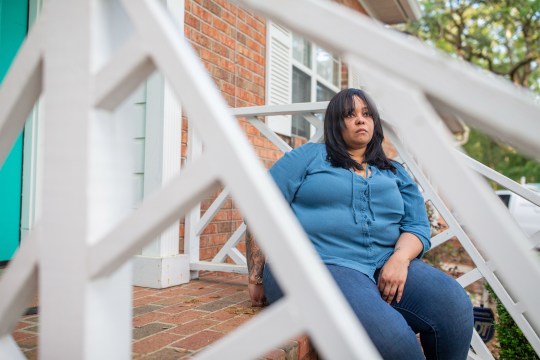
In a new column, Dr. Drew Altman, KFF’s Founding President and CEO, previews findings about the chronically ill uninsured from a large KFF survey of 25,000 Americans focusing on the cost and access challenges facing the chronically ill, which will be released tomorrow. He writes: “There are more than enough needs to go around in American health care, but if I had to pick the one group that struggles the most with costs and access, it would be people with chronic illnesses who are also uninsured.”
Other “Beyond the Data” columns >>

Key Facts about the Uninsured Population

The number and share of people without insurance grew in 2024, increasing for the first time since 2019, according to KFF’s analysis of data from the American Community Survey (ACS). This issue brief describes trends in health coverage in 2024, examines the characteristics of the uninsured population , and summarizes the access and financial implications of not having coverage.

Data and analysis

The coverage gap exists because some states did not expand Medicaid under the ACA to cover adults under age 65 without dependent children with incomes at/below 138% of the federal poverty level (FPL)

How Many Uninsured Are in the Coverage Gap?

An estimated 1.4 million uninsured individuals in the 10 states without Medicaid expansion, including many working adults, people of color, and those with disabilities, remain in the "coverage gap," ineligible for Medicaid or for ACA tax credits that would make coverage affordable.

The Uninsured and Health Coverage

This Health Policy 101 chapter examines the share of the United States population who are uninsured, highlighting their demographics and the challenges they face because of the lack of coverage.

Key Facts on Health Coverage of Immigrants

This fact sheet provides an overview of health coverage for immigrants based on data from the 2023 KFF/LA Times Survey of Immigrants. As of 2023, half of likely undocumented immigrant adults and one in five lawfully present immigrant adults reported being uninsured.

Who was uninsured in 2024?

Latest Polling
9.8%

The share of people under age 65 without insurance
62%

The share of uninsured adults who said they were uninsured because coverage is not affordable
59%

The share of uninsured adults who said they or someone living with them had problems paying for health care
39%

The share of uninsured adults who reported delaying or not getting needed care or medication due to cost

Stay informed.

Stay informed.

Filter

921-930 of 1,318 results

  • The Economic Downturn and Changes in Health Insurance Coverage, 2000-2003

    Report

    This report shows that number of uninsured Americans under age 65 increased by 5.1 million between 2000-2003 largely driven by continuing declines in employer sponsored insurance. For children, this decline was more than offset by increases in enrollment in Medicaid and the State Children’s Health Insurance Program (SCHIP), resulting in a decrease in the number of children without coverage. The same growth in public coverage did not occur for adults, and as a result all…

  • Medicare: Comparison of the Candidates’ Proposals

    Fact Sheet

    Medicare: Comparison of Candidate's Proposals Download a printable pdf of this document Bush-Cheney1 Kerry-Edwards2 General approach Supports greater role for private plans under Medicare to give seniors greater choice of health plans. Supports giving seniors a choice of a health plan that’s right for them. Opposes privatization of Medicare that causes benefit cutbacks. Opposes forcing seniors into HMOs to get drug benefits or affordable premiums. Market competition Supports competition between Medicare private plans and the…

  • Health Care and the 2004 Elections

    Other Post

    ** Update: For information on health care and the 2008 election, visit www.health08.org. ** Health care issues continue to be important for many Americans and a vital part of the policy debates in Washington and around the country. During an election season, candidates propose and debate their solutions for the pressing policy issues facing their constituents. The 2004 election season is no different and the Kaiser Family Foundation is issuing informational materials on some of…

  • Health Insurance Coverage for the Uninsured: Comparison of the Candidates’ Proposals

    Fact Sheet

    Health Care Coverage for the Uninsured: Comparison of Candidate's Proposals Download a printable.pdf of this document Bush-Cheney1 Kerry-Edwards2 General approach Provides tax credits and HSA contributions to low-income families and small employers to help people buy private insurance. Establishes insurance pools and authorizes association health plans. Expands community and rural health centers. Estimated 11 to 17.5 million newly insured. Expands public program coverage, provides tax credits to help people buy insurance, and expands the safety…

  • Health Care and the 2004 Elections: the Uninsured

    Issue Brief

    The Uninsured Download a printable .pdf of Health Care and the 2004 Elections: The Uninsured. IssueBackgroundOptions for Covering the Uninsured and the 2004 DebateAssessing Candidate PositionsIssue With nearly 45 million Americans under the age of 65 without health insurance – one in six Americans – addressing the uninsured population is a major issue in the upcoming election. Health insurance affects access to health care as well as the financial well-being of families. Thus, both the…

  • Medicaid and Other Public Programs for Low-Income Childless Adults:  An Overview of Coverage in Eight States

    Report

    Medicaid and Other Public Programs for Low-Income Childless Adults: An Overview of Coverage in Eight States This report profiles childless adult programs in eight state-level jurisdictions: the District of Columbia, Maine, Massachusetts, Minnesota, New York, Oregon, Pennsylvania, and Washington. Report (.pdf) Background State Reports prepared by the Economic and Social Research Institute

  • At the Edge: Near Elderly Americans Talk About Health Insurance

    Report

    These narratives focus on the experiences of those who are both near elderly and uninsured. They profile six individuals whose stories highlight a number of problems faced by large numbers of men and women in their fifties and early sixties. Report (.pdf)

  • New Reports Examine Near-Elderly Health Coverage Trends and Six Near-Elderly Uninsured Individuals’ Experiences with the American Health Care System

    Report

    Two new reports focus on health coverage in the near elderly (age 55-64) population. One report examines trends in the population's income, health status, and insurance coverage and the other report profiles six near-elderly uninsured individuals' life challenges in the years preceding Medicare eligibility. Health Insurance Coverage of the Near Elderly At the Edge: Near Elderly Americans Talk About Health Insurance

  • Health Insurance Coverage of the Near Elderly

    Report

    This report examines the changes in income, health status, and insurance coverage that occur with the aging of the population, focusing primarily on the nearly 26 million near elderly--those between 55 and 64 years of age. Report (.pdf)