Uninsured

New and noteworthy

Quote from KFF President and CEO Drew Altman reads, "when it comes to the “affordability crisis” driving the national discussion of health care today, the chronically ill, and most of all the chronically ill uninsured, are the tip of the spear."

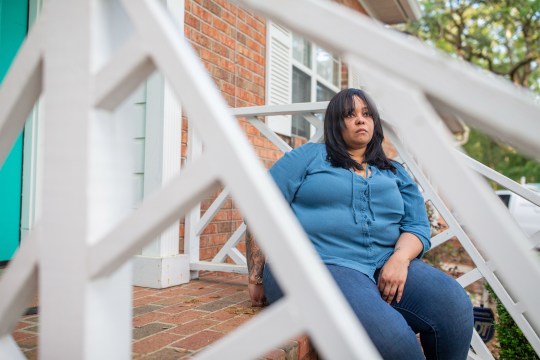
The Group that Struggles the Most in American Health Care

In a new column, Dr. Drew Altman, KFF’s Founding President and CEO, previews findings about the chronically ill uninsured from a large KFF survey of 25,000 Americans focusing on the cost and access challenges facing the chronically ill, which will be released tomorrow. He writes: “There are more than enough needs to go around in American health care, but if I had to pick the one group that struggles the most with costs and access, it would be people with chronic illnesses who are also uninsured.”


Other “Beyond the Data” columns >>

Key Facts about the Uninsured Population

The number and share of people without insurance grew in 2024, increasing for the first time since 2019, according to KFF’s analysis of data from the American Community Survey (ACS). This issue brief describes trends in health coverage in 2024, examines the characteristics of the uninsured population , and summarizes the access and financial implications of not having coverage.

Data and analysis

The coverage gap exists because some states did not expand Medicaid under the ACA to cover adults under age 65 without dependent children with incomes at/below 138% of the federal poverty level (FPL)

How Many Uninsured Are in the Coverage Gap?

An estimated 1.4 million uninsured individuals in the 10 states without Medicaid expansion, including many working adults, people of color, and those with disabilities, remain in the "coverage gap," ineligible for Medicaid or for ACA tax credits that would make coverage affordable.

The Uninsured and Health Coverage

This Health Policy 101 chapter examines the share of the United States population who are uninsured, highlighting their demographics and the challenges they face because of the lack of coverage.

Key Facts on Health Coverage of Immigrants

This fact sheet provides an overview of health coverage for immigrants based on data from the 2023 KFF/LA Times Survey of Immigrants. As of 2023, half of likely undocumented immigrant adults and one in five lawfully present immigrant adults reported being uninsured.

Who was uninsured in 2024?

Latest Polling
9.8%

The share of people under age 65 without insurance
62%

The share of uninsured adults who said they were uninsured because coverage is not affordable
59%

The share of uninsured adults who said they or someone living with them had problems paying for health care
39%

The share of uninsured adults who reported delaying or not getting needed care or medication due to cost

Stay informed.

Stay informed.

Filter

861-870 of 1,314 results

  • Issues Facing Medicaid and CHIP

    Event Date:
    Event

    Cindy Mann, senior fellow of the Commission, testified to the Senate Subcommittee on Public Health of the Health, Education, Labor and Pensions Committee on how to sustain and expand health care coverage for low-income children and families, and disabled and elderly people in these challenging times. TESTIMONY Download

  • Medicare Prescription Drug Coverage: Facts, Options, and Implications

    Event Date:
    Event

    Testimony by Patricia Neuman, Sc.D., vice president and director of the Foundation's Medicare Policy Project, for the House Committee on Energy and Commerce, Subcommittee on Health, hearing on Creating a Medicare Prescription Drug Benefit: begins with a brief review of existing sources of prescription drug coverage for the Medicare population and a discussion of how the lack of coverage affects people on Medicare. It then reviews broad approaches to improving prescription drug coverage, considers the…

  • The Medicare Program: Servicios De Salud Administrados Por Medicare

    Fact Sheet

    Panorama General: Medicare proporciona servicios de salud a casi 39 millones de norteamericanos, incluyendo aproximadamente a 34 millones de ancianos y a 5 millones de discapacitados. La gran mayoria de estas personas cubren sus gastos medicos directamente mediante el programa tradicional de "pago por servicio," mientras que el 15 porciento restante (mas de 5 millone de beneficiarios) estan cubiertos bajo algun plan de servicio medico contratado con Medicare, principalmente las organizaciones de administracion de la…

  • SCHIP Administration and Accountability

    Report

    The third in a series of reports on implementation issues and challenges in the first year of S-CHIP finds that non-Medicaid S-CHIP programs faced more administrative challenges. Success with enrollment appeared primarily related to administrative decisions, including a lower band of S-CHIP income eligibility, and the lack of premiums. REPORT Download

  • Medicaid’s Role for Low-Income Medicare Beneficiaries

    Fact Sheet

    Medicaid's Role for Low-Income Medicare Beneficiaries An overview that identifies low-income Medicare beneficiaries (dual eligibles), how Medicaid can provide care for them, and the challenges to accessing care. Fact Sheet

  • The Working Uninsured in California and the US

    Issue Brief

    This issue brief, prepared by Linda Blumberg and Len Nichols of the Urban Institute, examines the factors contributing to the disproportionately high rates of uninsurance among California's workers compared to the U.S. The report looks at differences in coverage by race and ethnicity, and by citizenship status, and also examines offer and take-up rates for employer health insurance among California's workers. Issue Brief

  • Medicare and Prescription Drug Focus Groups

    Report

    Summary Report This report, : Summary Report, produced jointly by the bipartisan team of Bill McInturff of Public Opinion Strategies and Geoff Garin of Peter D. Hart Research Associates, presents key findings from a series of eight focus groups on the Medicare program and the current debate over prescription drug coverage and Medicare reform. These groups, conducted in four cities with both elderly and non-elderly participants in June 2001, explored attitudes about Medicare and how…

  • Trends and Indicators in the Changing Health Care Marketplace 2002

    Report

    This chartbook provides information on key trends in the health care marketplace including health spending, the structure of the health care marketplace, and health plan and provider relationships. It highlights data on health plan enrollment, premiums, and benefits, and the implications of health market trends for consumers and the safety net. Chartbook (.pdf)